 Birch Bay Siding
 Roofing on the Point Whitehorn Shoreline Is a Different Job
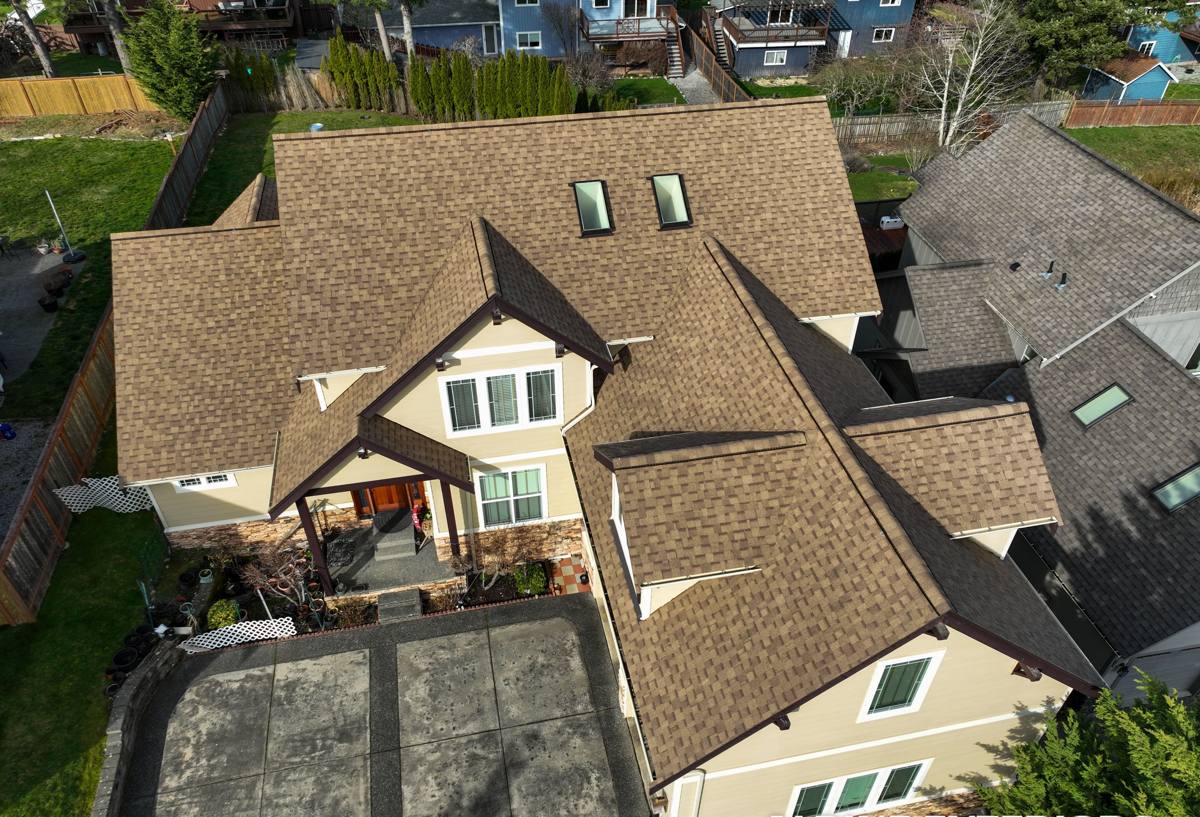
Point Whitehorn sits out on the bluffs and shoreline north of Birch Bay, close enough to the water that salt air is part of daily life, not an occasional nuisance. Add in Whatcom County's driving winter rain, wind off the Strait, and a moss season that can run eight months or more under tree cover, and you've got a roofing environment that's genuinely harder on materials than most inland installs. A new roof installation out here isn't just "put shingles on a house" — it's a system that has to hold up to salt corrosion, constant moisture cycling, and biological growth all at once.
We install roofs across Birch Bay and the surrounding shoreline communities, including Point Whitehorn, and the details we build in are shaped by exactly that combination of conditions. This page walks through what a correctly done new roof installation looks like out here, what tends to go wrong when it's not, and what our process actually involves.
What Salt Air, Rain, and Moss Actually Do to a Roof
Each of these three factors attacks a roof in a different way, and a roof that's only built to handle one of them tends to fail early against the other two.
Salt Air and Corrosion
Airborne salt accelerates the corrosion of any exposed metal — nails, flashing, drip edge, valley metal, and vent stacks. Once corrosion starts at a fastener or flashing seam, water finds its way underneath the roofing material long before the shingles themselves show visible wear. This is one of the most common causes of premature roof failure we see on shoreline properties, and it's largely preventable with the right fastener and flashing choices at installation time.
Driving Rain
Wind-driven rain off the water doesn't just fall straight down — it gets pushed sideways and upward under eaves, around vents, and into any gap in the underlayment or flashing detail. A roof built for a calmer inland climate often relies on gravity to shed water. Out here, the roofing system needs to be sealed and layered so it sheds water even when it's coming in sideways.
Moss and Sustained Moisture
Moss doesn't just look bad — it holds moisture directly against the roofing surface, works its way under shingle tabs as it grows, and breaks down granule coatings over time. On shaded, north-facing, or tree-covered sections of a Point Whitehorn roof, moss growth can start within a year or two of installation if the roof wasn't detailed to resist it.
What a Correct New Roof Installation Involves
A new roof is only as good as what's underneath the finished surface. Most of the decisions that determine how long a roof lasts happen before a single shingle or panel goes down.
Tear-Off and Deck Inspection
We remove the old roofing down to the deck on every full replacement rather than layering over existing material. That's the only way to actually see the plywood or plank decking underneath — and on older shoreline homes, it's common to find sections of decking that have softened from long-term moisture intrusion around old flashing or vent penetrations. Any soft or delaminated decking gets replaced before anything else happens; installing new roofing over compromised decking just hides a problem that will resurface.
Underlayment and Water-Resistant Barrier
Given how much wind-driven rain this area sees, we don't treat underlayment as an afterthought. Self-adhering ice-and-water barrier goes at eaves, valleys, and around every penetration — the spots where wind-driven rain is most likely to force its way under the roofing surface — with synthetic underlayment across the rest of the deck for a continuous water-resistant layer beneath the finished roofing.
Ventilation
Proper intake and exhaust ventilation keeps the attic space dry and temperature-balanced, which matters for two reasons here: it prevents condensation from building up on the underside of the decking during our wet, cool winters, and it reduces the moisture available to feed moss and algae growth on the roof surface itself. A roof installed without balanced ventilation traps humidity that works against the roofing material from below.
Choosing a Roofing Material for This Climate
There's no single "best" roofing material for every home — the right choice depends on the home's exposure, roof pitch, budget, and how much tree cover surrounds the property. Here's how the common options compare for a shoreline home in this part of Whatcom County.
| Material | Salt Air Performance | Moss Resistance | Maintenance |
|---|---|---|---|
| Architectural asphalt shingle | Good, with corrosion-resistant fasteners and flashing | Moderate — benefits from zinc/copper strips | Low to moderate |
| Standing seam metal | Very good with marine-grade coatings and fasteners | Excellent — sheds moisture quickly | Low |
| Cedar shake | Fair — requires diligent maintenance near salt air | Poor without regular treatment | High |
| Composite/synthetic shake or slate | Good | Good | Low |
For most Point Whitehorn homes, we steer people toward architectural asphalt with the right fastener and flashing package, or standing seam metal on homes with more direct wind and salt exposure or a lower roof pitch. Cedar shake can look great, but it's an honest trade-off — it demands more upkeep to hold up against this specific combination of salt, moisture, and shade than most homeowners want to take on, so we're straightforward with clients about that maintenance burden before they commit to it.
Flashing and Fasteners: Where Most Roof Failures Actually Start
We treat flashing and fastener selection as seriously as the roofing material itself, because in a salt-air environment, corroded metal is the most common failure point — not worn-out shingles. That means:
- Stainless steel or hot-dip galvanized fasteners rated for coastal exposure, not standard electro-galvanized nails
- Corrosion-resistant flashing at valleys, chimneys, skylights, and wall-to-roof transitions
- Sealed, layered step flashing rather than relying on caulk alone at wall intersections
- Properly lapped drip edge and gutter aprons so wind-driven rain can't get behind the fascia
- Pipe boot flashing rated for UV and moisture exposure, since these are a common early leak point on any coastal roof
Cutting corners on any of these is invisible on install day and expensive two or three years later, once corrosion has had time to work.
Building In Moss Resistance From the Start
You can't eliminate moss risk on a shaded shoreline roof, but you can significantly slow it down at installation time rather than fighting it after the fact.
Zinc or copper control strips near the ridge let rainwater carry trace metal ions down the roof slope, which inhibits moss and algae growth on the surfaces below. We also make sure valleys and low-slope sections are detailed so water and debris don't pool — standing moisture and trapped organic debris are what let moss get a foothold in the first place. Keeping gutters clear and trimming back overhanging branches after installation matters too, but the roof detailing itself is the first line of defense.
Our Installation Process
Every full roof replacement follows the same core sequence, adjusted for the home's specific pitch, access, and material choice:
- On-site inspection and honest assessment of the existing roof, decking, and ventilation
- Written estimate covering material options, scope, and timeline
- Complete tear-off of old roofing material
- Deck inspection and repair or replacement of any compromised sheathing
- Installation of ice-and-water barrier at vulnerable areas and synthetic underlayment across the field
- Corrosion-resistant flashing installed at all valleys, penetrations, and wall transitions
- Roofing material installed per manufacturer specification, with attention to intake and exhaust ventilation
- Site cleanup, including magnetic sweep for stray fasteners
- Final walkthrough and warranty documentation
What to Expect for Timeline
A straightforward single-family roof replacement typically runs one to three days depending on size, pitch, and weather. Given how much rain this area gets, we watch the forecast closely and won't leave a deck exposed if wet weather is moving in — decking and underlayment go down in a sequence that keeps the home protected at every stage, even if we have to pause for a day.
What Affects the Cost of a New Roof Here
Every home is different, and we don't quote sight unseen, but these are the main factors that move the price on a Point Whitehorn roof replacement:
| Factor | Why It Matters |
|---|---|
| Roof size and number of planes | More square footage and more valleys/hips mean more material and labor |
| Roof pitch and access | Steep or hard-to-access roofs require more safety equipment and time |
| Decking condition | Rot or delamination found during tear-off adds repair costs not visible beforehand |
| Material choice | Asphalt, metal, and composite materials carry different material and labor costs |
| Flashing and penetration count | Chimneys, skylights, and multiple vent stacks each add detail work |
| Ventilation upgrades | Adding or correcting intake/exhaust ventilation adds scope but improves longevity |
We give a firm written number after seeing the roof in person — not a phone estimate — because decking condition and flashing complexity genuinely can't be judged accurately from the ground or from photos.
Why a Crew That Already Works Point Whitehorn Matters
Roofing companies that mostly work inland don't always spec fasteners, flashing, and underlayment for salt-air exposure by default — it's not the first thing that comes to mind when a shoreline home looks, from the street, like any other house. A crew that regularly works Birch Bay and Point Whitehorn treats corrosion-resistant hardware and wind-driven-rain detailing as standard practice, not an upgrade someone has to ask for.
There's also a practical side to local experience: knowing which roads and driveways in this area limit material staging or dumpster placement, understanding how Whatcom County's weather windows affect scheduling around fall and winter storms, and having a working relationship with local building department requirements for permitting a roof replacement. None of that shows up on a spec sheet, but it affects how smoothly the job actually goes.
After Installation: Keeping the Roof Performing
A well-installed roof in this climate still benefits from basic upkeep. We recommend homeowners:
- Clear gutters and downspouts at least twice a year, more often under heavy tree cover
- Trim back branches that overhang the roofline to reduce shade and debris buildup
- Have moss or algae growth addressed early rather than left to spread
- Schedule a visual inspection after major windstorms to check for lifted or displaced material
- Keep documentation of the installation and materials used for warranty purposes
Manufacturer warranties on materials and our own workmanship warranty on the installation are both explained in writing at the end of the job, so there's no ambiguity about what's covered if an issue comes up down the road.
If you're planning a roof replacement in Point Whitehorn, we're happy to come take a look and put together a straightforward, no-pressure estimate — just fill out the form below and we'll get in touch.