 Birch Bay Siding
 Nooksack's Climate Is Harder on Siding Than Most Homeowners Realize
Homes in the Nooksack area deal with a combination of weather stresses that most siding products were never designed to handle for the long haul. Salt-laden air moving in off the Salish Sea corrodes fasteners and finishes over time. Driving rain, pushed sideways by wind off open fields and low terrain, gets forced into seams and laps that would stay dry in a calmer climate. And the long gray stretch of fall through spring keeps north-facing and shaded walls damp long enough for moss and algae to take hold and stay there. None of these factors are dramatic on their own, but stacked together year after year, they're exactly what breaks down lesser siding materials.
Salt Air and Slow Corrosion
Salt air doesn't just affect homes directly on the water. It travels inland on wind and settles on exterior surfaces across this part of Whatcom County, working on any exposed metal fastener, flashing, or trim edge. Over years, that steady exposure accelerates rust and finish breakdown on materials that aren't built to resist it.
Driving Rain and Wind-Driven Moisture
Rain that falls straight down is easy for any siding to shed. Rain that's pushed sideways by wind is a different problem — it finds horizontal laps, panel seams, and trim joints and works its way behind the surface if those details weren't built and installed correctly. This is where the difference between a correctly installed siding system and a merely adequate one shows up first.
Moss, Shade, and Standing Dampness
Tree cover and long wet seasons mean plenty of exterior walls in this area rarely get a full day of direct sun. That shade keeps siding damp longer after every rain, which is exactly the environment moss, algae, and mildew need to establish themselves. Siding that can't shed water quickly or resist organic growth ends up looking tired within a few years, no matter how well it was painted.
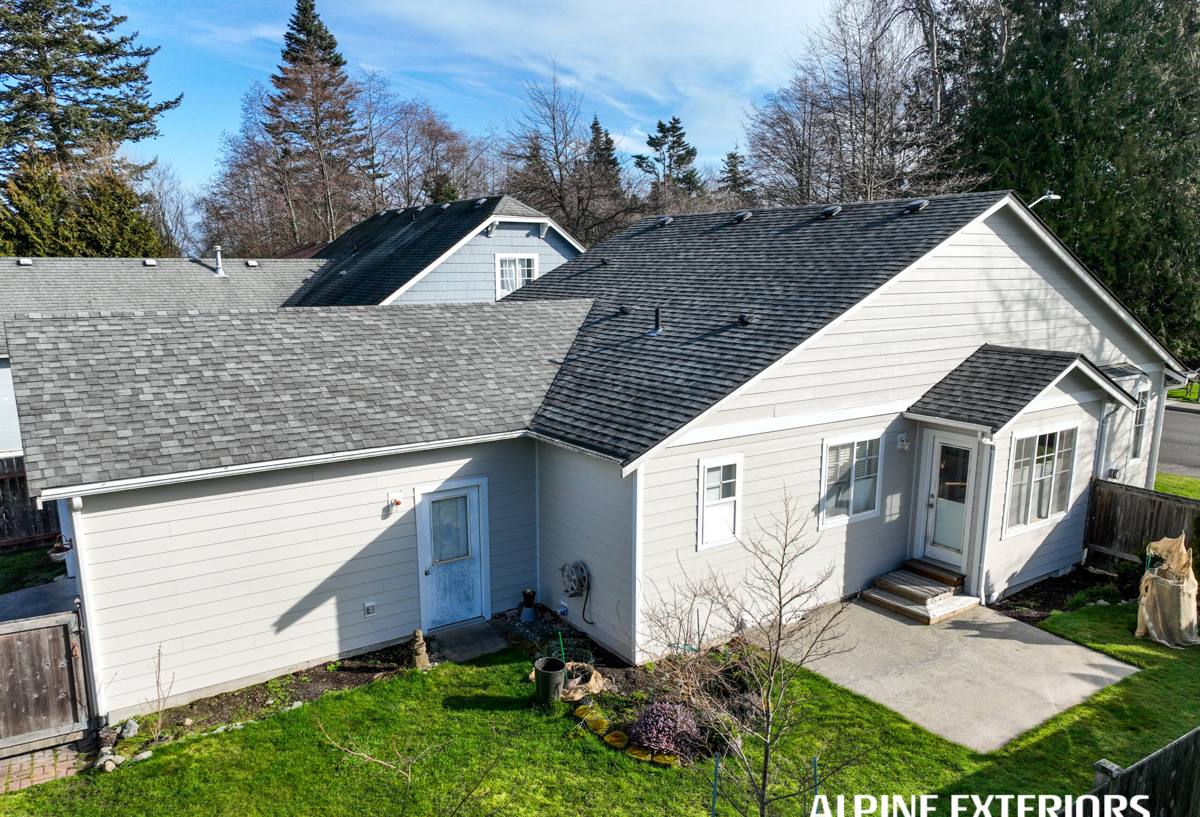
Why We Only Install James Hardie Siding in This Area
Birch Bay Siding Company installs one siding system: James Hardie fiber cement. We don't install vinyl, LP SmartSide, Cemplank, Allura, primed spruce, or cedar. That's not a marketing position — it's a standard we hold because of what we've seen these climate conditions do to siding materials over time.
Vinyl siding can warp, fade, and crack in cold snaps, and its seams are a known path for wind-driven rain to get behind the cladding. Wood products like cedar and primed spruce look good on day one but require an ongoing maintenance commitment — repainting, caulking, and moisture monitoring — that most homeowners don't sign up for and few contractors follow up on. Engineered wood products like LP SmartSide use wood fiber with a resin binder, which performs reasonably well when installation details are followed exactly, but wood-based products are inherently more vulnerable to moisture intrusion at cut edges and seams than fiber cement is.
James Hardie siding is fiber cement — a mix of cement, sand, and cellulose fiber that doesn't absorb and swell with moisture the way wood-based products do, and doesn't expand and contract with temperature swings the way vinyl does. It's also non-combustible, which matters given how many summers now bring wildfire smoke to Western Washington. Hardie's ColorPlus factory-applied finish is baked on and warrantied separately from the substrate, which means the color holds up without the repainting cycle wood siding demands. For homes taking the kind of salt air, sideways rain, and prolonged dampness that this area sees, it's the system that holds up correctly installed for decades rather than years.
What a Correct James Hardie Installation Actually Involves
The siding material is only half the equation. Most siding failures we get called out to inspect — regardless of brand — trace back to installation shortcuts, not the product itself. A correct Hardie installation in a climate like this one follows a specific sequence, and skipping steps is exactly how moisture problems start years later, hidden behind a wall that looks fine from the curb.
Weather-Resistive Barrier and Drainage Plane
Every wall gets a code-compliant weather-resistive barrier installed and lapped correctly before any siding goes up. Behind that, we build in a proper drainage plane so that any moisture that does get past the siding has somewhere to go — down and out, not trapped against the sheathing.
Fastening, Clearances, and Caulking
James Hardie publishes specific fastener types, spacing, and penetration depth requirements, along with minimum clearances from grade, roof lines, and decks. These aren't suggestions — they're what the manufacturer's warranty is actually based on. We follow Hardie's fastening and clearance specs on every job, and we're selective about where and how much caulk gets used, since over-reliance on caulk to seal a joint is a sign of a detail that wasn't built correctly in the first place.
Trim, Flashing, and Butt Joints
Every window, door, corner, and butt joint is a place where water wants to get behind the siding. Correct flashing at every horizontal trim piece, and properly sealed and backed butt joints on the field siding, are what keep wind-driven rain from finding its way in. This level of detail is where driving rain off open ground shows the difference between a five-year paint job on a rushed install and a siding system that's still doing its job in twenty years.
Choosing the Right Hardie Product Line for a Nooksack Home
James Hardie makes several distinct product lines, and the right one depends on the home's architecture, exposure, and the look the homeowner wants. We help walk through this decision as part of every estimate rather than defaulting to one option.
| Product Line | Best For | Look |
|---|---|---|
| HardiePlank Lap Siding | Most single-family homes; the most common choice in this area | Traditional horizontal lap, several width and texture options |
| HardieShingle | Accent gables, dormers, or homes wanting a cedar-shake look without cedar's upkeep | Staggered or straight-edge shingle profile |
| HardiePanel | Modern builds, garages, or vertical-board-and-batten styling | Large flat vertical panels |
| HardieTrim | Corners, window and door casing, fascia | Smooth or textured boards matched to the siding line |
All of these lines are available with Hardie's ColorPlus factory finish, and Hardie engineers its HZ5 product formulation specifically for climates like Western Washington's — cooler, wetter, and prone to freeze-thaw cycles — as opposed to the HZ10 formulation built for hot, humid regions. Installing the climate-matched product line is part of what "correct installation" means here.
Our Process for a Nooksack Siding Project
We keep the process straightforward and predictable, because homeowners deserve to know what's happening at every stage of a project on their home.
- Free on-site estimate. We walk the exterior, check existing siding and sheathing condition, and talk through product line and color options.
- Written proposal. A clear scope of work and cost, with no pressure to sign on the spot.
- Sheathing and moisture check. Once old siding comes off, we inspect the sheathing underneath for rot or damage before anything new goes on — this step catches problems that were invisible from outside.
- Weather barrier and drainage plane installation. Built to code and to Hardie's specifications, not shortcuts.
- Siding, trim, and flashing installation. Fastened, spaced, and flashed to manufacturer specification.
- Final walkthrough. We review the finished work with the homeowner before calling the job complete.
What Drives Cost on a Nooksack Hardie Project
Every home is different, so we don't quote broad prices without seeing the house, but a few factors consistently move the number up or down on projects in this area.
| Factor | Why It Matters |
|---|---|
| Sheathing condition | Rot or moisture damage found underneath old siding needs repair before new siding goes on |
| Home size and wall complexity | More corners, gables, and dormers mean more trim, cutting, and labor |
| Product line mix | Combining HardiePlank with HardieShingle accents or HardiePanel sections adds material and labor variety |
| Existing siding removal | Full tear-off versus siding over an already-prepped wall changes the labor scope |
| Access and site conditions | Sloped lots, limited driveway access, or tight setbacks can affect staging and scaffolding needs |
Signs Your Current Siding Is Struggling With This Climate
Catching problems early keeps a repair from turning into a full replacement. On a walk-around of your home, watch for these:
- Persistent moss or algae streaking on shaded or north-facing walls
- Peeling, bubbling, or chalking paint that returns soon after repainting
- Soft or spongy spots when pressing on the siding surface
- Visible gaps, warping, or buckling at panel seams and butt joints
- Rust staining running down from fasteners or trim
- Cracked or crumbling caulk at corners, windows, and trim joints
- A musty smell near exterior walls inside the home
Any one of these on its own might be minor. Several showing up together usually means moisture has been getting behind the siding for a while.
Why Hiring a Crew That Already Works in This Area Matters
Siding installation isn't uniform across Washington. A crew used to installing in a dry, mild climate can do everything "by the book" and still miss the details that matter most where wind-driven rain and prolonged dampness are the norm. Working regularly in Whatcom County means we've seen firsthand how sideways rain finds weak trim details, how shaded walls hold moisture longer, and how salt air ages fasteners and finishes faster than manufacturer literature alone would suggest. That local pattern recognition shapes how we flash a window, space a fastener, or flag a sheathing issue before it becomes a bigger repair. It's also why we standardized on one product system instead of installing whatever a homeowner asks for — we'd rather turn down installing a product we don't trust for this climate than install it and watch it fail early.
Let's Talk About Your Home
If your siding is showing wear, or you're planning ahead for a replacement, we're happy to take a look and give you an honest read on what your home needs — no pressure, no obligation. Fill out the form below to schedule a free estimate for James Hardie siding on your Nooksack home.