 Birch Bay Siding
 Roofing Built for Marietta's Salt Air and Rain
Marietta sits close enough to the water that homes here deal with a different set of stresses than roofs a few miles inland. Salt-laden air off Birch Bay and the Strait works on exposed metal fasteners, flashing, and vents year-round, not just during storms. Add Whatcom County's long stretch of wet weather, and a roof in this area has to handle near-constant moisture exposure for months at a time, not just the occasional heavy rain event. A roof that would hold up fine in a drier part of the state can fail early here if it wasn't designed and installed with these conditions in mind.
That combination — salt air, driving rain, and a moss season that can run from fall through spring — is why we treat a Marietta roof replacement as its own project, not a copy-paste of what works elsewhere. The material choice, the flashing details, the ventilation plan, and even the fastener type all get looked at through that lens.
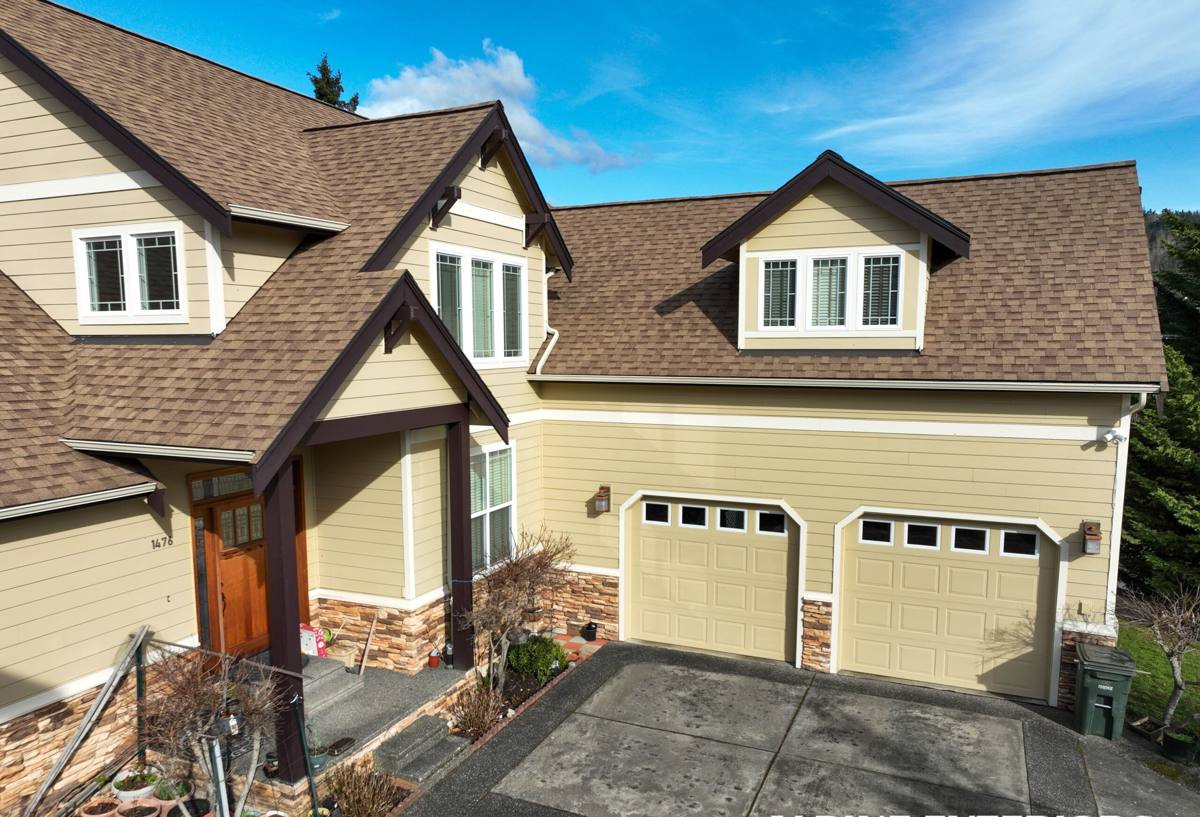
Signs a Marietta Roof Is Due for Replacement
Most homeowners don't wake up one day and decide they need a new roof — it's usually a slow accumulation of small problems that finally add up. Around Birch Bay, we typically see these signs before a full failure:
- Granule loss showing up in gutters or at downspout outlets, a sign asphalt shingles are past their protective life
- Moss or algae streaking that keeps coming back within weeks of cleaning, especially on north-facing slopes that stay shaded and damp
- Curling, cupping, or cracked shingles, particularly on roof faces that catch the most wind-driven rain
- Soft spots or sagging in the decking, felt when walking the roof or seen from the attic side
- Rust staining or lifting at metal flashing points — valleys, chimneys, and vent boots — where salt air accelerates corrosion
- Daylight visible through the roof deck from inside the attic, or damp insulation after a storm
Any one of these on its own might just need a repair. Several together, especially on a roof already in its second or third decade, usually means replacement is the more honest recommendation.
What a Correct Roof Replacement Actually Involves
A new roof is more than stripping off old shingles and nailing down new ones. The parts nobody sees from the ground are what determine whether the roof lasts fifteen years or thirty.
Tear-Off and Deck Inspection
We remove the existing roofing down to the deck rather than layering over it. That's the only way to actually see the condition of the sheathing underneath — soft, delaminated, or water-stained plywood needs to be replaced before anything new goes down, not covered up and hoped for. In a wet climate like this, decking that's been slowly absorbing moisture for years is common on older roofs, even when the shingles above look fine.
Underlayment and Ice-and-Water Protection
Underlayment is the roof's real waterproofing layer; shingles or metal panels are the wear surface on top of it. Given how much wind-driven rain the Birch Bay area sees, we pay particular attention to self-adhered ice-and-water membrane at vulnerable spots — eaves, valleys, and around penetrations — where wind can push rain up and under standard shingle laps.
Flashing and Ventilation
Flashing at chimneys, walls, skylights, and valleys is where most roof leaks actually originate, not in the open field of shingles. We use corrosion-resistant flashing materials and proper step-and-counter-flashing techniques, since salt air shortens the life of lower-grade metal considerably. Ventilation matters just as much — a roof that can't breathe traps moisture in the attic, which feeds the moss and mold problems this climate already encourages.
Choosing a Roofing Material for This Climate
There's no single "best" roofing material — the right choice depends on budget, how long you plan to stay in the home, and how much long-term maintenance you're willing to keep up with. Here's how the common options compare for a coastal Whatcom County property:
| Material | Typical Lifespan | How It Handles Salt Air & Moss | Maintenance |
|---|---|---|---|
| Architectural asphalt shingle | 25–30 years | Good with algae-resistant granules; needs periodic moss removal | Low to moderate |
| Standing seam metal | 40–50+ years | Excellent moss resistance; needs quality coatings/fasteners to resist salt corrosion | Low |
| Composite/synthetic shake | 30–40 years | Sheds moss better than wood; consistent performance in wet climates | Low |
| Cedar shake | 20–30 years | More moss-prone; requires regular treatment in a climate this wet | High |
For most Marietta homes, we lean toward architectural asphalt with algae-resistant granules or standing seam metal, since both hold up well against the specific one-two punch of salt exposure and sustained moisture without demanding constant upkeep. We'll walk through the honest trade-offs for your specific roof shape and budget rather than pushing one product across the board.
Moss, Algae, and the Long Wet Season
Moss isn't just cosmetic — its root structure holds moisture against the roof surface and can work its way under shingle edges over time, which is how a moss problem eventually becomes a leak problem. Because Whatcom County's wet season runs so long, moss here gets a much bigger head start each year than it would in a drier region.
A correct installation reduces future moss pressure in a few concrete ways: proper attic ventilation to limit condensation, algae-resistant shingle granules on shaded slopes, and, where the roof design allows it, zinc or copper strips at the ridge that slowly inhibit moss growth as rain washes over them. None of these eliminate the need for occasional cleaning, but they meaningfully slow how fast moss returns.
Our Installation Process, Start to Finish
- On-site inspection and estimate — we assess the current roof, attic ventilation, and any problem areas before quoting anything
- Material selection — we go over options and trade-offs specific to your home's exposure and roof pitch
- Permitting — we handle the required Whatcom County building permit before work begins
- Tear-off and deck inspection — old roofing removed, decking checked and repaired as needed
- Underlayment and flashing installation — waterproofing layer and all flashing points installed to spec
- Roofing material installation — shingles, metal panels, or shakes installed per manufacturer requirements
- Ventilation and final details — vents, ridge caps, and penetrations sealed and checked
- Cleanup and final walkthrough — site cleared, magnetic sweep for stray fasteners, roof reviewed with the homeowner
What a New Roof Costs to Install
Every roof is priced based on its own specifics, but the main factors that move the number up or down are consistent from job to job:
| Cost Factor | Why It Matters |
|---|---|
| Roof size and number of stories | More square footage and steeper access both add labor time |
| Roof pitch and complexity | Multiple valleys, dormers, and steep slopes take longer and need more flashing detail |
| Material choice | Asphalt, metal, and composite options span a wide price range |
| Decking condition | Rot or soft spots found during tear-off add repair costs not visible in advance |
| Ventilation and flashing upgrades | Bringing older ventilation up to current standards adds some cost but reduces future moss and moisture issues |
We won't quote a firm number without seeing the roof in person — anyone who does is guessing, and guesses tend to grow once the tear-off reveals what's actually underneath.
Why a Crew That Already Works in Marietta Matters
A roofing crew based near Birch Bay isn't just about faster response times, though that's part of it. Local crews have seen firsthand how roofs in this specific area actually fail — which slopes hold moss longest, which flashing details tend to corrode first, and how much wind-driven rain a given roof orientation really takes in a winter storm. That experience shapes real decisions: where to add extra underlayment, which fastener grade to use, and how aggressively to ventilate a given attic. A crew unfamiliar with this coastal stretch of Whatcom County is more likely to build a roof to a generic spec rather than one tuned to the conditions it will actually face.
Choosing the Right Roofing Contractor
Before hiring anyone for a project this important, it's worth confirming a few basics upfront:
- Current Washington State contractor license and liability insurance, provided without hesitation when asked
- A written estimate that details materials, scope of work, and warranty terms — not just a bottom-line price
- Manufacturer certification for the roofing system being installed, which affects warranty coverage
- A clear tear-off and deck-inspection process, not a plan to install over existing roofing
- Willingness to explain material trade-offs honestly rather than steering you to the highest-margin option
- Local references or a track record of jobs completed in the Birch Bay / Whatcom County area
If a contractor can't answer these plainly, that's worth noting before signing anything.
Get a Free Estimate for Your Marietta Roof
If your roof is showing its age, dealing with recurring moss, or just due for an honest inspection, we're glad to take a look. There's no pressure and no obligation — just a straightforward assessment of what your roof actually needs. Use the form below to request a free estimate.