 Birch Bay Siding
 Roofing in Marietta: A Different Kind of Weather Test
Marietta sits close enough to the water that every roof in the neighborhood is doing double duty. It's shedding the same driving winter rain that hits the rest of Whatcom County, but it's also absorbing salt-laden air coming off Birch Bay and the Strait of Georgia almost year-round. That combination is harder on a roof than either factor alone. Salt air accelerates corrosion on exposed metal — nails, flashing, vent caps — while the near-constant damp keeps organic growth like moss and algae active for most of the year instead of just a few wet months.
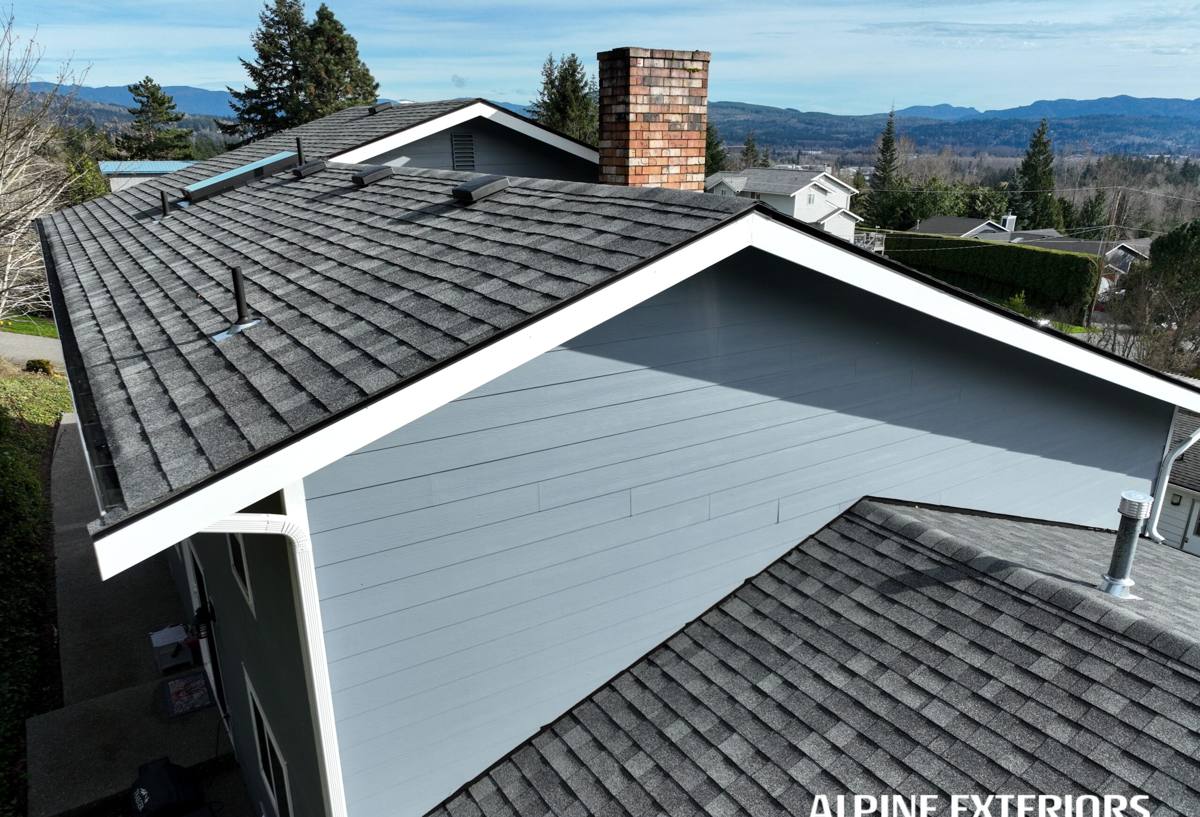
None of this means asphalt shingles are a bad fit for Marietta. They're still the most practical, cost-effective roofing material for the vast majority of homes here. It means the installation details matter more than they would in a drier, inland climate. A shingle roof put on with corner-cutting flashing work or the wrong fastening pattern might look fine for a year or two, then start failing in exactly the spots you'd expect — valleys, eaves, and anywhere moss has been allowed to sit.
What Birch Bay's Climate Actually Does to a Roof
Salt Air and Corrosion
Homes within a mile or two of the water see faster breakdown of unprotected or lower-grade metal components. Galvanized fasteners and flashing that would last decades further inland can start showing rust streaks and pitting years sooner near the bay. This is why fastener and flashing material selection is not a minor detail on a Marietta roof — it's one of the first things we look at when we walk a job.
Driving Rain
Storms coming off the water don't just fall straight down — wind-driven rain gets pushed sideways under shingle edges, into valleys, and around penetrations like plumbing vents and chimneys. A roof system that only relies on the shingles themselves to keep water out will eventually leak in these conditions. The underlayment, flashing, and valley details are what actually stop wind-driven water, and they need to be built for it from the start.
Moss and Algae Season
Whatcom County's wet season runs long, and shaded, north-facing, or tree-covered roof sections in Marietta can stay damp for weeks at a stretch. That's exactly the environment moss and algae need to take hold. Once moss establishes itself under shingle tabs, it holds moisture against the roofing material and lifts shingle edges, which is how a moss problem quietly turns into a leak problem.
What a Correctly Built Shingle Roof Includes
A roof that's going to hold up in this environment isn't just "shingles nailed to plywood." It's a layered system, and every layer has a job:
- Deck inspection and repair — soft, delaminated, or water-stained sheathing gets replaced before anything new goes down, not covered up.
- Ice and water barrier at vulnerable points — eaves, valleys, and roof-to-wall transitions get self-adhering waterproof membrane, not just felt.
- Synthetic underlayment across the field — a second line of defense against wind-driven rain that gets past the shingle surface.
- Corrosion-resistant flashing — valleys, chimneys, skylights, and wall intersections get metal or high-quality flashing suited for a coastal environment.
- Proper starter strips and nailing pattern — shingles fastened per manufacturer spec, in the right location on the shingle, with the correct number of fasteners for the local wind exposure.
- Balanced attic ventilation — intake at the eaves and exhaust at the ridge, so moisture from inside the house isn't condensing against the underside of the deck.
Skip any one of these and the roof can still look complete from the ground. The problems just show up later, usually as a leak that seems to come from nowhere until you get on the roof and find the shortcut.
Signs a Marietta Roof Needs Attention
Most roofing failures don't happen suddenly — there are warning signs first, if you know where to look:
- Moss visible on the roof surface, especially on shaded or north-facing slopes
- Granules collecting in gutters or downspouts (a sign shingles are wearing thin)
- Curling, cupping, or lifted shingle edges
- Dark streaking across the roof surface (algae growth)
- Rust staining below metal flashing, vents, or valleys
- Daylight visible through the roof deck from inside the attic
- Water stains on interior ceilings, especially after a windy storm
- Soft or spongy spots when walking the roof (deck damage underneath)
Any one of these is worth a look. Several at once usually means it's time for a real conversation about repair versus replacement.
Our Process for a Marietta Roofing Project
- On-site inspection. We walk the roof, check the attic for ventilation and moisture issues, and look at the deck condition — not just the shingle surface.
- Honest assessment. We'll tell you plainly whether you're looking at a repair, a partial re-roof, or a full replacement, and why.
- Written estimate. Scope, materials, and timeline in writing before any work starts — no verbal-only agreements.
- Tear-off and deck prep. Old roofing removed down to the deck, damaged sheathing replaced, deck inspected before anything new is installed.
- Waterproofing and underlayment. Ice and water barrier at eaves and valleys, underlayment across the field, flashing installed or replaced at every penetration.
- Shingle installation. Installed to manufacturer spec for fastening pattern and exposure, with attention to wind exposure this close to the bay.
- Ventilation check. Intake and exhaust balanced so the new roof isn't trapping moisture against the deck.
- Final walkthrough. We show you the finished work and go over care and warranty before we consider the job done.
Choosing a Shingle for a Coastal Whatcom County Home
Not every asphalt shingle product performs the same way in salt air and heavy moss exposure. Here's how the common categories compare for a home in Marietta's conditions:
| Shingle Type | Wind Performance | Moss/Algae Resistance | Best Fit For |
|---|---|---|---|
| Standard 3-tab | Lower wind rating | Standard granules only | Budget-driven projects, less wind/moss exposure |
| Architectural (laminated) | Higher wind rating, better uplift resistance | Often available with algae-resistant granules | Most Marietta homes — best balance of durability and cost |
| Algae-resistant (AR) shingles | Same as base product line | Copper- or zinc-infused granules resist streaking | Shaded roofs, north-facing slopes, tree cover |
| Impact/high-wind rated | Highest wind and impact rating | Varies by product line | Fully exposed sites facing the water |
For most Marietta properties, we lean toward a laminated architectural shingle with algae-resistant granules. It costs somewhat more upfront than a basic 3-tab product, but it's a better match for what this specific location does to a roof over time — and it typically comes with a stronger manufacturer warranty as a result.
What Affects the Cost of a Marietta Re-Roof
| Factor | Why It Matters |
|---|---|
| Roof size and pitch | More surface area and steeper slopes mean more material and labor time |
| Deck condition | Rotted or delaminated sheathing found during tear-off adds material and labor |
| Number of valleys and penetrations | Each valley, vent, and chimney needs individual flashing work |
| Shingle grade selected | Standard 3-tab vs. architectural vs. algae-resistant vs. impact-rated |
| Layers of existing roofing | Multiple old layers mean more tear-off work before installation can start |
| Ventilation upgrades needed | Adding or correcting intake/exhaust vents affects both cost and long-term roof health |
We won't quote a Marietta roof over the phone from a satellite photo. Salt exposure, tree cover, and roof condition vary enough house to house in this area that an accurate number requires an actual look.
Why It Matters That We Already Work in This Area
A roofing crew that regularly works Birch Bay and the surrounding Whatcom County communities has already seen how the local conditions play out over years, not just on installation day. We know which roof orientations in this area tend to hold moss the longest, which flashing materials actually hold up against the salt air instead of just looking fine at handoff, and how to size ventilation correctly for homes sitting this close to the water. That's the kind of judgment that only comes from working the same conditions repeatedly — not from a general contractor passing through the county on a one-off job.
Being local also means we're not a phone number that disappears after the invoice is paid. If a question comes up two years after installation, you're calling a crew that's still working in your neighborhood.
Getting the Most Life Out of Your Roof
Asphalt shingle roofs in this climate benefit from a bit of regular attention:
- Keep gutters clear so water isn't backing up under the shingle edge
- Trim back tree limbs that keep sections of roof shaded and damp
- Have visible moss addressed before it spreads under shingle tabs
- Check attic ventilation periodically — blocked vents shorten roof life from the inside out
- Have flashing and vent boots inspected every few years, especially in a salt-air environment
None of this requires a major annual project — just enough attention that small issues get caught before they turn into deck damage or interior leaks.
If your roof is showing any of these signs, or it's simply due for a straight answer about its condition, we're glad to take a look. Fill out the form below for a free, no-pressure estimate on your Marietta home.