 Birch Bay Siding
 Custer's Siding Problem Isn't Like Most Places
Custer sits close enough to Birch Bay and the Strait of Georgia that homes here deal with a combination of stresses most siding products were never engineered for: salt-laden air moving in off the water, long stretches of driving rain through fall and winter, and a moss season that can run eight months or more in shaded, north-facing exposures. Any one of those on its own is manageable. Together, they shorten the life of the wrong siding material fast — and they're exactly why we tell Custer homeowners to think carefully before choosing anything other than fiber cement.
This page is about one job done right: correct fiber cement siding installation for homes in the Custer area, using James Hardie products, installed to the specifications that actually matter in this climate. We don't install LP SmartSide, vinyl, Cemplank, Allura, or bare wood siding, and we'll explain why as we go.
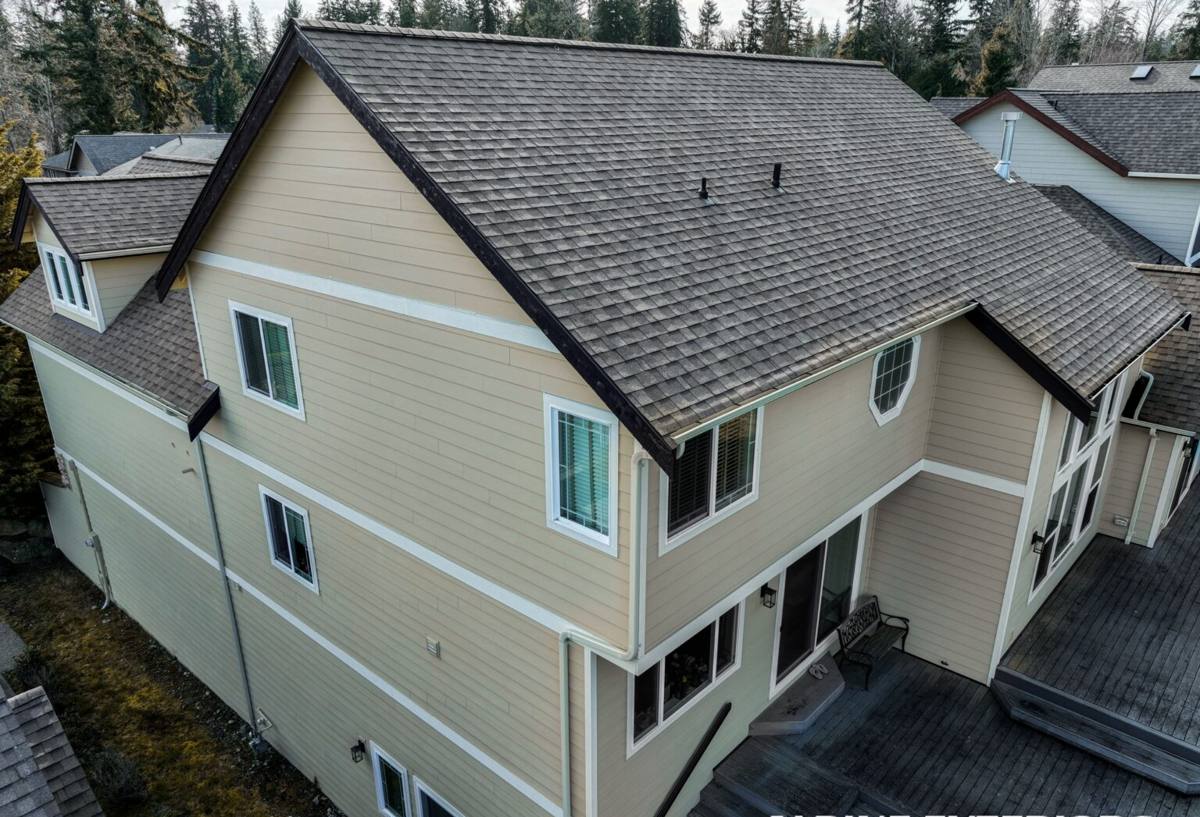
What Salt Air, Rain, and Moss Actually Do to a House
Salt air doesn't just look bad on outdoor metal — it accelerates corrosion on fasteners, flashing, and any exposed hardware behind or around your siding. When those components fail years before the siding itself does, water finds a way in behind the cladding, and that's when real damage starts: sheathing rot, mold, and framing repairs that cost far more than the siding job itself.
Driving rain off the water doesn't fall straight down — it hits siding at an angle, working its way behind laps, into unsealed joints, and around penetrations like hose bibs and light fixtures. Siding that isn't dimensionally stable, or that wasn't installed with the right gaps and flashing details, lets that moisture in over time.
Moss is the most visible symptom, but it's really a moisture indicator. Where moss and algae take hold and stay wet for extended periods, they hold moisture against the siding surface longer than open, sun-exposed walls. On a material that swells, absorbs water, or has a paint film that degrades, that constant damp cycle is where premature failure starts — peeling paint, soft spots, delamination at the edges.
Why This Rules Out Some Common Siding Choices
Vinyl siding doesn't rot, but it flexes with temperature swings, can crack in cold snaps, and has seams and J-channels that give wind-driven rain more entry points. Bare or primed wood siding needs a paint film to protect it, and repainting on a schedule that keeps up with this climate is a real, recurring cost most homeowners underestimate. Engineered wood products like LP SmartSide use a resin-treated wood strand core — it holds up reasonably well in dry climates, but any wood-based product depends entirely on an intact factory coating and correctly sealed edges to keep moisture out over the long run. In a marine climate with this much sustained dampness, that's a narrower margin for error than we're willing to install on someone's home.
Why We Install Only James Hardie Fiber Cement
James Hardie fiber cement is cement, sand, and cellulose fiber — it doesn't absorb water the way wood or wood-based products do, it won't rot, and it's non-combustible. It doesn't warp, crack from freeze-thaw cycling, or provide anything for moss and mildew to feed on the way organic siding materials can. That's a meaningful difference on a property exposed to Whatcom County's wet season for months at a stretch.
Built for This Exact Climate: HZ5 Engineering
James Hardie engineers its siding by climate zone, not as a one-size-fits-all product. The HZ5 line is formulated for the wetter, more moisture-intensive climates of the Pacific Northwest, with a moisture-resistant formulation suited to sustained damp exposure. Installing a climate-matched product from the start, rather than a general-purpose or region-mismatched board, is one of the more overlooked factors in how long a siding job actually lasts here.
ColorPlus Factory Finish
Most Hardie siding we install carries the ColorPlus finish — a color baked on at the factory under controlled conditions, rather than field-applied paint. It resists fading and chipping better than a job-site paint job, and it comes backed by its own finish warranty. In a climate where repainting every several years is the alternative, a factory finish designed to hold up outdoors long-term is a real cost consideration over the life of the siding, not just an aesthetic one.
What a Correct Fiber Cement Job Actually Involves
Fiber cement performs the way it's supposed to only when it's installed to spec. The material itself is durable, but a rushed or incorrect installation can undercut most of that durability. Here's what separates a correct job from a problem waiting to happen:
| Detail | Done Right | Common Shortcut |
|---|---|---|
| Clearance from grade/decks | Minimum gap maintained per manufacturer spec, siding kept clear of soil and hardscape contact | Siding installed tight to grade or pavement, wicking moisture upward |
| Butt joints and gaps | Properly gapped and sealed or flashed per Hardie instructions | Boards butted tight with no room for expansion, caulk relied on to do all the work |
| Flashing at windows/doors | Integrated house wrap and flashing so water sheds outward at every penetration | Siding butted to trim with sealant as the only barrier |
| Fasteners | Corrosion-resistant fasteners, correct type and placement per HZ5 spec | Standard fasteners that corrode faster in salt-air exposure |
| Starter strip and first course | Level starter strip set to manufacturer height for correct water shedding | First course set without a proper starter, throwing off the whole reveal line |
None of these details show up in a walk-by inspection right after installation. They show up three, five, or ten years later — as the difference between a wall that's still tight and one that's letting water behind the cladding.
Our Process for Custer Projects
- On-site assessment. We look at your home's specific exposure — which walls take the worst of the wind-driven rain, where moss and algae are already established, and where the existing siding or sheathing shows signs of moisture damage.
- Moisture and substrate check. Before any new siding goes up, we check what's underneath. Damaged sheathing gets addressed before it's covered over, not buried under new siding.
- Removal and prep. Old siding comes off, house wrap and flashing details get corrected or installed where missing, and penetrations are properly sealed.
- Installation to HZ5 spec. Hardie boards and panels go up with the clearances, fastening pattern, and flashing details this climate actually requires — not just the manufacturer's bare minimum.
- Final inspection and walkthrough. We check reveals, caulk lines, and trim details, and walk the finished job with you before we consider it done.
Comparing Your Options for a Custer Home
| Material | Moisture Behavior in This Climate | Maintenance Burden | Typical Lifespan Factors |
|---|---|---|---|
| James Hardie Fiber Cement (HZ5) | Does not absorb/rot; engineered for wet climates | Low — factory finish, occasional wash | Long service life when installed to spec |
| Vinyl | Doesn't rot but flexes, seams allow water entry | Low, but limited repair options if damaged | Shorter in high-wind/driving-rain exposure |
| LP SmartSide / engineered wood | Wood-strand core depends on intact coating and sealed edges | Moderate — edge sealing and coating upkeep matter | Shorter if moisture reaches the core |
| Cedar / primed wood | Absorbs moisture; needs an intact paint/stain film | High — regular repainting/staining required | Depends heavily on maintenance schedule |
Living With Fiber Cement in a Moss-Prone Climate
Even the right siding benefits from basic upkeep in this environment. A simple annual routine goes a long way:
- Rinse shaded, north-facing walls where moss and algae tend to establish, using a garden hose — avoid high-pressure washing that can force water behind laps or damage caulk lines.
- Trim back vegetation and tree branches that keep siding shaded and damp longer than necessary.
- Check caulk at trim, window, and door joints yearly, and re-caulk where it's cracked or pulled away.
- Keep gutters and downspouts clear so water isn't sheeting down the siding face during heavy rain.
- Watch for any soft spots, staining, or persistent moss buildup near grade level, which can point to a clearance or drainage issue worth addressing early.
Why Hiring a Crew That Already Works in Custer Matters
Siding specs on paper are the same everywhere. What changes house to house is exposure — which wall takes the brunt of the wind off the bay, where moss has already gotten a foothold, where a previous installer cut corners on flashing. A crew that already works this stretch of Whatcom County has seen those patterns repeat across homes with similar exposure, and knows where the extra attention actually needs to go rather than treating every wall the same. That local pattern recognition, paired with installation done to the manufacturer's climate-specific spec, is what keeps a fiber cement job performing the way it's supposed to for the long haul.
If you're weighing siding options for a Custer-area home, we're happy to take a look and talk through what your specific exposure calls for. Reach out for a free, no-pressure estimate — there's a form below to get started.