 Birch Bay Siding
 Building a Deck That Actually Holds Up in Ferndale
Ferndale sits close enough to the water and to the open weather patterns that move through Whatcom County that a deck built to a generic national spec rarely performs the way it should here. Between salt-tinged air drifting in off the bay, long stretches of driving rain through fall and winter, and a moss season that seems to start earlier every year, a deck in this area is under more constant low-grade stress than most homeowners realize. It's not usually one dramatic failure that ruins a deck out here — it's years of small compromises in material choice, fastener selection, and drainage that add up to soft boards, rusted hardware, and a structure that looks tired well before its time.
This page is about one thing: building or replacing a custom deck for a home in the Ferndale area, done in a way that respects what this specific climate does to wood, metal, and composite materials over time. It's not a general "why choose us" pitch — it's what we've learned building and repairing decks in this exact part of Whatcom County.
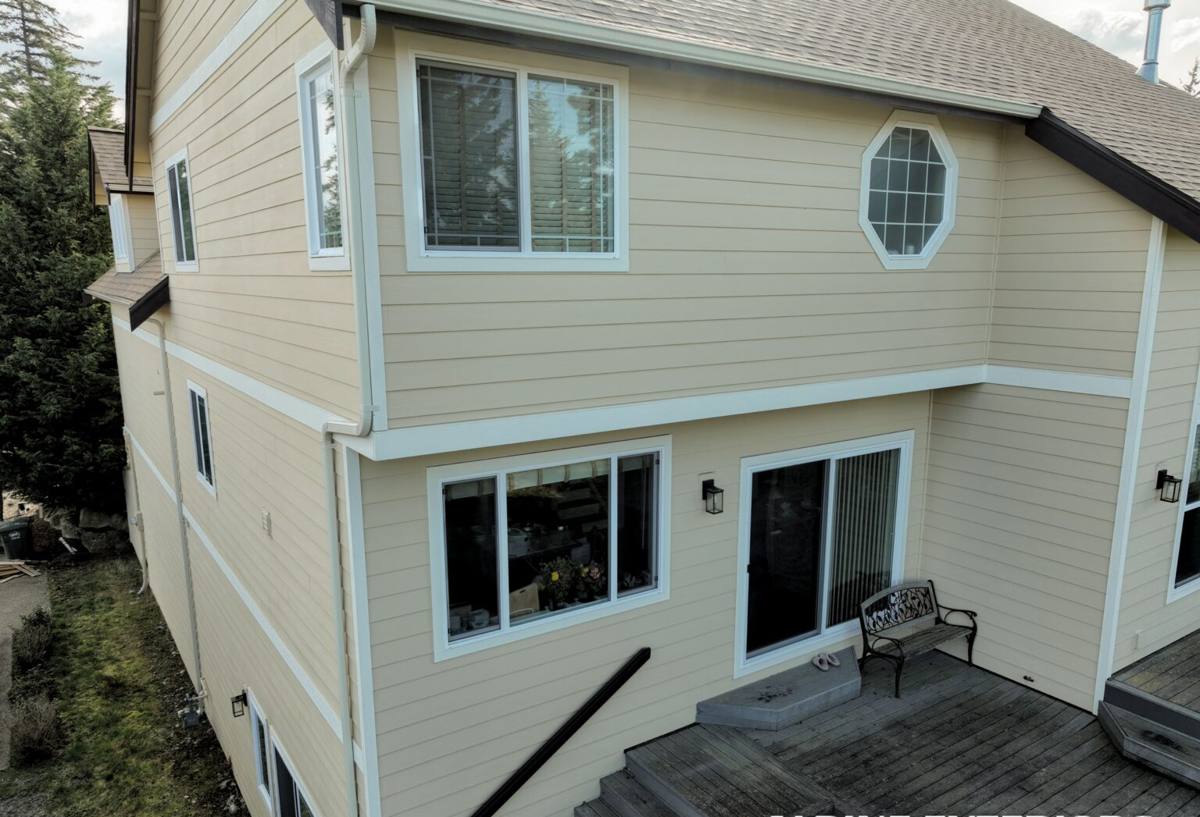
What This Climate Actually Does to a Deck
Three things drive almost every deck problem we see in the Ferndale and Birch Bay area, and they compound each other:
Salt Air
Even a few miles inland from the water, airborne salt accelerates corrosion on fasteners, brackets, and any exposed metal hardware. Standard zinc-coated screws and nails that would be fine in a drier inland climate can start showing rust streaks and weakening within a few seasons here. This matters most at structural connection points — the spots you don't see once the deck is finished, but that carry all the load.
Driving Rain
Whatcom County doesn't just get a lot of rain — a good share of it comes in sideways with wind, which pushes moisture into places a purely vertical rain wouldn't reach: under railings, behind fascia boards, into end grain at butt joints, and around post bases. Decking that isn't detailed to shed water actively, rather than just tolerate it, ends up holding moisture far longer than the label on the lumber suggests it should.
Moss and Prolonged Dampness
Moss doesn't just grow on roofs. On decks, it takes hold in shaded corners, between deck boards where debris collects, and on north-facing sections that never fully dry out between rain events. Beyond looking bad, moss holds moisture against the wood surface, which is exactly the condition that leads to rot and slippery, unsafe footing.
None of this means a deck can't last in Ferndale — it means the material choices, fastener grade, and construction details have to be selected with these three factors in mind from the start, not treated as an afterthought.
Choosing Decking Material for a Ferndale Property
There's no single "best" decking material for every home — it depends on budget, how much upkeep the homeowner wants to do, and how exposed the site is to wind and salt air. Here's how the common options actually compare under local conditions:
| Material | How It Handles This Climate | Maintenance | General Cost Range |
|---|---|---|---|
| Pressure-treated wood | Affordable and strong, but end grain and fastener holes need extra sealing to resist moisture intrusion | Annual cleaning, periodic staining/sealing | Lower |
| Cedar | Naturally rot- and insect-resistant, ages well if sealed, but softer surface can hold moss if not cleaned | Regular cleaning, re-sealing every few years | Mid-range |
| Composite decking | Doesn't absorb moisture like wood, resists rot, but surface can still grow moss/algae in shaded, damp spots | Periodic washing, no staining needed | Mid to higher |
| PVC / capped composite | Fully moisture-resistant board, strongest option for consistently damp or shaded areas | Occasional washing only | Higher |
Cost ranges vary by project size, framing complexity, railing style, and site access — a straightforward ground-level deck and a raised deck with stairs and custom railing aren't priced the same way. We walk through actual numbers for your specific project during the estimate rather than guessing at a per-square-foot figure that doesn't hold up once site conditions are factored in.
What We Won't Do
We don't install decking products or fastening systems that we've seen struggle under sustained coastal moisture exposure, even if they're cheaper up front or common elsewhere. That's a standard we hold ourselves to based on what actually performs in this climate over years, not a claim about any specific brand failing — it's simply that some products are better suited to drier or more sheltered regions than to a Ferndale-area lot exposed to bay winds and long wet seasons.
Where Decks in This Area Actually Fail
Most deck problems we're called out to inspect aren't visible from the top. The failure points are almost always in the substructure:
The Ledger Board Connection
Where the deck attaches to the house is the single most important — and most commonly under-flashed — connection on the whole structure. Without proper flashing that directs water away from the house rim joist, this area traps moisture against the framing and can lead to rot that's hidden until it's already serious.
Joist Tops and Cut Ends
Every cut end of a piece of framing lumber exposes raw wood fibers that soak up water fast. Joist tops under the decking, and any field cuts made on site, need to be sealed — not just the factory-treated faces of the board.
Post Bases and Footings
Posts sitting directly on or too close to grade, or set in footings without proper drainage, sit in standing water after heavy rain events far more than most homeowners expect. That constant wet-dry cycling at the base of a support post is where structural rot tends to start.
Fastener Selection
This is where salt air does its damage. Using the wrong grade of screw or a bracket that isn't rated for coastal or treated-lumber exposure means the hardware corrodes faster than the wood around it, and a corroded fastener loses holding strength long before it looks obviously bad.
Drainage and Grading Around the Deck
A deck doesn't exist in isolation from the ground around it. If the grading under and around a deck doesn't move water away from posts and footings, the deck is fighting standing water every wet season regardless of how good the decking material is. Part of a correct install is checking how water actually moves across the site — not just building to the framing plan and assuming the ground will handle the rest.
For raised decks, we also look at under-deck ventilation. A low-clearance deck with poor airflow underneath stays damp longer after rain, which is exactly the environment moss and rot need. Sometimes the right fix is a few extra inches of clearance or a strategically placed vent gap, not a different decking material.
Our Process for a Ferndale Deck Project
- On-site assessment — we look at sun exposure, prevailing wind direction, drainage patterns, and how close the site is to open water or exposed coastal air, since that changes hardware and material recommendations.
- Design and material selection — sized to your budget and how much maintenance you actually want to do, not a one-size answer.
- Permitting — we handle the permit process where required so the structure is inspected and built to code, which also protects resale value.
- Framing built for moisture — proper ledger flashing, sealed cut ends, corrosion-resistant fasteners rated for the exposure level of your site, and footings set with drainage in mind.
- Decking and railing install — installed with the gaps, fastening pattern, and edge details that let the deck shed water instead of holding it.
- Final walkthrough — we go over basic care specific to the material you chose, so you know what upkeep actually matters and what doesn't.
Maintenance a Ferndale Deck Actually Needs
Even a well-built deck needs some seasonal attention in this climate. This isn't a heavy list, but skipping it is how moss and moisture problems get a foothold:
- Sweep debris out of board gaps regularly — trapped leaves and needles hold moisture against the wood
- Rinse or wash the surface at least once or twice a year to knock back early moss and algae growth before it establishes
- Check railing posts and stair connections annually for any looseness, which can signal fastener corrosion
- Re-seal or re-stain wood decking on the schedule appropriate to the product — don't wait until it visibly grays and cracks
- Keep gutters and downspouts near the deck clear so roof runoff isn't dumping extra water onto or under the structure
- Trim back overhanging vegetation that keeps sections of the deck shaded and slow to dry
Why It Matters That We Already Work in Ferndale
A crew that mostly builds decks in drier inland regions and occasionally takes a job out here doesn't always have a feel for how differently this coastal edge of Whatcom County behaves. Wind exposure on a Ferndale lot near the bay can be noticeably different from a sheltered inland yard just a few miles away, and that affects everything from fastener spec to how much clearance you want under the decking. Working regularly in Birch Bay and Ferndale means we're not guessing at how a material or detail will hold up — we're building to what we've actually seen perform, and fixing what we've seen fail, in this specific stretch of coastline.
If you're planning a new custom deck or replacing one that's showing its age, we're happy to come take a look and talk through options honestly — no pressure, no upsell on materials your site doesn't need. Reach out using the form below for a free estimate.