 Birch Bay Siding
 Siding Replacement in Custer: A Different Set of Problems Than Inland Homes
Custer sits close enough to the water that homes here deal with a version of weather most siding products were never really engineered for. You've got salt-laden air rolling off the bay, long stretches of driving rain through fall and winter, and a moss season that can run most of the year in shaded, north-facing spots. None of that is unusual for anyone who's lived in this part of Whatcom County for a while — but it matters enormously when you're deciding what to put on the outside of your house and how it gets installed. Siding replacement here isn't just a cosmetic project. It's a decision about how well your home is going to hold up against moisture, salt corrosion, and organic growth for the next several decades.
This page is specifically about siding replacement for homes in and around Custer — not siding in general. The climate factors below, the failure points we see, and the installation details that matter are all shaped by this specific location.
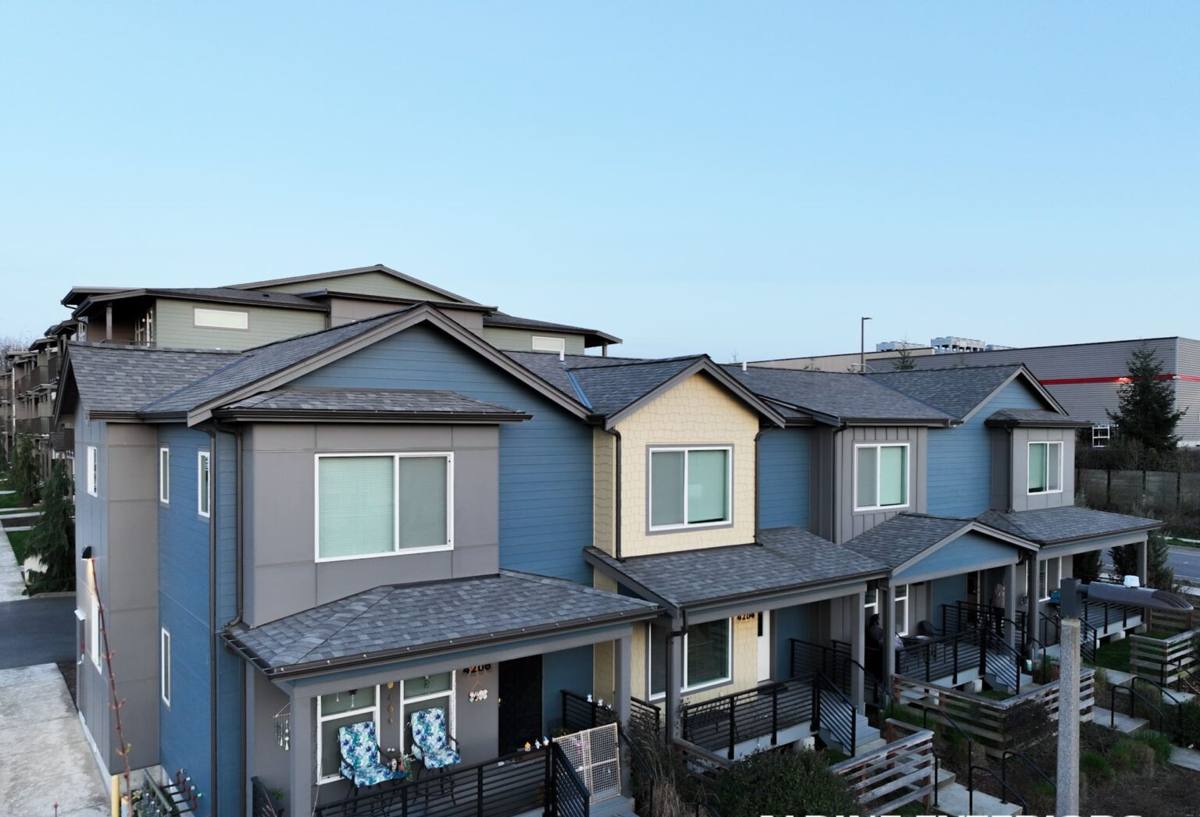
What Salt Air, Rain, and Moss Actually Do to Siding
Salt Air
Homes closer to Birch Bay and the surrounding shoreline take on airborne salt that settles on exterior surfaces and works into fasteners, trim edges, and any exposed seams. Over time, salt exposure accelerates corrosion in metal components — nails, flashing, screws — and can degrade certain coatings faster than a home fifteen or twenty miles inland would experience. It's a slow process, but it's constant, and it's one of the reasons material choice and fastener choice both matter more here than in a lot of other places.
Driving Rain
Whatcom County doesn't just get rain — it gets wind-driven rain that hits siding at an angle instead of falling straight down. That matters because it pushes water into laps, seams, and butt joints that a vertical rain would never reach. Siding and the water-resistive barrier behind it have to be installed with that reality in mind, not just to shed water that falls straight down.
Moss and Organic Growth
Shaded exposures, tree cover, and consistently damp conditions give moss, algae, and mildew a long growing season on exterior surfaces. Porous or absorbent siding materials give organic growth something to hold onto and stay damp against, which speeds up both staining and material breakdown. Siding that resists moisture absorption at the surface has a real advantage here.
Signs a Custer Home Actually Needs Siding Replacement
Not every issue means a full replacement — but in this climate, the following signs usually mean the siding has been letting moisture in longer than the surface appearance suggests:
- Soft or spongy spots when you press on siding, especially near the bottom courses and around window trim
- Persistent dark staining or moss growth that comes back within weeks of cleaning
- Visible cupping, warping, or separation at seams and butt joints
- Paint that's failing faster than expected, especially peeling in sheets rather than fading evenly
- A musty smell near exterior walls or noticeably higher humidity in adjacent interior rooms
- Siding that was never properly flashed at windows, doors, or trim intersections — often invisible until you pull a section
Any one of these can point to a small repair, but more than one usually means moisture has been working behind the siding for a while, and a proper replacement — not a patch — is the honest recommendation.
Why We Only Install James Hardie Fiber Cement
We don't install vinyl, LP SmartSide, primed cedar, or unbranded fiber cement alternatives like Cemplank or Allura. That's a deliberate standard, not a sales pitch, and it's worth explaining why — especially for a climate like Custer's.
Vinyl siding is affordable and low-maintenance in mild climates, but it's a petroleum-based product that expands and contracts with temperature swings, can crack in cold snaps, and isn't fire-resistant. Engineered wood products like LP SmartSide use wood strand cores that, however well-treated, remain more vulnerable to sustained moisture exposure than a cement-based material — a real concern given how much wind-driven rain this area sees. Primed cedar looks great initially but demands an aggressive, ongoing maintenance schedule (repainting, sealing, moss treatment) that most homeowners underestimate until they're a few years in. Off-brand fiber cement products can be reasonable materials, but they don't carry the same factory-finish system, engineered climate variants, or long-term manufacturer track record that we've chosen to stand behind.
James Hardie fiber cement is non-combustible, doesn't absorb moisture the way wood-based products do, and comes with a factory-applied ColorPlus finish that resists fading and doesn't require repainting on the same cycle as field-painted wood. Hardie also makes an HZ5 product line engineered specifically for cooler, wetter climates like ours — that climate-specific engineering is a meaningful factor when the local conditions include salt air and near-constant rain exposure for months at a time. It's not that other products can't perform anywhere — it's that for the specific conditions Custer homes face, we think Hardie is the more defensible long-term choice, and we'd rather install one product well than several products with compromises we'd have to explain away later.
What a Correct Siding Replacement Actually Involves
The material is only part of the equation. A huge percentage of siding failures we see in this area trace back to installation shortcuts, not the product itself. A correct job includes:
Full Tear-Off and Substrate Inspection
Old siding comes off completely so the sheathing underneath can be inspected for rot, delamination, or existing moisture damage. Skipping this step means covering up a problem instead of fixing it.
Water-Resistive Barrier
A properly lapped and sealed weather barrier goes on before any siding, installed to shed wind-driven rain downward and outward rather than trapping it against the sheathing.
Flashing at Every Penetration
Windows, doors, hose bibs, light fixtures, and any other penetration need proper flashing integrated with the water-resistive barrier — this is one of the most commonly skipped steps in lower-quality installs, and it's exactly where wind-driven rain finds its way in.
Correct Fastening and Clearances
Hardie siding has specific fastener spacing, penetration depth, and clearance requirements from grade, decks, and roof lines. Getting these wrong voids warranty coverage and creates entry points for moisture — a serious issue given how much rain this area sees annually.
Proper Caulking and Joint Treatment
Seams and joints are treated according to manufacturer specification, not just caulked over generically. Improper joint treatment is a common cause of premature failure at butt joints.
Our Process, Start to Finish
| Step | What Happens |
|---|---|
| Estimate & Inspection | We walk the exterior, check for existing moisture damage, and assess trim, flashing, and substrate condition — not just the visible siding. |
| Scope & Material Selection | We confirm the Hardie product line, profile, and color, and explain exactly what the install will involve for your home's exposures. |
| Tear-Off | Old siding is removed and the sheathing is inspected before anything new goes on. |
| Repair & Prep | Any damaged sheathing or framing is addressed before the weather barrier goes back on. |
| Barrier & Flashing | Weather-resistive barrier and flashing are installed at every penetration and transition. |
| Siding Installation | Hardie siding is installed to manufacturer fastening, spacing, and clearance specifications. |
| Final Walkthrough | We review the completed work with you and confirm trim, caulking, and finish details before calling it done. |
What Drives the Cost of a Siding Replacement
| Factor | Why It Matters |
|---|---|
| Home size & wall complexity | More corners, dormers, and trim details mean more labor and material cuts. |
| Substrate condition | Rot or moisture damage found during tear-off adds repair scope before new siding can go on. |
| Siding profile & color | Lap width, shingle-style profiles, and certain ColorPlus finishes vary in material cost. |
| Trim & accessory scope | Full trim replacement alongside siding costs more than siding alone but avoids mismatched old-and-new transitions. |
| Site access | Steep grades, tight lot lines, or limited staging area can affect labor time. |
We don't quote a number without seeing the house — anyone who does is guessing. What we can tell you honestly is that the factors above are the real drivers, not marketing add-ons.
Why a Crew That Already Works Custer Matters
There's a practical advantage to hiring a crew that's already familiar with this specific stretch of Whatcom County rather than one that treats every job as a first encounter with the local conditions. Knowing how salt exposure behaves closer to the water, how long moss season actually runs on shaded exposures, and where wind-driven rain tends to concentrate on a given roofline isn't something you pick up from a manual — it comes from doing the work here repeatedly. That familiarity shows up in small decisions during installation: where extra flashing attention goes, which exposures get prioritized, and what fastening approach holds up best against the conditions this area actually produces.
Before You Hire: A Practical Checklist
- Ask specifically what siding material and product line they're proposing, and why
- Ask how they handle flashing at windows, doors, and penetrations — get a real answer, not a generality
- Confirm whether tear-off includes a substrate inspection or just a cover-over
- Ask about fastener type and spacing relative to manufacturer specification
- Confirm what's covered under warranty and whether it's manufacturer-backed, transferable, or contractor-only
- Get a written scope that separates siding, trim, and any repair work identified during tear-off
Caring for Your Siding After Installation
Hardie siding is low-maintenance compared to wood or vinyl, but "low-maintenance" doesn't mean "no maintenance" in a climate like this one. A periodic gentle rinse to keep moss and salt residue from building up, prompt attention to any caulking that separates over time, and keeping vegetation trimmed back from shaded exposures will go a long way toward getting the full lifespan out of the material and finish.
If you're noticing signs of wear on your Custer home's siding, or you're planning ahead before a small problem becomes a bigger one, we're happy to take a look and give you a straightforward assessment. Reach out for a free, no-pressure estimate using the form below.