 Birch Bay Siding
 Windows Take a Different Kind of Beating in Cottonwood Beach
Cottonwood Beach sits close enough to the water that its homes deal with a combination most inland Whatcom County houses never see: salt-laden air, wind-driven rain coming almost sideways off the Strait, and long stretches of gray, damp weather that keep wood and vinyl surfaces wet for days at a time. Add in a moss season that can run from fall through spring, and you've got an environment that is genuinely harder on window frames, seals, and sills than a typical Pacific Northwest suburb.
None of that means window replacement here is exotic or requires anything unusual. It means the details matter more, and the margin for a sloppy install is smaller. A window that's "close enough" in a dry inland climate can start showing problems within a year or two out here. We've replaced enough failed installs in this neighborhood to know exactly where corners tend to get cut, and we build our process around not repeating those mistakes.
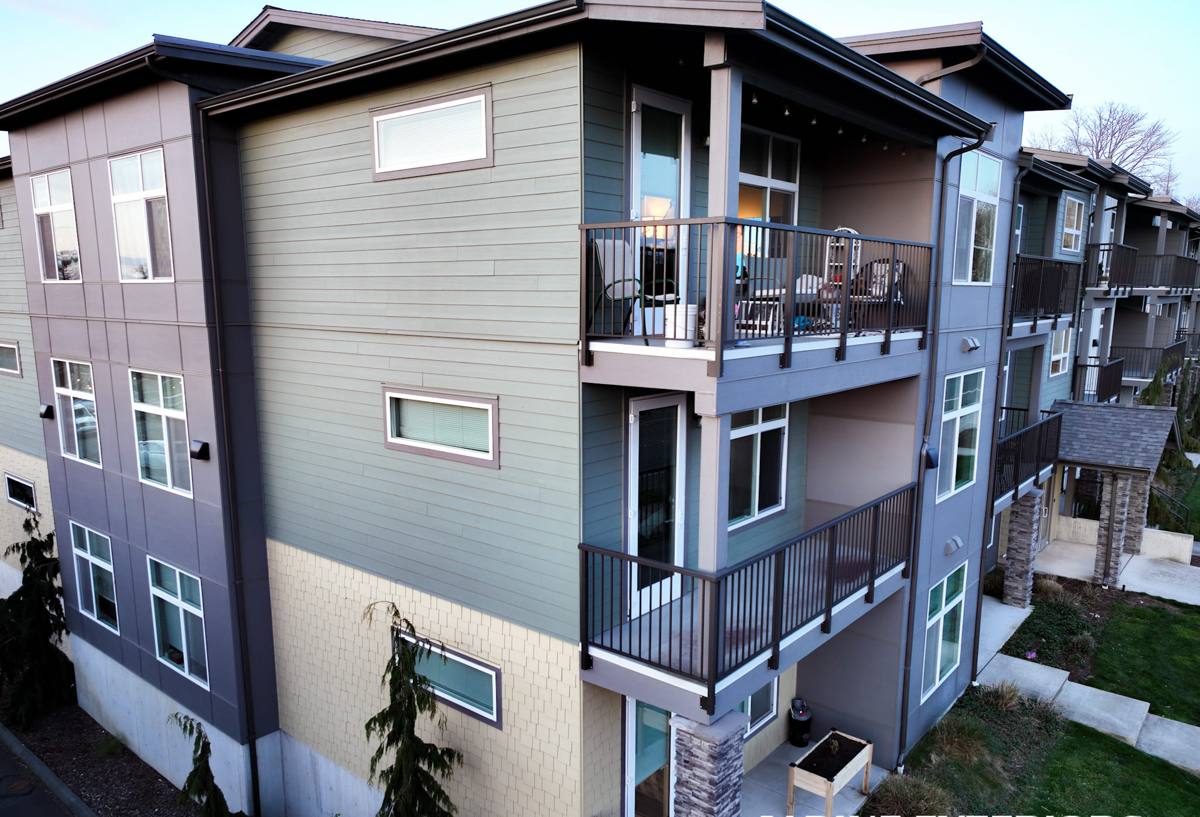
How Salt Air, Rain, and Moss Actually Damage Windows
Salt Air
Airborne salt is corrosive to a lot of the hardware inside a window assembly — screws, hinges, balance mechanisms, and some lower-grade aluminum components. It also accelerates the breakdown of certain sealants and finishes faster than manufacturers' standard warranties assume, because those ratings are usually based on general climate testing, not a shoreline environment like Birch Bay's.
Driving Rain
Wind-driven rain doesn't just sit against a window — it gets pushed and forced into any gap that a normal rainstorm would never find. This is why flashing detail and sealant work around a window opening matter so much more here than in a sheltered inland lot. A perfectly good window can still leak if the water management around it wasn't built for wind-driven conditions.
Moss and Sustained Moisture
Long moss seasons mean long stretches where nearby siding, trim, and sills stay damp. Moisture that lingers around a window opening — rather than shedding off quickly — gives wood rot and mold a foothold, especially at the bottom corners of older wood-frame windows where caulking has started to crack.
Signs Your Windows Are Losing the Fight
Most Cottonwood Beach homeowners don't wake up one day and decide to replace windows — they notice small things that get worse over a season or two. Worth paying attention to:
- Fogging or a permanent haze between double-pane glass (a sign the seal has failed and the insulating gas has escaped)
- Windows that feel drafty even when fully latched, especially during a west or southwest wind
- Soft or discolored wood at the sill or lower frame corners
- Difficulty opening, closing, or locking that wasn't there a year or two ago
- Visible water staining on interior trim or drywall below a window after a storm
- Chalky white residue or pitting on aluminum frames (salt corrosion)
- Condensation forming on the inside of the glass regularly, even in mild weather
Any one of these can be a minor fix. Several together, especially on a home that's had its original windows for 15-20+ years, usually means replacement is the more honest recommendation than another round of patching.
What a Correct Window Replacement Actually Involves
The window unit itself is only part of the job. In a climate like this, the installation detail is where most long-term performance is won or lost.
Removing the Old Window Without Hiding Problems
We pull the old unit fully rather than doing a quick "insert" swap wherever the surrounding framing allows it. That lets us actually see the condition of the rough opening — the wood framing, sheathing, and any existing flashing — instead of installing a new window over a hidden moisture problem.
Fixing What's Underneath
If we find soft framing, old failed flashing, or signs of past water intrusion, that gets addressed before the new window goes in. Installing a new window over compromised framing just delays the same failure by a few years.
Flashing and Water Management
This is the step that matters most for a wind-driven-rain environment. Proper flashing tape and a correctly lapped weather-resistive barrier direct any water that gets past the window back out, rather than letting it collect behind the trim. This is the single most common shortcut we see in older or budget installs in this area, and it's usually the root cause when a "good" window still leaks.
Sealing and Insulation
Low-expansion foam or backer rod and sealant around the frame perimeter — never just caulk on the exterior face alone — closes the air gaps that cause both drafts and condensation issues.
Final Weatherproofing
Exterior trim, sealant beads, and any siding tie-in get finished so water sheds away from the window rather than pooling against it — important given how much of the year this area spends under damp or mossy conditions.
Choosing the Right Window for a Marine Climate
Frame material matters more here than in a dry inland climate. There's no single "best" option for every home — it depends on your budget, your home's style, and how much upkeep you want to take on.
| Frame Material | Salt Air / Moisture Behavior | Maintenance | Typical Fit |
|---|---|---|---|
| Vinyl | Doesn't corrode or rot; performs well near the water | Low — occasional cleaning | Most common choice for coastal replacement due to cost and durability balance |
| Fiberglass | Very stable in temperature swings and moisture; resists warping | Low | Higher upfront cost, strong long-term option for exposed elevations |
| Aluminum | Can corrode or pit over time in salt air unless properly coated | Moderate — watch for pitting near the coast | Better suited to sheltered elevations or where a slim sightline is wanted |
| Wood (clad or unclad) | Most vulnerable to sustained moisture and rot if not maintained | High — regular painting/sealing needed | Best for homeowners committed to upkeep, or fully clad exteriors |
For most Cottonwood Beach homes, we steer people toward vinyl or fiberglass on exposed, weather-facing walls simply because they hold up with the least ongoing maintenance. That's not a knock on wood or aluminum windows — it's a matter of matching the material to how much upkeep you actually want to sign up for in a marine climate.
Our Process, Start to Finish
- Walkthrough and assessment. We look at each window individually — condition, exposure to weather, and how it's performing — rather than quoting a blanket number for the whole house.
- Honest recommendation. Some windows genuinely just need resealing or hardware repair. We'll tell you that instead of selling a full replacement you don't need.
- Written estimate. Clear on window count, materials, and scope of the flashing and sealing work — not just "windows installed."
- Scheduling around weather. Window openings are exposed during install, so we plan around forecasted rain where possible to protect your home's interior.
- Installation. Old unit removed, framing inspected and repaired if needed, new window set, flashed, insulated, and sealed.
- Final walkthrough. We check operation, look for gaps, and confirm the exterior finish work is clean before we consider the job done.
What Drives the Cost of a Window Replacement Here
Every home is different, but the same handful of factors move the price up or down on most Cottonwood Beach jobs:
| Factor | Why It Matters |
|---|---|
| Number and size of windows | Straightforward — more glass and larger openings mean more material and labor |
| Frame material chosen | Vinyl is generally the most budget-friendly; fiberglass and wood cost more upfront |
| Condition of existing framing | Rot or moisture damage found during removal adds repair work before the new window can go in |
| Exposure and access | Second-story or heavily wind-exposed windows can take more time to flash and seal properly |
| Glass package | Upgraded low-E coatings or gas fills add cost but can help with both energy performance and condensation |
We'd rather walk your home and give you real numbers than throw out a per-window average that doesn't reflect what your specific windows need.
A Quick Checklist Before You Hire Anyone
- Ask whether they remove the full old window or do an "insert" install — and why
- Ask specifically how they handle flashing and water management, not just caulking
- Ask what happens if they find rot or moisture damage once the old window is out
- Get the warranty terms in writing — both the manufacturer's and the installer's labor warranty
- Ask how many jobs they've done in your specific neighborhood or similar coastal conditions
- Make sure the estimate breaks out materials and labor, not just a lump sum
Why a Crew That Already Works Cottonwood Beach Matters
A contractor who works this stretch of Birch Bay regularly already knows which elevations tend to take the worst of the wind-driven rain, how long moss season typically runs here, and where salt exposure causes the most wear on hardware and finishes. That's not something you can fully replicate with a general regional crew that's installed windows all over Whatcom County but hasn't spent much time on homes sitting this close to the water.
It also means we're not guessing at flashing details or material choices — we've seen what holds up on homes with this exact exposure and what fails early. That local pattern recognition is part of what you're paying for when you hire a crew that knows the neighborhood, not just the trade.
Ready for an Honest Look at Your Windows
If your windows are drafty, fogging, or just past their prime, we're happy to take a look and give you a straightforward assessment — no pressure, no upsell on windows that don't need replacing. Fill out the form below for a free estimate, and we'll walk your home with the same eye for detail we'd want if it were our own.