 Birch Bay Siding
 Cottonwood Beach Windows Work Harder Than Most
If you live in Cottonwood Beach, you already know your windows earn their keep. Sitting this close to the water in Whatcom County means salt-laden air, wind-driven rain that finds every gap, and a long, damp moss season that keeps humidity high for months at a time. Windows here don't fail because they're old — they fail because coastal exposure accelerates every weak point in a window assembly: seals, frames, hardware, and flashing all take more abuse than they would a few miles inland.
Energy-efficient windows are usually sold on the promise of lower heating bills, and that's real. But in a place like Birch Bay, the bigger story is often durability. A window that's genuinely built and installed for this climate keeps conditioned air in and keeps salt air, moisture, and wind pressure out. A window that isn't will show it within a few winters — fogged glass, drafts, sticky sashes, and trim that stays damp long after the rain stops.
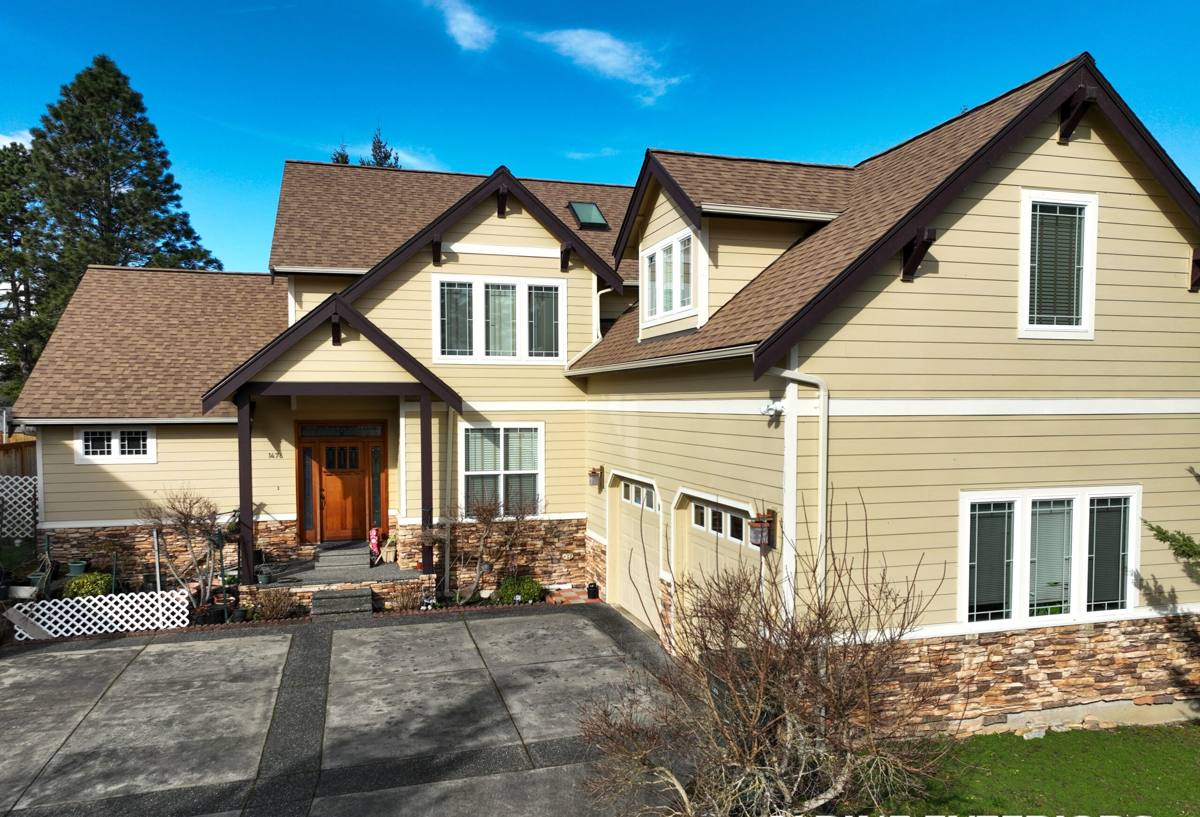
What "Energy-Efficient" Actually Means Near the Water
Energy efficiency isn't one feature — it's a combination of glass, frame, and installation working together. For a coastal Whatcom County home, a few of these matter more than they would inland.
Low-E Glass and Gas Fills
Low-emissivity (Low-E) coatings reflect heat back into the room in winter and block solar heat gain in summer, without noticeably changing how clear the glass looks. Pairing that with an argon or krypton gas fill between panes slows heat transfer further. In a marine climate with mild but persistent cold and damp, this combination does more to stabilize indoor comfort than any single upgrade.
Frame Material and Salt Exposure
Frame choice matters more here than in a dry inland climate. Salt air corrodes exposed metal hardware and fasteners faster, and it can accelerate the breakdown of some sealants and finishes. We factor salt exposure into frame and hardware recommendations for any home within a mile or two of the water, Cottonwood Beach included.
Weatherstripping and Seals
A high-efficiency window with a poor seal is not an efficient window. Compression seals and weatherstripping take the brunt of driving rain and wind pressure off the water, and they're the first thing to degrade if the installation wasn't sealed and flashed correctly to begin with.
Common Window Problems We See in Cottonwood Beach Homes
- Fogged or cloudy glass — a sign the seal between panes has failed and the gas fill has escaped
- Persistent condensation on interior glass, often tied to poor seals combined with the area's high ambient humidity
- Sticking sashes or hardware that's stiffened or corroded from salt air exposure
- Visible moss or green growth building up in window sills, tracks, and exterior trim
- Soft or discolored trim around the window opening, usually a sign water has been getting behind the frame
- Noticeable drafts during wind events, especially on walls that face the water
None of these are unusual for a coastal Washington home — they're just the predictable result of long-term exposure. The question isn't whether a window will show wear near the water, it's whether it was built and installed to slow that wear down as much as possible.
Frame Material Comparison for Coastal Exposure
| Frame Type | Salt Air Behavior | Maintenance | Typical Fit for Cottonwood Beach |
|---|---|---|---|
| Vinyl | Does not corrode; UV and salt-resistant finishes hold up well | Low — occasional cleaning | Strong all-around choice for most homes |
| Fiberglass | Very stable in temperature swings and salt exposure; holds paint well | Low to moderate | Good where a painted or wood-look finish is wanted |
| Aluminum-clad wood | Cladding protects wood but exposed metal trim can corrode faster near salt air | Moderate — seams and cladding need periodic inspection | Workable if detailing and drainage are done right |
| Bare wood | Most vulnerable to moisture and rot without diligent upkeep | High | Requires the most maintenance commitment this close to the water |
We don't rule out any material outright — it's about matching the frame, finish, and installation detail to how exposed a given wall of the house actually is. A window facing prevailing wind and rain off the water needs more careful attention than one tucked on a sheltered side.
What a Correct Installation Actually Involves
The window unit itself is only part of the equation. Most window failures we're called out to fix trace back to installation, not the product. A correct job includes:
Removal and Opening Inspection
Once the old window is out, the rough opening gets inspected for hidden water damage, soft framing, or failed flashing from the original install. This is the point where problems that have been building for years actually get found and fixed, rather than sealed back up behind a new window.
Flashing and Drainage
Proper flashing directs any water that gets past the exterior trim back out, rather than letting it pool against the frame. This step matters everywhere, but it's non-negotiable on a coastal wall that takes direct wind-driven rain.
Sealing and Insulation
The gap between the window frame and the rough opening needs to be insulated and air-sealed correctly — not overpacked, not left with gaps. Done wrong, this is a common source of drafts and moisture problems even with a top-tier window.
Exterior Finish Work
Trim, caulking, and any siding tie-in need to shed water rather than trap it. In a moss-prone climate, we also think about how the finished opening will drain and dry so moss and organic growth don't get a foothold right at the window edge.
Our Process for Cottonwood Beach Homes
- On-site assessment — we look at existing windows, framing condition, and how exposed each elevation of the home is to wind and rain off the water.
- Recommendation — we walk through frame material, glass package, and any repair work the opening needs, in plain terms and with honest trade-offs.
- Scheduling around the weather — coastal weather windows can be tight, so we plan installs to minimize how long any opening is exposed.
- Installation — removal, opening inspection and repair as needed, flashing, setting the window, insulating, and sealing.
- Finish and walkthrough — exterior trim and caulking completed, and we walk the homeowner through operation and care before we call it done.
What Correct Energy-Efficient Windows Cost To Consider
| Cost Factor | Why It Matters Here |
|---|---|
| Frame material | Corrosion resistance and finish durability near salt air affect long-term value more than upfront price alone |
| Glass package | Low-E coatings and gas fills add cost but do the most work in a marine climate with mild but persistent cold |
| Opening condition | Hidden rot or old flashing failures found during removal can add repair scope — better found now than papered over |
| Number and size of openings | Larger or harder-to-access windows, including upper stories facing the water, take more labor |
| Trim and exterior finish | Matching existing siding and trim, and detailing for drainage, adds time but protects the install long-term |
We give straightforward, itemized estimates rather than one flat number, so homeowners can see exactly where the cost is going and where there's room to adjust scope.
Checklist: Questions Worth Asking Before You Hire
- Will the crew inspect the rough opening for hidden water damage before installing, not just after removal?
- What flashing and drainage details will be used, specifically for a wall exposed to wind-driven rain?
- Does the frame and hardware recommendation account for salt air exposure at this specific home?
- What's included in the warranty — glass seal failure, frame defects, and labor — and for how long?
- How will the crew protect siding, landscaping, and interior finishes during the work?
- Is there a plan for weather delays, given how quickly coastal conditions can change?
Why Local Cottonwood Beach Experience Matters
Window installation isn't identical everywhere. A crew that mostly works drier inland neighborhoods can still do competent work, but they aren't necessarily thinking about salt air corrosion on hardware, the drainage detailing that matters most during driving rain, or how quickly moss establishes itself on damp trim during a long Whatcom County winter. Those are the details that separate a window that looks fine at handoff from one that's still performing well five or ten winters later.
Working regularly in Birch Bay and neighborhoods like Cottonwood Beach means we're not guessing at how the local climate treats a window installation — we're seeing the results, good and bad, on an ongoing basis, and building that into how we spec and install every job.
If your windows are drafty, fogged, sticking, or just due for an upgrade, we're happy to take a look and talk through honest options for your home. Reach out for a free, no-pressure estimate using the form below.