 Birch Bay Siding
 Cherry Point sits along Birch Bay's stretch of the Whatcom County shoreline, where roofs take a different kind of beating than homes further inland. Wind off the water, salt-laden air, and rain that comes in sideways rather than straight down all add up over time. When a storm rolls through and leaves shingles curled, flashing bent, or a soft spot on the ceiling, the fix needs to account for that exposure — not just patch what's visible and hope for the best.
Why Storms Hit Cherry Point Roofs Harder
Homes along this part of the Birch Bay coastline face a combination most inland Whatcom County properties don't deal with as often. Wind gusts off the water carry rain at an angle, driving moisture up under shingle tabs and into flashing laps that would stay dry in a straight-down rain. That same air carries salt, which speeds up corrosion on exposed nail heads, metal flashing, and gutter hardware — a slow process that weakens a roof's defenses well before any single storm does visible damage.
Layer on the region's long moss season. Shade, moisture, and mild temperatures let moss and algae get a foothold on north-facing slopes and anywhere debris collects, and that growth holds water against the roofing material year-round. A roof that's already carrying moss or organic buildup is more vulnerable when a storm hits — wind can lift shingles that moss has already loosened, and trapped moisture makes any new leak point worse, faster.
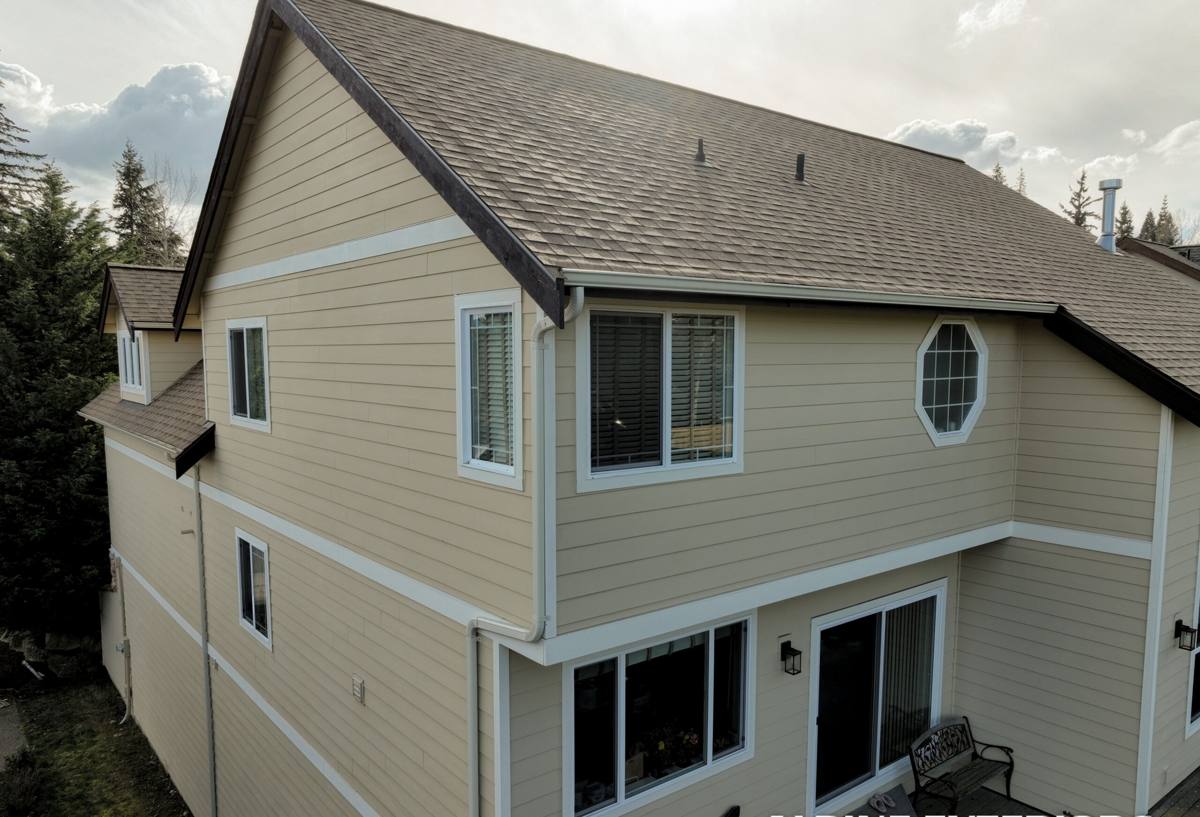
Recognizing Storm Damage Before It Becomes a Bigger Problem
Storm damage isn't always a missing shingle you can spot from the driveway. Some of the most costly damage starts small and stays hidden until it's caused real trouble underneath.
What to Check From the Ground or a Ladder
- Shingles that are cracked, curled, creased, or missing entirely, especially on the side of the roof that faces prevailing wind
- Bare or shiny patches where wind has stripped protective granules off asphalt shingles
- Bent, lifted, or separated flashing around chimneys, vents, skylights, and roof-to-wall joints
- Gutters pulling away from the fascia, or full of shingle granules and debris after a storm
- Dents in metal roofing, vents, or gutter runs from wind-blown debris or hail
- Visible sagging anywhere along the roofline, which can point to deck damage underneath
What to Check Inside the Home
A ceiling stain, a musty smell in the attic, or a small drip during the next rain are often the first real evidence that a storm compromised the roof, even when the exterior looked fine right after the wind died down. Attic checks after any significant storm are worth doing — daylight coming through the decking, damp insulation, or water staining on rafters all mean the roof surface let something through.
What a Correct Storm Damage Repair Actually Involves
A storm repair done right isn't just swapping out the shingles you can see are missing. It's a sequence that protects the home immediately and then addresses the actual cause of the damage, not just the symptom.
- Stop further water intrusion. If a storm has left an active leak or exposed decking, that gets covered or tarped first, before anything else.
- Inspect beyond the obvious damage. Wind and rain damage often extends past the spot with the missing shingle — neighboring courses, fasteners, and flashing get checked too.
- Assess the deck. Any roof deck that's been wet for a while needs to be checked for soft spots or rot before new material goes down over it.
- Replace and reseal flashing. Flashing around chimneys, vents, and valleys is a common failure point in wind-driven rain and should be re-secured or replaced, not just caulked over.
- Match and install roofing material. Shingles or panels get replaced with product that matches the existing roof as closely as possible, properly nailed and sealed for the wind exposure this stretch of coastline sees.
- Clear and clean. Debris, old granules, and damaged material get removed from the roof and gutters so water can move off the roof the way it's supposed to.
Repair Options: Matching the Fix to the Damage
Not every storm-damaged roof needs the same scope of work. The right call depends on how much of the roof is affected, its age, and what's underneath the surface layer once it's opened up.
| Approach | Best For | What It Addresses | Things to Consider |
|---|---|---|---|
| Spot repair | Isolated wind or debris damage on an otherwise sound, newer roof | Missing or damaged shingles, a single flashing failure, localized leaks | Fast and cost-effective, but color and granule wear may not match perfectly on an older roof |
| Partial re-roof | Damage concentrated on one slope, or a roof nearing the end of its service life on one section | Larger sections of compromised shingles, deck repair in the damaged area, updated flashing | Blends better than a small patch, but requires matching material availability |
| Full replacement | Widespread damage, an aging roof already near replacement, or repeated storm damage on the same roof | Entire roofing system, deck, flashing, and ventilation as a unit | Higher upfront cost, but resets the clock and lets material be chosen specifically for this exposure |
Homeowners sometimes want the cheapest fix, which is understandable, but a spot repair on a roof that's already failing elsewhere just moves the next leak a few feet over. Part of an honest inspection is telling you plainly which category your roof actually falls into.
Our Process for Cherry Point Storm Repairs
We start with a free inspection, on the roof and in the attic where accessible, and walk you through exactly what we find — what's storm damage, what's pre-existing wear, and what's still holding up fine. If there's an active leak, protecting the home comes first, before any conversation about scope or scheduling.
From there we give a straight recommendation: spot repair, partial re-roof, or full replacement, along with why. We document damage clearly, which matters if you're filing a claim, and we use materials and fastening methods suited to this stretch of coastline — corrosion-resistant fasteners and flashing, and installation details aimed at wind-driven rain rather than just a straight-down downpour. When the work is done, we clean up thoroughly, including gutters, so the roof is actually ready for the next storm rather than just patched for the next photo.
Working With Your Insurance Company
Most homeowners' policies cover sudden storm damage — wind, hail, or a fallen branch — though coverage details and deductibles vary by policy. What helps most is documentation done at the time of inspection: clear notes and photos of the damage before any repair work covers it up. We're glad to provide that documentation for your claim, and to talk through what we're seeing in plain terms so you can make an informed decision with your adjuster, not guess at it.
One thing worth knowing: gradual damage from long-term neglect, moss buildup, or a roof that was already past its service life typically isn't treated the same as sudden storm damage by insurers. That's another reason an honest, specific diagnosis matters — it protects you from a denied claim as much as it protects the roof.
Why Hiring a Crew That Already Works Cherry Point Matters
A roofer who works this part of Birch Bay regularly already knows what wind-driven rain off the water does to flashing details, why north-facing slopes here grow moss faster, and which fastener and material choices actually hold up against salt air instead of just looking fine for the first year or two. That's different from general roofing knowledge — it's specific to this coastline.
It also means faster response after a storm. When wind and rain move through Whatcom County, a lot of roofs get hit at once, and a crew already familiar with this area can prioritize active leaks and get tarps up quickly rather than starting from scratch on an unfamiliar property.
Keeping Your Roof Ahead of the Next Storm
Storm repair shouldn't be a one-time event you forget about until the next one hits. A few habits go a long way toward reducing how much damage the next storm actually causes:
- Have moss and organic growth treated before it spreads across a full slope, not after
- Keep gutters and downspouts clear so wind-driven rain has somewhere to go
- Trim back branches that could come down on the roof in high wind
- Get flashing and fastener condition checked every couple of years, since salt air corrosion isn't always visible from the ground
- Address small leaks immediately rather than waiting for the next storm to make them worse
A roof that's already in good shape going into storm season simply has less that can go wrong, and what does go wrong tends to be minor and cheap to fix rather than a full emergency.
If a recent storm left you with damage, or you just want a second opinion on a roof you're not sure about, we're happy to take a look. The estimate is free, there's no pressure to move forward, and you'll get a straight answer about what your roof actually needs — use the form below to get started.