 Birch Bay Siding
 Windows Built for California Creek's Coastal Exposure
California Creek sits close enough to Birch Bay and the Strait of Georgia that homes here take on a specific mix of weather most inland Whatcom County properties don't deal with year-round: salt-laden air off the water, driving horizontal rain that comes in sideways during winter storms, and a long stretch of the year where moss, algae, and general dampness just sit on every north-facing surface. Windows are one of the first things to show the wear from that combination. Frames chalk and pit faster near the shoreline. Seals that would last two decades in a drier climate can start failing in twelve or fifteen years here. Wood sills that aren't detailed correctly hold moisture against the house instead of shedding it.
None of that means California Creek homes need exotic materials or gimmicks. It means the installation has to be done with the local climate in mind from the first measurement to the final bead of sealant. That's the difference between a window that looks fine for a few years and one that actually performs for the next twenty or thirty.
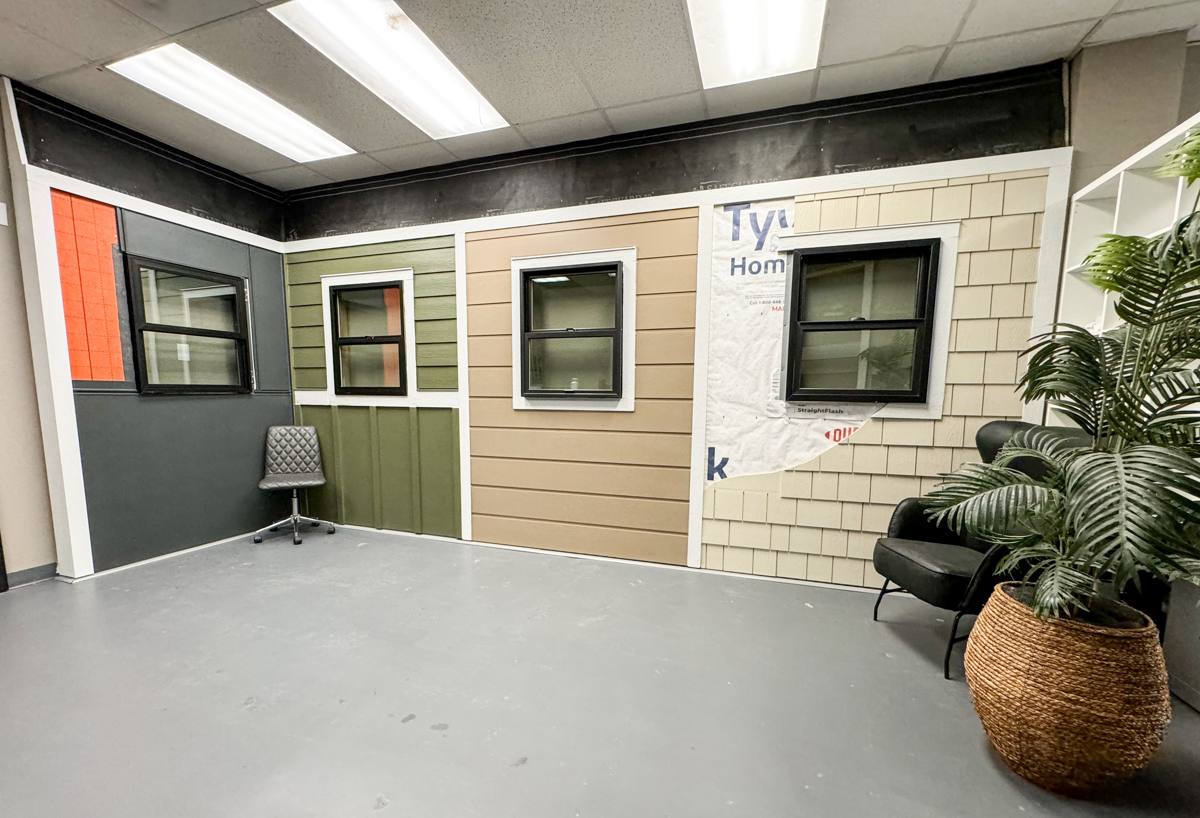
What Local Homes Actually Need From a Window Install
Air and Water Sealing Comes First
In a region with this much sustained rain and wind-driven moisture, the flashing and sealing details around a window matter more than almost anything else about the product itself. A correctly installed window has a drainage path built in — house wrap integrated with the flashing, a sill pan that directs any incidental water back out rather than into the wall cavity, and sealant placed only where it should be (never as a substitute for proper flashing, which is a shortcut that causes rot down the road).
Material Choices That Hold Up Near Salt Air
Not every window frame material ages the same way this close to the water. Vinyl and fiberglass frames generally resist salt exposure and moisture cycling better than bare wood or lower-grade aluminum, which is why we lean toward those options for California Creek installs unless a homeowner has a specific reason to go another direction. This is a practical maintenance call, not a knock on any manufacturer — every material has trade-offs, and we'll walk through them honestly for your specific exposure and budget.
Moss and Algae Considerations
The long damp season in this part of Whatcom County means north- and west-facing elevations often stay shaded and wet longer after a storm. That affects window placement details too — proper drip caps, correctly pitched sills, and adequate clearance from siding and trim all reduce the surfaces where moss and mildew can get a foothold around the window opening.
Our Window Installation Process
- On-site assessment. We look at your existing windows, the condition of the surrounding wall assembly, and any signs of past water intrusion before we talk products.
- Accurate measurement. Every rough opening gets measured individually — homes settle and shift over time, and no two openings in an older house are guaranteed to be identical.
- Removal without damage. Old windows come out carefully to avoid tearing house wrap or damaging framing that's still sound.
- Inspection of the opening. This is the point where hidden rot, soft framing, or old flashing failures get caught — before a new window goes in on top of a problem.
- Flashing and sill pan installation. This is the step that determines whether water goes where it's supposed to for the next few decades.
- Window setting and shimming. The unit gets leveled, plumbed, and squared, then fastened per manufacturer specification — not just "close enough."
- Insulation and air sealing. Gaps get filled with the right material (not just spray foam everywhere) to avoid bowing the frame.
- Exterior and interior trim. Finish work is sealed and detailed to shed water and match the home.
- Final walkthrough. We test operation, check the seal, and go over care with the homeowner before we call it done.
Signs a California Creek Home May Need Window Work
- Visible fogging or moisture between the panes of double- or triple-glazed units
- Drafts you can feel around the frame, especially during winter storms
- Wood trim or sills that feel soft, look discolored, or show active mold or moss growth
- Windows that are difficult to open, close, or lock — often a sign the frame has shifted
- Visible gaps between the window frame and siding or trim
- Noticeably higher heating bills without another clear cause
- Paint or finish that's peeling or bubbling specifically around window openings
Comparing Frame Materials for This Climate
| Material | Moisture & Salt Air Resistance | Maintenance | Typical Trade-Offs |
|---|---|---|---|
| Vinyl | Strong — won't rot or corrode | Low; occasional cleaning | Fewer color/finish options than wood or fiberglass |
| Fiberglass | Very strong; stable in temperature and moisture swings | Low | Higher upfront cost than vinyl |
| Wood (clad or unclad) | Depends heavily on maintenance and detailing | High — needs regular finish upkeep | Best appearance for some homeowners, but more exposure risk near the water without diligent upkeep |
| Aluminum | Variable — lower-grade finishes can corrode faster in salt air | Moderate | Thinner sightlines, but thermal performance is generally weaker unless thermally broken |
We're happy to talk through any of these honestly, including where a homeowner's preference for wood or aluminum makes sense despite the added upkeep. The point isn't to steer everyone to the same product — it's to make sure you understand what you're signing up for in terms of long-term care given where the house sits.
Cost Factors Homeowners Should Know
We're not going to quote a number without seeing the job, but a few things consistently move the price up or down on window installations in this area:
| Factor | Why It Matters |
|---|---|
| Number of openings | More windows generally means a lower per-unit cost due to shared setup and labor efficiency |
| Frame material | Vinyl tends to be the most budget-friendly; fiberglass and clad wood cost more upfront |
| Condition of the existing opening | Hidden rot or old flashing failures add repair time before the new window can go in |
| Glass package | Double vs. triple pane, and low-E or gas-fill options, affect both cost and long-term energy performance |
| Replacement type | Insert (pocket) replacement into an existing frame is typically less involved than a full-frame tear-out |
| Trim and siding work | If siding needs to be pulled back or trim rebuilt, that adds labor beyond the window itself |
Full-Frame vs. Insert Replacement
One decision that comes up on almost every project is whether to do a full-frame replacement or an insert (pocket) replacement, where the new window goes into the existing frame. Insert replacement is faster and less disruptive, and it's a reasonable choice when the existing frame is still square, dry, and structurally sound. Full-frame replacement costs more and takes longer, but it's the right call when there's evidence of water damage, rot, or a frame that's shifted out of square — which we see often enough on older homes near the water that it's always worth checking before assuming an insert is the answer. We'll tell you honestly which category your home falls into rather than defaulting to whichever is easier for us.
Why It Matters to Hire a Crew That Knows This Area
Window installation looks similar on paper everywhere in Whatcom County, but the details that make it last change with the site. A crew that's worked in and around Birch Bay and California Creek has already seen how the wind comes off the water on this stretch of coastline, how far the driving rain pushes into an unsealed gap, and which parts of a house tend to hold moisture longest through the wet season. That's not something you can fully substitute with a generic installation checklist — it comes from doing the work here repeatedly and seeing what actually holds up.
It also means we're not guessing at material choices. We can talk plainly about which frame materials and glass packages make sense for a home a few hundred yards from saltwater versus one further inland, and we'll say so when a homeowner's preference (say, a wood-frame look) is going to need more upkeep in this environment — that's information you deserve before you commit, not after.
What a Correct Job Looks Like When It's Done
When the installation is done right, you shouldn't notice anything dramatic — that's the point. No drafts, no fogging between panes, no water staining on the interior sill after a heavy storm, and windows that open and close smoothly without sticking as the seasons change. The real test is how the house performs during the next big winter blow off the Strait, not how it looks the day the crew leaves.
Get an Honest Look at Your Windows
If you're dealing with drafts, fogged glass, or windows that just don't feel right anymore, we're glad to come take a look and give you a straightforward, no-pressure estimate. Use the form below to get started.