 Birch Bay Siding
 Building New in California Creek? The Window Install Sets the Tone for Everything After
If you're framing a new home in the California Creek area near Birch Bay, the windows are one of the few building components that have to be right on the first try. Once siding, trim, and interior finishes go in around them, a poorly flashed or poorly set window becomes a hidden problem — one that usually doesn't show itself until a wet winter a few years down the road, when water finds the path of least resistance behind the wall. New-construction window installation isn't just "putting windows in the holes." It's a sequenced process that has to integrate correctly with the house wrap, the framing, and the exterior cladding that comes after it.
We install new-construction windows in this area regularly, working alongside framing crews and general contractors during the dry-in stage. This page covers what that job actually involves, what Whatcom County's coastal climate demands from the work, and why the sequencing matters as much as the window itself.
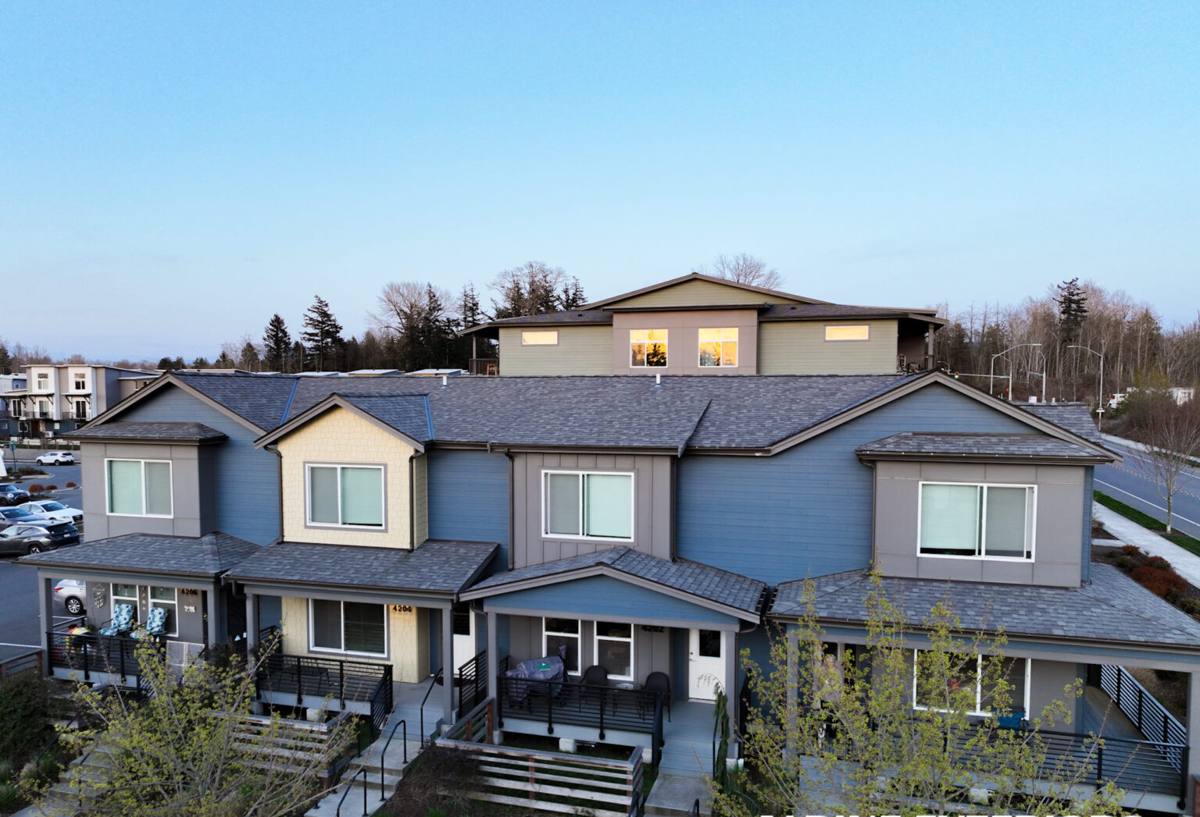
What Birch Bay's Climate Asks of a New Window Install
California Creek sits close enough to the water that homes here deal with a specific combination of weather stresses. None of it is exotic, but all of it needs to be accounted for during the build, not patched afterward.
Salt air and hardware corrosion
Proximity to Birch Bay and the broader Salish Sea coastline means airborne salt settles on exterior surfaces year-round. Over time it accelerates corrosion on cheap fasteners, uncoated hinges, and lower-grade cladding on window frames. This doesn't mean every window needs marine-grade everything — it means we pay attention to fastener specification and frame hardware rather than assuming standard interior-grade parts will hold up the same way they would fifty miles inland.
Driving, wind-driven rain
Storms coming off the water push rain sideways, not straight down. A window that would stay dry in a calm downpour can still take on water when wind is driving rain up under a sill or sideways into a poorly lapped flashing joint. This is the single biggest reason new-construction flashing sequence matters more here than in a drier, calmer climate — the margin for error is smaller.
A long moss and dampness season
Whatcom County's wet season runs long, and surfaces that stay damp for extended stretches grow moss, algae, and mildew faster than they would in a drier region. That's mostly a siding and roofing concern, but it matters for windows too: any trim detail or sill that traps moisture instead of shedding it becomes a spot where organic growth and wood decay get a head start.
New-Construction Windows vs. Retrofit Windows — Why the Distinction Matters
"New-construction" isn't a marketing term — it describes a specific type of window and a specific installation method, and it's different from the retrofit or insert windows used in remodels. On a home being framed from scratch, using the new-construction approach correctly is what gives you a genuinely weathertight opening, rather than a compromise built around an existing wall.
| Factor | New-Construction Window | Retrofit / Insert Window |
|---|---|---|
| Frame | Has a nailing fin around the perimeter | No nailing fin; fits inside an existing frame |
| Install stage | Set during framing, before siding and trim | Set into an existing rough opening after siding is in place |
| Flashing integration | Fin is integrated directly with the house wrap in a shingle-lapped sequence | Relies on the existing wall's flashing, which can't always be fully verified |
| Best use | New builds, additions, full wall/siding replacement | Remodels where the existing frame is sound and siding stays intact |
| Sightline | Slightly larger visible frame due to the fin and trim | Can preserve the existing trim profile |
Since a California Creek new build starts with open framing, there's no reason to use a compromise product. New-construction windows, installed in the correct order relative to the weather-resistant barrier, give the wall assembly its best chance at staying dry for the life of the house.
What a Correct New-Construction Install Actually Involves
The window itself is only part of the job. The install sequence around it is what determines whether water sheds away from the opening or finds a way in. On every new-construction window we set, the sequence follows the same logic, regardless of window brand:
- Rough opening is checked for square, level, and correct sizing before anything is set
- A sloped sill pan is installed at the bottom of the opening so any water that gets past the window drains back out, rather than pooling on the framing
- The weather-resistant barrier (house wrap) is cut and prepped in a way that will shingle-lap correctly with the window's flanges
- The window is set, shimmed plumb and square, and fastened through the nailing fin per the manufacturer's schedule
- Flashing tape is applied at the sides first, then the top, in a strict shingle-lap order — never top-then-sides — so water is always directed outward and downward
- Head flashing is integrated above the window before the house wrap above it is lapped back down over the top flange
- Interior gaps are insulated and air-sealed without over-packing, which can bow the frame
- Exterior trim and sealant joints are installed last, once the flashing behind them is already doing the real waterproofing work
That last point matters: sealant and trim are a second line of defense, not the primary one. A window that relies on caulk to stay dry, rather than on correctly lapped flashing, is a window that's going to leak eventually — usually right around the time the caulk starts to age and crack.
Frame and Glass Choices Worth Thinking Through at This Stage
Because you're building new, you get to choose the window package rather than being limited to what's already in the wall. A few decisions are worth making deliberately rather than defaulting to whatever's cheapest:
Frame material
Vinyl is the most common choice for new builds in this area and performs well for the cost, provided it's a quality line with reinforced corners. Fiberglass frames cost more but hold up with less expansion and contraction across our temperature swings and tend to hold paint and finish better over decades. Wood-clad windows offer a different interior look but add a maintenance commitment on any exposed wood — something to weigh honestly against this area's damp season rather than assume away.
Glass package
Double-pane with a low-E coating and argon fill is the standard baseline and performs well here. Triple-pane adds cost and weight and makes the most sense on north- or west-facing walls that take the brunt of wind and weather, or for homeowners prioritizing sound and thermal performance over the added expense. It's rarely worth specifying on every opening in the house — that's a per-elevation decision, not an all-or-nothing one.
Hardware and fasteners
Given the salt air discussion above, we spec corrosion-resistant fasteners and hardware on coastal-facing builds rather than treating it as a place to save a few dollars. It's a small line-item difference at framing stage and a much bigger repair later if lower-grade hardware starts failing.
How We Work With Builders on a California Creek New Build
Window installation on new construction is a scheduling-dependent trade — we have to be on site at the right moment in the framing sequence, not before the openings are framed and not after the house wrap is already closed up. On projects in this area, that typically means:
- Reviewing the window schedule and rough opening sizes against the plans before framing is finished, catching sizing conflicts early
- Coordinating directly with the framing crew or general contractor on timing so we're on site right at dry-in, not holding up the schedule
- Installing sill pans, windows, and flashing in the sequence above, elevation by elevation
- Photo-documenting flashing details before they're covered by siding, so there's a record of what's behind the wall if it's ever needed
- Walking the completed openings with the builder before siding crews close them in
That coordination is where a lot of the value is. A window crew that shows up disconnected from the framing schedule either slows the job down or gets rushed into skipping steps. Neither outcome serves the house.
What Drives Cost on a New-Construction Window Package
Every new build is different, so we don't quote sight-unseen, but the main variables that move the number are consistent from project to project:
| Cost Factor | Why It Matters |
|---|---|
| Number and size of openings | More glass and larger units mean more material and labor per opening |
| Frame material | Vinyl, fiberglass, and wood-clad carry different material costs |
| Glass package | Triple-pane and specialty coatings add cost per unit over standard double-pane |
| Opening complexity | Corner windows, large sliders, and odd shapes take more time to flash correctly |
| Elevation exposure | Openings on the water- or wind-facing side may warrant upgraded flashing details or hardware |
| Site access and timing | Scaffolding, staging, and how tightly the install fits into the broader framing schedule |
Why It Matters That We Already Work in This Area
California Creek isn't a generic building site — it's a specific slice of Whatcom County coastline with its own wind exposure, moisture patterns, and building conditions. A crew that already works in and around Birch Bay has seen how homes here actually hold up over time: which elevations take the worst of the weather, where moss and dampness show up first, and what flashing details actually earn their keep versus what's just spec-sheet boilerplate.
That local experience shows up in small decisions during the install — which openings get extra attention on flashing laps, where corrosion-resistant hardware is worth spending on, how sill pans are detailed on the wind-facing side of the house. None of that is exotic knowledge, but it's the kind of judgment that only comes from having done this work, on homes like this one, in this exact area.
After Move-In: What New Homeowners Should Keep an Eye On
A correctly installed new-construction window shouldn't need attention for years, but it's worth knowing what to watch for as the house settles in:
- Check exterior caulk lines annually and re-seal if they crack or pull away — this is maintenance, not a sign the flashing failed
- Keep gutters and downspouts clear so roof runoff isn't sheeting down over window openings
- Watch for any moss or dark staining forming directly above a window, which can point to a gutter or roof-flashing issue worth checking rather than a window problem
- Report any interior sill dampness after a wind-driven storm promptly — early water intrusion is easy to trace and fix, and gets harder to diagnose the longer it's ignored
If you're framing a home in California Creek or elsewhere around Birch Bay and want the window package handled by a crew that already knows this area's weather and building conditions, we're glad to walk the plans with you. Reach out below for a free, no-pressure estimate.