 Birch Bay Siding
 Building Decks That Actually Hold Up Near Birch Bay
Bellingham sits close enough to Birch Bay and the Strait of Georgia that homes in this part of Whatcom County deal with a specific combination of weather most inland deck builders never have to think about: salty, moisture-laden air off the water, long stretches of driving rain, and a moss season that can run from October well into spring. A deck built with generic, big-box specs might look fine the first summer. By year three or four, fasteners are bleeding rust, boards are cupping, and moss is creeping across every shaded board. Building for this area means designing and installing with that reality in mind from the first post hole, not patching problems after the fact.
This page focuses specifically on deck building for homes in and around Bellingham near Birch Bay — what the local climate demands, what a correctly built deck actually involves below the surface, and how we approach the work so it's still solid a decade from now.
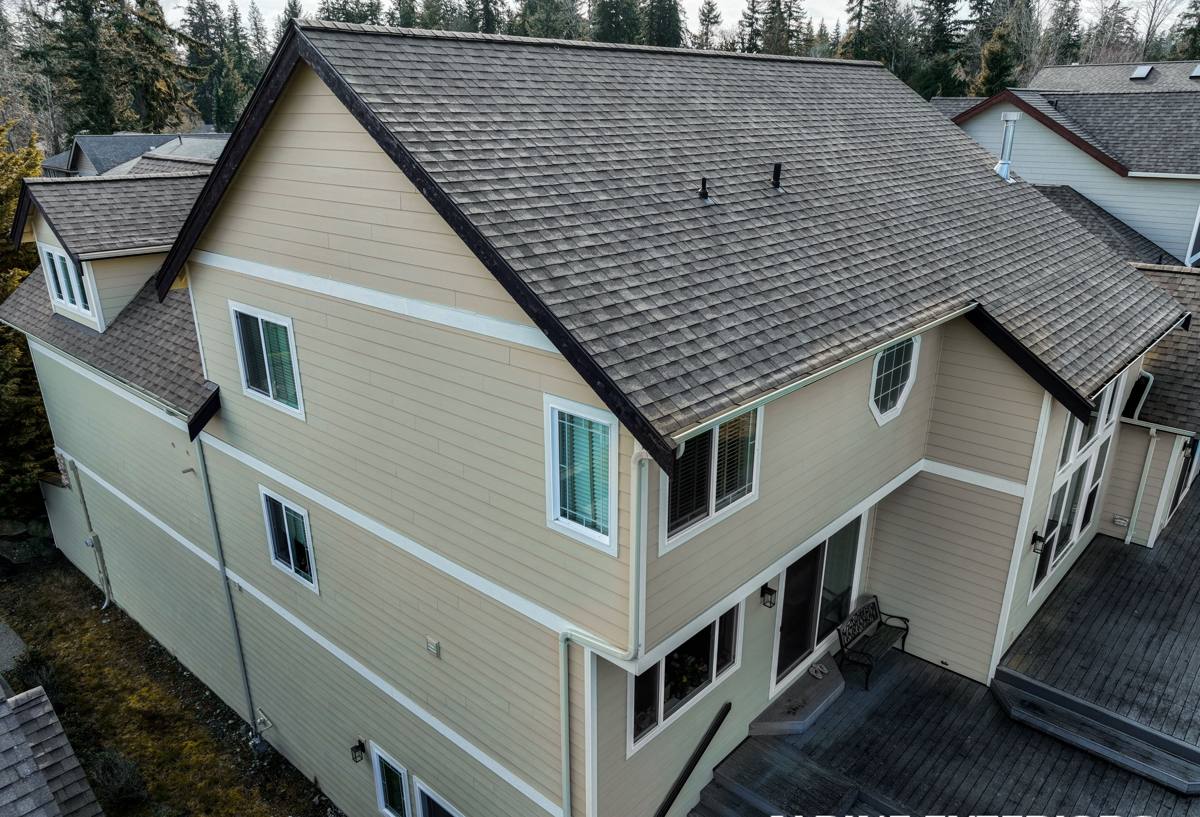
What Whatcom County Weather Does to a Deck Over Time
Three conditions drive almost every deck problem we see in this area:
- Salt air corrosion — proximity to the bay means airborne salt settles on metal fasteners, brackets, and hardware. Standard zinc-coated screws and nails corrode faster here than they would twenty miles inland, which shows up as rust streaking, weakened connections, and eventually failed hardware hidden under the decking.
- Driving rain — wind-driven rain doesn't just fall on a deck, it gets pushed sideways into ledger connections, post bases, and any gap where end grain is exposed. Water that would run off a flat surface in calmer weather gets forced into joints instead.
- Extended moss season — shaded, north-facing, or tree-covered decks stay damp for months at a time. Moss and algae hold moisture against the wood surface long after the rain stops, which accelerates rot in exactly the spots that already get the least sun to dry out.
None of these are exotic problems, but they compound. A deck that would last 20 years in a dry inland climate can start showing structural issues in half that time here if it wasn't built with corrosion-resistant hardware, proper drainage, and airflow underneath.
Choosing Decking Material for This Climate
There's no single "best" decking material — the right choice depends on budget, how much upkeep you want to do, and how exposed the deck is to rain and shade. Here's how the common options actually perform in a marine, high-moisture climate like this one:
| Material | Moisture/Salt Performance | Maintenance | Typical Lifespan Here |
|---|---|---|---|
| Pressure-treated pine/fir | Good if sealed regularly; end grain is a weak point | Re-seal or stain every 1-2 years | 15-20 years with upkeep |
| Cedar | Naturally rot- and insect-resistant, but still absorbs moisture | Oil or seal annually to prevent graying and cupping | 15-25 years with upkeep |
| Composite (wood-plastic blend) | Handles moisture well; some boards absorb water at cut ends if not capped | Occasional wash to control surface algae/moss | 25-30 years |
| PVC / capped polymer | Fully sealed surface, best resistance to moisture and salt | Wash to prevent moss film in shaded areas | 25-30+ years |
In our experience, composite and capped PVC products earn their higher upfront cost on shaded, north-facing, or heavily rain-exposed decks in this area, simply because they don't absorb moisture through the board face the way wood does. On sunnier, well-drained sites, a properly sealed cedar or treated-wood deck is a perfectly reasonable choice — the key word is "properly sealed," which is where a lot of decks in this region fall short.
Fasteners and Hardware Matter as Much as the Decking
We use stainless steel or heavy-duty coated fasteners and structural hardware rated for coastal exposure, not standard interior-grade screws and brackets. This is one of the most common corners cut on decks in salt-air areas, and it's also one of the hardest problems to spot until a connection has already weakened — the decking looks fine while the hardware underneath is failing.
Framing and Substructure: Where Decks Actually Fail First
Most deck failures don't start at the surface — they start in the framing underneath, where nobody's looking. The substructure needs to handle rain and humidity even better than the decking itself, because it's harder to inspect and slower to dry out.
- Ledger board attachment — the connection to the house needs proper flashing so water is directed away from the wall, not trapped behind the ledger where it can rot both the deck framing and the home's sheathing.
- Joist protection — joist tape or a comparable moisture barrier over the top of each joist keeps standing water from soaking into the wood through fastener holes, which is one of the most common hidden rot points we find on older decks.
- Post bases — posts should sit on standoff hardware that keeps end grain off concrete or soil, so they're not sitting in a puddle every time it rains.
- Airflow underneath — enough clearance and ventilation below the deck lets it actually dry out between storms instead of staying damp for the entire wet season.
Drainage and Moisture Management
A deck's slope, gaps, and grading matter more here than in a drier climate. Boards need consistent spacing so water sheds through rather than pooling on the surface, and the ground or patio below needs to slope away from the house rather than toward it. On decks built over living space or storage below, an under-deck drainage system can keep that area usable year-round instead of collecting runoff every time it rains — worth discussing if you're planning to use the space underneath.
Our Deck Building Process
- On-site assessment — we look at sun/shade exposure, drainage slope, proximity to the water, and how the deck ties into the house before recommending materials.
- Honest material recommendation — we'll tell you where a lower-cost material makes sense and where it doesn't, based on how exposed the site actually is, not a one-size-fits-all pitch.
- Permit handling — most new decks and significant rebuilds in this area require a permit; we handle that process so it's done correctly and on record.
- Build with coastal-grade hardware — corrosion-resistant fasteners, proper flashing, and joist protection as standard practice, not an upsell.
- Final walkthrough — we go over drainage, board spacing, and maintenance expectations so you know what to watch for going forward.
Moss, Algae, and Long-Term Maintenance
Even a well-built deck in this region needs some seasonal attention. Moss and algae don't mean the deck was built poorly — they mean it's living in a damp, mild climate, which is simply the trade-off of the area. A few habits keep it from becoming a bigger problem:
- Sweep debris (leaves, needles) off the deck regularly, especially in fall, so moisture doesn't get trapped underneath organic matter.
- Wash shaded and north-facing sections at least once a year to clear early moss growth before it establishes.
- Re-seal or re-stain wood decking on the schedule appropriate to the product — skipping a cycle is when moisture starts getting in.
- Keep gutters and downspouts clear so runoff isn't dumping extra water directly onto or under the deck.
- Trim back overhanging branches where possible to get more sun and airflow onto persistently damp boards.
Signs Your Existing Deck Needs Attention
- Soft or spongy spots underfoot, especially near the ledger or stairs
- Rust staining around fastener heads or hardware
- Persistent moss or algae that comes back within weeks of cleaning
- Gaps or cracking where boards meet the house
- Visible sagging or a post that no longer sits flush on its base
If any of these sound familiar, it's worth having the substructure looked at before it becomes a safety issue rather than a maintenance item.
Permits and Building in Whatcom County
New decks, and often significant rebuilds, require a permit and inspection through the local building department. Requirements can vary depending on deck height, size, and proximity to property lines, and whether the home is inside city limits or in unincorporated Whatcom County near Birch Bay. We handle the permit process as part of the job so the work is documented and up to code, rather than leaving that step for the homeowner to sort out separately.
Why Hire a Crew That Already Works This Area
A deck built to a generic national spec sheet isn't necessarily built for a marine climate with this much salt air and rain. Choosing a crew that already works in Bellingham and along Birch Bay means the hardware, flashing details, and material recommendations are based on what we've actually seen hold up here, not a one-size-fits-all approach. That local familiarity is what separates a deck that needs major repairs in five years from one that's still solid in twenty.
If you're planning a new deck or need an honest look at an existing one, we're happy to walk the site and talk through what it actually needs. There's no pressure and no cost to get a free estimate — just a straightforward assessment from a crew that knows what this climate does to outdoor structures.