 Birch Bay Siding
 Board & Batten Siding Built for Bellingham's Coastal Climate
Board and batten is one of the most requested siding styles we see in Bellingham and around Birch Bay, and it's easy to understand why. The strong vertical lines read as clean and modern on newer builds, or classic farmhouse on an older home, depending on trim width and color. It's a distinctive look that stands out from the lap siding on most of the block.
But in Whatcom County, board and batten isn't just a look — it's a siding system that has to hold up against salt air drifting in off the water, driving rain that comes in sideways more often than straight down, and a moss season that can run most of the year on shaded, north-facing walls. Board and batten has more vertical seams per square foot than lap siding, and every one of those seams is a potential water path if the materials or the installation aren't right. This page covers what board and batten needs to actually perform here, what a correct installation involves, and why we install it in James Hardie fiber cement only.
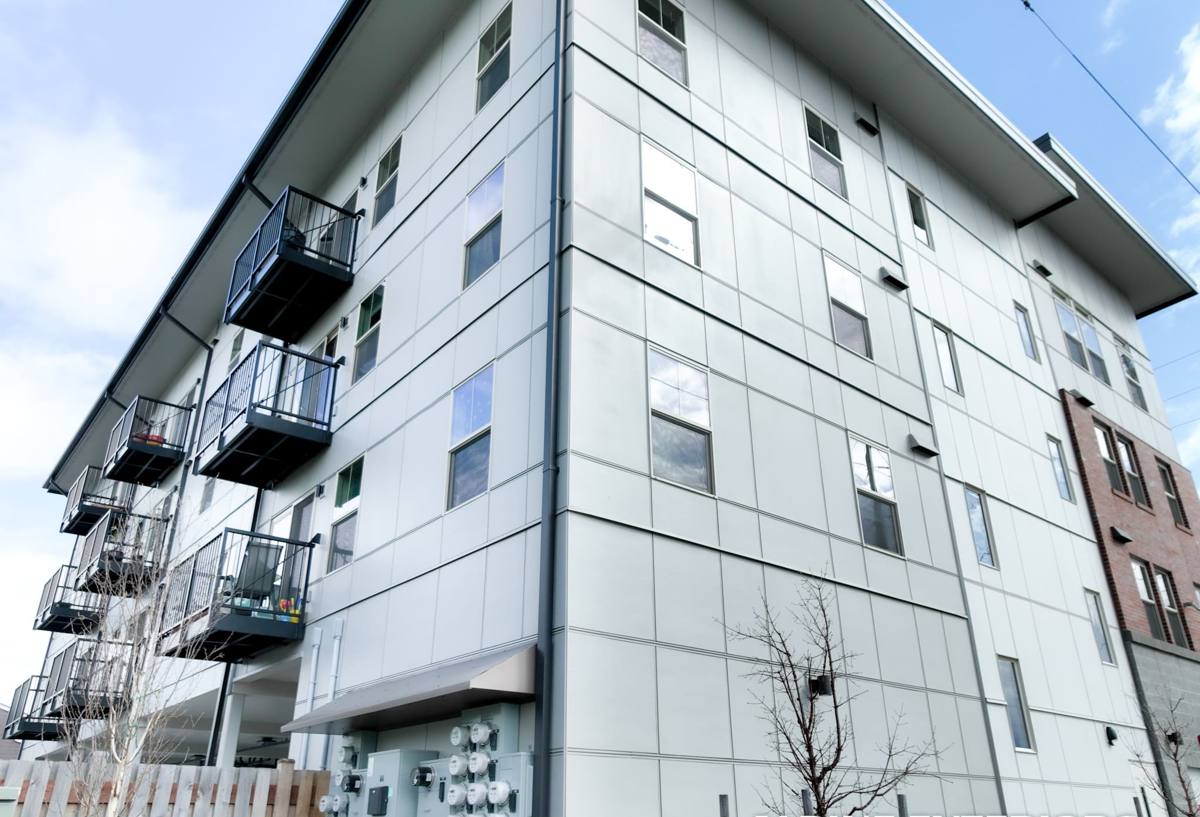
What Local Weather Does to Vertical Siding
A siding style that looks identical in a catalog photo can perform very differently depending on climate, and board and batten is more climate-sensitive than most.
Salt Air
Homes closer to the water around Birch Bay and Bellingham Bay take on a steady dose of salt-laden air. Salt accelerates corrosion on exposed metal fasteners and flashing, and it's hard on paint films and coatings that aren't formulated to resist it. Battens sit proud of the wall and catch more of that airflow than a flat lap board does, so the trim material and fastener choice matter more here than they would inland.
Driving Rain
Wind off the Strait doesn't just push rain down — it drives it sideways and up under trim, fascia, and around fasteners. Vertical board and batten depends entirely on a properly lapped, sealed water-resistive barrier behind the panels, because the battens themselves are not a waterproofing layer. If that barrier is installed carelessly, wind-driven moisture will find the gaps.
Moss and Sustained Dampness
Shaded north- and east-facing walls in Bellingham's tree-covered neighborhoods stay damp for long stretches of the year. That's exactly the environment moss and mildew need to establish. The shadow lines and small ledges created by battens give organic growth more places to gain a foothold than a flat surface does, especially on a siding material that isn't dense and factory-sealed all the way through.
What a Correct Board & Batten Installation Actually Involves
Board and batten looks simple from the curb, but it's one of the least forgiving styles to install correctly — and one of the most expensive to fix if it's done wrong, because a failure usually isn't visible until moisture has already been working behind the wall for a season or two.
Drainage Plane and Rainscreen Gap
Correct installation starts with a continuous, properly lapped water-resistive barrier, ideally paired with a drainage gap that lets any moisture that does get past the siding drain and dry out rather than sit against the sheathing. This matters more on vertical siding than horizontal lap, because vertical seams give water more direct paths downward along the wall.
Batten Layout and Fastening
Batten spacing, panel gapping, and fastener pattern all need to follow the manufacturer's specified installation instructions — not a generic "close enough" approach. Fasteners have to land in framing or blocking at the correct spacing, and panel edges need the clearance called for in the spec so the material can expand and contract with temperature and moisture without buckling or pulling fasteners loose.
Flashing at Penetrations
Every window, door, vent, and hose bib penetration through a board and batten wall is a place water can get behind the cladding if it isn't flashed correctly. This is where most of the actual leak risk lives on a board and batten project — not in the field of the wall, but at the transitions.
Before we start any board and batten project in Bellingham or Birch Bay, we walk through the same checklist:
- Water-resistive barrier is continuous, correctly lapped, and free of tears or gaps
- Drainage gap or rainscreen is present behind the siding, not just a flat nail-up
- Batten spacing and panel gapping match the manufacturer's written instructions
- Fasteners land in solid framing at the correct spacing and depth
- Flashing is installed at every window, door, and wall penetration before siding goes on
- Caulking is used only where the manufacturer specifies it, not as a substitute for flashing
- Bottom starter courses and inside/outside corners are detailed to shed water, not trap it
Comparing Board & Batten Materials
Homeowners researching board and batten usually run into the same handful of material options. Here's how they actually compare for a Bellingham or Birch Bay property, in plain terms.
| Material | Moisture / Salt Air Behavior | Moss & Mildew Resistance | Ongoing Maintenance |
|---|---|---|---|
| Vinyl board & batten | Battens and panels can gap, warp, or rattle loose over time; won't rot but doesn't manage moisture behind it | Grows moss and mildew on the surface like any material; grooves and laps trap grime | Low effort, but fading and brittleness are common after years of sun and salt exposure |
| Engineered wood (LP SmartSide-type products) | Cut edges and panel joints are the weak point — moisture intrusion at an unsealed edge can lead to swelling | Moderate; depends heavily on coating and edge sealing being maintained | Requires diligent edge sealing and repainting on the schedule the manufacturer specifies |
| Raw or primed wood (cedar, primed spruce) | Natural material moves with moisture; end grain and battens are prone to checking and rot without upkeep | Higher risk in damp, shaded exposures without regular treatment | Highest — repainting or restaining on a recurring cycle, plus caulking and spot repairs |
| James Hardie fiber cement | Dense, non-combustible material engineered for wet Pacific Northwest climates; doesn't rot or swell like wood | Factory ColorPlus finish resists moss and mildew adhesion far better than field-applied paint | Low — no repainting for years when factory-finished; occasional rinse and inspection |
Why We Install Board & Batten in James Hardie Fiber Cement Only
We don't install vinyl, LP SmartSide, or raw wood board and batten, and we're upfront about why. Each of those products has legitimate strengths — vinyl is inexpensive, engineered wood is lighter to work with, cedar has real warmth and character. But for the specific demands of a Bellingham or Birch Bay wall, we've standardized on one system because it holds up without asking the homeowner to maintain it constantly.
For board and batten specifically, that means HardiePanel vertical siding paired with HardieTrim battens, installed in the HZ5 formulation engineered for cold, wet climates like ours. The material is fiber cement — sand, cement, and cellulose fiber — so it doesn't absorb and swell the way wood or wood-strand products can, and it's non-combustible, which isn't a small thing given how common wildfire smoke seasons have become even on this side of the state. Factory-applied ColorPlus Technology baked-on finishes hold color and resist moss and mildew adhesion better than a coat of field-applied paint, and the product carries a strong transferable limited warranty when installed to Hardie's specification.
The trade-off is honest: fiber cement is heavier and less forgiving to install than vinyl, and it costs more upfront than the cheapest options. We think that trade-off is the right one for a wall that has to face this climate for decades, not just look good on installation day.
Our Process for a Bellingham Board & Batten Project
- Assessment — We inspect the existing wall, sheathing, and any current siding for hidden moisture damage before quoting anything. Board and batten projects sometimes uncover rot or failed flashing from a prior installation, and that needs to be addressed, not covered up.
- Prep — Old siding comes off down to the sheathing where needed, damaged material is repaired, and the water-resistive barrier and flashing are installed or restored correctly before a single panel goes up.
- Installation — HardiePanel and HardieTrim battens go up following Hardie's written fastening and spacing specifications, with attention to every window, door, and penetration.
- Final walkthrough — We review the completed work with the homeowner, including care and maintenance basics specific to fiber cement siding in a coastal climate.
What Affects the Cost of a Board & Batten Project
Board and batten costs more per square foot than plain lap siding on the same wall, mainly because of the extra trim material and labor involved in the batten layout. Beyond that baseline, a few factors move the number most:
| Factor | Why It Matters |
|---|---|
| Tear-off and wall condition | Removing old siding and repairing damaged sheathing or framing adds labor before installation even starts |
| Home size and number of stories | More wall area and taller walls mean more material, more staging, and more labor time |
| Trim and corner complexity | Dormers, bump-outs, and multiple roof lines multiply the number of batten transitions and flashing details |
| Color and finish | Factory ColorPlus finishes cost more upfront than field-painted primed panels but eliminate a repaint cycle |
| Site access | Tight lots, fencing, or limited staging space can add time for material handling and equipment setup |
We give exact numbers only after walking the property — anyone quoting a board and batten job sight unseen is guessing.
Why Hire a Crew That Already Works Bellingham and Birch Bay
Board and batten performance depends on details that don't show up in a brochure: how exposed a given wall is to prevailing weather, how much shade a north wall gets and for how long, and how much salt exposure a property actually has based on its distance from the water. A crew that regularly works Whatcom County properties has already seen how those variables play out on real walls in this area, rather than applying a generic install plan and hoping the climate cooperates. That local pattern-recognition is worth as much as the material spec sheet when it comes to a style of siding that punishes shortcuts.
Maintaining Board & Batten Siding After Installation
Correctly installed Hardie board and batten is low-maintenance, not no-maintenance. A little attention keeps it performing for the long haul:
- Rinse the exterior periodically, especially shaded and north-facing walls where moss takes hold first
- Keep gutters and downspouts clear so water isn't sheeting down the wall or overflowing near battens
- Trim back vegetation and tree cover that keeps walls shaded and damp longer than necessary
- Inspect caulking at trim joints and penetrations periodically and have any cracked or missing caulk addressed
- Have any impact damage or fastener issues repaired promptly rather than left to become a moisture entry point
If you're weighing board and batten for a home in Bellingham or Birch Bay, we're happy to walk the property, look at your specific exposure, and talk through what a correct installation would involve. Reach out below for a free, no-pressure estimate.