 Birch Bay Siding
 Siding Replacement Built for the Terrell Creek Corridor
The homes tucked along the Terrell Creek drainage in Birch Bay sit in one of the more demanding microclimates in Whatcom County for exterior siding. You've got the shaded, moisture-holding canopy that comes with a creek corridor, combined with the salt-laden air drifting in off Birch Bay itself and the driving, wind-pushed rain that comes through this stretch of the Salish Sea coastline most of the year. Siding here doesn't fail because it's old. It fails because it was never matched to what this specific area does to a wall system, year after year.
We work on homes throughout Birch Bay, and the Terrell Creek area has its own personality within that. Lots along the creek tend to run shadier and damper than the open, wind-exposed homes closer to the waterfront, which changes what "correct installation" actually means. A siding job that would hold up fine on a sunny, exposed lot can start showing moss and soft trim within a couple of years on a shaded, tree-lined property here. This page is about what that means for a siding replacement done right in this specific area.
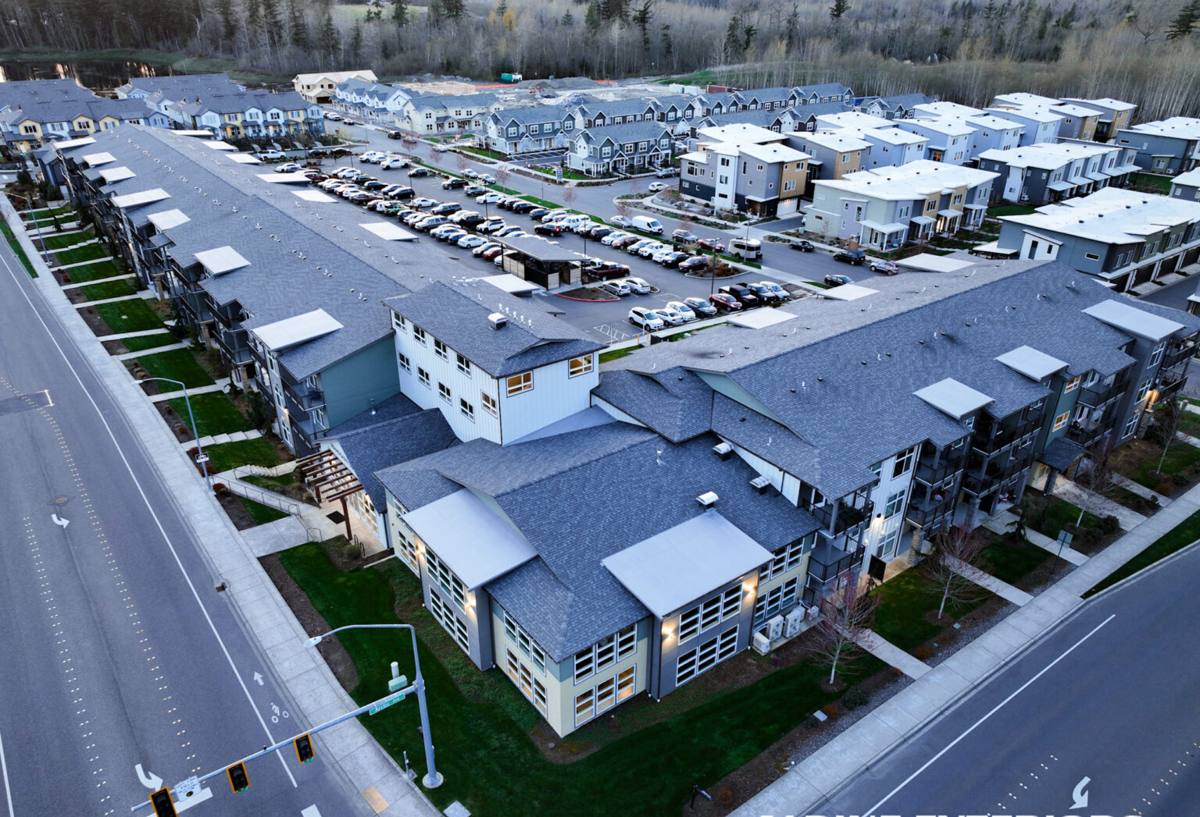
What Terrell Creek's Microclimate Does to Siding
Three conditions stack on top of each other for homes near the creek, and each one matters for a different reason:
Shade and Slow Drying
Tree cover along the creek keeps siding wet longer after every rain. Direct sun dries a wall fast; shade doesn't. Siding and trim that stay damp for extended stretches are exactly what moss, algae, and mildew need to establish themselves, and they're also what accelerates rot in any material that isn't genuinely moisture-stable.
Salt Air, Even Set Back from the Water
Birch Bay is a saltwater bay, and the air that moves through this area carries salt further inland than most homeowners expect, especially with the prevailing wind patterns off the water. Salt-laden moisture accelerates the breakdown of fasteners, caulk joints, and any paint or coating that isn't formulated to hold up against it.
Driving, Wind-Pushed Rain
Whatcom County's coastal weather doesn't just rain straight down. Wind pushes rain sideways into wall assemblies, which is exactly the condition that exposes weak flashing details, poor caulking, and siding products that rely on field-applied paint rather than a factory-cured finish.
None of these three conditions is unique to Terrell Creek on its own. What's unique is having all three stacked together on the same lot — shade that slows drying, salt air that attacks finishes and fasteners, and wind-driven rain that finds every gap. That combination is what separates a siding job that lasts fifteen years from one that lasts forty.
Signs a Terrell Creek Home Needs Siding Replacement
Because of the shade and moisture load in this area, siding problems here often show up as surface symptoms well before they become structural ones. Worth checking for:
- Green or black streaking that comes back within weeks of being cleaned
- Soft or spongy spots when you press on siding or trim, especially near the bottom courses and around windows
- Paint that's peeling, bubbling, or chalking heavily, particularly on north- and west-facing walls
- Visible gaps, warping, or buckling in panels or lap boards
- Moss establishing itself directly on the siding surface, not just the roof
- A musty smell near exterior walls or a noticeable jump in heating costs
- Caulk joints that have shrunk, cracked, or pulled away from trim and corners
Any one of these can be a minor fix. Several showing up together, especially on a shaded wall facing the creek, usually means moisture has been getting behind the siding for a while and it's worth a full inspection before deciding between a repair and a replacement.
What a Correct Siding Replacement Actually Involves
A siding replacement is a wall system replacement, not just a panel swap. On a shaded, moisture-prone lot like the ones along Terrell Creek, skipping any of the underlying steps is where premature failures start. A correct job includes:
- Full tear-off of the existing siding, not installation over it — covering up problems doesn't fix them.
- Sheathing inspection to check for rot, soft spots, or water staining once the old siding is off, before anything new goes on.
- Repair of any damaged framing or sheathing found during tear-off, priced and approved before covering it back up.
- A properly lapped weather-resistive barrier installed shingle-style so water sheds down and out, not into the wall cavity.
- Correct flashing at every window, door, deck ledger, and roof-to-wall transition — the details that matter most in wind-driven rain.
- A rainscreen gap where conditions call for it, giving the wall assembly a way to drain and dry rather than trapping moisture against the back of the siding — especially valuable on shaded, slow-drying walls like these.
- Manufacturer-spec fastening and clearances, including proper ground clearance and gaps at grade, decks, and roof lines.
- Sealed, painted, or factory-finished trim that's actually rated for the exposure it's getting.
Every one of these steps exists because something in this climate will eventually expose the shortcut if it's skipped. That's not a sales pitch — it's just what damp, shaded, salt-exposed walls do to a wall assembly over time.
Why We Only Install James Hardie Fiber Cement
We install one siding system: James Hardie fiber cement. Not vinyl, not LP SmartSide, not cedar, not the newer composite plank products. That's not a marketing position — it's the product line we've found actually holds up to what Terrell Creek's shade, salt air, and rain do to a wall over years, not just in the first season after install.
Fiber cement is a non-combustible mix of cement, sand, and cellulose fibers. It doesn't rot the way wood-based products can when moisture gets in, and it doesn't soften or warp under sustained dampness the way engineered wood products can if a seam or cut edge is ever exposed. For a creekside, shade-heavy lot, that moisture stability matters more than almost any other single property.
ColorPlus Factory Finish
Most of Hardie's product line is available with a ColorPlus finish — baked on and cured at the factory, not brushed on at the jobsite. In an area where field-applied paint has to fight salt air and slow drying times to cure properly, a factory finish is a real advantage: it's more consistent, more UV- and fade-resistant, and it comes with its own finish warranty separate from the substrate warranty.
HZ5 Engineering for This Climate
Hardie engineers its HardieZone products by climate exposure. The HZ5 line is built for the wetter, harsher-weather regions, which fits Whatcom County's coastal exposure better than a generic national product. It's a small distinction on paper but a meaningful one on a wall that's shaded most of the day and downwind of salt air.
Transferable Warranty
Hardie backs its siding with a long, transferable non-prorated warranty on the substrate, plus a separate finish warranty on ColorPlus color. If you sell the home, that coverage moves with it — worth mentioning to a buyer if you're ever listing a home near the creek.
How Hardie Compares to the Alternatives
| Material | Moisture / Moss Behavior in Shade | Finish | Typical Maintenance | Warranty Structure |
|---|---|---|---|---|
| James Hardie fiber cement | Dimensionally stable; doesn't rot or swell from sustained dampness | Factory-cured ColorPlus or field paint | Occasional wash; repaint only if field-painted | Long, transferable, non-prorated on substrate |
| Vinyl | Won't rot, but can warp or grow algae film in constant shade; seams trap grime | Color molded through, fades over time | Regular washing; panels can crack in cold snaps | Varies widely by manufacturer and gauge |
| LP SmartSide | Engineered wood — vulnerable if a cut edge or seam stays wet for long stretches | Factory primed or pre-finished | Edge sealing and caulk maintenance matters more | Manufacturer warranty, moisture-condition dependent |
| Cedar | Natural material; needs consistent airflow and upkeep to resist rot and moss in shade | Stain or paint, reapplied on a cycle | Highest upkeep of the group in a wet, shaded lot | No manufacturer warranty; workmanship only |
Every product on that list has a legitimate place somewhere. On a shaded, salt-exposed, high-rainfall lot like the ones along Terrell Creek, fiber cement's moisture stability is why it's the one we're willing to put our name behind.
What Drives Siding Replacement Cost Here
| Factor | Why It Matters on a Terrell Creek Lot |
|---|---|
| Home size and wall complexity | More corners, dormers, and roof-to-wall transitions mean more flashing detail work |
| Existing damage found at tear-off | Shaded, damp walls more often have hidden sheathing or framing repair needed |
| Siding profile and reveal | Lap, shingle, and panel styles carry different material and labor costs |
| ColorPlus vs. field-applied finish | Factory finish costs more upfront but skips a repaint cycle later |
| Site access | Wooded, sloped, or creekside lots can take longer to stage and scaffold safely |
| Rainscreen or extra drainage detailing | Recommended more often on shaded walls that don't dry quickly on their own |
We give a written estimate after walking the specific home, not a phone quote — the variables above swing the number too much to guess from a description.
Our Process for Terrell Creek Siding Replacements
- On-site inspection of the existing siding, trim, and, where accessible, the sheathing condition, with particular attention to shaded and north-facing walls.
- Written estimate covering material, labor, expected repair contingencies, and finish options.
- Tear-off and sheathing check, with any rot or damage documented and priced before covering it back up.
- Weather-resistive barrier, flashing, and drainage detailing installed to manufacturer spec, adjusted for the shade and moisture load of the specific walls.
- Hardie installation — fastening, clearances, and joint treatment done to the manufacturer's published requirements, not shortcuts.
- Trim, caulking, and touch-up at all penetrations, corners, and transitions.
- Final walkthrough with the homeowner and full site cleanup before we consider the job done.
Why It Matters That We Already Work This Area
A crew that's replaced siding on other homes along the Terrell Creek drainage already knows which walls need extra drainage detailing because of shade, which sides take the worst of the wind-driven rain, and how salt air in this specific stretch of Birch Bay tends to age caulk and fasteners faster than manufacturer literature assumes. That's not something you learn from a spec sheet — it's something you learn from doing the work on this ground, repeatedly, and seeing how it holds up a few years later.
It also means fewer surprises during the job itself. Local permitting expectations, typical lot conditions, and the practical realities of staging equipment on a wooded or sloped Whatcom County lot are all things a crew that already works this area has already solved, rather than figuring out for the first time on your house.
Maintaining Your Siding After Replacement
Correctly installed Hardie siding is low-maintenance, not zero-maintenance, especially on a shaded creekside lot. A simple annual routine goes a long way: rinse siding with a garden hose (not a pressure washer aimed directly at seams), keep gutters clear so water isn't sheeting down the wall face, trim back vegetation that's shading a wall and keeping it damp longer than it needs to be, and do a quick visual check of caulk joints each fall before the wet season sets in. Catching a small gap or crack early is far cheaper than dealing with what it becomes after another Whatcom County winter.
If your home is along the Terrell Creek drainage in Birch Bay and your siding is showing signs of moss, soft spots, or failing paint, we're happy to come take a look. The estimate is free, there's no pressure, and you'll get a straight answer about whether you're looking at a repair or a full replacement.