 Birch Bay Siding
 When a Storm Passes Through Sumas, Your Roof Takes the First Hit
Wind gusts off the water, sideways rain, and the occasional falling limb are just part of living in this corner of Whatcom County. Most of the time a roof shrugs it off. But after a real blow — the kind that rattles windows and strips branches off the cedars — it's worth getting eyes on the roof before a small problem turns into water in the attic. We work storm damage repairs in the Sumas area regularly, and the calls almost always follow the same pattern: a storm comes through, something looks off, and the homeowner isn't sure if it's cosmetic or a real problem.
This page covers what storm damage roof repair actually involves for homes in this area, what we look for, and how our process works from the first call to the final cleanup.
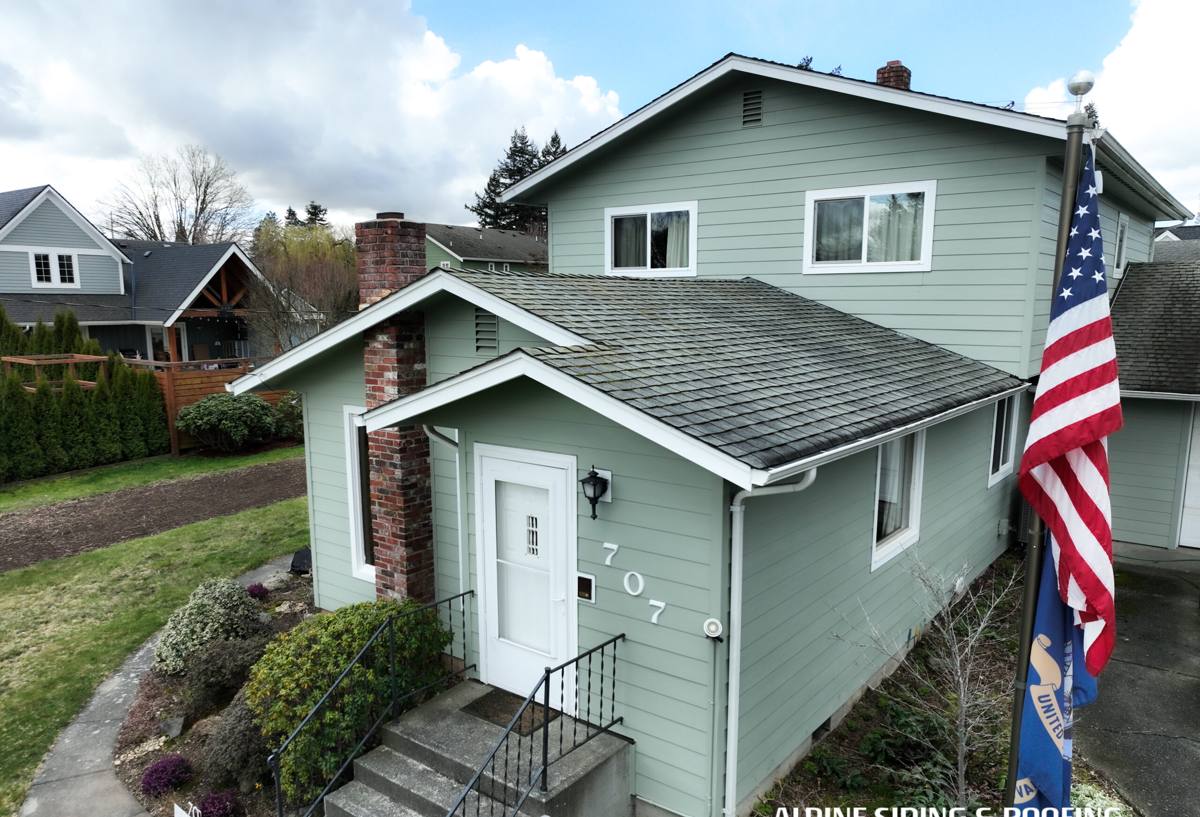
Why Local Weather Is Hard on Roofs Here
Roofing products are engineered to handle wind, rain, and sun — but not all climates ask the same things of a roof. This part of Washington has a specific combination of conditions that wears roofs down differently than a drier or more inland climate would.
Salt Air and Coastal Exposure
Homes closer to the water deal with a steady trace of salt in the air. Over years, that salt accelerates corrosion on exposed metal — flashing, fasteners, vent caps, gutter hangers. A roof that looks fine from the ground can have flashing that's thinner and more brittle than it should be, which matters a lot when a storm puts wind-driven rain right up under the shingle edge.
Driving Rain and Wind-Driven Water
Storms here rarely drop rain straight down. Wind pushes it sideways and up under laps, ridge caps, and step flashing that would stay dry in a calmer climate. This is why storm damage often shows up as a leak somewhere other than the spot that looks visibly damaged — the water traveled before it found a gap.
The Long Moss Season
Whatcom County's damp stretch runs long, and moss and algae get a real foothold on north-facing slopes and shaded valleys. Moss holds moisture against the roofing material and works its way under shingle tabs, which weakens the seal exactly where storm wind and rain are most likely to find an opening. A roof with heavy moss going into a storm is a roof more likely to take damage from that storm.
Signs Your Roof May Have Storm Damage
Some damage is obvious. A lot of it isn't — it hides until the next heavy rain finds it. After any significant wind or hail event, it's worth checking for:
- Shingles that are curled, cracked, creased, or missing entirely
- Granules collecting in gutters or at downspout outlets
- Bent, lifted, or missing flashing around chimneys, vents, or skylights
- Soft spots, staining, or a musty smell in the attic or top-floor ceilings
- Debris — branches, siding pieces, neighbor's shingles — that struck the roof directly
- Gutters pulled loose or sagging away from the fascia
- Daylight visible through the roof deck from inside the attic
If any of these show up after a storm, it's worth a proper inspection even if there's no active leak yet. A gap that stayed dry during one storm can let water through the next one, especially once wind direction shifts.
What a Correct Storm Damage Repair Actually Involves
The fastest way to end up doing this twice is a repair that patches the visible damage but ignores what's underneath it. A repair done right addresses three layers, not just the top one.
Matching the Roofing Material
Shingles fade and weather over time, so a patch using brand-new material next to five-year-old shingles will stand out and may not lay flat against the surrounding course. We match profile, weight, and color as closely as the existing roof allows, and we're upfront when an exact match isn't realistic on an older roof.
Underlayment and Deck Condition
If wind lifted shingles or wind-driven rain got underneath them, the underlayment — and sometimes the roof deck itself — may be compromised even though the shingles above it can be replaced. We check for soft or delaminating decking before closing a repair back up, because a new shingle over a wet deck just delays the same problem.
Flashing and Transition Points
Chimneys, vent pipes, skylights, and roof-to-wall transitions are where storm leaks actually originate more often than the open field of shingles. Given the salt exposure in this area, we pay particular attention to flashing condition, not just whether it's technically in place.
Our Storm Damage Repair Process
- Inspection and documentation. We walk the roof (or use a lift/ladder access as conditions require) and document the damage with photos — useful for your own records and for insurance if you're filing a claim.
- Temporary protection if needed. If there's an active leak or exposed deck, we get it covered to stop water intrusion before the full repair is scheduled.
- Honest scope assessment. We tell you plainly whether this is a targeted repair or whether the damage points to a larger issue worth addressing now rather than patching around.
- The repair itself. Matched materials, correct underlayment, and flashing rebuilt to shed water the way it's supposed to — not just re-nailed back into place.
- Cleanup and final check. Debris and old material hauled off, gutters checked for granule buildup, and a final look to confirm the repair is sealed and sitting right.
Repair Scope and Cost Factors
Every storm damage job is different, but the scope generally falls into a few categories. This isn't a quote — it's a way to think about where your situation likely lands before we come take a look.
| Damage Type | Typical Scope | What Drives the Cost |
|---|---|---|
| Isolated shingle damage (few shingles, one slope) | Spot repair, matched shingles | Roof pitch/access, material match availability |
| Flashing failure at chimney/vent/valley | Flashing rebuild, surrounding shingles reset | Number of penetrations, metal condition |
| Wind-lifted section with underlayment exposure | Underlayment replacement plus shingle course | Deck condition, size of affected area |
| Deck damage from prolonged water intrusion | Deck repair/replacement under the shingle repair | Extent of rot, structural inspection needed |
| Widespread storm damage across the roof | Full slope or full roof evaluation | Age of existing roof, whether replacement makes more sense than repeated repairs |
A Note on Insurance Claims
Not every storm event qualifies for an insurance claim, and we're not the ones who make that call — your adjuster is. What we can do is give you clear, photo-documented findings that describe the damage honestly, so you and your insurer have accurate information to work from. We don't inflate a scope to chase a bigger claim, and we won't tell you something is storm damage if it's really wear and tear that happened to get noticed after a storm. That kind of straight answer tends to matter more in the long run than a bigger number on day one.
Why a Crew That Already Works Sumas Matters
After a bigger regional storm, it's common to see traveling repair crews going door to door in Whatcom County looking for quick work. Some are legitimate. Many are gone before the first winter tests their repair, with no local number to call if something comes loose. A crew that's based here and works this area regularly has a reason to stand behind the work — we're not driving out of town once the check clears.
We also know what this specific climate does to a roof over time: how salt air treats exposed metal, how moss builds up on shaded slopes, and how wind-driven rain finds gaps that a drier climate would never test. That local knowledge shapes how we approach a repair, not just what we replace.
What to Do Right After a Storm
- Check the attic and ceilings for staining or dampness, not just the roof surface from the ground
- Photograph any visible damage and debris on the roof before cleanup, if it's safe to do from the ground
- Avoid getting on the roof yourself — wet, damaged roofing is more dangerous than it looks
- Don't sign anything with a door-to-door storm crew on the spot — get a second opinion first
- Call for an inspection even if there's no active leak yet; some damage only shows up in the next storm
If a recent storm has you wondering whether your roof took damage, we're happy to come take an honest look. There's no pressure and no obligation — just a straight answer about what we find and what, if anything, needs doing. Use the form below to request a free estimate.