 Birch Bay Siding
 Composite Decking Built for Semiahmoo's Waterfront Climate
Semiahmoo sits right where the Salish Sea meets Whatcom County's wet, gray winters — and that combination is hard on outdoor living spaces. Salt-laden air off the water, near-constant driving rain from fall through spring, and a moss season that can stretch six months or more all work against a deck that isn't built or installed correctly. We've been putting decking on homes around Birch Bay and Semiahmoo long enough to know which details matter here and which are just marketing.
This page is about one thing: composite decking, done right, for homes in this specific stretch of coastline. Not a generic decking overview — the actual conditions your deck will face and what it takes to hold up to them.
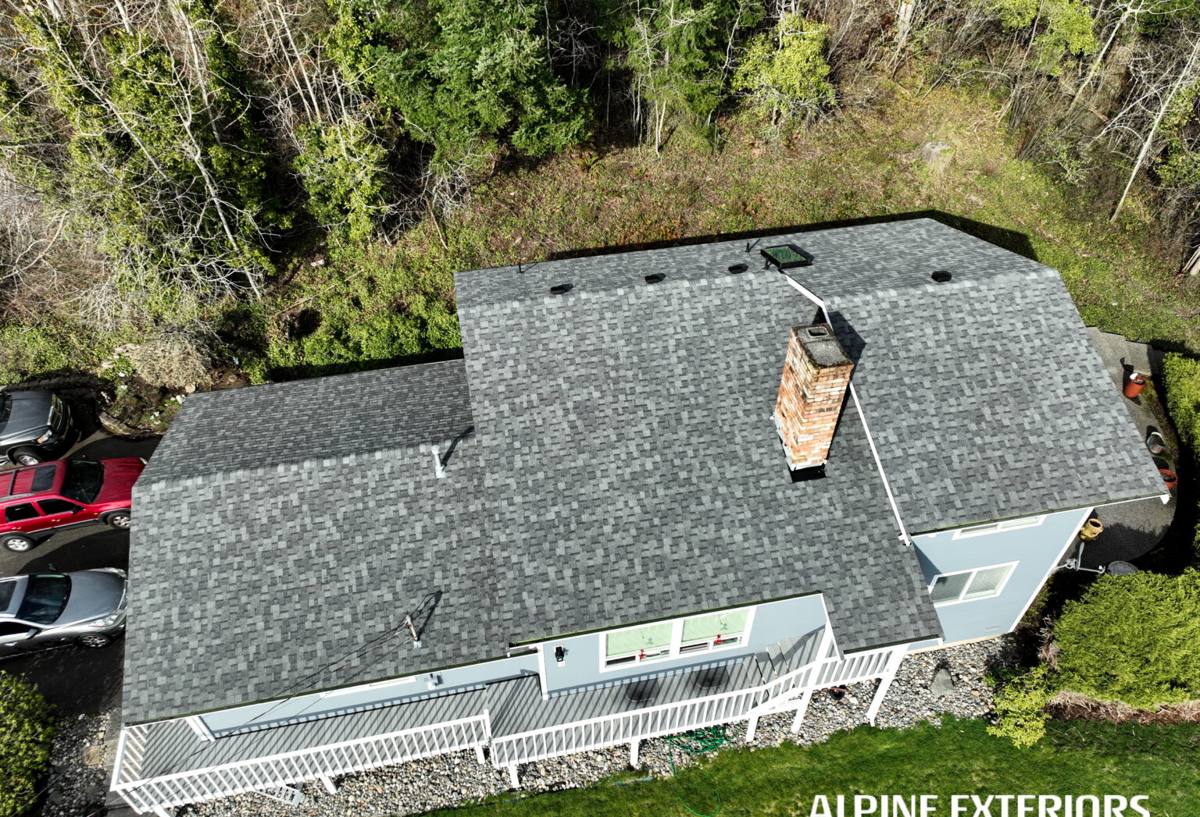
Why Semiahmoo's Climate Is Harder on Decks Than Most Places
Salt Air and Metal Fasteners
Properties close to Semiahmoo Bay and the Birch Bay shoreline get regular exposure to salt spray, especially during winter storms with onshore wind. Salt air accelerates corrosion in exposed fasteners, hardware, and connector plates. Standard hot-dip galvanized screws can start showing rust streaks on lighter-colored composite boards within a couple of seasons if the wrong fastener was used to begin with.
Driving Rain and Standing Water
Whatcom County doesn't just get a lot of rain — a good portion of it comes in sideways off the water. That matters for decking because water gets driven into gaps, ledger connections, and under rail posts that a calmer climate wouldn't stress nearly as hard. Any spot where water can pool instead of shed is a spot where problems start early.
Moss, Algae, and Shade
Long wet seasons plus tree cover common on Birch Bay lots create ideal conditions for moss and algae growth on any horizontal surface that stays damp. Composite decking resists rot the way wood can't, but surface growth is still a real issue if airflow underneath the deck is blocked or boards are laid without attention to drainage and gapping.
Why We Recommend Composite for This Area Specifically
We install wood decking too, and it has its place. But for waterfront and near-waterfront lots in Semiahmoo and Birch Bay, composite is usually the better long-term call, for reasons specific to this climate rather than composite being universally "better":
- No annual sanding, staining, or sealing — important when the weather window for outdoor maintenance work is short here
- Won't absorb moisture and swell/warp the way untreated or under-maintained wood will after repeated wet-dry cycles
- Color and finish hold up better against salt exposure than most paint or stain systems
- Consistent board quality means fewer surprises with cupping, splintering, or splitting near the water
The trade-off is real too: composite costs more upfront than pressure-treated wood, and if it's ever damaged, you're replacing a board rather than sanding out a gouge. For most homeowners in this area, the reduced maintenance burden over 20-plus years of coastal weather outweighs that.
What a Correct Composite Deck Install Involves Here
Substructure First
The composite boards themselves get the attention in most sales conversations, but the framing underneath is what determines whether the deck lasts. In a climate this wet, we pay particular attention to:
- Joist tape or flashing on top of every joist to keep moisture from wicking into the framing lumber
- Proper ledger board flashing where the deck attaches to the house — this is one of the most common failure points we see on older decks in this area
- Post bases set above grade with a drainage gap, not buried in soil or mulch where they'll stay wet
- Adequate slope away from the house for water shedding, even on a deck that looks level to the eye
Fasteners and Hardware
Given the salt exposure common to Semiahmoo properties, we use stainless steel or coated fasteners rated for coastal/marine environments rather than standard exterior-grade hardware. It costs more per box. It's not optional here — it's the difference between hardware that lasts and hardware that stains the boards and fails early.
Ventilation and Clearance
Composite decking needs airflow underneath to manage the moisture this climate throws at it. We build in proper joist spacing and skirting with ventilation gaps rather than solid skirting that traps damp air against the underside of the deck — a common cause of the moss and mildew smell homeowners sometimes notice on older decks.
Board Gapping and Fastening Pattern
Composite boards expand and contract with temperature more than people expect. Gapping that's too tight causes buckling; gapping that's too wide looks sloppy and catches debris. We follow manufacturer spec for gap width adjusted for the ambient temperature at time of install, and we use a hidden fastener system on the field boards so the surface stays clean and consistent.
Comparing Decking Options for a Semiahmoo Lot
| Material | Coastal/Salt Air Performance | Maintenance | Typical Lifespan |
|---|---|---|---|
| Composite decking | Strong — resists moisture damage, doesn't rot | Occasional wash-down; no staining/sealing | 25-30+ years |
| Pressure-treated wood | Moderate — needs consistent sealing to hold up near salt air | Annual cleaning, staining or sealing | 10-15 years with upkeep |
| Cedar | Moderate — natural rot resistance but softens with salt/moisture cycling | Regular sealing; more sensitive to neglect | 15-20 years with upkeep |
| PVC decking | Strong — fully synthetic, no wood fiber content | Low; can show heat sensitivity in direct sun | 25-30+ years |
Composite and PVC both perform well against salt air and moisture. We lean toward composite for most Semiahmoo projects because the wood-fiber core gives it a more natural look and feel underfoot, and current composite formulations have closed most of the durability gap that used to exist with PVC.
Cost Factors for a Composite Deck in This Area
Every deck is different, but the line items that move the price on a Semiahmoo or Birch Bay project are fairly consistent:
| Factor | Why It Matters Here |
|---|---|
| Deck size and footprint | Larger square footage means more boards, more framing, more fastener hardware |
| Height and railing requirements | Many waterfront lots have elevated decks requiring taller posts, stairs, and code-compliant railing |
| Substructure condition | If existing framing has moisture damage, that gets addressed before new decking goes down — skipping this is how decks fail early |
| Fastener and hardware grade | Marine-grade stainless costs more than standard exterior hardware, but it's not optional in salt-exposed spots |
| Board tier and color | Composite lines range from entry-level capped composite to premium multi-tone boards |
| Site access | Waterfront lots with limited access or steep grade can add labor time |
We give firm, itemized quotes after seeing the site — we don't work off ballpark square-footage pricing pulled from a national average, because it doesn't reflect what a Whatcom County coastal install actually requires.
Our Process on Semiahmoo and Birch Bay Projects
- On-site assessment. We look at the existing structure (if replacing a deck), grade, drainage, sun/shade exposure, and proximity to the water to understand what the deck will actually face.
- Material selection. We walk through composite board tiers, colors, and railing options suited to coastal exposure, and explain the real trade-offs rather than upselling the top tier by default.
- Written, itemized quote. Framing work, fastener grade, board material, railing, and labor broken out separately so you know what you're paying for.
- Framing and flashing. Any structural or moisture issues in the substructure get addressed first — this is the step that's easiest to shortcut and most important not to.
- Decking installation. Hidden fastener system, manufacturer-spec gapping, and attention to airflow underneath.
- Final walkthrough. We check fastener finish, board alignment, railing stability, and drainage before calling the job done.
Maintenance Checklist for a Composite Deck Near the Water
Composite is low-maintenance, not no-maintenance. In a salt-air, high-moss environment like Semiahmoo, a few habits go a long way:
- Rinse salt residue and debris off the deck surface a few times a year, especially after winter storms
- Sweep leaves and organic debris out of gaps between boards before they trap moisture and feed moss growth
- Check fastener heads periodically for any early rust staining, even with marine-grade hardware
- Keep skirting vents and underside airflow paths clear of stored items or overgrown landscaping
- Inspect railing post connections annually — these take the most wind and structural stress on exposed lots
- Address any moss buildup with a soft wash rather than a pressure washer set too aggressively, which can damage the board's cap layer
Why a Crew That Already Works Semiahmoo Matters
A lot of decking problems we get called to fix started with a contractor who does great work inland but hasn't dealt with this stretch of coastline regularly. Salt-air fastener selection, drainage detailing for driving rain, and moss-conscious ventilation aren't things you improvise on the fly — they're things you get right because you've already seen what goes wrong when they're skipped. We work Birch Bay, Semiahmoo, and the surrounding Whatcom County coastline regularly, and we build decks assuming the weather they'll actually face, not average weather.
If you're planning a new composite deck or replacing one that's showing its age, we're glad to come take a look and give you a straightforward, no-pressure estimate. Use the form below to get started.