 Birch Bay Siding
 Windows Built for Sandy Point's Waterfront Conditions
Sandy Point sits right up against the marine air coming off the water, and that changes what a window has to survive compared to a home fifteen miles inland. Salt-laden air, wind-driven rain, and long stretches of gray, damp weather don't just make a house feel drafty — they work on the hardware, the seals, and the glazing year after year. When we talk with Sandy Point homeowners about energy-efficient windows, the conversation is never just about the heating bill. It's about picking a window and an installation method that can actually hold up out here.
This page covers what that means in practice: what the climate does to windows over time, what "energy-efficient" should actually mean for a coastal Whatcom County property, how we approach the job, and what tends to drive cost up or down.
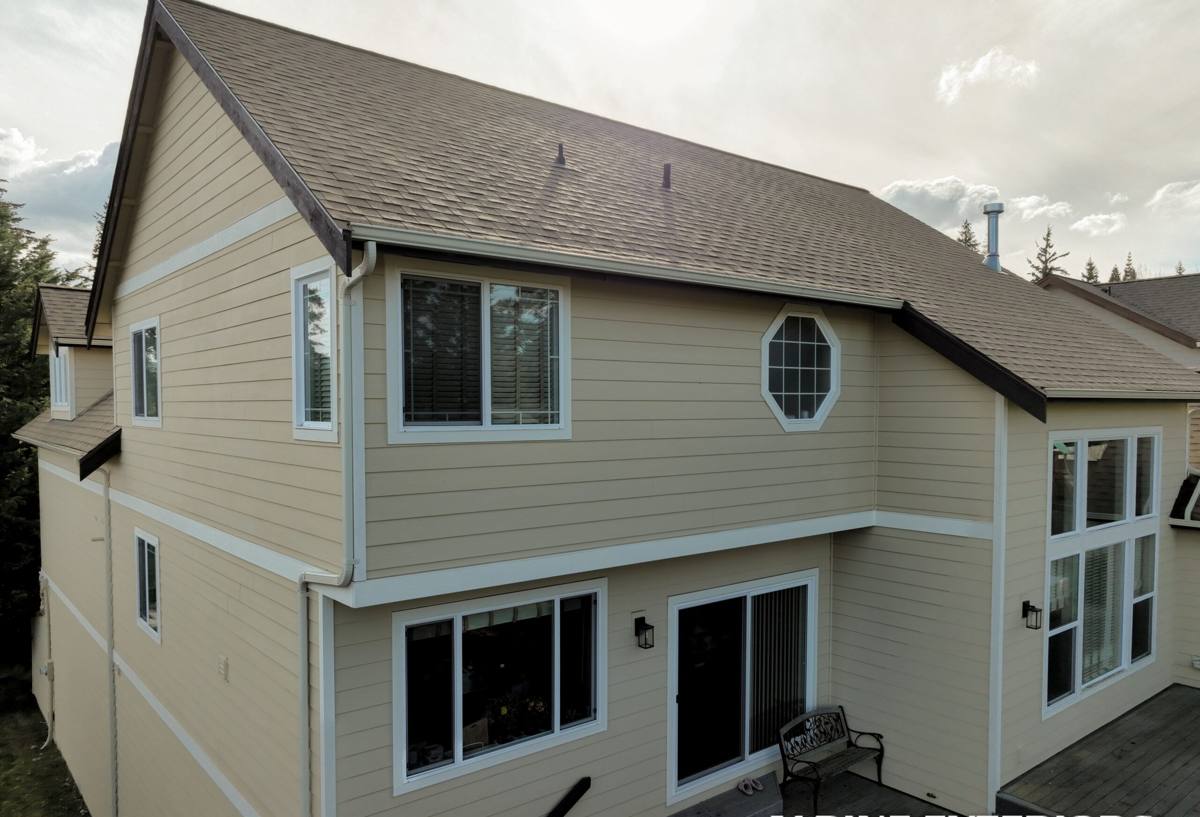
What Salt Air, Rain, and Moss Season Do to a Window Over Time
Every material in a window assembly reacts differently to the environment around Birch Bay and Sandy Point, and it's worth understanding why before you pick a replacement.
Salt Air and Metal Hardware
Airborne salt accelerates corrosion on unprotected or lower-grade metal components — hinges, locks, balance systems, and screws. Once corrosion starts on a lock or crank mechanism, the window stops sealing tightly even if the glass itself is fine. This is one of the biggest differences between a window spec sheet written for a general market and one that actually performs at the water's edge.
Driving Rain and Water Intrusion
Wind-driven rain doesn't just hit a window straight on — it gets pushed sideways and upward, testing every seam, sill, and flashing detail. A window that would be perfectly adequate in a sheltered inland yard can leak here if the flashing and sill pan weren't detailed for wind-driven exposure.
Moss, Algae, and Prolonged Dampness
Whatcom County's long wet season keeps north-facing walls, trim, and window sills damp for extended stretches. That moisture supports moss and algae growth around frames and sills, which holds even more water against wood trim and caulk joints. Over years, that cycle degrades sealants and, if moisture gets behind the frame, can lead to rot in the surrounding wall assembly — not just the window itself.
What "Energy-Efficient" Should Mean for a Sandy Point Home
Energy performance ratings matter, but out here they need to be read alongside durability and moisture management, not instead of them.
U-Factor
U-factor measures how well a window resists heat transfer — lower is better. In a marine climate with mild but persistent chill and dampness, a strong U-factor helps control both heat loss and condensation risk on the interior glass surface.
Solar Heat Gain Coefficient (SHGC)
SHGC measures how much solar heat passes through the glass. Sandy Point doesn't get the intense summer sun of a drier inland climate, so this rating matters less for cooling here than it does elsewhere in the state — but it still affects how a sunroom or west-facing room feels on the clearer days you do get.
Air Leakage Rating
This one deserves more attention here than in most climates. A window with a low air-leakage rating and properly maintained weatherstripping resists both heat loss and wind-driven moisture intrusion at the sash. Given how much wind this area sees off the water, air leakage performance is often the single most noticeable factor in day-to-day comfort.
Frame Materials: What Actually Holds Up Near the Water
Frame material choice matters more in a salt-air environment than almost anywhere else. Here's how the common options compare for a Sandy Point property.
| Frame Material | Salt Air / Corrosion Resistance | Moisture Behavior | Maintenance |
|---|---|---|---|
| Vinyl | Very good — won't corrode or rust | Doesn't absorb water; seams and welds are the main watch point | Low — occasional cleaning |
| Fiberglass | Excellent — highly stable, resists pitting | Very low expansion/contraction, holds seals well over time | Low |
| Aluminum-clad wood | Good on the exterior cladding; wood core needs protection | Wood core can be vulnerable if the cladding or sealant fails | Moderate — sealant and cladding joints need periodic checks |
| Bare wood | Poor without diligent upkeep | Absorbs moisture readily; highest rot risk in this climate | High — regular painting/sealing required |
We don't install bare wood frames on direct water-exposed elevations in this area as a matter of professional standard — not because wood windows are a bad product broadly, but because the maintenance burden and moisture risk in a salt-air, high-rainfall environment like Sandy Point are simply higher than most homeowners want to take on. Vinyl and fiberglass tend to be the more practical long-term choices for most of this neighborhood's exposure.
Glass Packages Worth Considering
Beyond the frame, the glass package itself affects both comfort and durability:
- Double-pane with Low-E coating: A solid baseline for most rooms — improves insulation and cuts down on interior condensation.
- Triple-pane: Adds meaningful sound dampening and insulation value, worth considering for rooms facing prevailing wind and weather, though it adds weight and cost.
- Argon or krypton gas fill: Improves insulating performance between panes; argon is the common, cost-effective choice for most homes.
- Warm-edge spacers: Reduce heat transfer at the glass edge and help limit condensation forming along the perimeter of the pane — a detail that matters in a consistently damp climate.
Signs Your Current Windows Are Underperforming
Before assuming full replacement is the answer, it's worth checking for these signs — some point to a window that's failing, others may just mean a tune-up or resealing is enough.
- Visible condensation or fogging between panes (a sign the seal has failed)
- Drafts you can feel near the frame on a windy day
- Locks or cranks that stick, corrode, or won't fully engage
- Soft, discolored, or bubbling trim or sill material around the window
- Moss or persistent green growth building up on the sill or frame
- Noticeably higher heating costs compared to similarly sized homes nearby
- Visible daylight gaps or peeling caulk at the perimeter
How We Approach an Energy-Efficient Window Job Here
Assessment First
We start by looking at each window's exposure — a window on the water-facing side of a Sandy Point home is dealing with a very different load than one tucked on a sheltered wall. That exposure level shapes our frame and glass recommendations, not a one-size-fits-all spec.
Moisture Management Before the Window Ever Goes In
Correct flashing and a properly installed sill pan matter more here than the window brand does. We integrate flashing with the home's existing water-resistive barrier so water is directed out and down, not trapped behind the new frame. This step is the difference between a window that lasts decades in this climate and one that causes hidden rot within a few years.
Installation and Sealing
We use sealants and fasteners rated for coastal exposure, set the window plumb and level, and confirm proper shimming so the frame isn't under stress that could compromise the seal over time. Interior and exterior sealing are both checked — a good exterior seal with a poor interior air seal still leaves you with drafts and condensation risk.
Final Check
Before we consider the job done, we test operation, confirm locks and hardware engage cleanly, and walk the exterior with the homeowner to review the finished flashing and trim work.
What Drives Cost Up or Down
| Factor | Effect on Cost |
|---|---|
| Frame material (vinyl vs. fiberglass vs. clad-wood) | Fiberglass and clad-wood generally cost more than vinyl |
| Glass package (double vs. triple-pane) | Triple-pane adds cost but improves insulation and sound control |
| Window size and configuration | Larger units, custom shapes, and multi-panel assemblies cost more |
| Extent of flashing/moisture repair needed | Existing water damage or rot found during removal adds labor |
| Number of windows replaced at once | Whole-house projects typically bring a better per-unit cost than one-off replacements |
| Water/wind exposure of each opening | Higher-exposure walls may call for upgraded hardware or sealant systems |
Broadly, homeowners in this area should expect a wide range depending on these factors — a single standard-size vinyl window replacement sits at the lower end, while larger openings, upgraded glass, or fiberglass framing move the number up. We'll always give you a specific number for your home rather than a generic estimate, since exposure and existing condition vary so much window to window.
Why Local Experience in This Area Matters
A crew that mostly works drier, more sheltered inland jobs can still install a window correctly on paper and still get it wrong for Sandy Point — because the failure points here are different. Flashing details that would be adequate elsewhere in Washington may not hold up against the wind-driven rain this stretch of Whatcom County sees regularly. Hardware that would last decades inland can start corroding here within a few years if it wasn't rated for the exposure. Knowing how the local moss season behaves, how salt air interacts with different frame materials, and which elevations on a Sandy Point home take the worst of the weather is the kind of knowledge that only comes from actually working this coastline, not from a spec sheet.
We work throughout Birch Bay and the surrounding Whatcom County waterfront, and Sandy Point's mix of water exposure and prevailing wind is one of the more demanding environments we build for. That's the standard we hold every window job to here.
Ready to Talk About Your Windows?
If your windows are drafty, fogged, or just past their useful life, we're happy to take a look and walk you through options suited to your home's specific exposure. Fill out the form below for a free, no-pressure estimate — no obligation, just an honest look at what your home needs.