 Birch Bay Siding
 Deck Repair Built for Sandy Point's Waterfront Conditions
Sandy Point sits right up against the water, and that location is exactly why decks here wear out faster than decks a few miles inland in Whatcom County. Salt-laden air off the water, wind-driven rain that gets under railings and into end grain, and a moss season that runs long and wet all work against wood and fasteners year-round. We repair decks in Sandy Point regularly, and the failures we see here follow a pattern that's different from what shows up on a typical Birch Bay area deck set back from the shoreline.
This page covers deck repair specifically — not new deck construction — for Sandy Point homes: what the local conditions do to a deck over time, how to tell if you're looking at a repair or something bigger, what a repair should actually include, and how we approach the work.
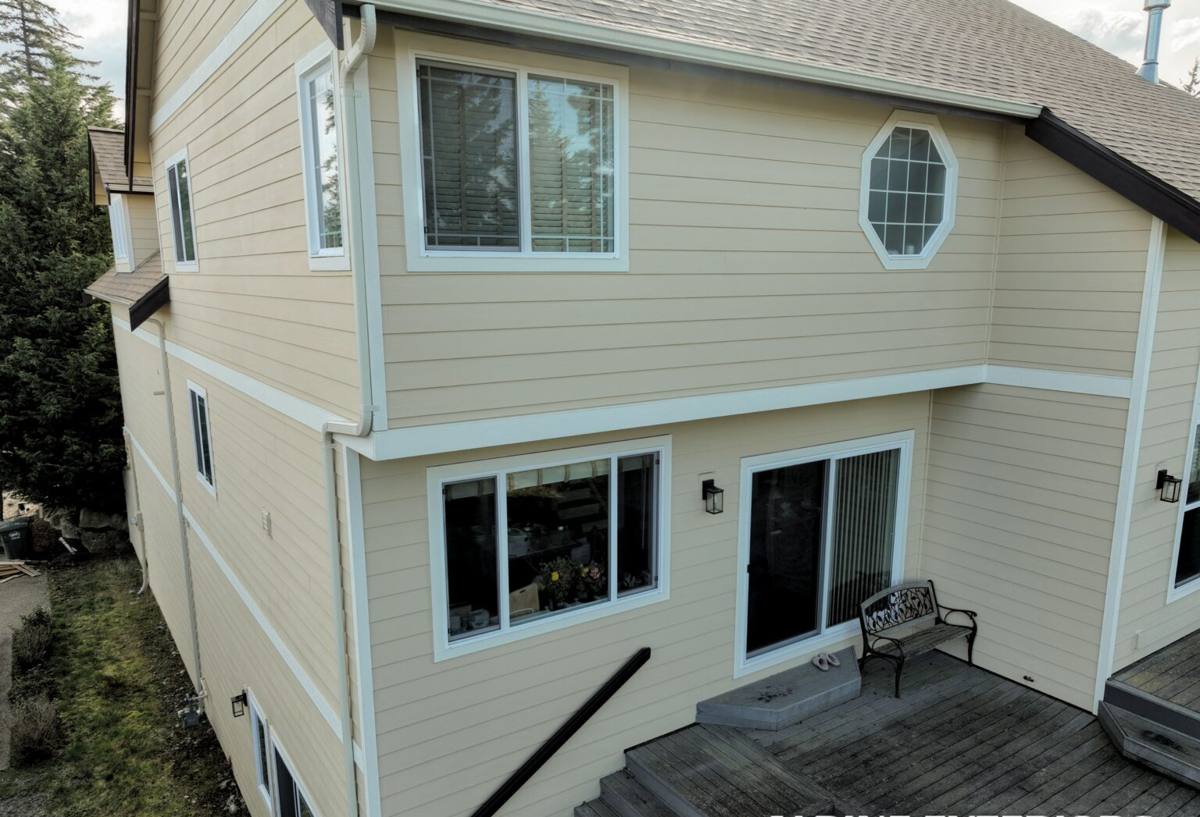
What Salt Air, Rain, and Moss Actually Do to a Deck
Corrosion at the fasteners and hardware
Salt air accelerates corrosion on anything metal — nails, screws, joist hangers, bolts, and railing hardware. Once a fastener starts to rust, it loses grip in the wood, and the deck board or railing post it's holding starts to work loose. This is usually the first failure point on a waterfront deck, often years before the wood itself is a problem.
Moisture intrusion at joints and connections
Driving rain off the water doesn't fall straight down — it gets pushed sideways into railing joints, stair stringers, and the ledger board where the deck attaches to the house. Water that gets trapped in those connection points, rather than running off, is what causes hidden rot. By the time it's visible from the surface, the damage underneath is usually further along than it looks.
Moss, algae, and the slip hazard they create
Whatcom County's wet season is long, and a shaded or north-facing deck in Sandy Point can stay damp for weeks at a stretch. Moss and algae take hold on decking boards and stairs, and beyond looking bad, a mossy deck surface is genuinely slick. Moss also holds moisture against the wood longer than bare boards would, which speeds up the very decay that's causing the repair need in the first place.
Signs Your Deck Needs Repair
Some of these are obvious from a walk-through; others take a closer look with a screwdriver or moisture meter. If you're seeing more than one or two of these, it's worth having it looked at before the next wet season:
- Boards that feel spongy, bounce, or flex more than they used to
- Visible rust streaks running down from screws, nails, or metal hardware
- Railings or posts that wiggle when pushed, even slightly
- Gaps opening up between boards, or boards cupping and warping
- Soft or discolored wood where the deck meets the house (the ledger board area)
- Persistent moss or dark staining that comes back within weeks of cleaning
- Stair stringers that feel unsteady or make cracking sounds under weight
- Visible daylight or gaps where flashing should be sealing a joint
Repair or Replace? What We Actually Look At
Not every problem deck needs to come down. A lot of decks with real issues are still structurally sound where it counts — the framing and posts — and just need targeted repair to the parts taking the most weather abuse. We look at the condition of the framing first, since that's the part that's expensive and disruptive to replace, and work outward from there.
| Factor | Usually a Repair | Usually a Replacement |
|---|---|---|
| Framing and support posts | Solid, no soft spots when probed | Soft, spongy, or visibly decayed |
| Ledger board connection | Sound, properly flashed | Rotted or missing flashing, water damage to the house rim joist |
| Decking boards | Isolated problem boards | Widespread cupping, splitting, or soft boards across the deck |
| Railings and hardware | Loose fasteners, a few weak spots | Rusted-through hardware, posts pulling from framing |
| Age and prior maintenance | Regularly cleaned and sealed | Long-neglected, multiple past patch jobs |
When the framing and the ledger connection are sound, repair is almost always the right call — it costs less, takes less time, and there's no reason to tear out structure that's still doing its job. When the framing itself has failed, patching the surface just delays a bigger problem and can mask a safety issue.
What a Correct Deck Repair Job Involves
Starting with the structure, not the surface
A repair that only replaces the boards you can see, without checking the joists and ledger underneath, is a cosmetic fix. We check framing condition, post connections, and the ledger board attachment before touching decking or railings, because that's where a Sandy Point deck's real problems usually start.
Fasteners and hardware matched to the environment
Standard hardware corrodes fast this close to the water. Any hardware we replace or add gets swapped for stainless steel or hot-dip galvanized fasteners rated for coastal exposure — not the general-purpose fasteners that are fine a few miles inland but fail early here.
Flashing and water management
Where the deck meets the house, and anywhere else water can collect, correct flashing is what actually keeps rot from coming back. A repair that skips flashing and just replaces damaged wood is treating a symptom — the same spot will fail again on the same timeline.
Railings, stairs, and structural connections
Railing posts need a solid connection to the framing, not just surface-mounted brackets. Stair stringers get checked for the same rot and corrosion issues as the deck itself, since stairs take direct rain exposure and heavy foot traffic.
Our Process
- Inspection. We check framing, posts, the ledger connection, decking, railings, and hardware, and probe any area that looks or feels suspect.
- Honest assessment. We tell you what's a repair, what's optional, and what we'd flag as a real safety issue — in plain terms, with our reasoning.
- Scoped plan. You get a clear plan for what's being repaired, what materials and fasteners we're using, and why.
- The repair itself. Structural work first, then decking, railings, and hardware, with attention to flashing and water management at every connection point.
- Walkthrough. We go over the finished repair with you and point out anything worth keeping an eye on going forward.
Material Choices That Hold Up Near the Water
We don't push one decking material as the answer for every deck — wood and composite both have a place, and the right choice depends on your budget, the deck's exposure, and how much maintenance you want to take on.
Pressure-treated and cedar decking can perform well in Sandy Point's conditions, but only with consistent sealing and cleaning — skip a season or two and moss and moisture start winning. Composite decking costs more upfront and doesn't need staining, but it still needs proper fastening, drainage, and airflow underneath to avoid trapped moisture at the framing. Whichever material a deck already has, or whichever you choose for a repair, our standard is the same: corrosion-resistant fasteners, correct flashing, and framing that can actually dry out between rains.
Why Hire a Crew That Already Works Sandy Point
A contractor who mostly works inland can still do fine general carpentry, but they may not think about salt-air corrosion, wind-driven rain angles, or moss-season drainage the way a crew that repairs decks in this specific environment does. We work throughout the Birch Bay area of Whatcom County, including Sandy Point, and we see the same failure patterns often enough to know what to check first and what corners get cut on decks that don't hold up.
That local familiarity also means a more accurate estimate the first time — we're not guessing at what coastal exposure does to a deck, we're working from what we actually see on decks like yours.
Keeping a Repaired Deck in Good Shape
A correct repair buys you years, but a few habits stretch that further, especially given how long the wet season runs here:
- Sweep off standing debris and leaves so moisture doesn't sit against the boards
- Clean moss and algae off before it gets established, not after it's thick
- Check railings and stair connections for looseness once or twice a year
- Reseal wood decking on the schedule the product calls for — don't stretch it out
- Look underneath periodically for rust streaks or soft framing near the ledger
- Keep gutters and downspouts clear so runoff isn't draining onto the deck
If your deck in Sandy Point has soft spots, loose railings, rust stains, or just feels like it's past due for an honest look, we're glad to come take a look. We offer free, no-pressure estimates — use the form below and we'll get in touch.