 Birch Bay Siding
 Building Decks for Sandy Point's Waterfront Conditions
Sandy Point sits right up against the water along the Birch Bay shoreline, and that location is exactly why a deck out here needs to be built differently than one going up ten miles inland. Salt-laden air moves off the water and settles on everything, driving rain comes in sideways during winter storms, and the shaded, damp stretches of many lots stay wet long enough to grow a steady crop of moss and algae. None of that is unusual for Whatcom County waterfront property, but it does mean a deck built to a generic spec sheet will show its age fast — loose fasteners, soft spots, slick boards, and finishes that fail years ahead of schedule.
We build custom decks for homes in this area on a regular basis, and this page walks through what actually matters for a Sandy Point deck: the materials that hold up, the details that keep water out of the structure, and the process we follow from first site visit to final walkthrough.
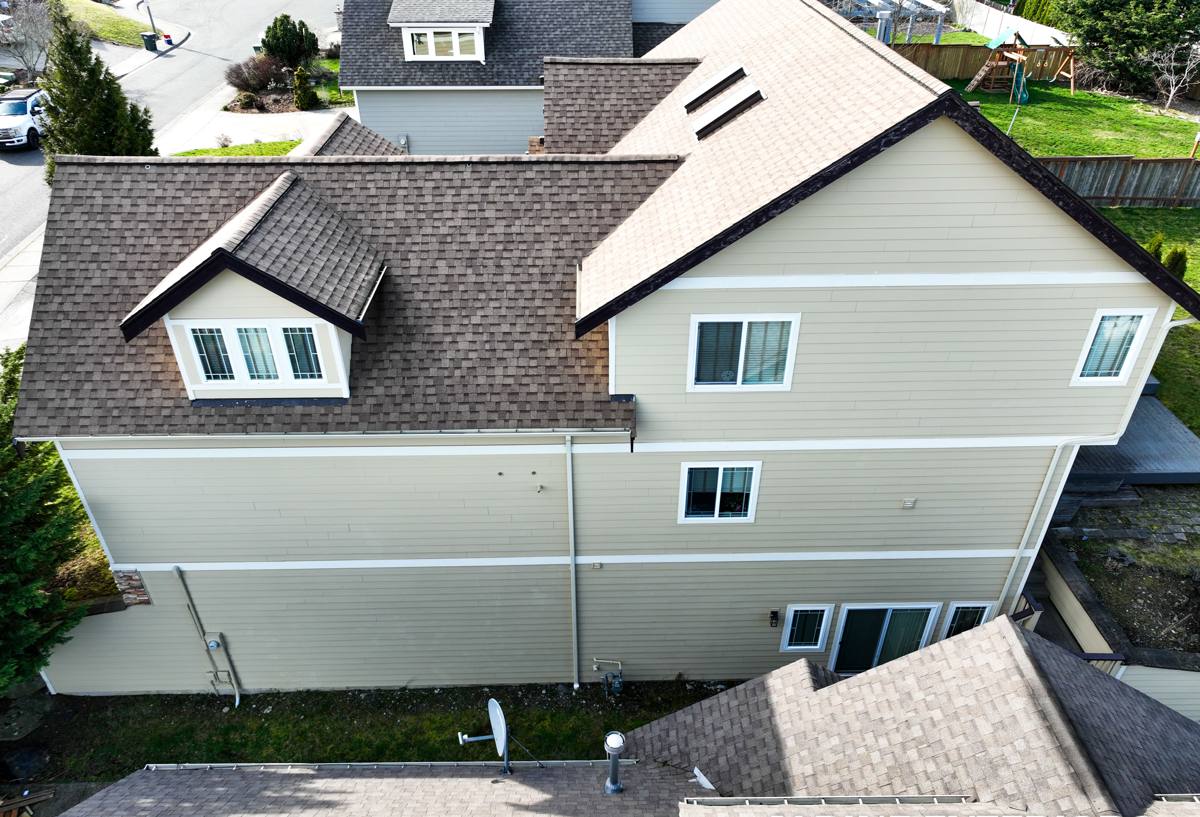
What Sandy Point Homes Actually Need From a Deck
A deck here has to do more than look good for a season. It has to shrug off three things that inland decks rarely deal with at the same intensity: corrosive salt air, near-constant moisture, and biological growth that turns walking surfaces slick.
Salt Air and Hardware Corrosion
Airborne salt accelerates corrosion on any exposed metal — fasteners, brackets, railing hardware, even the heads of screws that are otherwise doing their job. On a standard-grade build, that shows up as rust streaking down the decking within a couple of years and hardware that weakens well before the wood or composite around it fails. Waterfront and near-waterfront builds need corrosion-resistant hardware from the start, not as an upgrade.
Moss, Algae, and Slip Hazards
Birch Bay's long, wet season gives moss and algae months to establish themselves on any deck surface that doesn't dry out quickly — shaded sides of the house, areas under overhangs, and anywhere water tends to pool. Beyond the cosmetic issue, a mossy deck board is a genuine slip hazard, especially on stairs. Surface texture, drainage, and airflow underneath the deck all affect how fast growth takes hold.
Rain Volume and Ledger Protection
The point where a deck attaches to the house — the ledger board — is the single most common source of hidden water damage on any deck, anywhere. In an area that sees the rain volume Whatcom County does, a poorly flashed ledger doesn't just risk the deck; it can drive water into the house's rim joist and framing behind the siding, where it goes unnoticed until there's real rot.
Decking Material Options for a Coastal Environment
There's no single "best" decking material — the right choice depends on your budget, how much upkeep you want to take on, and how close you are to the water. Here's how the common options stack up for a Sandy Point property specifically.
| Material | Salt Air Resistance | Moss/Slip Behavior | Maintenance | Relative Cost |
|---|---|---|---|---|
| Composite decking | Very good — won't rust or rot | Textured, capped boards resist staining and clean up easily | Periodic washing; no sealing or staining | Higher upfront, lowest long-term |
| Cedar | Good if properly sealed and maintained | Can get slick when damp; needs regular cleaning | Re-sealing/staining every 1-2 years in this climate | Mid-range |
| Pressure-treated pine | Fair; hardware and fasteners are the weak point | Rougher surface helps traction but holds moss longer | Sealing every 1-2 years; watch for checking and warping | Lowest upfront |
| Tropical hardwoods (e.g., ipe) | Excellent natural density and rot resistance | Dense surface sheds water well; still needs cleaning | Oiling to maintain color; low structural upkeep | Highest |
For homes with direct salt exposure and owners who don't want a standing maintenance job, we most often recommend composite. For homeowners who want the look and feel of real wood and are willing to keep up a sealing schedule, cedar or a tropical hardwood are both reasonable choices — we'll talk through the trade-offs honestly based on your specific lot and budget rather than pushing one material across the board.
What a Correctly Built Deck Involves
The visible decking is maybe a third of what makes a deck last. The structure underneath and the connection points are where most failures actually start, and they're also the parts a homeowner can't easily inspect once the build is done — which is exactly why they need to be right the first time.
Footings Sized for Local Soil
Footing depth and sizing need to account for the soil conditions on your specific lot and Whatcom County's frost depth requirements. Waterfront lots can also have variable soil composition, so we don't treat footing specs as a copy-paste from the last job — each site gets assessed on its own.
Ledger Flashing Done Right
Given how much rain this area sees, we treat ledger flashing as non-negotiable: proper step flashing, correct fastener spacing rated for the load, and a water-resistant barrier between the ledger and the house sheathing. This is the detail that determines whether your deck stays a simple outdoor structure or becomes a path for water into your home's framing.
Fasteners and Hardware Grade
For decks in salt-air exposure, we use stainless steel or heavy hot-dip galvanized fasteners and structural hardware rather than standard-grade coated screws and brackets. It costs more upfront than the hardware aisle default, but it's the difference between hardware that outlasts the decking and hardware that's rusting and loosening within a few winters.
Railings and Guards
Railing height, baluster spacing, and attachment strength all need to meet code, but on a waterfront property they also need to handle more direct wind and weather exposure than a sheltered inland deck. We build railings to hold up under that load, not just to pass inspection on day one.
Our Process for a Sandy Point Deck Project
Every deck we build starts with an actual site visit — not a phone estimate. Here's how a project typically moves:
- Site visit and consultation. We walk your property, look at drainage patterns, sun and shade exposure, existing structure (if replacing a deck), and talk through how you actually plan to use the space.
- Design and material selection. We put together a layout and material recommendation based on your budget, maintenance preference, and the specific exposure your lot has to wind, rain, and salt air.
- Permitting. We handle the permit process with the relevant local jurisdiction so the structure is inspected and documented correctly — this protects you if you ever sell the home or file an insurance claim.
- Construction. Footings, framing, ledger attachment and flashing, decking, and railing — built in that order, with each stage inspected before we move to the next.
- Final walkthrough. We go over the finished deck with you, including what maintenance it needs and on what schedule, before we consider the job done.
Maintaining a Deck in Birch Bay's Climate
Even a well-built deck needs some seasonal attention out here — the climate simply asks more of an outdoor structure than it would inland. A short annual routine catches problems while they're still cheap to fix.
- Sweep and rinse the deck surface regularly to keep moss and algae from getting a foothold, especially in shaded areas
- Check fastener heads and railing connections each spring for early signs of rust or looseness
- Inspect the ledger board area and flashing after the wettest months for staining or soft wood
- Clear debris and standing water from between boards and off the surface so moisture doesn't sit
- Re-seal or re-stain wood decking on the schedule appropriate to that material — don't wait until it's visibly failing
- Check under-deck framing and post bases for moisture or early rot if the space is accessible
Why It Matters to Hire a Crew That Already Works This Area
A deck built by a crew with no experience in waterfront Whatcom County conditions can look identical to one built by a crew that does — for the first year or two. The difference shows up later, in the hardware that starts rusting, the ledger that was flashed like an inland job, or the decking material that wasn't suited to how much moss and moisture the lot actually sees. We already know what salt air and Birch Bay's rain do to a structure over time, so we're not guessing at material and hardware choices for your project. If your property is part of a community with design guidelines or covenants, we can also work within those requirements as part of the planning process.
What Affects the Cost of a Custom Deck
We won't quote a number without seeing the site, but the main cost drivers on most Sandy Point projects are consistent: overall square footage, the decking material you choose, how many stairs and landings are involved, railing style, and whether the site needs extra footing work due to slope or soil conditions. A simple, single-level composite deck will run less than a multi-level design with custom railing and hardwood decking — the honest answer is always "it depends on the specifics," which is exactly what the site visit is for.
If you're planning a new deck or replacing one that's showing its age, we're happy to take a look and put together a straightforward, no-pressure estimate — just fill out the form below to get started.