 Birch Bay Siding
 Roofing Birch Bay Village Homes for the Conditions They Actually Face
Birch Bay Village sits close enough to the water that salt air is part of daily life, not an occasional nuisance. Add Whatcom County's long wet season, driving rain that comes in sideways off the bay, and the shade cover that keeps moss thriving on north-facing slopes for most of the year, and you've got a roofing environment that's genuinely harder on materials than most inland neighborhoods ever see. A roof replacement here isn't just about swapping old shingles for new ones — it's about building a system that's specifically set up to shed water fast, resist wind-driven rain intrusion, and slow down moss and algae growth for as long as possible.
We work Birch Bay Village regularly, which means we already know what tends to go wrong on roofs in this specific pocket of Whatcom County — where moisture collects, which slopes hold moss longest, and which flashing details get skipped by crews who aren't used to coastal installs. That local familiarity shows up in the details of the job, not just the sales pitch.
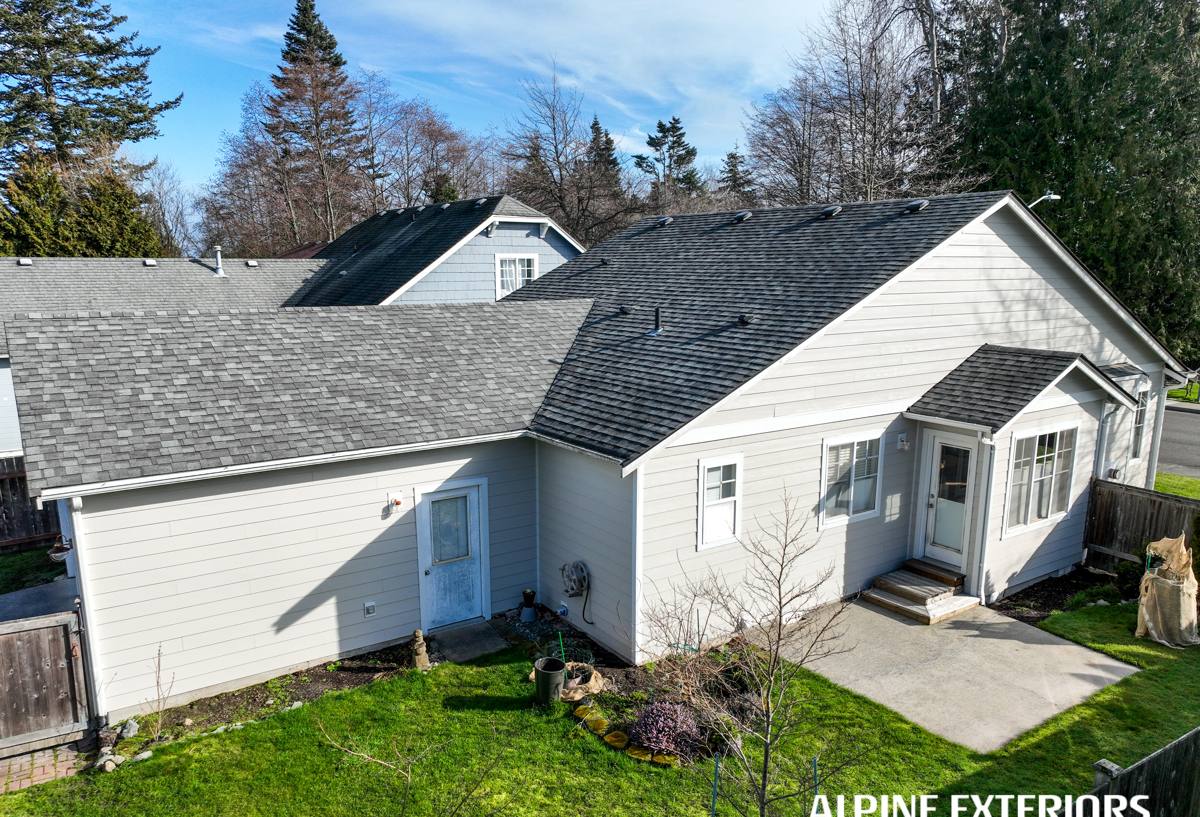
What Salt Air, Rain, and Moss Actually Do to a Roof
Salt Air
Airborne salt from the bay settles on roofing surfaces and accelerates corrosion on exposed metal — nails, flashing, vents, and fasteners. Cheaper or improperly coated metal components can start showing rust streaks and pitting years before they would inland. This is one of the biggest reasons material choice matters more here than in a landlocked neighborhood.
Driving Rain
Birch Bay gets wind-driven rain that doesn't just fall straight down — it pushes sideways under shingle tabs, around vents, and into any flashing detail that's even slightly undersized or under-sealed. A roof that would perform fine in a calmer climate can leak here if the underlayment, flashing laps, and fastening pattern weren't built with wind-driven moisture in mind.
Moss and Algae
Shaded, north-facing roof sections in Birch Bay Village can stay damp for weeks at a stretch during the wet months. That constant moisture is exactly what moss needs to establish itself, and once it takes hold it lifts shingle edges, traps water against the roof deck, and shortens the life of the roofing material significantly if it's left unmanaged.
Signs a Birch Bay Village Roof Needs Replacing, Not Just Patching
- Granule loss showing up in gutters or at downspout outlets, especially after a hard rain
- Shingles that are cupping, curling, or cracking, particularly on south- and west-facing slopes
- Moss established at the ridge or in valleys that keeps coming back after cleaning
- Rusted or visibly corroded flashing around chimneys, vents, and skylights
- Soft spots, sagging, or staining on interior ceilings near exterior walls
- A roof that's 20+ years old and has never had a full tear-off, even if it "looks okay" from the ground
- Repeated small leaks in different spots each winter — a sign the whole system is aging out, not just one shingle
If you're only seeing one or two of these, a repair might still make sense. If you're seeing several at once, or the roof is old enough that patching one area just shifts problems to the next, replacement is usually the more honest recommendation — and the one that saves money over a few more years of chasing leaks.
What a Correct Roof Replacement Looks Like Here
Full Tear-Off, Every Time
We don't install new roofing over old layers. A tear-off lets us actually see the deck — check for rot, soft spots, and prior water damage that a layover would just bury. In a climate with this much sustained moisture, hidden deck problems are exactly what causes premature failures down the road.
Underlayment Built for Wind-Driven Rain
Given how much sideways rain Birch Bay sees off the water, we use synthetic underlayment with proper overlap and sealed seams, plus ice-and-water shield in the vulnerable spots — eaves, valleys, and around every penetration. This is the layer that saves you when wind pushes moisture past the shingle surface, and it's also the layer that gets skimped on by crews working fast.
Flashing That Won't Corrode
Given the salt exposure, we pay particular attention to flashing material and installation — proper metal selection, correct step-and-counter flashing at walls, and sealed, lapped details at every roof penetration. Flashing failures are one of the most common causes of leaks on coastal roofs, and they're almost always preventable with correct installation up front.
Ventilation That Matches the Climate
Balanced intake and exhaust ventilation keeps the attic and roof deck from trapping moisture underneath the new roofing. In a damp climate like this, poor ventilation contributes to both premature shingle aging from the underside and conditions that help moss and mold get a foothold.
Moss-Resistant Details Where They Count
On shaded slopes prone to moss, we can incorporate copper or zinc strips near the ridge, which release trace metal ions with rainfall that discourage moss regrowth — a low-maintenance way to extend the clean look of the roof between cleanings, without relying on chemical treatments that need reapplying.
Material Options for Birch Bay Village Homes
| Material | How It Handles Salt Air & Rain | Moss Resistance | Typical Lifespan |
|---|---|---|---|
| Architectural Asphalt Shingle | Good with correct flashing and underlayment; algae-resistant granule options recommended near the coast | Moderate — benefits from moss-inhibiting strips on shaded slopes | 25–30 years |
| Standing Seam Metal | Excellent when properly coated; sheds wind-driven rain very effectively | High — steep, smooth surface discourages growth | 40–50+ years |
| Synthetic/Composite Shake | Good; doesn't absorb moisture like wood, holds up well to salt exposure | Moderate to high depending on product | 30–50 years |
| Cedar Shake (untreated) | Struggles with sustained coastal moisture without diligent maintenance | Low — high moisture retention feeds moss and rot | Varies widely; maintenance-dependent |
We'll walk you through what actually fits your home, your roof's slope and exposure, and your budget — there's no single "best" answer for every house in Birch Bay Village, and we're not going to push a product because it's easier for us to install.
Our Process, Start to Finish
- On-site inspection. We walk the roof, check the deck condition where accessible, look at flashing, ventilation, and any existing moss or moisture damage, and take honest notes on what's actually needed.
- Written estimate. You get a clear scope of work and pricing — no vague line items, no pressure to decide on the spot.
- Material selection. We talk through options based on your roof's exposure, your home's style, and your budget, with straight talk about trade-offs.
- Scheduling around weather. Given how much rain this area sees, we plan installs to minimize the window your home is exposed, and we don't cut corners to beat a forecast.
- Full tear-off and installation. Deck inspection, underlayment, flashing, ventilation, and final roofing installed to manufacturer spec — not shortcuts to save an hour.
- Final walkthrough. We show you the finished work, confirm cleanup is complete, and go over warranty coverage before we consider the job done.
Why a Crew That Works Birch Bay Village Specifically Matters
Roofing crews that mostly work drier, inland areas sometimes underestimate what a coastal Whatcom County roof needs — lighter underlayment, standard fasteners instead of corrosion-resistant ones, or flashing details that are fine in a mild climate but undersized for wind-driven rain off the bay. We work this neighborhood and the surrounding Birch Bay area regularly enough to know which slopes hold moss the longest, where salt exposure hits hardest, and which installation details actually matter here versus which ones are just upsells.
That familiarity also means faster, more accurate estimates. We're not guessing at what your neighborhood's homes typically need — we've seen it firsthand, roof after roof.
Maintenance That Extends the Life of a New Roof
- Clean gutters at least twice a year — clogged gutters in a heavy-rain climate back water up under the roof edge
- Have moss professionally removed (not power-washed, which can strip granules) as soon as it appears on shaded slopes
- Trim back overhanging branches to reduce shade, debris, and the moisture that feeds moss
- Schedule a roof inspection after any major windstorm off the bay to catch lifted shingles or damaged flashing early
- Check attic ventilation isn't blocked by insulation, especially after any attic work
A well-installed roof handles Birch Bay's climate for decades. A well-maintained one does even better — the two work together, and neither one substitutes for the other.
Get a Straight Answer on Your Roof
If your Birch Bay Village home is showing signs of roof wear, or you just want an honest read on how many years you've got left before replacement makes more sense than repair, we're happy to take a look. We'll give you a free, no-pressure estimate and tell you plainly what we see — whether that means a full replacement, a targeted repair, or simply keeping an eye on it for now. Fill out the form below to get started.