 Birch Bay Siding
 Roof Repair Built for Blaine's Coastal Conditions
Homes along the Blaine and Birch Bay shoreline take a different kind of beating than roofs twenty miles inland. The same salt air that makes this stretch of Whatcom County a good place to live is slowly working against every roof on it. Add driving rain off the Strait of Georgia and a moss season that can run most of the year in the shade, and you end up with roofs that fail in specific, predictable ways. A repair done without accounting for those conditions tends to need a second repair within a year or two. One done correctly the first time holds up.
This page is about roof repair specifically for Blaine and the surrounding Birch Bay area — what tends to go wrong here, what a proper repair involves, and how we approach the job so it actually lasts through the next few winters.
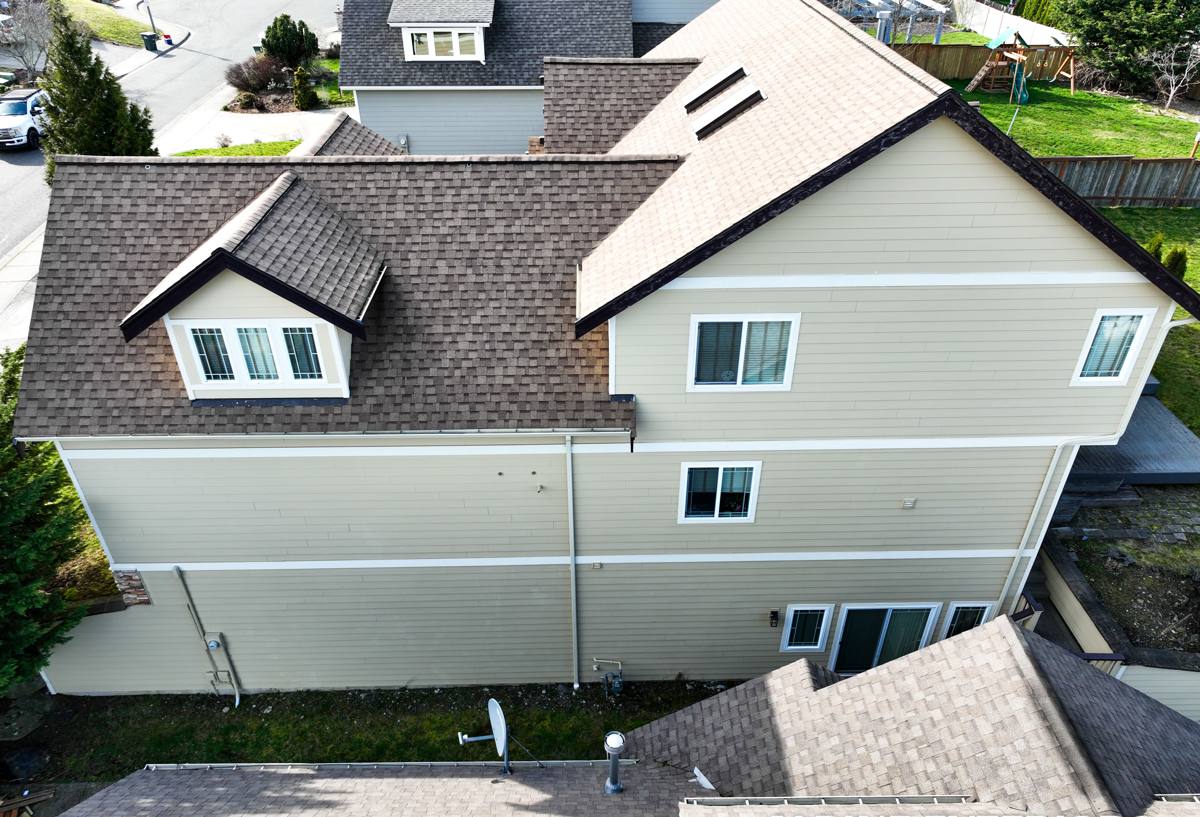
Why Salt Air, Rain, and Moss Change the Repair Calculus
Salt Air and Metal Fasteners
Salt-laden air corrodes exposed metal faster than it does further inland. Roofing nails, flashing, vent boots, and screws that would hold up for decades in a drier, non-coastal climate can start rusting and losing grip years earlier near the water. When we repair a roof in Blaine, we're looking closely at fastener condition, not just shingle condition — a shingle can look fine while the nail underneath it has already lost most of its holding strength.
Driving Rain and Wind-Driven Water
Storms coming off the water don't just fall straight down — wind pushes rain sideways and up under laps, seams, and flashing edges that would stay dry in a calmer climate. This is why so many leaks on Birch Bay homes show up at valleys, chimney flashing, and roof-to-wall transitions rather than in the open field of the roof itself. A repair that only patches the visible gap and ignores how water is actually moving in a wind-driven storm usually leaks again at the next big blow.
Moss Season and Roof Damage
Whatcom County's mild, wet climate keeps moss growing on shaded and north-facing roof slopes for most of the year. Moss holds moisture against the roofing material, works its way under shingle tabs as it grows, and can lift edges just enough to let water in. It also holds onto the granule loss that comes with age, which accelerates wear on asphalt shingles specifically. Moss isn't just cosmetic — on an older roof, established moss growth is often the direct cause of the leak we're called out to fix.
Signs a Blaine Roof Needs Repair Now
Most roof problems give warning signs well before they turn into an active leak inside the house. Homeowners in Blaine and Birch Bay should watch for:
- Water stains on interior ceilings or the tops of walls, especially after a windy rainstorm
- Missing, cracked, or curling shingles, particularly on slopes facing the water
- Heavy moss or algae buildup on shaded roof sections
- Granules collecting in gutters or at downspout outlets
- Daylight visible through the roof deck from inside an attic
- Soft or spongy spots when walking the roof for inspection
- Rusted, lifted, or separated flashing around chimneys, skylights, and vent pipes
- Sagging in the roofline, which usually points to deck or structural moisture damage
Any one of these on its own might just need a straightforward patch. Several at once, or damage that's spread across more than one slope, is usually the point where it's worth having someone look at the whole roof rather than just the spot that's currently leaking.
What a Correct Repair Actually Involves
Diagnose the Cause, Not Just the Symptom
The leak you see inside the house is often several feet away from where water is actually entering the roof, because water travels along the underlayment or roof deck before it finds a way through. A repair that just re-seals the spot above the ceiling stain without tracing the water's actual path tends to look successful for a few months and then come back. We start by getting on the roof and finding the real entry point — usually a failed flashing detail, a wind-lifted shingle, or a section where moss has worked underneath the roofing material.
Matching Materials, Not Just Covering the Hole
A repair patch that doesn't match the existing shingle profile, color, or exposure will telegraph as a visible patch for the life of the roof, and mismatched materials can also age and weather differently, creating a new weak point at the seam between old and new. Where an exact match isn't available — which happens on older roofs — we talk through the options with the homeowner rather than just installing whatever's on the truck.
Flashing and Underlayment Come First
On a coastal roof, flashing and underlayment condition matter more than the shingles themselves, because those are the components actually doing the work of keeping wind-driven water out at every joint and penetration. A repair that replaces damaged shingles but reuses old, corroded flashing underneath is addressing the part you can see and skipping the part that's actually failing.
Common Roof Repairs We Handle in Blaine
| Repair Type | Typical Local Cause | What's Involved |
|---|---|---|
| Flashing repair or replacement | Salt-air corrosion, wind-driven rain at chimneys and walls | Remove and replace flashing, re-seal roof-to-wall and roof-to-chimney transitions |
| Shingle replacement (spot repair) | Wind lift, granule loss, age | Remove damaged shingles, inspect deck beneath, install matched replacements |
| Moss remediation and repair | Shaded, north-facing slopes; long wet season | Careful moss removal, treatment of affected shingles, repair of any lifted or damaged material underneath |
| Valley repair | Concentrated water flow during heavy or driving rain | Re-line or reinforce valley flashing and underlayment where water volume is highest |
| Vent boot and penetration repair | Rubber boot deterioration, corroded fasteners | Replace boots and fasteners, re-seal around pipes and vents |
| Deck repair | Long-term moisture intrusion left unaddressed | Cut out and replace damaged sheathing before re-roofing the section |
Our Process, From Call to Finished Repair
1. Inspection and Honest Diagnosis
We walk the roof, check the attic if accessible, and trace the actual path water is taking before recommending anything. If it's a simple, contained repair, we say so. If the damage is more extensive than the visible symptom suggests, we explain what we found and why.
2. A Clear, Written Estimate
You get a straightforward scope of work and price before anything starts — no vague allowances, no surprise add-ons once we're up on the roof.
3. The Repair Itself
We work the affected area properly: pulling back enough surrounding material to see what's underneath, replacing flashing and underlayment where it's compromised, and matching shingles as closely as materials allow. We don't just cap over a problem to make it disappear from view.
4. Cleanup and Walkthrough
Debris, old materials, and stray fasteners get cleared from the roof, gutters, and ground before we consider the job done, and we walk you through what was found and fixed.
Why a Crew That Already Works Blaine Matters
A roofer who works Blaine and Birch Bay regularly already knows which slopes on which house orientations take the worst of the wind-driven rain, how aggressively moss establishes itself on the area's shaded rooflines, and how fast salt exposure eats through standard fasteners and flashing compared to a roof twenty miles inland. That local pattern recognition shortens the diagnosis and reduces the chance of a repair that solves the visible symptom but misses the actual cause. It also means realistic expectations about how a repair will hold up through the next wet season, rather than assumptions carried over from a drier climate.
Repair vs. Replacement: Making the Right Call
Not every roof problem in Blaine needs a full replacement, and not every leak is fixable with a quick patch. As a general guide:
- Repair usually makes sense when damage is contained to one section, the roof is under roughly two-thirds of its expected lifespan, and the deck underneath is still sound
- Replacement is usually the better long-term value when damage is spread across multiple slopes, the roofing material is near the end of its service life, or repeated repairs are being needed in different spots year after year
We'll give you a straight answer on which situation you're in rather than defaulting to whichever is more profitable for us. A patch that's likely to fail again within a year isn't a good use of your money, and a full replacement on a roof that only needs targeted work isn't either.
Protecting the Repair Afterward
A properly done repair still benefits from basic upkeep in a climate like this one. Keeping gutters clear so water has somewhere to go during heavy rain, keeping overhanging branches trimmed back so shaded areas get at least some sun and airflow, and having moss treated before it establishes heavily all extend the life of both the repaired section and the rest of the roof. None of this requires getting on the roof yourself — it's worth mentioning to whoever repairs your roof so it stays factored into future visits.
Get a Free, No-Pressure Estimate
If you're dealing with a leak, visible moss, or storm damage on a Blaine or Birch Bay roof, we're glad to take a look and give you a straight assessment of what's actually going on and what it will take to fix it right. Use the form below to request a free estimate.