 Birch Bay Siding
 Why Decks in Point Whitehorn Wear Differently
Point Whitehorn sits close enough to the water that its homes take a different kind of weather than a deck ten miles inland. The bluffs and shoreline along this stretch of Whatcom County catch wind and moisture straight off the Salish Sea, and that combination is hard on outdoor structures in ways that aren't always obvious from the surface. A deck can look fine for years while the framing underneath quietly loses its strength to trapped moisture, corroding fasteners, and constant damp shade. By the time boards start to feel spongy or a railing post wiggles, the damage is usually well past a simple repair.
We build and replace decks throughout the Birch Bay area, and Point Whitehorn properties consistently show the same wear pattern: solid-looking surface boards over framing and connections that have been silently failing underneath. A replacement done right here isn't just about swapping old boards for new ones — it's about correcting the details that let the last deck fail early in the first place.
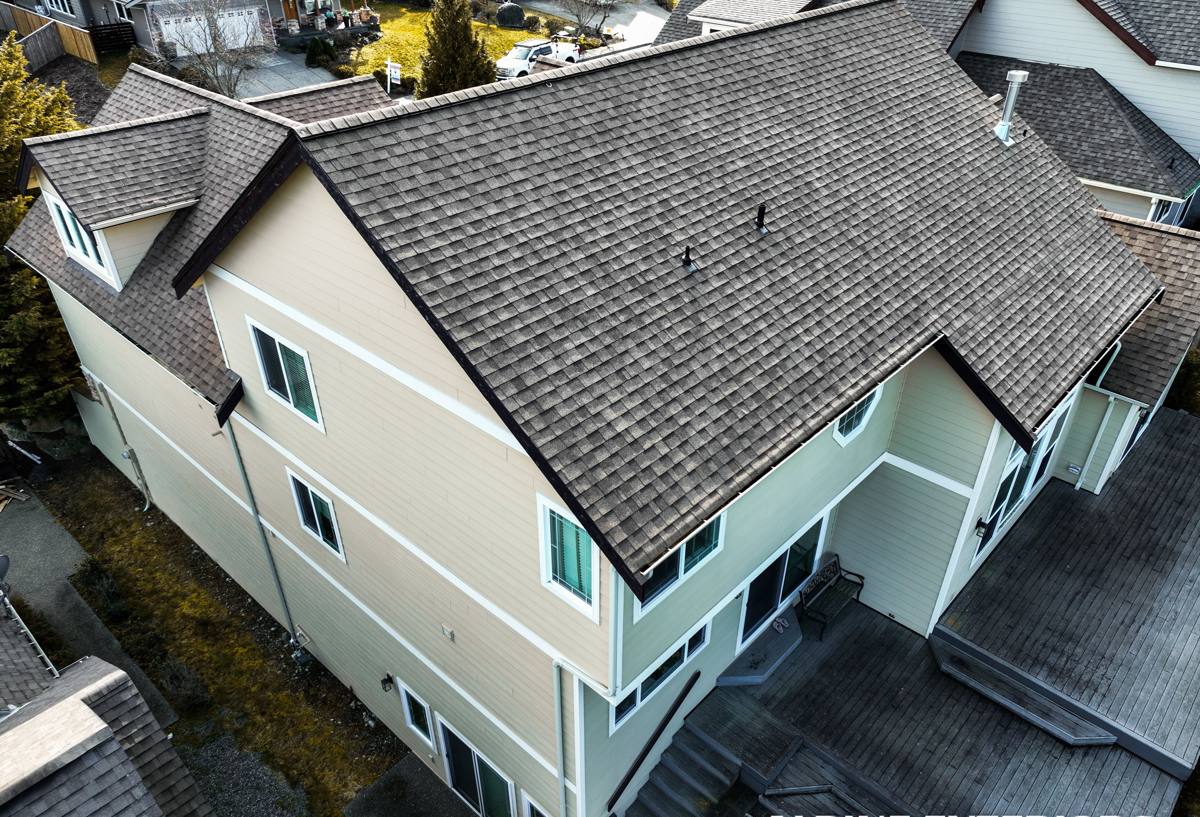
What the Coastal Climate Does to a Deck
Salt Air and Fasteners
Airborne salt from the water settles on every exposed surface, including the screws, nails, brackets, and joist hangers holding a deck together. Standard fasteners and connectors that would last decades in a drier inland yard can start corroding within a few seasons this close to the shoreline. Once a fastener weakens, the joint it's holding loses grip long before the wood around it looks bad, which is why decks in this area sometimes feel "loose" well before any board shows visible rot.
Driving Rain and Hidden Rot
Storms coming off the water don't just fall straight down — wind-driven rain gets pushed sideways into ledger boards, rim joists, and any spot where the deck meets the house. If flashing was skipped or installed poorly on the original build, water works its way behind the siding and into the framing over years, rotting it from the inside while the visible wood stays intact. This is one of the most common reasons a deck that "looks okay" turns out to need full replacement once a contractor pulls the boards back.
Moss, Shade, and Standing Water
Whatcom County's long wet season keeps moss and algae established on shaded or north-facing decks for much of the year. Beyond the slip hazard, moss holds moisture against the wood surface far longer than open sun and air would allow, accelerating decay in the boards themselves and in any gaps between boards where debris and organic growth collect. Decks with poor drainage or tight board spacing tend to show this wear first.
Signs Your Deck Needs Replacement, Not Another Repair
Some deck problems are genuinely fixable with a board swap or a hardware upgrade. Others are a sign the structure itself has reached the end of its service life. A few honest checkpoints before you decide which category you're in:
- Boards that feel soft, spongy, or spring back slowly when you step on them
- A ledger board or rim joist that's discolored, swollen, or crumbling where the deck meets the house
- Railing posts or stair stringers that flex or wiggle under normal use
- Visible rust streaking from screws, nails, or metal connectors
- Persistent moss or dark staining that returns within weeks of cleaning
- Gaps, cupping, or splitting across multiple boards rather than just one or two
- A deck original to a home built more than 15-20 years ago that has never been re-flashed
One or two of these on their own might mean a repair. Several at once, especially anything involving the ledger board or framing, usually means the deck has passed the point where patching makes financial sense.
What a Correct Deck Replacement Involves Here
Framing and Ledger Flashing
The single most important part of a deck replacement in this climate is what happens where the deck attaches to the house. Proper ledger flashing — installed so water is directed out and away from the wall assembly rather than behind it — is what prevents the hidden rot that takes down so many older decks in this area. We treat this connection as the foundation of the whole project, not an afterthought under the first row of boards.
Decking Material Choice
Wood, composite, and PVC decking all behave differently under salt air, damp shade, and freeze-thaw cycles. The right choice depends on your budget, how much upkeep you're willing to do, and how exposed the deck is to wind and rain off the water. We'll walk through the honest trade-offs for your specific site rather than pushing one product for every home.
Fasteners and Hardware
Given how fast standard hardware corrodes this close to the shoreline, we use stainless steel or marine-grade coated fasteners and connectors on replacement decks in Point Whitehorn. It costs more up front than builder-grade hardware, but it's the difference between a deck that stays structurally sound for decades and one where the connections fail years before the boards do.
Railings and Code Compliance
Any deck replacement is a chance to bring railings, guard height, baluster spacing, and stair details up to current Whatcom County building code — important both for safety and for resale, since outdated railings are a common inspection flag when a home sells.
Decking Material Comparison for This Climate
| Material | How It Handles Salt Air & Moisture | Upkeep | Typical Lifespan Here |
|---|---|---|---|
| Pressure-treated wood | Needs sealing/staining to resist moisture intrusion; most affordable upfront | Annual cleaning, re-staining every 2-3 years | 10-15 years with regular maintenance |
| Cedar | Naturally rot-resistant but still needs periodic sealing near the water | Cleaning plus sealant every 2-3 years | 15-20 years with upkeep |
| Capped composite | Resists moisture absorption and salt exposure well; won't rot | Occasional washing, no staining or sealing | 25-30+ years, manufacturer warranty-backed |
| PVC decking | Fully synthetic, handles damp shade and salt air with minimal wear | Lowest upkeep of the group | 25-30+ years, manufacturer warranty-backed |
Wood costs less to install but asks more of you every year to keep it protected — a real consideration if your deck sits in a shaded, moss-prone spot. Composite and PVC cost more upfront but hold up with far less maintenance in exactly the conditions Point Whitehorn sees most: salt air, wind-driven rain, and long stretches of damp shade.
What Drives the Cost of a Deck Replacement
Every deck replacement quote is a little different, but the same handful of factors move the price up or down on most Point Whitehorn projects:
| Factor | Why It Matters |
|---|---|
| Deck size and footprint | More square footage means more material, labor, and framing |
| Framing condition underneath | Rotted joists or ledger boards found during tear-out add repair scope |
| Decking material chosen | Wood, composite, and PVC carry different material costs and install methods |
| Height and stairs | Elevated decks and multi-flight stairs add structural and railing work |
| Railing style and code updates | Bringing older railings up to current code can add scope on older homes |
| Site access | Tight side yards or bluff-adjacent lots can slow tear-out and material staging |
We don't quote a number until we've actually looked at the framing, since that's the piece that most often changes the scope once boards come up.
Our Process for a Point Whitehorn Deck Replacement
1. On-Site Assessment
We start by inspecting the ledger connection, framing, and posts, not just the visible decking. This is where we find out whether you're looking at a straightforward board replacement or a deeper framing issue.
2. Honest Scope and Estimate
You get a clear breakdown of what needs to happen and why, with material options explained in plain terms so you can weigh cost against long-term upkeep for your specific situation.
3. Permitting
Most deck replacements in Whatcom County require a permit, particularly when framing, height, or railings are involved. We handle that process as part of the job.
4. Tear-Out and Rebuild
Old decking, and any compromised framing or ledger material, comes out completely. We rebuild with correctly flashed connections and corrosion-resistant hardware sized for this environment, then install the decking, railings, and stairs.
5. Final Walkthrough
Before we consider the job finished, we walk the deck with you — checking railings, stair spacing, and overall finish so nothing gets left as a punch-list item you discover later.
Why Local Experience Matters for This Job
A deck replacement crew that mostly works inland projects doesn't always think about ledger flashing, fastener grade, or drainage the same way a crew working the Birch Bay shoreline does, because inland decks don't have to fight salt air and driving rain the same way. We work in this specific climate regularly, which means we're not guessing at what fails here first — we've seen it, and we build to avoid it. That's the difference between a deck that needs attention again in five years and one that holds up through another two decades of Whatcom County weather.
If your deck is showing any of the wear signs above, or you just want a straight answer on whether it's a repair or a replacement situation, we're happy to take a look. Reach out for a free, no-pressure estimate using the form below.