 Birch Bay Siding
 Roof Replacement for Nooksack Homes
Nooksack sits in the same demanding stretch of Whatcom County weather that we see across our whole Birch Bay service area: salt-laden air moving in off the water, long stretches of driving rain through fall and winter, and a moss season that can run most of the year on shaded roof slopes. A roof out here isn't just a barrier against rain — it's fighting a slow, constant battle against moisture intrusion, organic growth, and the corrosion that salt air causes on fasteners and metal flashing. When that battle starts going the wrong way, a roof replacement isn't a luxury project. It's the thing that keeps the rest of the house dry.
This page covers what actually goes into a correct roof replacement for a home in this area, what to look for in materials and workmanship, and how our process works from first inspection to final walkthrough.
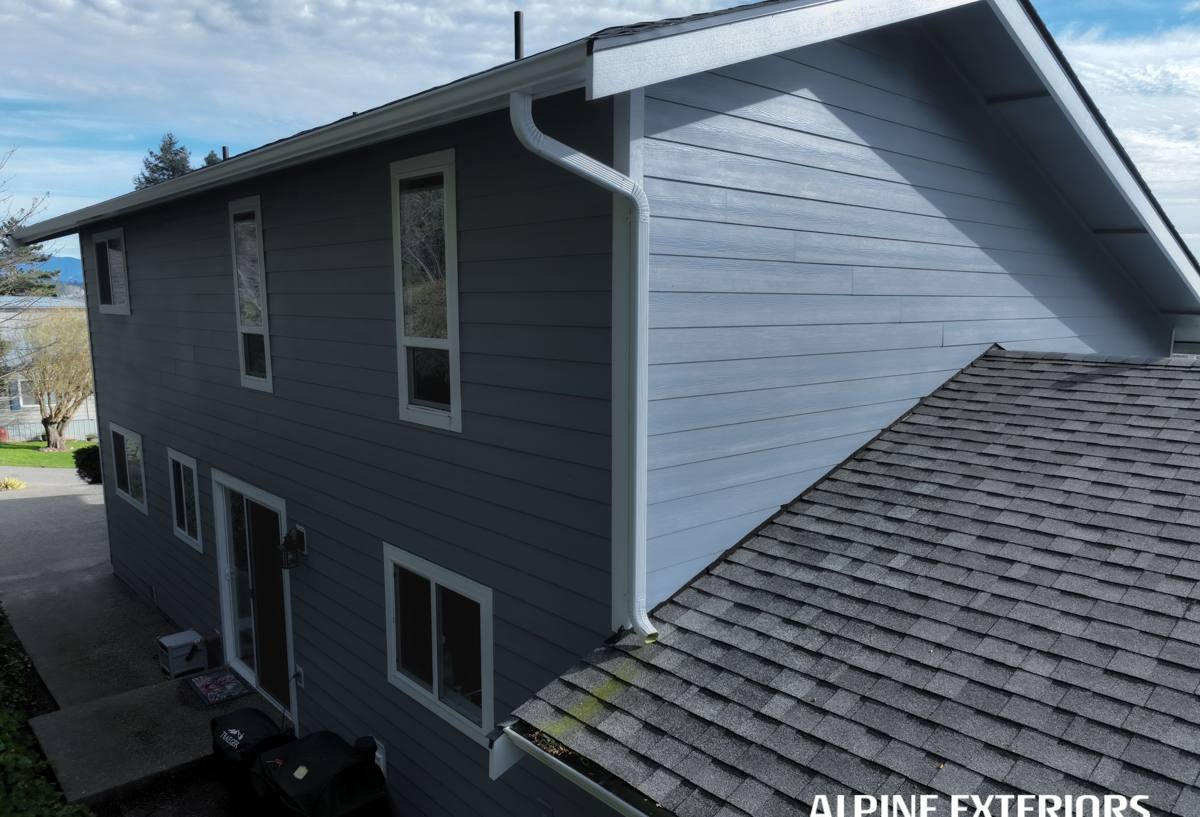
Signs a Nooksack Roof Is Due for Replacement
Roofs rarely fail all at once. They give warning signs for months or years before a leak actually shows up inside the house. Knowing what to watch for can be the difference between a planned replacement and an emergency repair during a winter storm.
Moss and Algae Buildup
Thick moss on north-facing or shaded slopes isn't just cosmetic. Moss holds moisture directly against the shingle surface, which accelerates granule loss and can lift shingle edges enough for wind-driven rain to get underneath. If moss keeps coming back within a year or two of cleaning, that's usually a sign the roof's surface is already degraded enough that it can't shed water and dry out the way it should.
Shingle Wear and Granule Loss
Bald patches, curling shingle edges, and granules collecting in gutters are all signs the asphalt underneath is starting to bake and crack from UV exposure and repeated wet-dry cycles. Once a shingle loses its granule coating, it ages much faster.
Interior Warning Signs
Water stains on ceilings, musty smells in the attic, or visible daylight through the roof deck are late-stage signs — by the time these show up, moisture has usually been getting into the structure for a while. A roof replacement at this stage often needs to include some deck repair, not just new shingles.
What a Correct Roof Replacement Actually Involves
A roof replacement is more than stripping old shingles and laying down new ones. In a climate like ours, the details underneath the visible surface matter as much as the shingle brand on top.
Full Tear-Off and Deck Inspection
We remove the old roofing down to the deck rather than layering over it. This lets us actually see the plywood or OSB sheathing underneath and replace any sections that have gone soft or delaminated from long-term moisture exposure — something that's common on homes that have gone a long time between replacements in a wet climate.
Underlayment and Water-Resistant Barrier
A synthetic or felt underlayment goes down over the deck as the roof's secondary defense. In areas prone to ice damming, wind-driven rain, or valleys and eaves where water concentrates, we use a self-adhering water-and-ice barrier for extra protection at the vulnerable points.
Flashing at Every Penetration
Chimneys, vent pipes, skylights, and roof-to-wall intersections are where the vast majority of roof leaks actually start — not in the open field of shingles. Correct flashing work, tied properly into the underlayment and siding, is one of the most important parts of the job and one of the easiest things for a rushed crew to shortcut.
Proper Ventilation
Ridge and soffit ventilation lets the attic breathe, which controls moisture buildup and helps the roof deck dry out between rain events. In a climate this wet, poor ventilation can trap humid air against the underside of the deck and shorten the life of the new roof before it's even had a chance to prove itself.
Choosing the Right Material for This Climate
There's no single "best" roofing material for every home — it depends on the roof's pitch, the budget, and how much long-term maintenance the homeowner wants to take on. Here's how the common options stack up for a wet, moss-prone, salt-air environment like ours.
| Material | Typical Lifespan | Moss/Algae Resistance | Relative Cost | Best Fit |
|---|---|---|---|---|
| Standard 3-Tab Asphalt | 15-20 years | Low without treatment | Lowest | Budget-focused projects, shorter-term ownership plans |
| Architectural (Dimensional) Asphalt | 25-30 years | Moderate; better with algae-resistant granules | Mid-range | Most homes; strong balance of cost and durability |
| Metal Roofing | 40-60+ years | High; sheds moss more easily on steeper pitches | Higher upfront | Long-term owners, steep roofs, low-maintenance priority |
| Synthetic/Composite Shake | 30-50 years | Moderate to high depending on product | Higher | Homeowners wanting a cedar look without cedar's upkeep |
We generally steer homeowners toward algae-resistant architectural shingles or metal roofing for this area specifically because of how much time our roofs spend wet. A product that performs fine in a dry climate can struggle here simply because it never gets enough dry time between rain events to fully shed moisture. That's a maintenance and moisture-behavior consideration, not a knock on any particular brand — it's about matching the product to the conditions it will actually live in.
Our Roof Replacement Process
Homeowners generally want to know two things before a roof project starts: how long it will take, and what to expect day to day. Here's the general sequence we follow.
- Inspection and estimate — We walk the roof, check the attic for ventilation and moisture issues, and give an honest assessment of what the roof actually needs.
- Material selection — We go over the tradeoffs between shingle types, colors, and warranty tiers so the choice fits the budget and the house.
- Scheduling around weather — Roofing in this region means planning around rain windows. We track forecasts closely and won't leave a deck exposed if a system is rolling in.
- Tear-off and deck repair — Old roofing comes off, the deck gets inspected, and any damaged sheathing is replaced before anything new goes down.
- Underlayment, flashing, and ventilation — The parts that actually keep water out get installed correctly, not rushed.
- Shingle or panel installation — New roofing goes on following manufacturer specs, which matters for keeping warranty coverage valid.
- Cleanup and final walkthrough — Job site debris and nails get cleared, and we walk the finished roof with the homeowner before calling it done.
Moisture and Ventilation: The Part You Don't See
A lot of premature roof failure in this part of Washington isn't really about the shingles at all — it's about what's happening underneath them. If warm, moist air from inside the house gets into the attic and can't escape through proper ridge and soffit ventilation, it condenses against the cold underside of the roof deck. Over time that trapped moisture can rot sheathing, feed mold growth, and undercut the new roofing from below, even while the shingles themselves still look fine from the ground. Any roof replacement worth doing includes an honest look at attic airflow, not just what's visible from the curb.
Living With Moss, Algae, and Salt Air After the New Roof Goes On
A new roof buys time, but it doesn't stop the climate. Ongoing care makes a real difference in how long that investment lasts.
- Keep gutters and valleys clear of needles and debris so water has a clear path off the roof.
- Trim back overhanging branches to reduce shade and let roof surfaces dry faster after rain.
- Have moss growth treated or gently removed before it thickens — a light buildup is far easier to manage than a heavy mat.
- Check flashing around chimneys, vents, and skylights once a year for lifted edges or cracked sealant.
- Watch for granule buildup in gutters as an early sign of shingle wear.
- Rinse salt residue off roof surfaces near the water when it's practical to do so, rather than letting it sit indefinitely.
None of this replaces a professional inspection, but it's the kind of routine attention that keeps small issues from turning into a premature second replacement.
Permits and Local Considerations in Whatcom County
Roof replacement work in unincorporated Whatcom County areas like Nooksack typically requires a building permit, and the job needs to meet current code for ventilation, ice-and-water barrier placement in vulnerable areas, and fire-rating where applicable. We handle the permitting process as part of the job so homeowners aren't left tracking down paperwork on their own. It's also worth confirming with your insurance carrier ahead of time what documentation they want for a roof replacement — some carriers offer premium adjustments for a new roof, and having the right paperwork in hand speeds that along.
Why a Crew That Already Works This Area Matters
A roofing crew that's used to Whatcom County's weather patterns plans differently than one that isn't. That means scheduling tear-offs around realistic rain windows instead of gambling with an exposed deck, knowing which details — ventilation, flashing, underlayment placement — matter most given how much time roofs here spend wet, and not treating this climate as an afterthought to a standard install. We've built our process around the reality of installing and maintaining roofs in this specific stretch of the Pacific Northwest, from Birch Bay out to communities like Nooksack, and that shows up in how the work holds up over time, not just how it looks the day we finish.
If your roof is showing wear, has recurring moss problems, or you're just not sure whether repair or full replacement makes sense, we're happy to take a look. Reach out using the form below for a free, no-pressure estimate — we'll give you a straight answer about what your roof actually needs.