 Birch Bay Siding
 Metal Roofing for Nooksack Homes: Why the Material Matters Here
Nooksack sits inland enough from the water to feel a little different from Birch Bay proper, but it still gets the same weather system moving through Whatcom County — long stretches of driving rain, salt-laced air carried in off the Strait, and a moss season that can run most of the year on a shaded roof. Asphalt shingles handle mild climates fine. They struggle here, especially on roofs with north-facing slopes, tree cover, or low pitch where water and organic debris sit longer than they should.
Metal roofing isn't a fad upgrade — it's a practical response to that climate. A properly installed metal roof sheds water fast, doesn't give moss the same foothold that granulated shingle surfaces do, and holds up to decades of freeze-thaw cycling and wind-driven rain without the granule loss and edge curling we see on older shingle roofs in this area. It's not the right fit for every budget or every house, and we'll say so plainly during an estimate. But for homeowners planning to stay put and tired of re-treating moss or patching shingle wear every few years, it's worth a serious look.
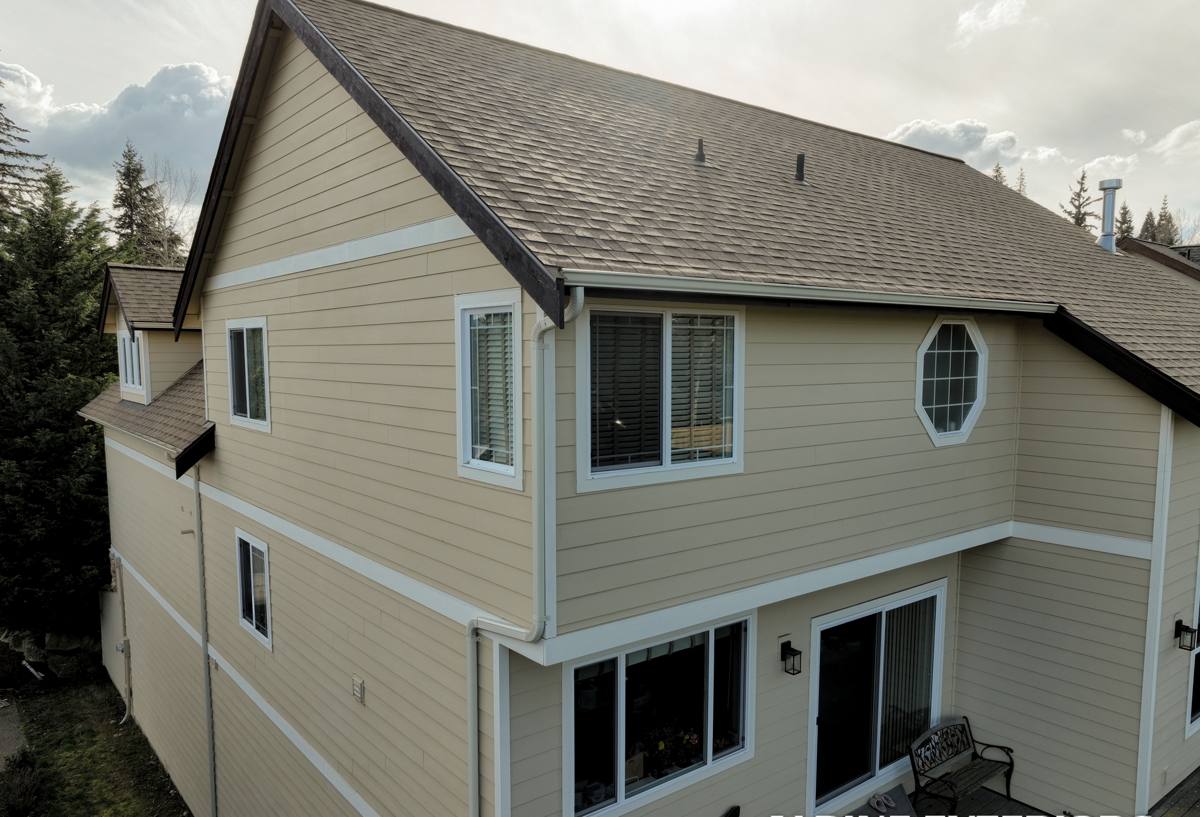
What Salt Air, Rain, and Moss Actually Do to a Roof Over Time
Salt Air
Even a few miles inland, coastal air carries fine salt particulate that settles on exterior surfaces. On roofing, this accelerates corrosion of exposed fasteners, weakens sealant bonds faster than in dry inland climates, and speeds up the breakdown of lower-grade metal coatings. It's a major reason we're selective about panel gauge, coating type, and fastener hardware on jobs in this area — cutting corners here shows up as rust streaking and failed seals within a handful of years instead of decades.
Driving Rain
Whatcom County storms don't always come straight down. Wind-driven rain finds its way under poorly lapped flashing, undersized underlayment, and loose fastener patterns. On a roof with valleys, dormers, or multiple roof planes — common on homes throughout the Birch Bay and Nooksack area — the flashing detail work matters more than the roofing material itself. A great panel with sloppy flashing will still leak.
Moss
Shaded, moisture-heavy conditions in this region give moss ideal growing conditions almost year-round. On asphalt shingles, moss roots into the granule layer and lifts it, shortening the roof's life. On a metal roof, there's no granulated surface for moss to anchor into, and the smooth, sloped panel surface sheds water and debris faster — which means less standing moisture for moss to establish in the first place. It doesn't make a roof moss-proof forever, especially in heavy tree cover, but it removes the material's biggest vulnerability to it.
Metal Roofing Options We Install
Not all metal roofing is the same product wearing different colors. The panel style, fastening method, and coating all affect how the roof performs in this specific climate.
| Panel Type | How It's Fastened | Best Fit |
|---|---|---|
| Standing Seam | Concealed clips, no exposed fasteners on the field | Homes wanting the longest service life and lowest long-term maintenance; best resistance to wind-driven rain |
| Exposed Fastener Panel | Screws through the panel face into decking or purlins | Budget-conscious projects, outbuildings, shops; requires fastener inspection over time |
| Metal Shingles / Shakes | Interlocking panels resembling traditional shingle or shake profiles | Homeowners who want the metal performance but a more traditional roofline appearance |
For primary residences in a salt-air, high-rain environment like Nooksack, we lean toward standing seam or high-quality interlocking panel systems because the concealed fastening removes the weak point that salt air attacks first. Exposed fastener systems can still be a sound, more affordable choice — they just need honest maintenance expectations, which we'll walk through at the estimate.
What a Correct Metal Roof Installation Actually Involves
The panels get the attention in most sales conversations, but the roof's actual performance is decided by what's underneath and around them.
- Deck inspection and repair: Any soft, delaminated, or water-damaged sheathing gets replaced before a single panel goes on — covering a bad deck with new roofing just hides the problem.
- Underlayment: A synthetic or self-adhered underlayment rated for metal roofing, with extra attention at eaves and valleys where wind-driven rain tends to push moisture furthest.
- Ventilation: Ridge and soffit ventilation sized correctly so condensation doesn't build up under the panels — a common cause of hidden deck rot on metal roofs that were installed without airflow in mind.
- Flashing at every penetration: Chimneys, vents, skylights, and roof-to-wall transitions are where most leaks originate, not the open field of panels.
- Fastener spacing and hardware grade: Correct spacing per panel manufacturer specs, with corrosion-resistant hardware rated for coastal exposure.
- Panel expansion allowance: Metal expands and contracts with temperature swings; clips and fastening patterns need to accommodate that movement without stressing seams.
Any one of these done wrong can undercut an otherwise good roofing material. This is where hiring an experienced crew matters more than the brand name on the panel.
Our Process From Estimate to Cleanup
1. On-Site Evaluation
We walk the roof and attic where accessible, check deck condition, note problem areas — valleys, low-slope sections, shaded moss zones — and measure for an accurate material estimate.
2. Straightforward Proposal
We explain panel options, coating choices, and what the job includes: tear-off (if needed), deck repair allowances, underlayment, flashing, and ventilation work. No vague line items.
3. Scheduling Around Weather
Given how much rain this region gets, we plan installation windows carefully and protect the open deck if weather shifts mid-project.
4. Installation
Deck repair first, then underlayment, flashing, panels, and trim, with fastener patterns and seams checked as we go rather than at the end.
5. Final Walkthrough and Cleanup
We walk the finished roof with the homeowner, confirm flashing and trim details, and do a magnetic sweep of the yard and gutters for stray fasteners and metal shavings.
Maintenance in a Moss-Prone, Salt-Air Environment
Metal roofing is lower-maintenance than shingles, not maintenance-free. In this climate, a short annual routine keeps a roof performing at its potential for decades.
- Clear gutters and valleys of needles, leaves, and debris at least once a year — buildup holds moisture against the panel edges.
- Do a visual check of exposed fasteners (if applicable) for signs of loosening or corrosion, especially after high-wind storms.
- Trim back overhanging branches to reduce shade, debris load, and moss pressure on north-facing slopes.
- Rinse off heavy moss or algae buildup with a soft wash rather than pressure washing, which can damage coatings and seams.
- Inspect flashing around chimneys, vents, and skylights after major storms — these are the first places a leak will show up.
Cost Factors to Understand Before You Budget
Metal roofing costs more upfront than asphalt shingles, but the gap narrows when you account for shingle re-roofs and moss treatments over the same time span. Actual pricing depends on the specifics of your roof, but these are the main variables that move the number.
| Factor | Why It Matters |
|---|---|
| Roof size and complexity | More valleys, dormers, and roof planes mean more flashing labor, not just more panel material |
| Panel type | Standing seam typically costs more than exposed fastener systems due to labor and hardware |
| Tear-off vs. new construction | Removing and disposing of old roofing adds labor and disposal cost |
| Deck condition | Rotten or delaminated sheathing found during tear-off requires repair before installation |
| Ventilation upgrades | Adding proper ridge/soffit venting where none exists is a worthwhile add, not a corner to cut |
| Coating and gauge | Heavier-gauge panels and higher-grade coatings cost more but resist salt-air corrosion longer |
We'll break down these factors specifically for your roof during the estimate rather than quoting a flat per-square number that doesn't reflect your actual conditions.
Why a Crew That Already Works Nooksack and Birch Bay Matters
A roofing crew that only occasionally works in coastal Whatcom County will often spec the same materials and details they'd use inland — standard fasteners, standard underlayment, minimal attention to salt exposure. That's how roofs that should last thirty-plus years start showing corrosion and leaks in under ten.
Working this area regularly means we've seen which roof sections fail first in this climate, which fastener grades actually hold up to salt air over time, and where moss pressure tends to be worst based on tree cover and roof orientation. That local pattern recognition shapes real decisions on your job — not marketing language, just fewer surprises five years down the road.
Get a Straight Answer on Your Roof
If you're weighing metal roofing against another re-roof for a Nooksack or Birch Bay home, we're glad to take a look and give you an honest assessment — including telling you if metal isn't the right fit for your situation. Request a free, no-pressure estimate using the form below, and we'll walk your roof and talk through real options for your budget and your home.