 Birch Bay Siding
 Roofing in a Salt Air, Rain, and Moss Climate
Homes in and around Nooksack sit close enough to Birch Bay and the Strait of Georgia that salt-laden air is a fact of life, not an occasional nuisance. Add Whatcom County's long wet season — months of low-intensity, driving rain that never quite lets a roof dry out — and you get conditions that are genuinely harder on asphalt shingles than what most manufacturer literature is written for. Shingles here don't usually fail because of one big storm. They fail slowly, from granule loss caused by wind-driven grit, from moisture that never fully evaporates between rain events, and from moss and algae that take hold in shaded, north-facing sections and hold water against the shingle surface for weeks at a time.
None of that means asphalt shingle roofing is a bad choice for this area — it's still the most practical, cost-effective option for the vast majority of homes here. It means the underlayment, ventilation, flashing details, and shingle selection all matter more than they would in a drier inland climate, and cutting corners on any one of them shows up as a callback within a few years instead of a decade.
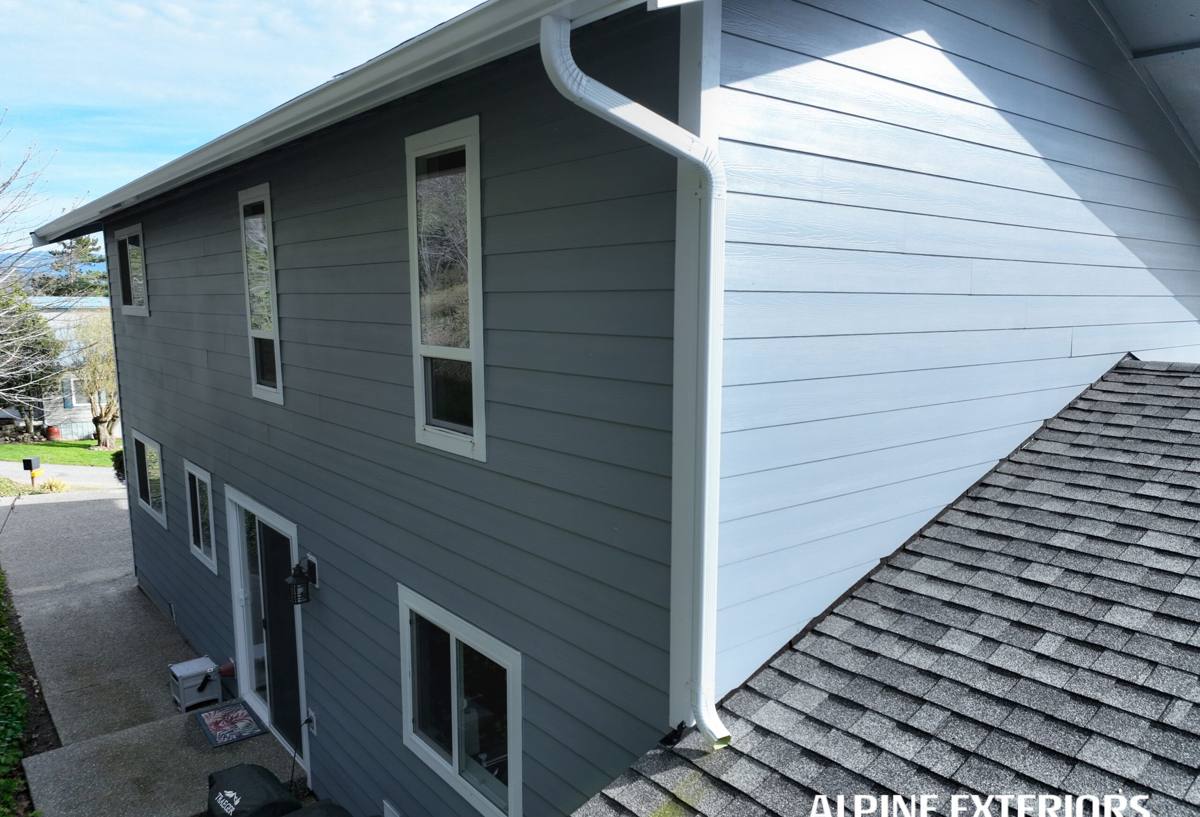
What "Correct" Looks Like for a Nooksack Roof
Underlayment and Ice/Water Protection
A single layer of felt underlayment is the minimum code allows, not the standard we build to. In areas that see wind-driven rain — which is most of this region — a synthetic underlayment with self-sealing lap edges holds up better over the life of the roof and gives the shingles a second line of defense when wind gets under the tabs. Valleys, eaves, and any low-slope transitions get self-adhered ice-and-water membrane, because that's where standing water and ice dams (on the rare cold snaps) cause the most damage, and it's the cheapest insurance on the whole job relative to what a leak in those spots costs to fix later.
Ventilation
Trapped moisture in the attic condenses on the underside of the roof deck and works its way back up into the shingles from below — a slow rot that has nothing to do with the weather outside. A balanced intake-and-exhaust system (soffit vents paired with ridge or box vents) keeps air moving through the attic year-round, which matters as much in our humid winters as it does in summer heat. We check this on every re-roof, not just new construction, because a lot of older Whatcom County homes were built before balanced ventilation was standard practice.
Flashing
Step flashing at walls and chimneys, proper counter-flashing, and correctly lapped valley metal are where most "mystery leaks" actually originate — not the shingle field itself. Flashing is metal, and metal near a salt-influenced coastal environment needs to be corrosion-resistant, properly fastened, and installed so water sheds over every lap rather than into it.
Signs Your Roof Needs Attention
Most roofing problems in this area give warning signs well before a leak shows up inside the house. Worth checking for, or having a crew check for you:
- Granules collecting in gutters or at downspout outlets, more than light seasonal shedding
- Dark streaking or green-black growth, especially on north-facing or shaded slopes
- Shingle edges that look curled, cupped, or lifted rather than lying flat
- Moss buildup thick enough that you can see it holding a layer of moisture against the roof
- Soft spots or slight sagging when walked (a sign of deck moisture, not just a shingle issue)
- Rusty streaks below flashing points or nail heads showing through the shingle surface
- Daylight visible through the roof deck from inside an unfinished attic
Any one of these on its own isn't an emergency. Several together, or moss and streaking that keep coming back after cleaning, usually means it's worth having someone look at the underlayment and deck condition, not just the surface.
Choosing the Right Shingle for This Climate
Not every asphalt shingle line is built the same way, and the differences matter more here than in a dry climate where any reasonable product will hold up. The table below covers the main categories we work with and how they hold up under salt air, rain, and moss pressure.
| Shingle Type | Typical Lifespan Here | Moss/Algae Resistance | Best Fit |
|---|---|---|---|
| Standard 3-tab | 15–20 years | Low unless treated | Budget re-roofs, outbuildings |
| Architectural / laminate | 25–30 years | Moderate to high with algae-resistant (AR) granules | Most Nooksack-area homes |
| Algae-resistant (AR) laminate | 25–30+ years | High — copper/zinc granules actively resist growth | Shaded roofs, north slopes, heavy tree cover |
| Impact-rated / heavier laminate | 30+ years | High | Homes prioritizing longevity over lowest upfront cost |
For most Nooksack homes we recommend an algae-resistant architectural shingle as the baseline, not an upgrade. The moss and algae pressure in this part of Whatcom County is high enough, year-round, that the AR granules pay for themselves in reduced cleaning and a longer effective life. Major manufacturers — GAF, CertainTeed, and Owens Corning all make solid AR laminate lines — back these with material warranties, but the warranty only holds up if the install follows their specifications on nailing pattern, starter strips, and ventilation. That's on us, not the shingle.
Our Process on a Nooksack Roofing Job
- Inspection and estimate. We walk the roof (weather permitting) and check the attic from inside, not just look from the ground. You get a written scope, not a verbal guess.
- Deck check during tear-off. Once the old shingles are off, we inspect the plywood or plank decking for soft spots or rot before anything new goes down. Bad decking gets replaced — it's not something we cover over.
- Underlayment and flashing. Synthetic underlayment, ice-and-water membrane in valleys and eaves, new step and counter-flashing where the old metal is worn or improperly lapped.
- Ventilation correction. If intake or exhaust venting is inadequate, we address it as part of the job rather than leaving a known problem in place.
- Shingle installation. Installed to manufacturer nailing and exposure specs so the material warranty stays intact.
- Cleanup and final walk-through. Magnetic sweep for nails, gutters cleared of debris, and a walk-through so you know what was done and why.
What Drives the Cost
We don't quote specific prices without seeing the roof, but the main factors that move a Nooksack-area estimate up or down are consistent from job to job:
| Factor | Why It Matters |
|---|---|
| Roof pitch and access | Steeper roofs and difficult access (tight lot lines, tall trees) take longer and require more safety setup |
| Deck condition | Rot or soft decking found during tear-off adds material and labor not visible from a ground-level estimate |
| Number of penetrations | Chimneys, skylights, plumbing vents, and complex valleys all add flashing work |
| Shingle tier chosen | Standard laminate vs. algae-resistant vs. heavier impact-rated product |
| Existing layers | Tear-off of multiple old layers costs more than a single-layer removal |
| Ventilation upgrades | Adding or correcting soffit and ridge venting where the current system is inadequate |
As a rough range, a straightforward asphalt shingle re-roof on an average single-family home in this area typically runs from the mid-single-digit thousands into the low five figures, with the factors above — especially deck condition and roof complexity — being what actually determines where a given job lands. Anyone quoting a firm number without walking the roof and checking the attic is guessing.
Living With Moss Season
Even a correctly installed, algae-resistant roof will pick up some moss over time in this climate — the goal isn't zero moss, it's keeping it from becoming a maintenance problem. A few habits go a long way:
- Keep overhanging branches trimmed back so shaded areas get more light and airflow
- Clear gutters at least twice a year so water isn't backing up under the shingle edge
- Have visible moss removed gently (soft wash, not pressure washing, which strips granules) before it builds up thick enough to hold water against the roof
- Avoid zinc or copper strips as a substitute for proper AR shingles — they help on the section directly below them but don't treat the whole roof
Why Local Experience on This Specific Job Matters
Asphalt shingle roofing looks like a commodity job from the outside — tear off, install, done. In practice, a crew that already works the Nooksack and greater Birch Bay area knows things a generalist doesn't: which shingle tiers actually hold up against this coastline's salt exposure versus which ones just perform well on paper, how local wind patterns affect flashing details on exposed gables, and how to sequence a tear-off around the wet stretches of the year so a deck isn't left exposed longer than it has to be. That local knowledge doesn't show up as a line item on an estimate, but it's the difference between a roof that looks fine at handoff and one that's still performing well a decade in.
It also matters for permitting and code familiarity specific to Whatcom County jurisdictions, and for having a track record you can actually check with neighbors rather than reviews from three states away.
If your Nooksack-area roof is showing granule loss, persistent moss, or you're just due for an honest look at what condition it's actually in, we're glad to come out and take a look. The estimate is free, there's no pressure attached to it, and you'll get a straight answer about what your roof needs and what it doesn't — use the form below to get started.