 Birch Bay Siding
 Why Lummi Island Roofs Wear Differently Than Roofs Inland
Lummi Island sits right in the weather. It's a ferry-access community out in the Salish Sea, which means every roof on the island takes a steady dose of salt-laden air, wind-driven rain, and the kind of persistent damp that inland Whatcom County homes simply don't deal with as much. Salt air is corrosive to metal, wood, and fasteners alike, and it doesn't take a storm to do the damage — it's the slow, daily exposure that adds up over years.
Add in the long moss season that's typical of this part of Washington, and you've got a roof that's fighting on two fronts: corrosion from the salt, and moisture retention from moss and shade. A roofing system that isn't specified correctly for this environment will show its age faster here than it would ten or fifteen miles inland, no matter what the manufacturer's brochure claims about durability.
That's the starting point for any honest conversation about metal roofing on Lummi Island: the climate is the design problem, and the install has to answer it directly.
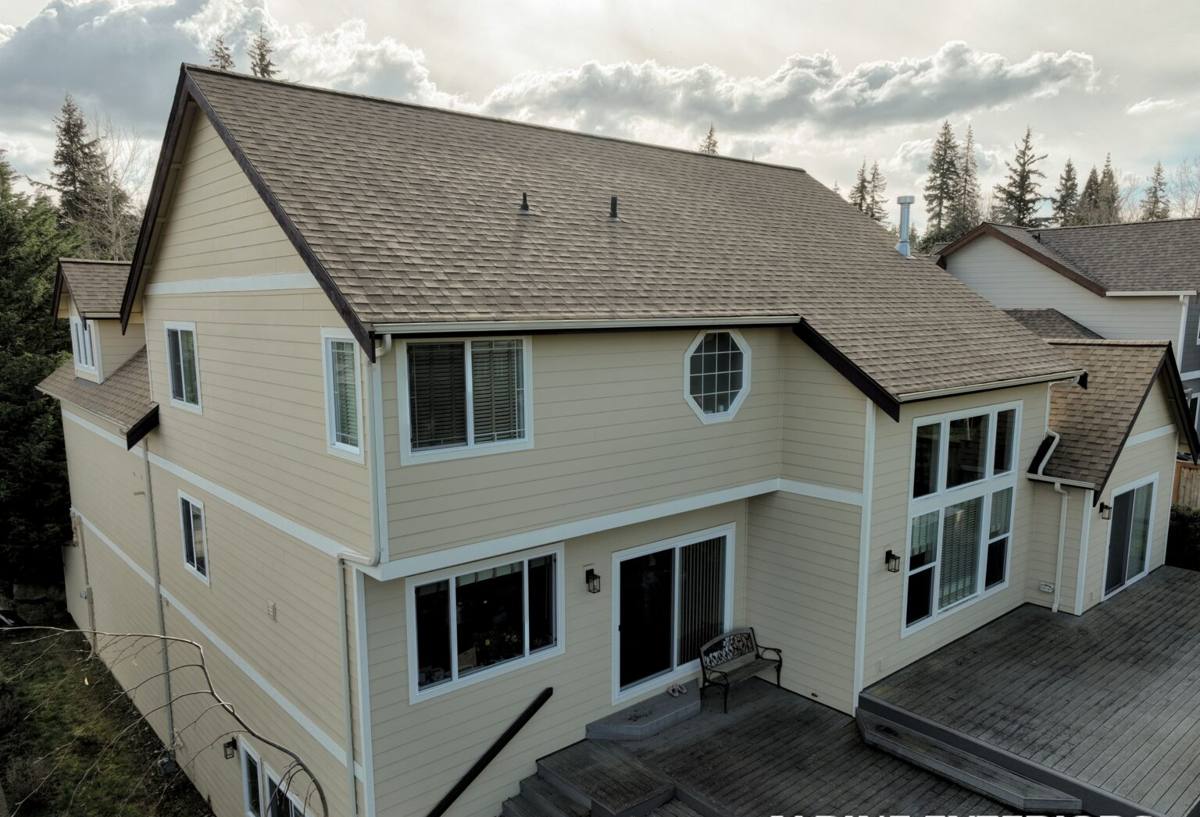
What a Correct Metal Roof Install Looks Like Here
Underlayment and Moisture Control
In a driving-rain climate, wind can push water sideways and even slightly uphill under panel edges. That means underlayment isn't a formality — it's the actual backup waterproofing layer if wind-driven rain ever gets past the metal at a seam, penetration, or edge. We use a synthetic or self-adhered underlayment rated for high-moisture, high-wind exposure, with extra attention at valleys, eaves, and any place water tends to pool or back up.
Fastening and Corrosion-Resistant Hardware
Salt air attacks fasteners faster than it attacks the panels themselves. Mismatched or standard-grade screws and clips are one of the most common failure points we see on coastal metal roofs — not because the panel failed, but because the hardware holding it rusted out first. Every fastener, clip, and closure strip needs to be rated for coastal or marine-grade exposure, not just "exterior use."
Flashing and Penetrations
Every chimney, vent stack, and roof-wall transition is a potential entry point for wind-driven rain. Flashing details matter more here than on a calm, dry-climate roof — kickout flashing, step flashing, and properly lapped transitions aren't optional extras, they're what keeps a metal roof watertight through a real Pacific storm rather than just a light shower.
Ventilation
A sealed-up, poorly ventilated attic traps moisture underneath the metal, which speeds up condensation-driven corrosion from the underside — the side you can't see. Proper intake and exhaust ventilation keeps the roof deck dry from below, which matters just as much as keeping rain out from above.
Choosing a Metal Roofing System for Salt Air Exposure
Not all metal roofing products handle coastal exposure the same way. Panel material, finish, and fastening style all affect how a roof holds up to years of salt air and moss growth. Here's how the common options compare for a Lummi Island application:
| System | Corrosion Resistance | Maintenance Needs | Typical Trade-Off |
|---|---|---|---|
| Standing seam steel (Galvalume or similar coated finish) | Strong, if coating and fasteners are marine-rated | Low — concealed fasteners reduce failure points | Higher upfront cost, longer service life |
| Aluminum standing seam | Excellent — aluminum doesn't rust | Low | Costs more than steel; softer, so care needed with foot traffic |
| Exposed-fastener steel panels | Moderate — depends heavily on fastener quality and re-torquing over time | Higher — exposed screws need periodic inspection and re-seating | Lower upfront cost, more long-term upkeep in salt air |
| Uncoated or budget-grade steel | Poor in coastal exposure | High | We don't recommend this for Lummi Island — it's the wrong tool for this climate |
Our standard for this area is a coated steel or aluminum standing seam system with concealed fasteners and marine-rated hardware. It costs more going in, but on an island where salt air is a daily constant, concealed fasteners and a proper coating are what actually keep the maintenance calls and premature failures from stacking up.
Moss, Debris, and the Long Wet Season
Metal roofing sheds moss and debris far better than shingles or wood shakes, which is one of the genuine advantages of going metal in this climate. But "sheds better" doesn't mean "immune." Moss and organic debris can still build up in valleys, behind chimneys, and anywhere water flow slows down, and trapped debris holds moisture against the panel finish and fasteners longer than it should. Trees and overhanging branches common to wooded island lots make this worse by dropping needles and leaves straight onto the roof.
Good design — the right panel profile, properly sized valleys, and gutters that actually keep up with the rain volume — reduces how much debris collects in the first place. It's a lot cheaper to design that out up front than to fight it every season after.
Our Process for a Lummi Island Metal Roof
- On-site inspection — we look at the existing roof deck, ventilation, flashing points, and how exposed the home is to wind and salt-laden air off the water.
- Tear-off vs. overlay decision — metal can sometimes go over an existing roof if the deck and code allow it, but on a coastal home we usually recommend a full tear-off so we can inspect and repair the deck and address ventilation properly, rather than sealing existing problems under a new roof.
- Underlayment and flashing install — done to coastal-exposure standards, not the minimum code requirement.
- Panel install — standing seam or the system we've agreed on, with marine-grade fasteners and clips throughout.
- Final inspection and walkthrough — we go over the finished roof with you, including what maintenance (if any) it will need going forward.
Why a Crew That Already Works Lummi Island Matters
Lummi Island is ferry-access, which changes how a roofing job actually runs. Material deliveries, crew scheduling, and equipment staging all need to account for ferry timing — a contractor who hasn't planned a job around that before will burn time and money figuring it out on your project. A crew that already works the island knows how to stage materials efficiently, plan the crew's day around ferry runs, and avoid the scheduling surprises that stretch a project out.
There's also the climate knowledge that only comes from working roofs in this specific exposure repeatedly — knowing which corners of a roof take the worst of the wind-driven rain, how fast moss builds up on a shaded north slope near the water, and which fastener and flashing details actually hold up here versus what merely meets code. That's not something you get from a general contractor who does one island job a year.
What Affects the Cost of a Metal Roof Here
| Factor | Why It Matters on Lummi Island |
|---|---|
| Panel material and finish | Aluminum and premium coated steel cost more but resist salt-driven corrosion far longer |
| Fastener and hardware grade | Marine-rated hardware costs more per piece but prevents early hardware failure |
| Roof complexity | More valleys, penetrations, and transitions mean more flashing detail work |
| Tear-off vs. overlay | Tear-off costs more upfront but lets us fix deck and ventilation issues before they're sealed in |
| Access and logistics | Ferry scheduling and site access can affect crew time and material staging |
We'll walk through these factors with you directly and give you a straightforward range once we've actually seen the roof — not a number pulled out of thin air over the phone.
Maintaining a Metal Roof in This Climate
Metal roofs are low-maintenance compared to shingles, but "low" isn't "zero," especially in a salt-air, high-moss environment. A short annual routine goes a long way:
- Clear moss, needles, and leaf debris from valleys and behind chimneys or vents before they hold moisture against the panels
- Check and clean gutters so water isn't backing up under eave edges during heavy rain
- Look over exposed fasteners (if your system has them) for any sign of loosening, rust bleed, or a failing seal
- Rinse off salt residue near the water-facing side of the home if it's visibly built up
- Have flashing around chimneys, vents, and roof-wall transitions checked every couple of years, since these are the most common points where a leak starts
- Trim back overhanging branches that drop debris directly onto the roof
Get a Straight Answer for Your Roof
If you're weighing a metal roof for a home on Lummi Island, the honest answer depends on your current roof's condition, how exposed the site is to wind and salt air, and what you actually want out of the next 30-plus years. We'll come look at the roof, tell you what we see, and give you a clear, no-pressure estimate — no upsell, no scare tactics, just what the roof actually needs. Fill out the form below and we'll get a visit scheduled.