 Birch Bay Siding
 Marietta's Siding Problem Isn't Like Everyone Else's
Marietta sits close enough to the water that its siding takes a different kind of beating than a house ten miles inland in Whatcom County. It isn't one big storm that wears siding out here — it's the daily grind of salt air, wind-driven rain coming off the bay, and a moss season that runs longer than most homeowners realize. Siding that would hold up fine in a drier part of the state can start showing stress in Marietta within a few years if it wasn't built or installed with this specific environment in mind.
When we replace siding on a Marietta home, we're not just swapping old material for new. We're correcting for the exact conditions that broke down what's on the wall now, so the replacement doesn't fail the same way on the same timeline.
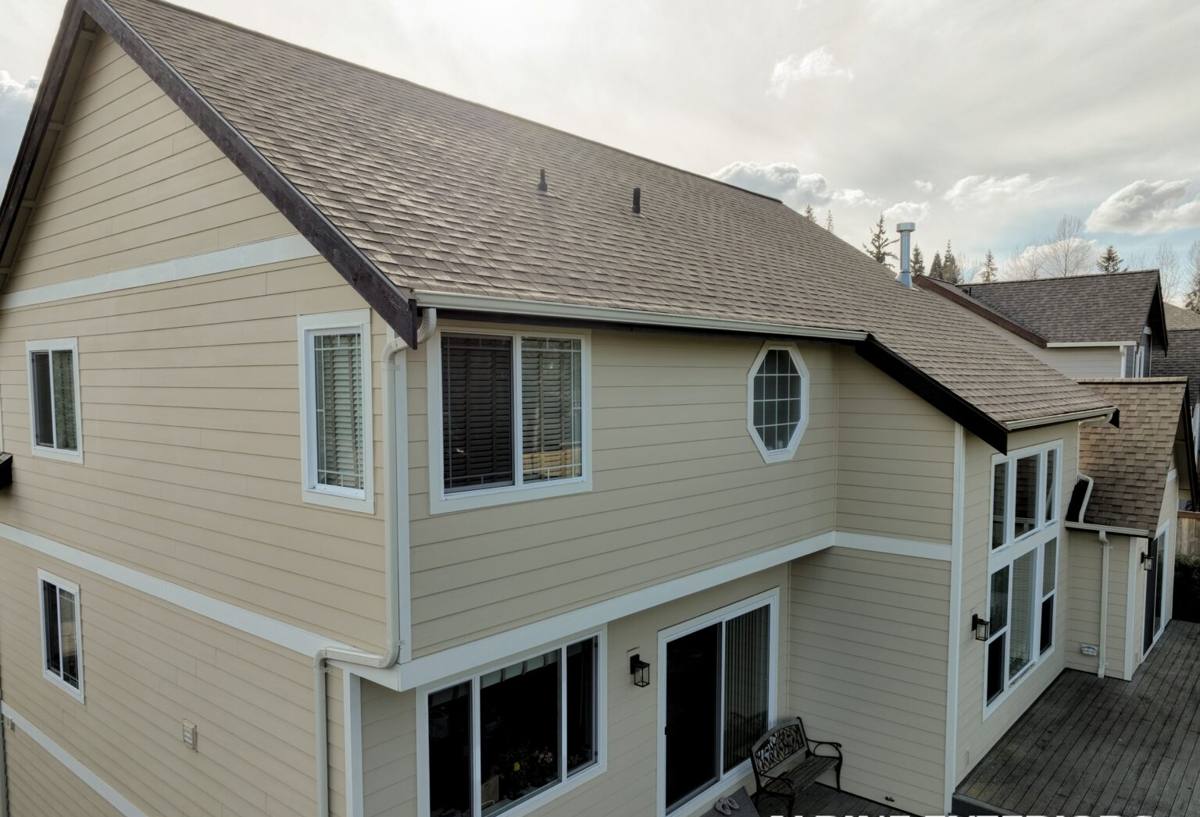
What Marietta Homes Are Actually Up Against
Salt Air
Airborne salt from Birch Bay doesn't just sit on the surface of your siding — over time it works into seams, fastener heads, and any spot where the factory finish has been compromised. On products that aren't engineered to resist it, that means faster fading, chalking, and corrosion at the hardware level, even if the siding panel itself still looks intact from the street.
Wind-Driven Rain
Rain that comes in sideways doesn't behave like rain that falls straight down. It gets pushed up under laps, into butt joints, and behind trim if those details weren't built to handle horizontal pressure. A siding job that looks fine on a calm day can leak for years before anyone finds the damage, because the water is entering from an angle nobody's checking.
The Long Moss Season
Whatcom County's wet season stretches long, and Marietta's tree cover and proximity to the water keep humidity around siding surfaces high for months at a time. Moss and algae don't just look bad — they hold moisture against the siding surface far longer than open air would, which is exactly the condition that causes rot in wood-based products and accelerates finish breakdown on anything not built to resist it.
Signs a Marietta Home Needs Siding Replacement, Not Another Repair
Some damage is worth patching. Some means the siding system underneath has already failed and repairs are just delaying the real cost. Here's what tells us it's time to talk replacement instead of another round of caulk and touch-up paint:
- Soft or spongy spots when you press on the siding, especially near the bottom courses and around windows
- Persistent moss or algae growth that returns within weeks of cleaning
- Paint that's peeling or bubbling rather than just fading evenly
- Visible gaps at seams, corners, or trim that weren't there a few years ago
- A musty smell near exterior walls, which often means moisture has reached the sheathing
- Siding that's warped, cupped, or separating from the wall at the edges
- Repeated repairs to the same section of wall over the last several years
If more than one or two of these apply, the siding is usually telling you the water-resistive barrier or the siding material itself has already given up, and a repair is just cosmetic at that point.
Why This Crew Installs Only James Hardie Fiber Cement
We don't install LP SmartSide, vinyl, Cemplank, Allura, primed spruce, or cedar. That's not a marketing position — it's a standard we hold because of exactly what Marietta's climate does to siding over time.
Wood-based products, even engineered ones, rely on their factory coatings and careful installation to keep moisture out; once that coating is compromised by salt exposure or trapped moisture from moss, the wood substrate underneath is vulnerable to rot. Vinyl handles moisture fine but expands and contracts with temperature swings, and driving rain can find its way behind it at seams over time. Cement-based alternatives to Hardie vary in how consistently they're manufactured and finished, which matters a lot when the product is going to sit in salt air for decades.
James Hardie fiber cement is non-combustible, doesn't support rot, and its ColorPlus factory finish is baked on and warrantied against fading and flaking in ways that hold up better against coastal exposure than field-applied paint. Hardie also makes climate-engineered HZ product lines built specifically for regions like ours, with moisture and impact performance suited to areas that get sustained wet weather. That's the product we stand behind on Marietta homes, and it's the only one we put our name on.
What a Correct Siding Replacement Actually Involves
Siding replacement done right is mostly about what happens before the new siding ever goes up. The steps that get skipped are the ones that cause failures five or ten years down the road.
- Full removal of old siding and inspection of the sheathing underneath for rot or damage that needs to be addressed before covering it back up
- Repair or replacement of any compromised sheathing — never siding installed over a soft or damaged substrate
- A properly lapped water-resistive barrier, installed so every seam sheds water downward, not just stapled on for coverage
- Correct flashing at every window, door, and roofline intersection, since these are the highest-risk points for wind-driven rain intrusion
- Fastener placement and spacing that follows James Hardie's published installation specs, not general contractor habit
- Proper clearance at the bottom of the siding from grade, decks, and roof lines to avoid wicking moisture up from below
- Caulking and sealing only at the joints Hardie's specs call for — over-caulking can trap moisture instead of keeping it out
Most siding failures we see in this area trace back to one of these steps being rushed or skipped, not to the siding material itself. Hardie's product is only as good as the installation behind it.
How Our Process Works for a Marietta Project
- On-site assessment. We walk the exterior with you, check for soft spots and moisture entry points, and look at how the home is oriented to wind and rain exposure.
- Scope and product selection. We recommend the Hardie product line and profile that fits the home and its exposure, and walk through color options in the ColorPlus system.
- Written estimate. You get a clear breakdown of the work, materials, and timeline before anything is scheduled.
- Tear-off and sheathing check. Old siding comes off, and we inspect and repair the wall assembly underneath before anything new goes up.
- Weather barrier and flashing. This is the step that determines whether the new siding actually keeps water out — we don't rush it.
- Hardie installation to spec. Panels, fasteners, and joints installed per manufacturer requirements, not shortcuts.
- Final walkthrough. We go over the finished job with you before calling it done.
Cost Factors for Siding Replacement in Marietta
Every home is different, but the same handful of factors drive most of the cost difference between projects in this area:
| Factor | Why It Matters |
|---|---|
| Extent of sheathing damage found at tear-off | Rot repair adds labor and material cost before new siding can go up — this is the most common source of budget changes |
| Home size and wall complexity | More corners, gables, and trim details mean more cutting, flashing, and labor time |
| Siding profile and trim selection | Lap width, panel vs. shingle-style Hardie products, and trim detail all affect material and labor cost |
| Access and site conditions | Tree cover, tight lot lines, and staging space around the home affect how efficiently a crew can work |
| Window and door count | Each opening needs its own flashing detail, which adds time regardless of home size |
We won't know your real numbers until we've seen the home and, in most cases, opened up a section of wall to check the sheathing. Anyone quoting a firm price before that step is guessing.
Why a Crew That Already Works Marietta Matters
A contractor who's worked homes in this specific pocket of Whatcom County already knows how the wind typically hits a given orientation, how long moss takes to establish on a north-facing wall near the water, and which flashing details tend to get missed by crews used to drier inland conditions. That's not something you can fully substitute with general experience — it comes from having actually replaced siding on homes dealing with the same salt exposure and rain patterns yours does.
It also means faster, more accurate estimates, because we're not guessing at how this climate behaves — we've seen what it does to siding here over years, not just in theory.
Get a Straight Answer on Your Siding
If your Marietta home is showing any of the signs above, or you just want an honest read on how much life is left in your current siding, we're happy to take a look. There's no pressure and no upsell — just a clear assessment and a written estimate for James Hardie fiber cement siding installed the way this climate requires. Use the form below to request your free estimate.