 Birch Bay Siding
 Roof Repair for Lummi Island's Conditions
Lummi Island sits out in the Salish Sea, surrounded by salt water on every side, and that changes what a roof has to put up with compared to a house a few miles inland. Homes here deal with salt-laden air, wind-driven rain that comes in sideways off the water, and long stretches of gray, wet weather that keep roofs damp for months at a time. Add in the shade from evergreen trees on many island lots, and you get ideal conditions for moss and moisture damage to take hold quietly, long before a homeowner notices a leak inside.
Roof repair on Lummi Island isn't just patching a shingle and calling it done. It means understanding how this specific environment attacks a roof system — fasteners, flashing, underlayment, and all — and repairing it in a way that holds up through the next few winters, not just until the next inspection.
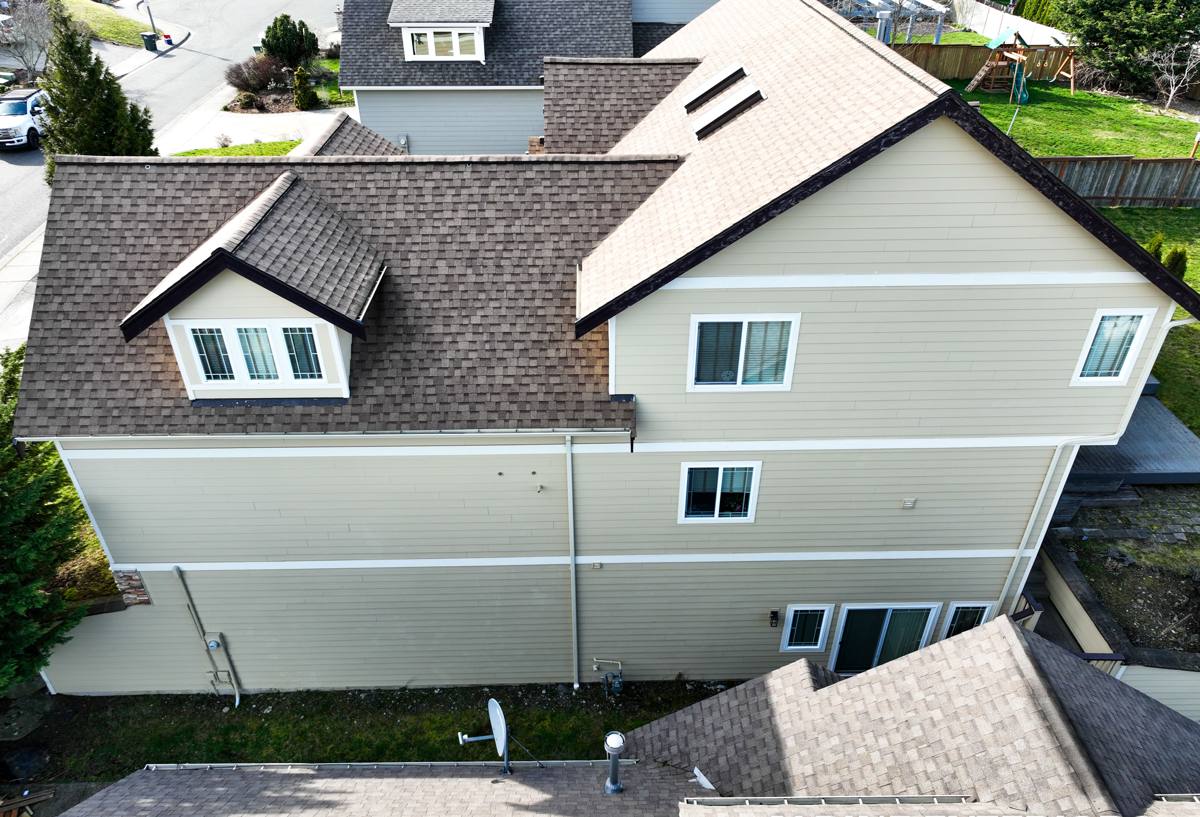
Why Roofs on Lummi Island Wear Differently
Salt Air and Metal Fatigue
Salt in the air accelerates corrosion on anything metal — nails, flashing, gutter fasteners, roof vents. On a mainland roof a few miles from the water, corrosion is a slow, decades-long process. On an island roof exposed to salt spray year-round, exposed or poorly coated metal components can start showing rust and pitting much sooner. Once a fastener or flashing piece corrodes, it stops sealing properly, and that's how water finds its way into a roof deck.
Driving Rain and Wind
Whatcom County gets its share of wet weather, but island homes catch wind off open water with less tree and terrain buffering than a lot of mainland lots. Driving rain doesn't just fall straight down — it gets pushed sideways and upward under shingle edges, around chimney flashing, and into any gap that a standard repair might leave unsealed. A repair that would hold up fine on a sheltered inland roof can fail within a season or two out here if it isn't detailed for wind-driven moisture.
Moss and Organic Growth
Shaded, moisture-retaining roof sections on the island grow moss fast, especially on north-facing slopes and anywhere debris collects. Moss holds water against the roofing material, works its way under shingle tabs as it grows, and can lift and loosen sections that would otherwise be sound. A roof repair that doesn't address the moss causing the damage in the first place is a repair that's going to need doing again soon.
Signs Your Roof Needs Repair
Most roof problems on Lummi Island start small and stay hidden until they've caused real damage. Homeowners who catch these signs early save themselves a much bigger repair bill later.
- Dark streaks, green film, or thick moss patches on the roof surface, especially on shaded slopes
- Shingle tabs that are curling, cupping, or missing granules in patches
- Rust staining around vent pipes, flashing, or metal roof accessories
- Water stains or discoloration on interior ceilings, especially near chimneys or where roof planes meet
- Sagging or soft spots anywhere on the roof deck when walked (a sign of trapped moisture)
- Granules collecting in gutters or at the base of downspouts
- Daylight visible through the attic roof deck, or damp insulation below it
- Flashing that's visibly lifted, cracked, or pulling away from chimneys, skylights, or walls
Any one of these on its own might be minor. Several together, or any sign paired with an interior stain, is worth a professional look before the next heavy rain season.
What a Correct Roof Repair Actually Involves
Finding the Real Source First
Water rarely shows up where it enters. A stain on a bedroom ceiling might trace back to a flashing failure ten feet away, with the water traveling along the underlayment or a rafter before finding a gap in the drywall or sheathing. A repair that just patches the spot where water appeared, without tracing it back to the actual entry point, is a repair that will fail again. We start every job by getting on the roof and finding where the water is actually getting in, not just where it's showing up.
Matching Materials, Not Guessing
A patch repair only blends in and performs correctly if the shingle profile, color, and weight match what's already on the roof. Mismatched patches stand out visually and can create their own water-shedding problems where old and new material meet. We identify what's on your roof and source a genuine match wherever possible, and we're upfront with you when an exact match isn't available and what the next-best option looks like.
Flashing Done Right
Most roof leaks in this climate trace back to flashing — around chimneys, skylights, dormers, and anywhere two roof planes meet — rather than failed shingles themselves. Flashing repairs on an island roof need corrosion-resistant materials and correct step-and-counter-flashing technique, sealed to handle wind-driven rain, not just laid down and caulked over. Caulk is a short-term fix, not a repair; we use it as a supplement to correct flashing work, never as a substitute for it.
Addressing Moss, Not Just the Damage It Caused
If moss caused or contributed to the damage, removing the moss and treating the area is part of the repair, not an optional extra. We clear growth carefully to avoid damaging granule surfaces underneath, and we'll talk with you about zinc or copper strips and gutter clearing as ways to slow regrowth on shaded slopes going forward.
Repair or Replace? Weighing Your Options
Not every roof problem calls for a full replacement, and not every repair is a good long-term investment. The right call depends on the roof's age, how widespread the damage is, and what's underneath the surface layer.
| Factor | Repair Usually Makes Sense | Replacement Worth Considering |
|---|---|---|
| Roof age | Under 15-20 years, within expected shingle lifespan | At or past the manufacturer's expected service life |
| Damage extent | Isolated to one section, flashing point, or slope | Spread across multiple slopes or recurring in the same areas |
| Roof deck condition | Solid, dry sheathing under the damaged area | Soft, rotted, or water-stained decking found during inspection |
| Moss and moisture history | First occurrence, addressed early | Long-term untreated moss with granule loss across large areas |
| Material availability | Close match to existing shingles still available | Discontinued material with no reasonable match |
We'll give you a straight answer on which category your roof falls into. If a repair will genuinely hold up, that's what we recommend — we don't push a full replacement on a roof that has years of life left in it.
Getting the Job Done Right on an Island Job Site
Planning Around Ferry Access
Lummi Island is reached by ferry, and that changes how a roofing job needs to be planned compared to a mainland address. Materials, tools, and crew all need to be staged and scheduled around ferry timing rather than just loaded up and driven straight to the site. A crew that hasn't worked the island before can lose a half-day or more figuring this out on the fly — time that shows up as delay or added cost on your job.
Our Process
- Inspection and diagnosis — we get on the roof, trace the actual source of any leak or damage, and check the deck and flashing, not just the surface.
- Clear, written estimate — what needs repair, what materials we'll use, and what it will cost, before any work starts.
- Scheduling — we plan the visit around ferry timing and weather windows so the job isn't rushed or interrupted partway through.
- The repair — correct flashing, matched materials, and proper sealing against wind-driven rain, done once and done right.
- Cleanup and follow-up — debris and old material hauled off, and we'll walk you through what to watch for going forward.
Why Local Experience on Lummi Island Matters
A roof repair crew that mostly works inland Whatcom County or Bellingham neighborhoods can still do competent work, but they're often solving island-specific problems for the first time on your roof. Salt-air corrosion patterns, wind-driven rain angles off open water, and heavy shaded-slope moss growth aren't things every roofer sees on a daily basis. A crew that already works Birch Bay and the surrounding coastal areas has already dealt with these conditions repeatedly and knows what actually holds up out here versus what looks fine for a season and fails the next.
Logistics matter too. Knowing how to plan a job around ferry schedules, load materials efficiently, and avoid a wasted trip because of a missed sailing is part of doing right by an island customer — it keeps your job on schedule and keeps costs predictable instead of padded for uncertainty.
Get a Straight Answer on Your Roof
If you're seeing moss buildup, a stain on a ceiling, or you just want a second opinion before winter storms roll in off the water, we're glad to take a look. We'll tell you honestly whether you need a repair or something more, what it should cost, and why — no pressure, no upsell. Reach out below for a free estimate on your Lummi Island roof.