 Birch Bay Siding
 Roofing on Lummi Island Is Its Own Kind of Job
Lummi Island sits out in the marine weather that defines this stretch of Whatcom County — wrapped in salt air off Rosario Strait and Hale Passage, hit by driving rain off the water, and shaded enough in places to grow moss on a roof faster than most homeowners expect. An asphalt shingle roof out here works harder than the same roof would fifteen miles inland, and it shows the wear differently: granule loss along the exposed slopes, dark algae streaking on north-facing sections, and moss creeping in at valleys and eave lines where debris and moisture collect. A roof that's installed correctly for this environment, and maintained on a realistic schedule, will handle it. One that isn't will show problems years before it should.
Birch Bay Siding Company works asphalt shingle roofing on Lummi Island as part of our regular Whatcom County service area, alongside siding, trim, and exterior repair. This page covers what a shingle roof actually needs to hold up out here, what a correct install or repair looks like, and how our process runs from first estimate to final cleanup.
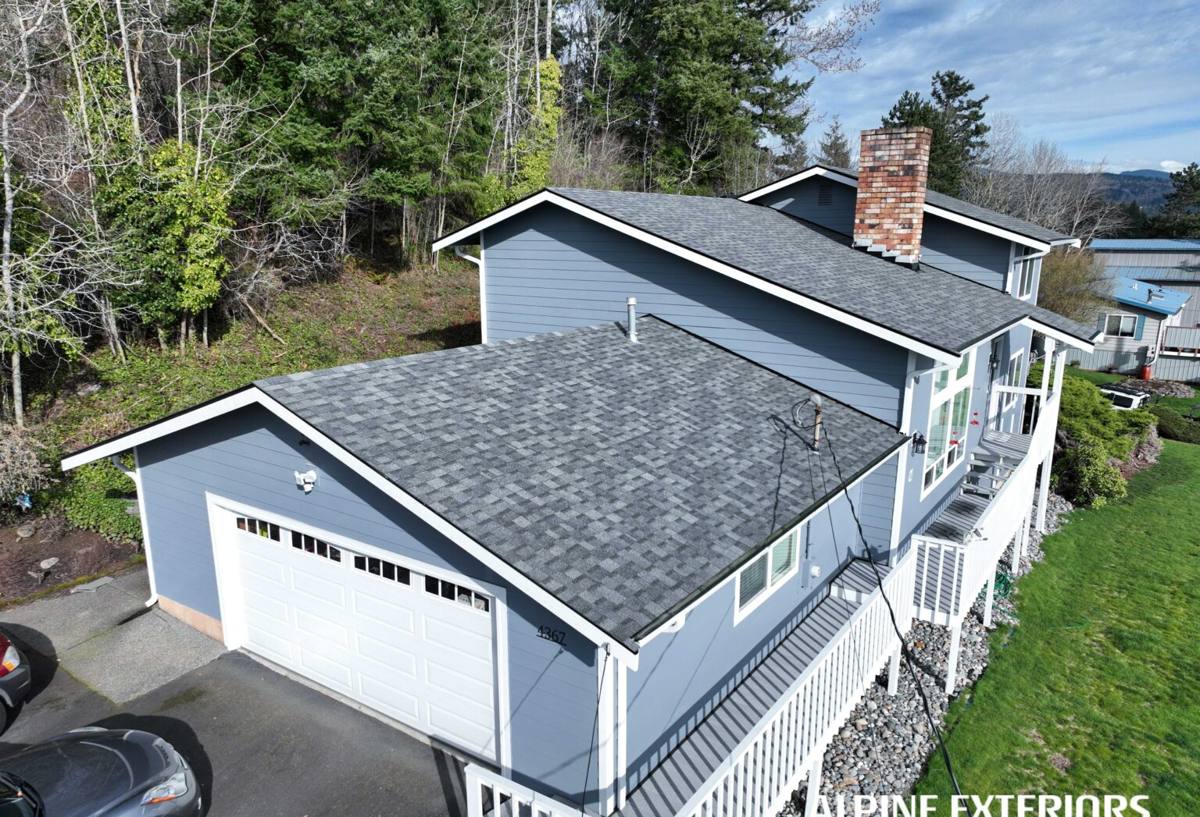
What Salt Air, Rain, and Moss Actually Do to a Shingle Roof
These three factors don't act alone — they compound each other, and understanding how helps explain why some roofs age fast and others don't.
Salt Air
Airborne salt from the surrounding water accelerates corrosion on any exposed metal — roofing nails, flashing, vent stacks, and gutter hardware. Standard electro-galvanized fasteners can start rusting years before their inland equivalents, and once a nail head corrodes and loosens, water finds a path underneath the shingle above it. This is one of the most common causes of a leak that shows up "out of nowhere" on an otherwise decent-looking roof.
Driving Rain
Wind-driven rain off the water doesn't just fall straight down — it pushes sideways and works its way up under shingle tabs, into exposed nail heads, and along poorly sealed flashing at chimneys, skylights, and wall intersections. A roof built for calmer weather, with minimal underlayment and standard flashing details, is more likely to leak here than the identical roof built to a marine-exposure standard.
Moss and Algae
Shaded roof sections, especially north-facing slopes and areas under overhanging trees, stay damp longer after rain and are exactly where moss takes hold. Moss roots work into the shingle mat, lift tabs, and hold moisture against the roof deck long after the surrounding roof has dried out. Left unaddressed, it shortens the roof's life significantly and is one of the most preventable causes of early shingle failure we see on island and coastal properties.
What a Correctly Installed Shingle Roof Needs Out Here
A roof built for Lummi Island's conditions isn't a different roof, exactly — it's the same asphalt shingle system with every detail done to the standard the climate demands, not the minimum the code allows.
- Ice-and-water shield at eaves, valleys, and penetrations — self-adhering underlayment that seals around nail penetrations, critical anywhere wind-driven rain can push water uphill under the shingle field.
- Corrosion-resistant fasteners — hot-dip galvanized or stainless roofing nails hold up far longer against salt air than standard electro-galvanized nails, especially at the exposed perimeter.
- Properly lapped synthetic underlayment across the full deck, not just felt paper, for a second line of defense if wind ever drives water past the shingles themselves.
- Correct nailing pattern and shingle exposure — under-nailing or high-nailing is a common installation shortcut that shows up as blow-offs in the first hard windstorm.
- Balanced ventilation — intake at the eaves and exhaust at the ridge, sized to the attic, so trapped moisture doesn't condense on the deck from the inside while rain is being kept out on the outside.
- Metal flashing at every transition — chimneys, skylights, sidewalls, and valleys — bedded and sealed rather than relying on roof cement alone.
- Algae-resistant shingle granules on the shaded and north-facing slopes where moss and algae growth is most likely.
Choosing the Right Shingle for This Environment
Not every asphalt shingle product is a good match for a shaded, salt-exposed, high-rainfall roof. The table below covers the main categories we work with and where each one makes sense.
| Shingle Type | Typical Lifespan | Wind / Algae Resistance | Best Fit |
|---|---|---|---|
| 3-Tab Asphalt | 15–20 years | Lower wind rating; algae-resistant versions available | Budget-conscious re-roofs on less exposed slopes |
| Architectural (Dimensional) | 25–30 years | Higher wind rating; heavier mat sheds moisture better | Most homes here — the standard we recommend for full re-roofs |
| Impact-Resistant / Premium | 30+ years | Highest wind and impact rating; often carries stronger algae protection | Homes with heavy tree cover, exposed water-facing elevations, or owners planning to stay long-term |
For most Lummi Island homes, we lean toward architectural shingles with algae-resistant granules as the baseline — the added mat weight and warranty coverage against streaking are worth it in a climate that grows moss and algae as readily as this one does. We'll walk through the honest trade-offs in cost and expected service life for your specific roof rather than pushing one product across every job.
Repair or Full Replacement? How We Help You Decide
Not every roofing problem on Lummi Island means a full tear-off. A lot of leaks and moss issues can be fixed with targeted repair if the roof deck and majority of the shingle field are still sound. The factors below are what we actually weigh on a roof inspection.
| Factor | Leans Toward Repair | Leans Toward Replacement |
|---|---|---|
| Age of roof | Under 12–15 years | Approaching or past manufacturer's rated lifespan |
| Extent of damage | Isolated area — one slope, one flashing detail | Granule loss, curling, or moss spread across multiple slopes |
| Deck condition | Solid, no soft spots or rot | Soft decking, staining, or sag found underneath |
| History of leaks | First occurrence, clear single cause | Repeated leaks in different spots over time |
| Ventilation | Adequate and functioning | Undersized or blocked — often a sign the whole system needs updating |
We'll always tell you plainly which side of that line your roof falls on, including when a repair is the honest answer and a full replacement isn't necessary yet.
Moss and Algae: Prevention Matters More Than Cure
Once moss establishes itself on a shingle roof, cleaning it off is only part of the fix — the underlying moisture retention and shade conditions that let it grow back need to be addressed too. A realistic maintenance routine keeps a roof out here performing closer to its rated lifespan.
- Keep overhanging branches trimmed back to reduce shade and let roof surfaces dry faster after rain.
- Clear gutters and valleys of needles and leaf debris each fall, before the wet season settles in.
- Have moss physically removed rather than pressure-washed off — pressure washing can strip granules and shorten shingle life.
- Consider zinc or copper control strips near the ridge on shaded slopes, which release trace metals that inhibit moss and algae regrowth as rain washes over them.
- Schedule a roof walk-through every year or two, even with no visible problems, so small issues (a lifted tab, a cracked pipe boot) get caught before they become leaks.
Ventilation and Moisture Control
A shingle roof's enemy isn't only the rain hitting it from outside — it's also moisture generated inside the home that has nowhere to go. In a marine climate with consistently high humidity, an attic without balanced intake and exhaust ventilation traps that moisture against the underside of the roof deck. Over time that leads to sheathing rot, mold, and premature shingle failure from beneath, which can look identical to a roofing leak but has a completely different cause and fix. When we're on a roof for a repair or replacement, checking soffit intake and ridge or box vent exhaust is a standard part of the inspection, not an upsell — it directly affects how long the shingles above it will last.
Our Process, Start to Finish
Every roofing job on Lummi Island runs through the same steps, adjusted for the scope of the work:
- On-site inspection. We walk the roof (or use appropriate access for steep or unsafe sections), check the deck, flashing, ventilation, and shingle condition, and photograph problem areas.
- Written estimate. A clear scope of work and price — repair or replacement — with the shingle options and their honest trade-offs explained.
- Scheduling around weather and logistics. We plan material delivery and crew timing around ferry schedules and forecasted weather windows so the roof isn't left open longer than necessary.
- The work itself. Tear-off (if applicable), deck inspection and repair, underlayment, flashing, shingle installation, and ventilation work, done to the standard outlined above.
- Cleanup and walkthrough. Magnetic sweep for nails, debris hauled off, and a final walkthrough so you know exactly what was done.
Why It Matters to Hire a Crew That Already Works This Island
Lummi Island is ferry-access only, which changes how roofing logistics actually work. Material deliveries, crew scheduling, and any follow-up trips all need to account for ferry timing — something a contractor who doesn't regularly work the island tends to underestimate, which shows up as delayed starts, rushed work to avoid an extra ferry trip, or difficulty getting back out for warranty follow-up. A crew that already routes Lummi Island into its regular Whatcom County schedule plans around that reality from the start instead of treating it as a surprise. It also means we've seen firsthand how the local combination of salt air, shade, and rainfall actually plays out on real roofs here — which is the kind of judgment that doesn't come from a spec sheet.
Workmanship and Materials You Can Count On
We stand behind our installation work with a workmanship warranty, separate from and in addition to the manufacturer's material warranty on the shingles themselves. We'll explain both clearly before work starts — what's covered, for how long, and what voids either one — so there are no surprises later. If a manufacturer's warranty requires specific installation details to stay valid, we install to that standard as a baseline, not an option.
If your Lummi Island roof is showing granule loss, moss buildup, staining, or you just want an honest read on where it stands, we're glad to take a look. Reach out for a free, no-pressure estimate using the form below.