 Birch Bay Siding
 Ferndale Homes Face a Specific Kind of Window Wear
Ferndale sits close enough to Birch Bay and the Salish Sea that its homes take on the same weather load as the rest of coastal Whatcom County — salt-laden air, long stretches of wind-driven rain, and a wet season that stretches on far longer than most people expect when they move here. Windows are one of the first places that weather shows up. A window that would last two or three decades in a dry inland climate can start failing in half that time here if it wasn't installed with this specific environment in mind.
This page is about window installation specifically for Ferndale properties — not a generic overview of window types, but what actually matters when you're replacing or installing windows on a home that has to stand up to this region's conditions year after year.
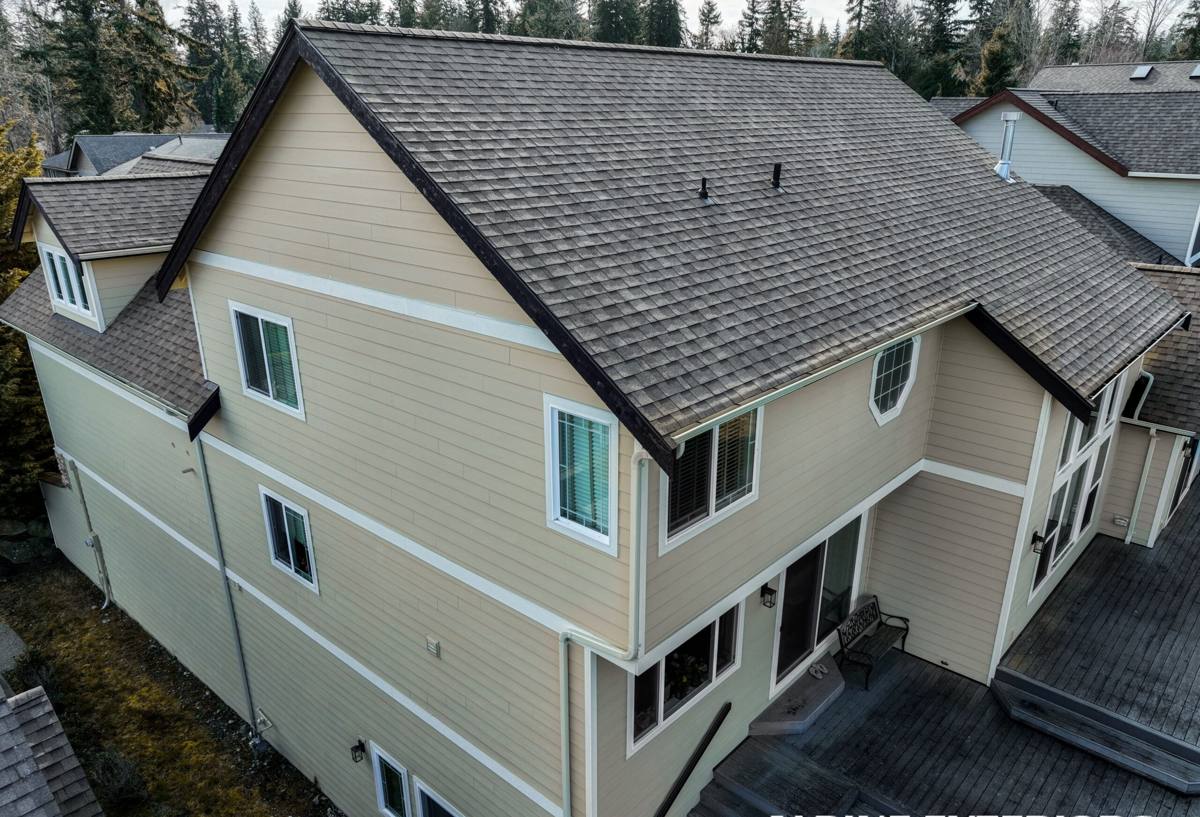
What Coastal Whatcom County Weather Does to a Window Over Time
Salt Air and Corrosion
Proximity to the water means airborne salt settles on everything, including window hardware, screens, and metal flashing. Over years, that salt exposure accelerates corrosion on lower-grade fasteners, hinges, and cranks, and it can pit or dull finishes on frames that aren't rated for coastal exposure. It's a slow process, which is exactly why it gets overlooked — the damage is already done by the time a homeowner notices a window that won't latch cleanly or a frame that's started to chalk and pit.
Driving Rain and Flashing Failures
Rain here rarely falls straight down. Wind off the bay drives it sideways into wall assemblies, which puts enormous pressure on the flashing and sealant details around every window opening. Most window failures we see in this area aren't glass failures at all — they're water intrusion problems caused by flashing that was installed as an afterthought instead of as the primary defense it needs to be.
Moss Season and Trapped Moisture
Whatcom County's moss season runs long, and it isn't just a roof problem. Moss and organic buildup on window sills, trim, and the shaded sides of a house hold moisture against wood and painted surfaces for weeks at a time. On older wood-framed windows especially, that sustained dampness is what leads to soft sills, peeling paint, and eventually rot at the corners — damage that's expensive to fix if it's caught late, and cheap to prevent if it's caught early.
Signs Your Ferndale Home Is Ready for New Windows
Not every window problem means a full replacement, but these are the signs worth taking seriously in this climate:
- Fog or moisture between panes — a sign the seal on a double-pane unit has failed
- Soft, spongy, or discolored wood at the sill or lower corners of the frame
- Windows that are hard to open, close, or lock, especially after damp weather
- Visible gaps, drafts, or a cold spot near the window even when it's shut
- Paint that's peeling or bubbling specifically around the window, not the whole wall
- Moss or persistent green growth building up on sills or trim year after year
- Noticeably higher heating bills without another clear explanation
- Condensation forming on the inside of the glass regularly in winter
One or two of these can sometimes be addressed with repair or re-caulking. Several at once, especially on a home with original windows, usually points to replacement being the more cost-effective long-term move.
Picking a Window That Actually Holds Up Here
Frame material and glass package matter more in a coastal climate than they do inland. The table below reflects how the common options actually perform under salt air, sustained moisture, and Whatcom County's wind-driven rain — not just how they perform in a showroom.
| Frame Material | How It Handles This Climate | Maintenance |
|---|---|---|
| Vinyl | Won't rot or corrode; performs well against salt air and moisture; can flex slightly in temperature swings | Low — occasional cleaning |
| Fiberglass | Very stable in wet, coastal conditions; holds paint well if a custom color is wanted | Low |
| Wood (unclad) | Classic look but the most vulnerable to rot and moss-related moisture damage without diligent upkeep | High — regular painting/sealing required |
| Wood-clad (vinyl or aluminum exterior) | Wood interior warmth with a weather-resistant exterior shell; performs well if the cladding is properly sealed | Moderate |
| Aluminum | Strong and low-maintenance but a poor insulator unless thermally broken; can be prone to condensation in our wet winters | Low |
For most Ferndale homes, we steer people toward vinyl or fiberglass frames with a dual-pane, low-E glass package as the practical baseline — they handle the salt air and moisture load with the least ongoing upkeep. Solid wood frames aren't off the table, but we're honest with clients about the maintenance commitment they require in this specific environment before they commit to that look.
What a Correct Installation Actually Involves
The window unit itself is only part of the job. In a climate where driving rain regularly tests every seam in the building envelope, how the window is installed matters as much as which window is chosen.
Flashing and Water Management
Every opening needs a sill pan or sloped sill flashing that directs any water that gets past the window back outside the wall, not into the framing. Flashing tape needs to integrate correctly with the home's weather-resistive barrier in the right shingle-lap order — head flashing over the barrier, side and sill flashing under it — so water is always directed downward and outward, never trapped behind the siding. This is the single most common shortcut we see on older or lower-budget installs, and it's almost always the reason a "new" window starts leaking within a few years.
Air Sealing and Insulation
The gap between the window frame and the rough opening needs to be sealed and insulated correctly — not overpacked with expanding foam, which can bow the frame and affect operation, and not left with just a bead of caulk, which won't stop air movement. Low-expansion foam or backer rod with sealant, sized and applied correctly around the full perimeter, keeps the window performing the way it's rated to and prevents the drafts and condensation issues that show up later.
New Construction vs. Retrofit Windows
There are two basic approaches to replacing a window, and which one applies depends on the condition of the existing frame and trim.
Retrofit (insert) windows fit inside the existing frame, leaving the exterior trim and siding largely undisturbed. It's faster and less invasive, and it's a reasonable option when the existing frame is still solid and dry. Full-frame (new construction) replacement removes the window down to the rough opening, which lets us inspect and, if needed, repair the framing and flashing underneath — the right call whenever there's evidence of past water damage, rot, or a flashing job that needs to be redone properly. On a lot of the older Ferndale-area homes we work on, especially ones that have gone a long stretch without a window inspection, full-frame replacement ends up being the more honest recommendation once we can see what's actually happening behind the trim.
How We Handle a Ferndale Window Installation Project
- On-site assessment — we look at each opening individually, check for existing moisture or rot, and note conditions specific to the home's exposure (shade, wind direction, proximity to landscaping that holds moisture).
- Window and glass selection — we walk through frame material and glass package options based on that specific home's exposure, not a one-size-fits-all default.
- Removal — old units are removed carefully, with the opening checked for hidden damage before anything new goes in.
- Flashing and prep — sill pans, flashing tape, and weather-resistive barrier integration are done to current best practice, every opening, every time.
- Installation and sealing — the window is set, shimmed level and square, insulated, and sealed on both the interior and exterior.
- Final check — every window is operated, checked for square and smooth operation, and inspected for a clean, weathertight finish before we call the job done.
Why Local Experience in Ferndale Matters
A crew that regularly works Whatcom County homes already knows which details can't be skipped here — the flashing sequence that actually holds up to sideways rain, which frame materials shrug off salt air and which ones need more upkeep than a homeowner may want to sign up for, and which sides of a house tend to hold moss and moisture longer based on shade and wind exposure. That's the difference between a window installation that looks right on installation day and one that's still performing correctly five, ten, and twenty years later. It's also why we don't treat every job the same way regardless of climate — an installation approach that works fine in a dry inland town isn't automatically the right approach for a home a few miles from Birch Bay.
What Influences the Cost of Window Installation
Costs vary enough by project that we won't quote a number without seeing the home, but the main factors that move the price are consistent: the number of windows, frame material, glass package (dual-pane versus triple-pane, low-E coatings), whether it's a retrofit or full-frame replacement, and whether any hidden rot or framing repair turns up once the old window comes out. As a broad range, homeowners in this area are typically looking at a few hundred dollars per window on the low end for a straightforward retrofit up into several thousand per window for larger, full-frame installations with premium materials — with most projects landing somewhere in between depending on scope. The only way to get a real number is a walkthrough of your specific windows and openings.
If you're weighing whether it's time to replace windows on a Ferndale-area home, we're happy to take a look and give you a straight answer — no pressure, no upsell, just what we'd actually recommend for your house. Use the form below to request a free estimate.