 Birch Bay Siding
 Deck Repair on Lummi Island: A Different Kind of Wear
A deck on Lummi Island takes a beating that a lot of inland decks never see. It sits fully exposed to salt-laden marine air off the water, absorbs driving rain that comes in sideways during winter storms, and spends a good part of the year damp enough to grow moss on any surface that doesn't dry out quickly. None of that is unique to any one property out here — it's just what island and shoreline exposure does to an outdoor wood structure over time, and it's why deck repair work on Lummi Island tends to involve a different set of problems than a repair job a few miles inland.
This page is about deck repair specifically — not new builds — for homes on Lummi Island. We work out of Birch Bay and cover Whatcom County's coastal and island communities, and Lummi Island repair calls have enough in common with each other that it's worth laying out plainly what we typically find, what a correct repair actually involves, and how the island setting itself changes the job.
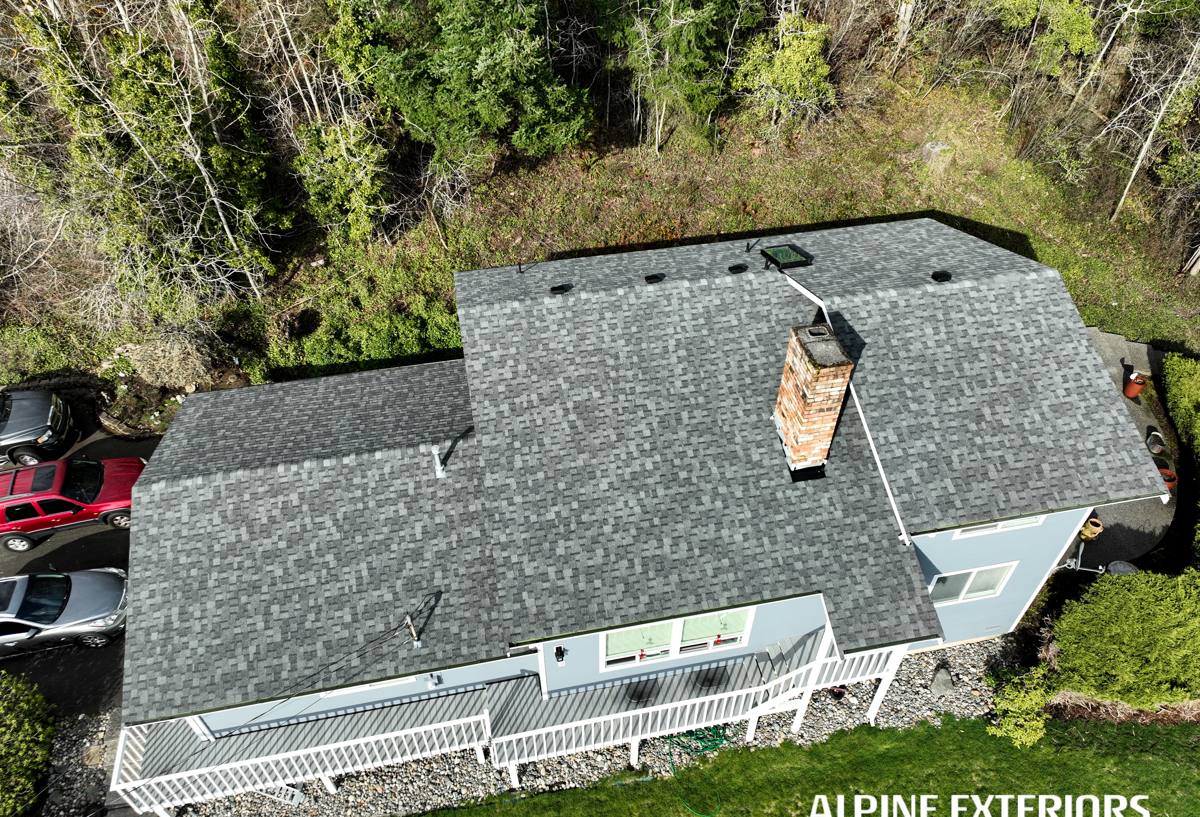
What Salt Air, Rain, and Moss Do to a Deck Out Here
Salt Air and Corrosion
Being surrounded by water means a Lummi Island deck deals with more sustained salt exposure than most mainland properties even a short distance from shore. Salt speeds up corrosion in any exposed metal — screws, joist hangers, post brackets, railing hardware — and a fastener that's corroding loses grip strength well before it's visibly rusted through. On a repair job, that's often the real story behind a railing that's started to wiggle or a board that's lifted at one end: it's not the wood that failed first, it's the metal holding it down.
Wind-Driven Rain and Water Intrusion
Storms coming off the water don't just drop rain straight down; wind pushes it sideways, up under railings, and into any gap or seam that isn't sealed or gapped correctly. That matters most at the ledger board, where a deck attaches to the house, and at any spot where boards butt against a house wall, post, or stair stringer. Water that gets behind flashing or into an unsealed ledger connection can sit there for months without being visible from the surface, which is a big part of why deck repair work here often turns up more rot than the surface condition suggested going in.
A Moss Season That Doesn't Take a Break
Mild temperatures and near-constant moisture give moss a long growing season on Lummi Island, and a horizontal deck surface is one of its favorite places to take hold — it holds water longer than a wall and stays damp between storms. Shaded decks and anything under tree cover are usually the worst affected. Moss itself isn't just cosmetic: it holds moisture directly against the board surface, and on wood decking in particular that constant dampness is what drives soft spots and rot underneath a mossy patch that might look minor from a few feet away.
Common Deck Problems We Find on Lummi Island Repairs
Most of the repair calls we get out here fall into a fairly consistent set of issues, and a lot of them share the same root cause: sustained moisture and salt exposure working on a spot that wasn't detailed to handle it. Signs worth taking seriously if you're seeing them on your own deck:
- Soft, spongy, or discolored decking boards, especially in shaded areas or spots that hold water after rain
- A railing post or section that flexes or wiggles more than it used to
- Visible rust staining running down from screw heads or metal hardware
- Gaps opening up where the deck meets the house, or staining on the siding just above the ledger board
- Stair stringers or treads that feel less solid underfoot than the rest of the deck
- Persistent moss or algae that comes back within weeks of being cleaned off
- Boards that have cupped, split, or pulled away from their fasteners
Any one of these on its own might be a small fix. Several of them together, or anything involving the ledger connection or a support post, usually means it's worth having someone look at the structure underneath, not just the visible surface.
Repair or Replace? How We Make That Call
Not every deck problem on Lummi Island means a full rebuild, and not every deck can be reasonably patched, either. The honest answer depends on how much of the structure is affected and how it's holding up underneath the surface, not just how the deck looks from the yard. Here's generally how the factors break down:
| Factor | Usually Points to Repair | Usually Points to Replacement |
|---|---|---|
| Decking boards | A handful of boards showing rot or damage | Widespread cupping, splitting, or soft spots across most of the surface |
| Framing & joists | Localized soft spots near one problem area | Soft or spongy framing found in multiple locations |
| Ledger connection | Isolated flashing or sealant failure caught early | Rot extending into the house rim joist or wall framing |
| Railings & posts | Loose hardware or a single damaged section | Multiple posts undersized or compromised structurally |
| Age & prior maintenance | Deck is reasonably young and was maintained regularly | Deck is old, poorly maintained, or has been patched repeatedly already |
We'll always tell you plainly which side of that line your deck falls on. A repair that's really just delaying an inevitable rebuild isn't doing you any favors, and a full rebuild on a deck that only needs targeted framing and board work isn't either.
What a Correct Deck Repair Actually Involves
A repair that only replaces what's visibly damaged and stops there tends to come back as a repeat call within a season or two. A repair done right treats the problem area as part of the whole structure and checks what's connected to it before closing things back up. That generally means:
- Pulling enough surrounding decking to see the actual extent of framing damage, not just guessing from the surface
- Replacing corroded fasteners and hardware with stainless steel or coastal-grade corrosion-resistant hardware, not standard galvanized replacements that will corrode again in this exposure
- Re-checking and, where needed, re-flashing the ledger board connection to the house, since a repair that ignores a failing ledger connection is treating a symptom instead of the cause
- Confirming footings and post bases haven't shifted or settled before reattaching structural elements to them
- Matching replacement decking material to what's there where practical, or discussing a material change honestly if the original product is part of why the deck is failing
- Re-gapping boards correctly on reinstall so water can actually drain and dry between them, rather than butting them tight and inviting the same moisture problem back
That approach takes more time upfront than swapping a few boards and calling it done, but it's the difference between a repair that holds for years and one that just delays the same call.
Our Repair Process
We start by walking the deck with you and looking past the obvious damage — checking framing, ledger connection, post bases, and hardware condition, not just the boards that prompted the call. From there we give you a clear picture of what's actually going on and where it falls on the repair-versus-replace question, along with a written scope before any work starts. If the damage is more extensive than expected once we open things up, we'll tell you before proceeding, not after the fact.
Repair work itself follows the same order every time: address structural and framing issues first, since nothing built on top of them will hold if they're not solid, then hardware and fasteners, then decking surface and railings. We finish with a walkthrough of what we found, what we fixed, and what's worth keeping an eye on given how this deck is exposed to sun, shade, and weather on your specific lot.
Getting Materials and a Crew to an Island Job
Lummi Island is reached only by a county-operated ferry, with no bridge connecting it to the mainland, and that changes how a repair job on the island actually gets scheduled compared to a mainland job a few minutes down the road. Materials, tools, and crew all move on the same ferry schedule the rest of the island runs on, so a repair here needs realistic planning around sailing times rather than the kind of same-day flexibility a mainland job allows. A crew that hasn't worked the island before can be caught off guard by that logistics layer and end up running behind on day one.
Working out of Birch Bay and covering Whatcom County's coastal and island communities regularly means we plan for that ferry schedule as a normal part of quoting and scheduling a Lummi Island job, not as a surprise that shows up mid-project. It also means we've already seen how salt air and prolonged moisture behave on island decks specifically, which shapes what fastener grade and repair approach we recommend before we've even opened up the damaged area.
A Short Checklist Before Hiring for Deck Repair on Lummi Island
- Ask whether they've worked on the island before and how they plan around ferry scheduling
- Confirm current Washington contractor licensing and insurance
- Ask what fastener grade they use for salt-air exposure, and whether it matches what's actually needed here
- Get a written scope that spells out what's being repaired versus just inspected
- Ask how they'll handle it if they find more damage than expected once the deck is opened up
Keeping a Repaired Deck From Needing the Same Repair Again
A well-executed repair still needs some routine attention afterward to get its full value, especially in this climate. A few habits make a real difference:
- Rinse the deck periodically to clear salt residue and organic buildup before it works into the wood or finish
- Keep gaps between boards clear of leaves and debris so water can actually drain through as designed
- Check railing hardware and post connections once a year, particularly heading into the wet season
- Reseal or restain wood decking on the schedule the product actually needs, not just when it starts looking gray
- Deal with any new soft spot or moisture sign right away — it's a lot cheaper to address early than after a full winter of exposure
If you're noticing soft boards, a loose railing, or moss that keeps coming back on a Lummi Island deck, we're glad to take a look and give you a straight read on what it needs. Reach out below for a free, no-pressure estimate.