 Birch Bay Siding
 New Roofs in Custer: Built for What This Climate Actually Does to a House
Custer sits a short drive inland from the Birch Bay shoreline, in a part of Whatcom County that still gets the full weather package coming off the water — salt-laden air, wind-driven rain that doesn't just fall but blows sideways under eaves and flashing, and enough shade and moisture in the fall and winter months to keep moss growing on roofs almost year-round. A roof here has a different job than a roof in a dry inland climate. It isn't just shedding water; it's holding up against corrosion, wind uplift, and constant dampness at the same time, for months at a stretch without a real drying-out period.
That combination is why we treat new roof installation in Custer as a full system decision — material, underlayment, ventilation, and flashing all have to work together — rather than a straight swap of old shingles for new ones. Get any one part wrong and the roof will look fine for a year or two before the climate finds the weak point.
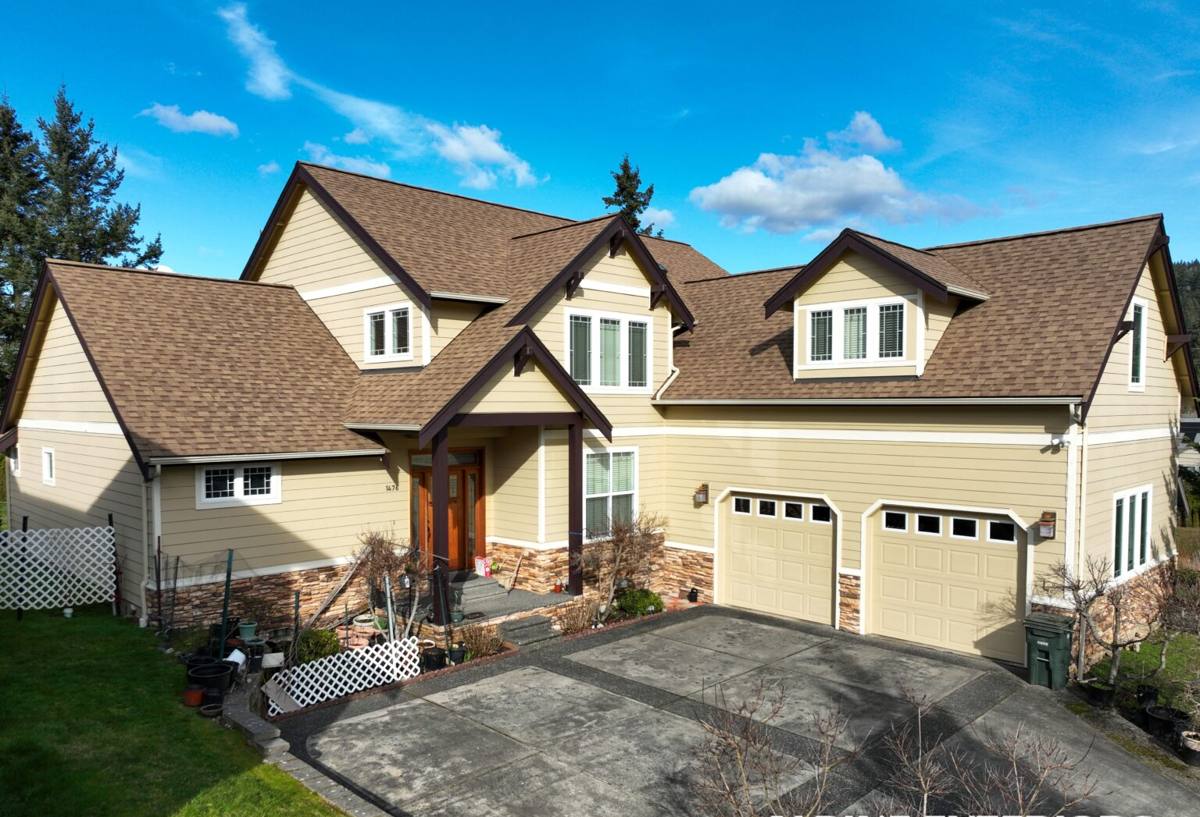
What Salt Air, Driving Rain, and Moss Season Do to a Roof Over Time
Salt Air and Metal Corrosion
Fasteners, flashing, vent stacks, and any exposed metal on a roof are the first things salt-laden coastal air goes after. Low-grade or unprotected fasteners can start rusting years before a homeowner would expect, and once a nail head or flashing seam corrodes, water finds its way underneath long before there's a visible leak inside the house.
Driving Rain and Wind-Driven Water
Whatcom County storms off the Strait of Georgia don't always drop rain straight down. Wind-driven rain gets pushed sideways and upward under shingle tabs, around chimney flashing, and into valleys — areas that a roof built for calmer climates might not seal as aggressively. This is also what puts real strain on shingle wind ratings and fastening patterns, not just the occasional big windstorm.
Moss, Shade, and Standing Moisture
Custer has enough tree cover on many lots that north-facing slopes and shaded valleys stay damp well after the rest of the roof has dried out. Moss takes root in that moisture, and once it does, it holds water against the shingle surface, lifts tabs as it grows, and works its way into gaps around fasteners and flashing. A roof that isn't detailed to shed water quickly and dry out between storms will grow moss faster than one that is — regardless of the shingle brand.
Signs a Custer Home Needs a New Roof, Not Another Repair
Repairs make sense when a roof has isolated damage and years of usable life left. A full replacement makes sense when the underlying system — not just the surface — has started to fail. Here's what we look for during an inspection:
- Granule loss heavy enough that shingles look bald or patchy, especially on south- and west-facing slopes
- Shingles that are cupping, curling at the edges, or cracking when lightly flexed
- Soft or spongy spots in the roof deck when walked, which usually means water has already gotten past the shingles
- Moss buildup thick enough to hold water against the roof surface for days after rain stops
- Rusting, lifting, or gapped flashing around chimneys, vents, and roof-to-wall transitions
- Daylight visible through the attic roof deck, or damp insulation and staining on rafters
- A roof original to the home and past 20–25 years old, even if it looks acceptable from the ground
- Repeated leak repairs in different spots each winter instead of one recurring problem area
If a roof is showing two or more of these at once, patch repairs usually end up being a short-term expense on the way to a replacement anyway.
What a Correct New Roof Installation Involves
Tear-Off and Deck Inspection
We remove the old roofing down to the deck rather than layering over it. That's the only way to actually see the plywood or plank sheathing underneath, replace any sections that have gone soft or delaminated from long-term moisture exposure, and confirm the deck is solid enough to hold fasteners properly for the next couple of decades.
Underlayment and Moisture Barrier
Given how much rain this area sees, we install a synthetic underlayment across the full roof and add self-adhered ice-and-water membrane at the vulnerable points — eaves, valleys, and around any roof penetrations — where wind-driven rain and ice damming are most likely to force water backward under the shingles.
Ventilation
A roof that traps warm, moist attic air underneath it will sweat from the inside just as much as it gets rained on from the outside, and that trapped moisture is a major contributor to premature deck rot and moss growth on the underside of the roofing. Balanced intake and exhaust ventilation is part of the design, not an afterthought.
Flashing Details
Chimneys, skylights, sidewalls, and valleys are where the large majority of roof leaks actually start, not the open field of shingles. We use step flashing, counter-flashing, and valley metal sized and lapped correctly for driving rain, and we don't rely on caulk or sealant to do a flashing detail's job long-term.
Fasteners and Wind Rating
We use corrosion-resistant fasteners and follow the shingle manufacturer's high-wind nailing pattern, which matters more here than in a sheltered inland location — a roof installed to minimum-code fastening will show its weak points the first time a real coastal storm comes through.
Choosing a Roofing Material for a Custer Home
There isn't one universally "best" roofing material — the right choice depends on how exposed the home is, how much shade and moss risk the roof faces, and what the homeowner wants to budget for upfront cost versus long-term maintenance.
| Material | Moss & Moisture Behavior | Wind & Salt-Air Durability | Typical Lifespan | Cost Factor |
|---|---|---|---|---|
| Architectural asphalt shingle | Good when installed with proper ventilation; needs periodic moss treatment | Strong with correct high-wind nailing pattern | 25–30 years | Moderate |
| Standing seam metal | Sheds water and moss very effectively due to smooth, steep-shedding surface | Excellent; corrosion-resistant coatings handle salt air well | 40–50+ years | Higher upfront |
| Synthetic/composite shingle | Resists moisture absorption better than organic-mat products | Good; performance varies by product line | 30–40 years | Moderate to higher |
For most Custer homes, a quality architectural asphalt shingle with proper ventilation and flashing is a solid, cost-effective choice. Homes with heavy shade, steep moss history, or owners planning to stay long-term often do better with metal or a synthetic product, since the reduced moss and maintenance burden pays back the higher upfront cost over time. We'll walk through the honest trade-offs for the specific roof rather than pushing one product line.
Our New Roof Installation Process
- On-site inspection of the current roof, attic ventilation, and deck condition, with photos and a plain-language explanation of what we find
- Written estimate covering material options, tear-off scope, and any deck repair allowances so there are no surprise add-ons mid-job
- Material ordering and scheduling, timed around the weather window where possible
- Full tear-off, deck inspection and repair, and disposal of old roofing debris
- Underlayment, ice-and-water membrane, and flashing installation at all vulnerable points
- Shingle or panel installation following manufacturer wind-rated fastening specs
- Final walk-through with the homeowner and a written warranty covering both materials and our workmanship
Why Local Roofing Experience in Birch Bay and Custer Matters
A crew that mainly works drier, more sheltered parts of the state doesn't spend much time thinking about ventilation balance for constant moisture, wind-driven rain protection at valleys, or moss-prone shaded slopes — because they don't have to. Working Whatcom County roofs regularly, including homes around Birch Bay and Custer, means we're detailing every roof assuming it will face driving rain and long damp stretches, not treating that as an unusual edge case. That shows up in the underlayment choices, the flashing details, and the fastening pattern we use as standard practice, not as an upgrade.
After the Install: Keeping a Custer Roof in Good Shape
A correctly installed roof still benefits from basic upkeep in this climate. Keeping gutters clear so water isn't backing up under the eaves, trimming back overhanging branches that keep a roof section shaded and damp, and having moss growth treated before it gets thick enough to lift shingles will all extend the life of a new roof well past its baseline expectancy. We're glad to walk homeowners through a simple maintenance schedule at the time of install.
If a Custer roof is showing its age, or it's simply time to plan ahead instead of waiting for a leak, we're happy to take a look and put together a straightforward, no-pressure estimate — just fill out the form below.