 Birch Bay Siding
 Deck Repair Built for the Custer Climate
Custer sits just inland from Birch Bay, close enough to the water that the same salt air, driving rain, and long moss season that wear down siding and roofs in Whatcom County go to work on decks too. A deck here doesn't fail the way one does in a dry inland climate. It fails from the outside in — moisture finding its way into end grain, fasteners corroding under the surface, and moss holding water against wood and composite boards for months at a time. Repairing a deck correctly in this area means understanding those specific pressures, not just patching whatever looks bad on top.
We've worked on decks throughout Birch Bay and the surrounding Custer area long enough to know which problems are cosmetic and which ones are structural warning signs. This page walks through what local decks actually need, what a proper repair involves, and how we approach the work.
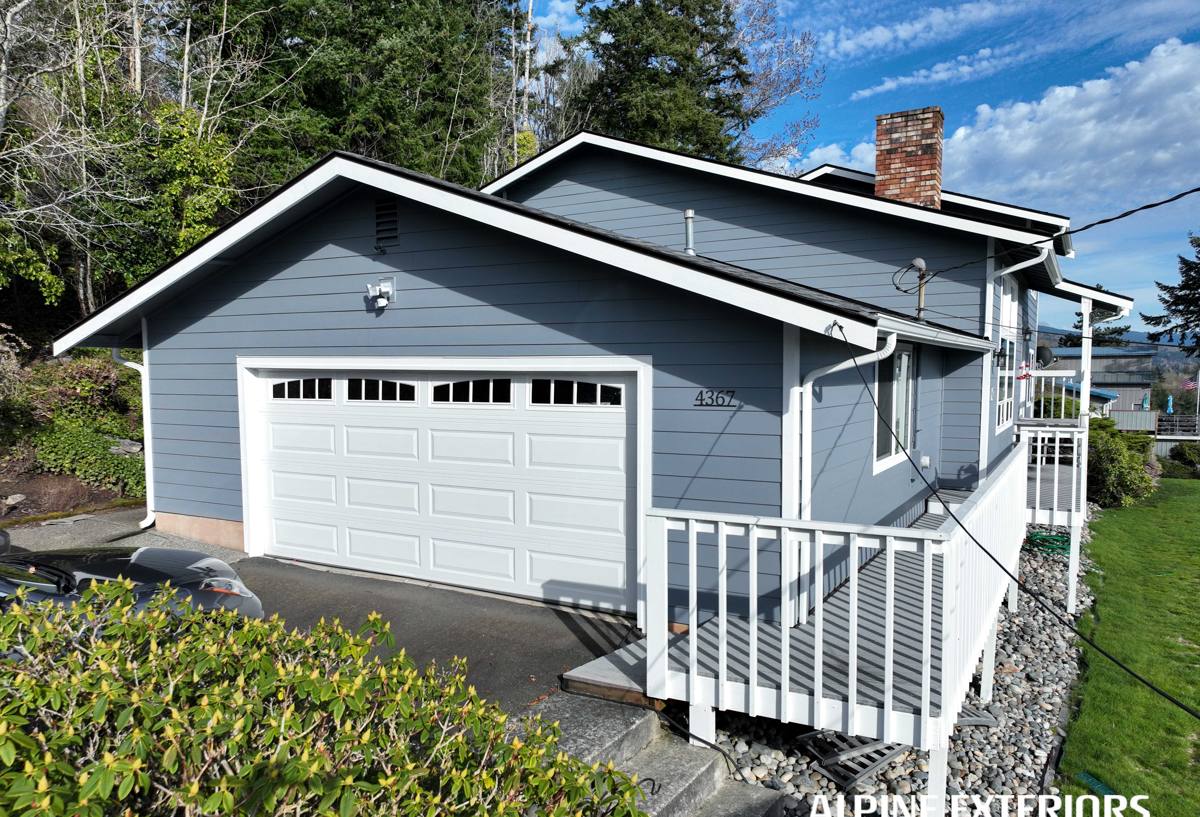
Why Decks Take a Beating Here
Salt Air and Metal Fasteners
Even a few miles inland from Birch Bay, airborne salt reaches exposed wood and metal. Ordinary fasteners — the kind sold for general construction — corrode faster in this environment than they would fifty miles east. Once a nail or screw starts rusting inside a board, it swells the wood around it, cracks the surface, and lets water in even faster. Rust streaks bleeding down decking or framing are almost always a sign the original hardware wasn't rated for a coastal-adjacent climate.
Driving Rain and Ledger Boards
Whatcom County gets a lot of rain that doesn't fall straight down — wind-driven rain finds its way under flashing, behind ledger boards, and into any gap where the deck meets the house. The ledger board (the piece that attaches the deck to the structure) is the single most common point of hidden rot we find, because water gets behind it and nobody sees the damage until the deck starts to feel spongy or a board finally gives way.
The Long Moss Season
Between the marine humidity and the tree cover common around Custer, moss and algae get a long growing window here — often eight months or more of the year. Moss on a deck isn't just a slip hazard. It holds moisture against the board surface constantly, which accelerates wood rot and can stain or degrade even composite decking over time if it's never cleaned off.
Common Deck Problems We See in This Area
- Soft or spongy decking boards, especially near the house or in shaded corners
- Rust stains bleeding from screw heads, joist hangers, or bolts
- Wobbly or loose railing posts, which are often a structural issue, not just a tightening job
- Gaps or dark staining where the ledger board meets the siding
- Moss or black algae buildup on boards that stay shaded most of the day
- Stair stringers or footings that have shifted or settled
- Composite decking that's faded, chalky, or separating at the fastener points
What a Correct Deck Repair Actually Involves
Diagnosing the Real Problem
A deck repair done right starts with figuring out why the damage happened, not just replacing the board that looks bad. If a section of decking is soft, we check whether the joist underneath is also compromised, whether the ledger connection is still sound, and whether water is draining away from the structure or pooling against it. Replacing a rotten board over a rotten joist just buys a year or two before the same spot fails again.
Structural vs. Cosmetic Repairs
Some deck problems are purely cosmetic — faded boards, minor surface checking, moss staining. Others are structural — compromised joists, a failing ledger connection, undersized or corroded hardware, footings that have moved. We're upfront about which category a given repair falls into, because a cosmetic fix on a structural problem isn't a repair, it's a delay.
Repair Options by Decking Material
| Material | Common Issue Locally | Typical Repair Approach | Ongoing Maintenance |
|---|---|---|---|
| Pressure-treated wood | Rot at fastener points and ledger contact; moss staining | Sister or replace affected joists and boards; upgrade to coastal-rated fasteners | Annual cleaning and re-sealing recommended |
| Cedar decking | Surface checking, graying, softness in shaded areas | Board-by-board replacement; improve airflow underneath where possible | Periodic cleaning and oil or sealant |
| Capped composite | Fastener pull-through, fading, moss buildup on the cap surface | Replace individual boards with matching profile; correct fastening pattern | Low — occasional washing |
| Older uncapped composite | Moisture absorption, swelling, mold in the surface layer | Often more cost-effective to replace the affected run than patch it | Moderate — regular cleaning needed |
Repair vs. Replace
Homeowners often ask whether it's worth repairing an older deck or starting over. The honest answer depends on what's underneath the decking boards, not just how the surface looks.
| Factor | Leans Toward Repair | Leans Toward Replacement |
|---|---|---|
| Framing condition | Joists and ledger are still solid | Widespread rot in the substructure |
| Extent of damage | Isolated boards or one section | Damage spread across most of the deck |
| Age of the deck | Under 15–20 years, built to a reasonable standard | Original construction is decades old or undersized for current code |
| Fastener condition | Hardware is coastal-rated and holding | Widespread corrosion in joist hangers or structural bolts |
In a lot of cases the honest recommendation is a hybrid: replace the structural elements that are truly failing — joists, ledger, hardware — and keep decking that's still sound. That's usually the most cost-effective path, and it's what we recommend when it applies.
Fasteners and Hardware: Why It Matters More Here
This is where a lot of deck repairs in coastal Whatcom County go wrong. Using standard zinc-coated screws or nails on a Custer-area deck is asking for a repeat repair within a few years. We use stainless steel or heavy hot-dip galvanized fasteners and hardware rated for coastal exposure, along with joist hanger hardware built to the same standard. It costs more up front than generic hardware, but the whole point of a repair is that it lasts — corroding fasteners undo everything else about the job.
Our Deck Repair Process
- Inspection. We walk the full deck, check the ledger connection, get underneath where access allows, and test boards and railings for movement or soft spots — not just a visual look at the top surface.
- Honest assessment. We tell you what's cosmetic, what's structural, and what the realistic options are, including repair-versus-replace where relevant.
- Written scope. A clear plan of what's being repaired, what materials and fasteners we're using, and why.
- The repair. Structural work first — joists, ledger, hardware — then decking, railings, and stairs.
- Final check. We confirm the deck is solid, drainage is working as intended, and nothing was left loose or unresolved.
Why Hire a Crew That Already Works in Custer and Birch Bay
A contractor who mostly works inland doesn't always think about coastal-grade fasteners, moss-related moisture, or how wind-driven rain behaves against a ledger board — because those aren't daily problems where they usually work. We're out in Birch Bay, Custer, and the rest of this stretch of Whatcom County regularly, so we're already factoring in salt air and rain exposure before we ever price the job. That local familiarity shows up in what materials we spec, not just in how fast we can get to a job site.
Keeping a Repaired Deck Solid Afterward
A good repair job holds up better with a little seasonal attention. None of this is complicated, but skipping it shortens the life of even a well-done repair in this climate.
- Sweep or blow off leaves and debris regularly, especially in shaded corners where moss takes hold first
- Clean visible moss or algae before it spreads, rather than waiting for it to cover a full section
- Check that gaps between boards stay clear so water can drain instead of pooling
- Look at the ledger board area once or twice a year for staining or gaps at the siding
- Re-seal or re-oil wood decking on the schedule appropriate to the product
- Watch for any new movement in railing posts or stairs and address it early
If your deck in Custer or anywhere around Birch Bay has soft spots, rust stains, loose railings, or just years of moss buildup catching up with it, we're glad to take a look. The estimate is free, there's no pressure attached to it, and you'll get a straight answer about what actually needs to happen — just fill out the form below.