 Birch Bay Siding
 Windows Built for Custer's Coastal Exposure
Custer sits close enough to Birch Bay and the Strait of Georgia that homes here take on a mix of weather most inland Whatcom County properties never see. Salt-laden air off the water works into window frames and hardware year-round, wind-driven rain gets pushed sideways into gaps that would stay dry elsewhere, and the long stretch of gray, damp months keeps moss and mildew active on sills and exterior trim for most of the year. A window that's a good fit in Bellingham or Ferndale isn't automatically a good fit in Custer — the exposure is different, and the installation details that matter shift accordingly.
We install custom windows in Custer regularly, which means we're not guessing at how this specific stretch of coastline treats window assemblies. We've seen which frame materials hold up, which sealant details actually keep water out under driving rain, and which shortcuts show up as callbacks two or three winters later.
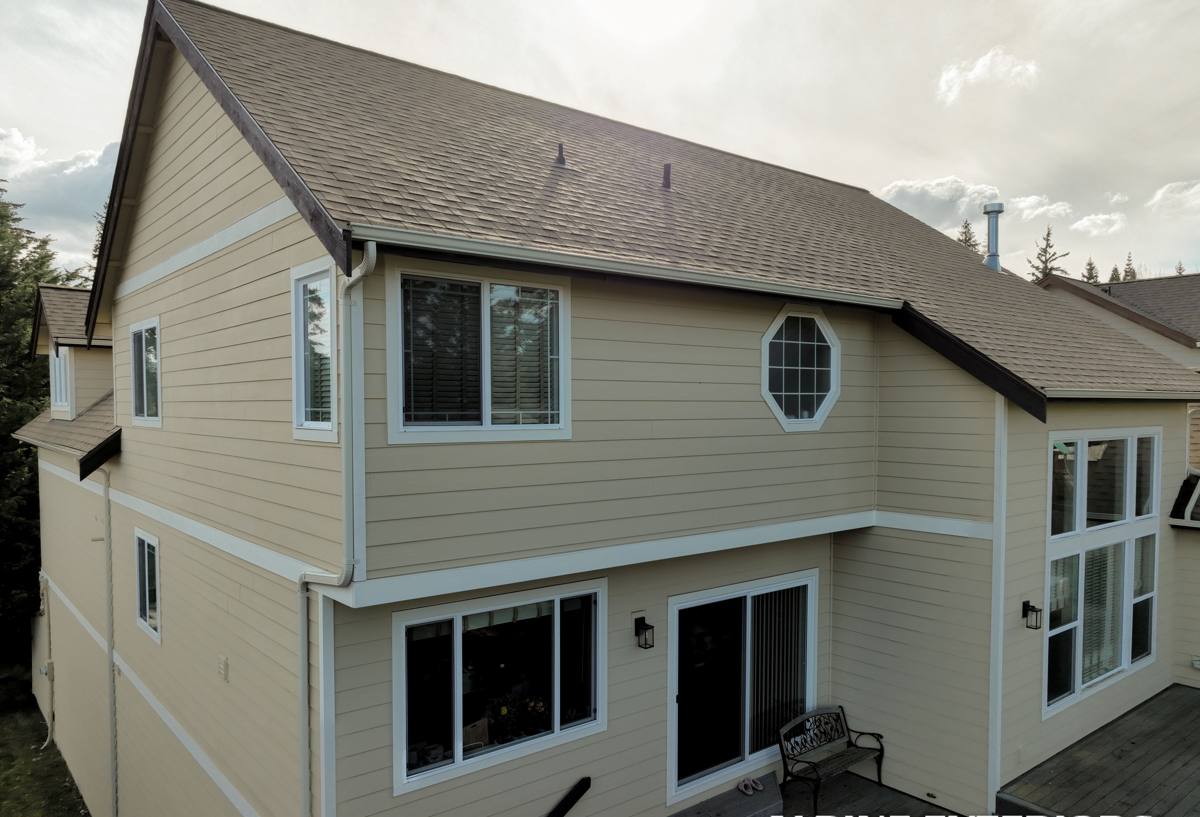
What "Custom" Actually Means Here
Custom windows aren't just an odd size ordered to fit a rough opening — though that's part of it. In Custer, custom work usually falls into one of these categories:
- Non-standard openings in older homes where stock sizes don't exist anymore
- Matching sightlines and grid patterns across additions or mixed-era construction
- Upgraded glass packages for coastal wind exposure and noise from nearby roads
- Bay, bow, or picture window configurations built to a specific wall opening
- Full-frame replacements where the existing opening needs correction, not just a new sash
The common thread is that a custom job requires more upfront measuring, more decision-making about materials and flashing, and more attention during install than a straight swap-and-caulk replacement. That's true anywhere, but the margin for error is smaller in Custer because a poorly sealed custom opening becomes a moisture problem faster in this climate than it would somewhere drier.
Common Custer Housing Stock and What It Means for Window Work
Custer has a mix of older single-story homes, mid-century ranches, and newer construction spread across acreage and smaller lots. Older homes often have window openings that have shifted slightly with settling, or original wood-frame windows that were never designed for the level of moisture exposure the coastal side of the county gets. Newer builds are more likely to have standard openings but may still need upgraded glass or frame materials if the original builder specified a baseline package rather than something suited to full-time coastal exposure.
Why Salt Air and Driving Rain Change the Job
Two things drive most of our decision-making on Custer window jobs: corrosion resistance and water management.
Salt Air and Hardware
Salt-laden air accelerates corrosion on window hardware — hinges, locks, balance mechanisms, and screws — faster than it does inland. Cheaper hardware finishes can start showing pitting or stiffness within a few years in this environment. We spec hardware and fasteners with the coastal exposure in mind rather than assuming a standard package will hold up the same way it does twenty miles inland.
Driving Rain and Flashing Details
Wind off the Strait doesn't just bring rain straight down — it pushes it sideways into any gap in the flashing, sill pan, or trim. A window that's caulked but not properly flashed can look fine for a season or two and still be feeding water into the wall cavity behind it. We build a proper sill pan and integrate flashing with the house wrap or building paper on every install, not just on the ones where it's obviously needed. That step is what actually stops the leaks that show up as soft drywall or trim rot two or three years down the road.
Moss and Sill Maintenance
Whatcom County's long wet season keeps organic growth active on horizontal surfaces — including window sills and the trim below them — for much of the year. Moss and algae hold moisture against wood and painted surfaces, which shortens the life of anything that isn't detailed to shed water cleanly. Sill design and slope matter more here than in drier parts of the state, and it's one more reason we don't treat every install as a generic swap.
Frame Material: What Holds Up in This Environment
| Material | Coastal Performance | Maintenance | Typical Fit for Custer |
|---|---|---|---|
| Vinyl | Good — resists corrosion, no paint to maintain | Low; occasional cleaning | Strong default for most replacement jobs |
| Fiberglass | Very good — dimensionally stable, resists moisture | Low | Good upgrade for full sun/wind exposure areas |
| Aluminum-clad wood | Fair — depends heavily on cladding seams and install quality | Moderate; interior wood still needs care | Used selectively for specific aesthetic requirements |
| Bare wood | Poor without diligent upkeep in salt air | High; regular refinishing needed | Not our default recommendation for direct coastal exposure |
We don't refuse to install any particular material — if a homeowner wants a wood-frame look for a specific architectural reason, we'll talk through what that upkeep actually looks like on this coastline so there are no surprises later. But for most Custer jobs, vinyl or fiberglass frames give the best balance of performance and long-term cost, which is why they're what we lead with.
Glass and Performance Options Worth Considering
Custom window jobs are a good time to reconsider the glass package, not just the frame:
- Low-E coatings — help with year-round temperature control and reduce fading on interior finishes
- Argon or krypton gas fill — improves insulating performance in double- or triple-pane units
- Laminated glass — adds sound dampening, useful for homes near busier roads
- Impact-rated or heavier-gauge glass — an option worth discussing for homes with more open wind exposure
None of these are mandatory, and we'll tell you honestly if an upgrade isn't worth the cost for your specific opening or orientation. The goal is matching the glass package to how exposed that particular wall of the house actually is, not upselling every option on every job.
Our Installation Process
- On-site measure and assessment — we check the opening for square, rot, and existing flashing condition before anything is ordered
- Material and glass selection — matched to the wall's exposure, the home's style, and your budget
- Opening prep — remove old unit, inspect and repair sheathing or framing if needed, never install over a compromised opening
- Sill pan and flashing integration — tied into the existing weather-resistive barrier, not just caulked over it
- Window set and shim — leveled and fastened per manufacturer spec, insulated around the frame
- Exterior trim and sealant — finished with sealant rated for the coastal environment, not a generic caulk
- Final walkthrough — operation check, sweep test where relevant, and a look at surrounding trim and siding
Skipping the opening inspection or the flashing integration is where most bad window jobs go wrong — the window itself can be a fine product and still leak within a couple of years if the install underneath it was rushed.
What to Check Before You Sign a Window Contract
- Does the quote specify frame material and glass package in writing, not just "window installation"?
- Is sill pan flashing explicitly included, or only caulk and trim?
- Does the crew carry current WA contractor licensing and insurance?
- Are they familiar with coastal Whatcom County conditions specifically, or mostly working inland?
- Is there a clear warranty on both the product and the labor, and do you understand what voids it?
- Will they inspect and repair compromised sheathing or framing if it's found during removal, rather than installing over it?
Cost Factors on a Custom Window Job
Every custom job prices differently based on opening size, frame material, glass package, and how much prep the existing opening needs. Broadly, expect the total to be shaped by:
| Factor | Why It Affects Cost |
|---|---|
| Opening condition | Rot or out-of-square framing adds repair time before the window can even be set |
| Frame material | Vinyl is typically the most economical; fiberglass and clad-wood run higher |
| Glass package | Low-E, gas fill, and laminated or impact-rated glass each add cost |
| Opening size and shape | Bay, bow, and oversized picture windows require more custom fabrication |
| Access and site conditions | Second-story or hard-to-reach openings take more labor and equipment |
We'll walk through these factors on-site so you know what's driving the number before we write a quote — not just a flat price with no explanation behind it.
Why a Local Crew Matters for This Job
A crew that already works in Custer and along the Birch Bay corridor has seen how these homes actually age under this weather — where moisture tends to collect, which orientations take the worst of the wind, and which flashing details hold up over a full Whatcom County winter rather than just looking right on install day. That's not something you can fully substitute with a generic install checklist. It affects how we prep the opening, what sealant and hardware we spec, and how we set expectations for maintenance afterward.
If you're weighing a custom window project for a home in Custer or elsewhere around Birch Bay, we're glad to come take a look and talk through options honestly — no pressure, no upsell script. Fill out the form below for a free estimate.