 Birch Bay Siding
 Cottonwood Beach: Siding That Has to Answer to the Water
Cottonwood Beach sits right along the shoreline in Birch Bay, in northern Whatcom County, and that waterfront position puts more demand on a home's siding than almost anywhere else in the area. Siding is the one exterior system that's in constant, direct contact with whatever the climate throws at it — salt-laden air, driving rain off the water, and long stretches of damp, shaded weather that keep moss and mildew active most of the year. Roofs, windows, and decks all deal with their own exposure, but siding is the skin of the house, and on a lot facing the bay, that skin works harder than it does even a few streets further inland.
This page is specifically about James Hardie fiber cement siding for homes in Cottonwood Beach — what the local climate demands from it, what a correct installation actually involves, and why a crew that already works this stretch of Birch Bay tends to get better long-term results than a contractor treating it like any other job.
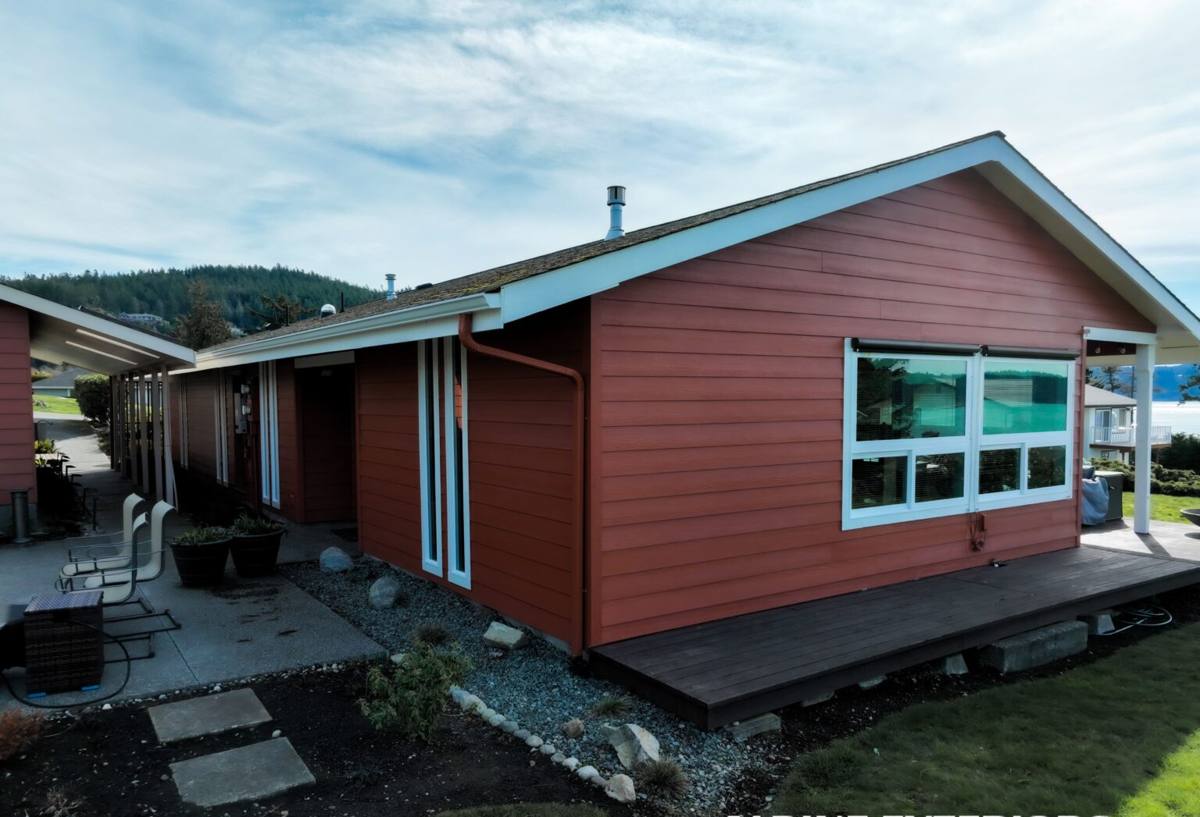
What Cottonwood Beach's Climate Demands From Siding
Salt Air and Corrosion
Homes directly along Birch Bay's shoreline take in more salt-laden air than properties set back from the water. Salt accelerates corrosion in fasteners, trim, and flashing, and it can break down lower-grade finishes faster than they'd wear in a drier or more inland setting. Every material choice and every piece of hardware on a Cottonwood Beach exterior needs to be selected with that corrosion exposure in mind, not just picked because it looks good going up.
Wind-Driven Rain
Being on the water also means more sustained wind, and wind-driven rain doesn't behave like a simple downpour — it gets pushed sideways into joints, seams, and anywhere siding meets a window, door, or roofline. That sideways moisture load is heavier than a general Whatcom County rainfall total suggests, and it's exactly the kind of exposure that exposes weak installation details: a joint that would hold up fine in a calm location can start leaking here because water is finding it from an angle nobody planned for.
A Long Moss and Mildew Season
Mild temperatures, shoreline humidity, and shaded walls add up to a moss and mildew season that runs longer in Birch Bay than it does in drier parts of the county. North-facing walls and anything shaded by trees or neighboring structures are usually the first to show it. Any siding material that's even slightly porous, or that holds moisture against its own surface, becomes a growth surface over time — which is a big part of why the material choice matters as much as the workmanship.
Why James Hardie Is the Only Siding We Install Here
We install James Hardie fiber cement siding exclusively. That's not a brand preference we picked off a supplier's shelf — it's a professional standard we settled on after years of installing, inspecting, and repairing siding in exactly this kind of coastal, high-moisture environment.
- Non-combustible core: Fiber cement doesn't feed a fire the way wood-based siding products can.
- Factory-applied ColorPlus finish: The color is baked on in a controlled factory process rather than brushed on in the field, which holds up better against salt exposure, fading, and chalking than site-applied paint.
- HZ5 formulation for this climate zone: Hardie engineers specific product lines for specific climate exposures, and the HZ5 line is built for regions with sustained moisture and freeze-thaw cycling — a good match for shoreline Whatcom County.
- Dimensional stability: Fiber cement doesn't swell, cup, or warp the way engineered wood products can after repeated wetting through a long wet season.
- A strong transferable warranty: Hardie backs its product with one of the more robust warranty structures in the industry, provided the installation follows their published specification.
We don't install LP SmartSide, vinyl siding, Cemplank, Allura, primed spruce, or cedar. Each of those products has a legitimate place in the market, and plenty of homeowners are satisfied with them in less demanding settings. On a shoreline lot in Cottonwood Beach, we've made the professional call that we'd rather stand fully behind one system than offer a cheaper option that quietly shifts more long-term maintenance risk onto the homeowner.
Choosing the Right Hardie Products for a Cottonwood Beach Home
Lap, Panel, and Shingle Profiles
HardiePlank lap siding is the most common choice and works well on the traditional home styles found throughout Birch Bay. HardiePanel, installed vertically, suits modern designs and can pair well with lap siding as an accent on gables or entry features. HardieShingle gives a shaped, textured look for homes going for a cottage or craftsman feel. The right profile depends on the home's architecture and how much of its exterior faces direct wind and salt spray versus a more sheltered elevation.
ColorPlus Colors Versus Field-Applied Paint
On a property this close to the water, the difference between a factory-cured ColorPlus finish and a field-applied paint job is not cosmetic — it's a maintenance and longevity decision. Salt air and UV exposure break down site-applied paint faster than they break down a factory finish cured under controlled conditions. Choosing a ColorPlus color up front, rather than planning to paint later, is one of the simplest ways to reduce the repainting cycle a Cottonwood Beach home would otherwise need.
What a Correct Installation Involves
Fiber cement only performs the way it's engineered to when it's installed exactly to Hardie's published specifications. That includes the right fastener type and spacing, correct clearance from grade and roof lines, drainage or rain-screen detailing behind the panels where the wall assembly calls for it, and properly caulked or factory-mitered joints. Hardie siding installed loosely, or with shortcuts on flashing and clearance, will still develop moisture problems in a climate like this one — the material is only as good as the installation behind it, which is exactly why installation quality matters more here than in a calmer, drier location.
- Fasteners and hardware rated for corrosion resistance, not just standard-grade galvanized
- Correct clearance between the bottom edge of the siding and grade, decks, and roof surfaces
- Properly lapped and sealed flashing at every window, door, and wall penetration
- Drainage plane or rain-screen detailing behind the siding where the assembly requires it
- Factory-mitered corners or properly caulked field joints, not gapped or overfilled seams
How James Hardie Compares to Other Siding Options in This Climate
| Material | Moisture Behavior | Maintenance in Salt Air | Typical Longevity Here |
|---|---|---|---|
| James Hardie fiber cement | Dimensionally stable, resists swelling and cupping | Low; factory finish resists fading and chalking | 30+ years with correct installation |
| Vinyl siding | Can warp or distort under heat and wind load over time | Low upfront, but seams and fasteners remain exposure points | Variable; shorter in high-wind shoreline spots |
| LP SmartSide / engineered wood | Wood-based core is moisture-sensitive at cut edges and joints | Moderate; edge sealing and caulk upkeep matter | Depends heavily on installation quality and upkeep |
| Cedar / primed wood | Absorbs and releases moisture readily | High; regular refinishing needed in salty, wet air | Shorter without consistent, ongoing maintenance |
Our Process for a Cottonwood Beach Siding Project
We start with an on-site assessment of the existing siding, paying particular attention to which elevations face the water directly and which are more sheltered, since that orientation changes how much salt and wind-driven rain each wall actually takes on. From there we put together a clear written scope covering the Hardie product line, profile, and color, along with a realistic timeline before any tear-off begins. During installation, the flashing, clearance, and drainage details that matter most in this climate are handled as standard practice, not offered as optional upgrades. We finish with a walkthrough so the homeowner understands what was done and what, if anything, needs periodic attention going forward.
Why a Crew That Already Works Cottonwood Beach Matters
A contractor who works this specific stretch of shoreline regularly already knows things a generalist crew has to learn on the job — which elevations take the worst of the wind, how far moss creep tends to go on shaded north walls, and where extra drainage detailing earns its keep versus where it's unnecessary. Those judgment calls show up in the small details: fastener grade, flashing laps, joint treatment. On a home this exposed to salt and driving rain, those details are what separate a siding job that looks good for a season from one that performs for decades.
Questions Worth Asking Before You Hire
- What siding material do they install, and do they stand behind it with a written warranty?
- Do they carry current Washington contractor licensing and active liability insurance?
- How do they detail flashing and clearance specifically for wind-driven rain off the bay?
- Do they use corrosion-rated fasteners and hardware, or standard-grade materials?
- Will you get a clear, written scope of work before any contract is signed?
If you're weighing siding options for a home in Cottonwood Beach, we're happy to walk the exterior with you and give an honest read on what it actually needs. Reach out below for a free, no-pressure estimate.