 Birch Bay Siding
 Decks Built for Cottonwood Beach's Climate, Not a Generic Backyard
Cottonwood Beach sits close enough to the water that its weather behaves differently than a deck built ten miles inland. Homes here deal with salt-laden air coming off the water, long stretches of driving rain through fall and winter, and a moss season that can run for months if a structure isn't built and finished to shed water properly. A deck that would hold up fine in a drier, inland part of Whatcom County can start showing corrosion, soft spots, or slick moss growth within a few seasons here if it wasn't designed with this specific environment in mind. We build decks for this stretch of coastline regularly, and the material choices, fastener specs, and drainage details we use reflect what actually happens to a deck exposed to this air and this rainfall, not a one-size-fits-all approach pulled from a catalog.
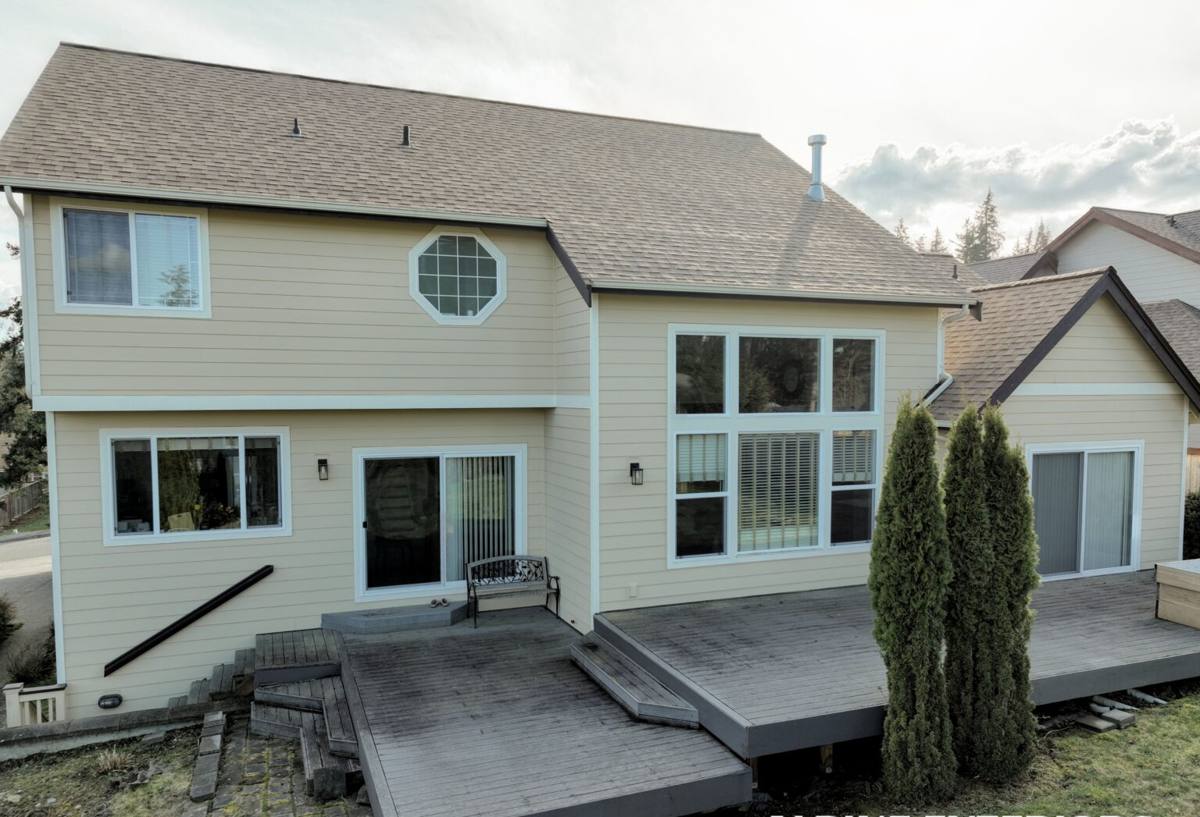
What Salt Air, Rain, and Moss Actually Do to a Deck
It helps to understand the specific ways this climate wears a deck down, because it changes what "good work" looks like here.
Salt Air and Metal Hardware
Airborne salt accelerates corrosion on any metal component — screws, joist hangers, bolts, and railing brackets. Standard carbon-steel or lightly galvanized hardware can start rusting and staining the decking around it well before the wood or composite itself shows any wear. Once a fastener corrodes, it loses holding strength, and a deck is only as sound as its weakest connection.
Standing Water and Wood Decay
Whatcom County gets sustained rain, not just occasional showers, and a deck's structure spends a lot of the year damp. Any spot where water can pool — a ledger board without proper flashing, joists without airflow underneath, decking laid without a drainage gap — becomes a starting point for rot, even in materials rated as weather-resistant.
Moss, Algae, and Slip Hazards
Shade, moisture, and mild coastal temperatures are exactly what moss and algae need to thrive. On a deck, that's not just a cosmetic issue — a mossy or algae-covered surface gets genuinely slippery, especially on stairs. How a deck is oriented, spaced, and surfaced has a real effect on how much moss problem you end up managing every year.
Choosing the Right Decking Material for a Cottonwood Beach Home
There's no single "best" decking material — the right choice depends on your budget, how much upkeep you want to do, and how close your lot is to direct salt exposure. Here's how the common options actually perform in this specific climate.
| Material | Upfront Cost | Moisture & Salt Air Performance | Maintenance | Realistic Lifespan Here |
|---|---|---|---|---|
| Pressure-Treated Wood | Lowest | Decent if sealed regularly; end grain and fastener holes are vulnerable points | Annual cleaning and re-sealing recommended | 10-15 years with consistent upkeep |
| Cedar | Moderate | Naturally rot-resistant but softer; needs finish maintained to hold up to driving rain | Regular cleaning, periodic refinishing | 15-20 years with upkeep |
| Capped Composite | Higher | Strong resistance to moisture and salt air; won't absorb water like wood | Occasional washing to keep algae/moss film off | 25-30+ years |
| PVC Decking | Highest | Fully synthetic, no organic material for rot or insects to work with | Lowest maintenance of the group | 25-30+ years |
Wood remains a reasonable choice if you're comfortable with yearly maintenance and like the natural look, but it's the material most sensitive to being neglected in a wet, salty climate — a missed season of sealing can undo years of good performance. Composite and PVC cost more upfront but hold up with far less attention, which is why we see more homeowners near the water choosing them over time. We'll walk you through the honest trade-offs for your specific project rather than pushing one option.
Framing and Substructure — Where Deck Failures Actually Start
Most deck problems people notice on the surface — soft boards, sagging, movement underfoot — trace back to something done wrong in the framing, not the decking itself. This is the part of the job that doesn't show once the project is finished, which is exactly why it has to be done right the first time.
- Ledger board attachment with proper flashing so water is directed away from the house rim joist, not trapped against it
- Joist spacing and sizing matched to the actual span and expected load, not just "what's typical"
- Footings set below frost depth and sized for the soil conditions on your specific lot
- Airflow and drainage maintained under the deck so the substructure can dry out between rain events
- Ground-contact-rated lumber used anywhere framing sits close to soil or standing moisture
A deck that looks great for the first year or two but was framed with shortcuts is a much more expensive fix later than getting the substructure right from the start. This is the area where cutting corners is hardest for a homeowner to catch during a walkthrough, and easiest for a contractor to cut.
Fasteners and Hardware for a Salt-Air Environment
Given how much salt air affects metal over time, hardware choice deserves its own attention rather than being an afterthought. We use stainless steel or high-grade coated fasteners and connectors rated for coastal exposure, not the standard hardware that's fine for an inland build but starts rusting and staining a deck near the water within a couple of seasons. Hidden fastener systems are also worth considering on composite and PVC decks — beyond the cleaner look, they reduce the number of exposed fastener heads that would otherwise be the first thing to corrode and stain the surface around them. Joist hangers, post bases, and structural screws all get the same treatment, since a single weak connection point undermines the whole structure regardless of how good the visible decking is.
Railings, Stairs, and Code Requirements
Any deck above a certain height needs a code-compliant guardrail, and most jurisdictions in this area require permits for new deck construction, especially where stairs, electrical, or attachment to the house structure are involved. Baluster spacing, guardrail height, and stair rise/run all have to meet current building code, and inspectors will check these details specifically. We handle the permitting and inspection process as part of the job rather than leaving it to the homeowner to sort out, and we build to code as a baseline, not a minimum to negotiate around. For stairs in particular, we pay close attention to tread surface and drainage, since a wet, mossy stair tread is one of the more common slip hazards on an older coastal deck.
Our Deck Building Process
The process for a new deck or a full replacement generally follows the same sequence, though timelines vary with scope and permitting:
- On-site visit to assess the lot, grade, sun/shade exposure, and how the deck will connect to the house
- Material and layout discussion based on your budget, maintenance preferences, and how you plan to use the space
- Written estimate covering materials, labor, and permit handling, with no vague allowances
- Permit submission and any required engineering for footings or ledger attachment
- Demolition of the old structure if applicable, done carefully to protect the surrounding landscaping and siding
- Framing, with footings, joists, and flashing inspected before decking goes down
- Decking, railing, and stair installation
- Final walkthrough and inspection sign-off
We keep you informed at each stage rather than disappearing until the job is "done," and we don't consider a deck finished until it passes final inspection.
Keeping a Cottonwood Beach Deck Looking Good Through Moss Season
Even a well-built deck needs some seasonal attention in this climate. A simple annual routine goes a long way toward avoiding the slip hazards and premature wear that come from letting moss and algae build up unaddressed:
- Sweep debris and fallen leaves off the surface regularly, especially in fall — trapped organic matter holds moisture and feeds moss growth
- Wash the deck surface at least once a year with a cleaner appropriate to your decking material; avoid pressure washing wood too aggressively, as it can strip fibers and open the surface to moisture
- Check and clear any gaps between boards so water continues to drain rather than pooling
- Inspect visible fasteners and hardware periodically for early rust staining, which is easier to address early than after it spreads
- For wood decks, keep sealing on schedule — skipping a year in this rainfall pattern shows up fast
Why Hire a Crew That Already Works in Cottonwood Beach
A deck contractor who mostly works drier, inland jobs isn't necessarily going to think about salt-air hardware ratings, drainage detailing for sustained coastal rain, or moss-conscious layout unless it's prompted. Working regularly in Birch Bay and the surrounding Whatcom County coastline means these aren't special considerations we have to remember — they're just how we build here by default. We've seen how decks in this specific environment age, both the ones built with these details in mind and the ones that weren't, and that experience shapes every material and hardware decision we make on your project.
If you're planning a new deck or need to replace one that hasn't held up to the weather here, we're happy to take a look and put together a straightforward estimate. There's no pressure and no obligation — just an honest assessment of what your project needs, using the form below.