 Birch Bay Siding
 Decks in Cottonwood Beach Take a Different Kind of Beating
Cottonwood Beach sits close enough to the water that every deck built here is really an outdoor structure fighting three things at once: salt-laden air, sideways rain off the Strait, and a moss and algae season that runs far longer than most homeowners expect. A deck design that works fine twenty miles inland in Whatcom County can fail early out here if it wasn't built with this specific exposure in mind. That's not a scare tactic — it's just what happens when standard framing details, generic fasteners, or the wrong decking material meet marine air and near-constant moisture cycling.
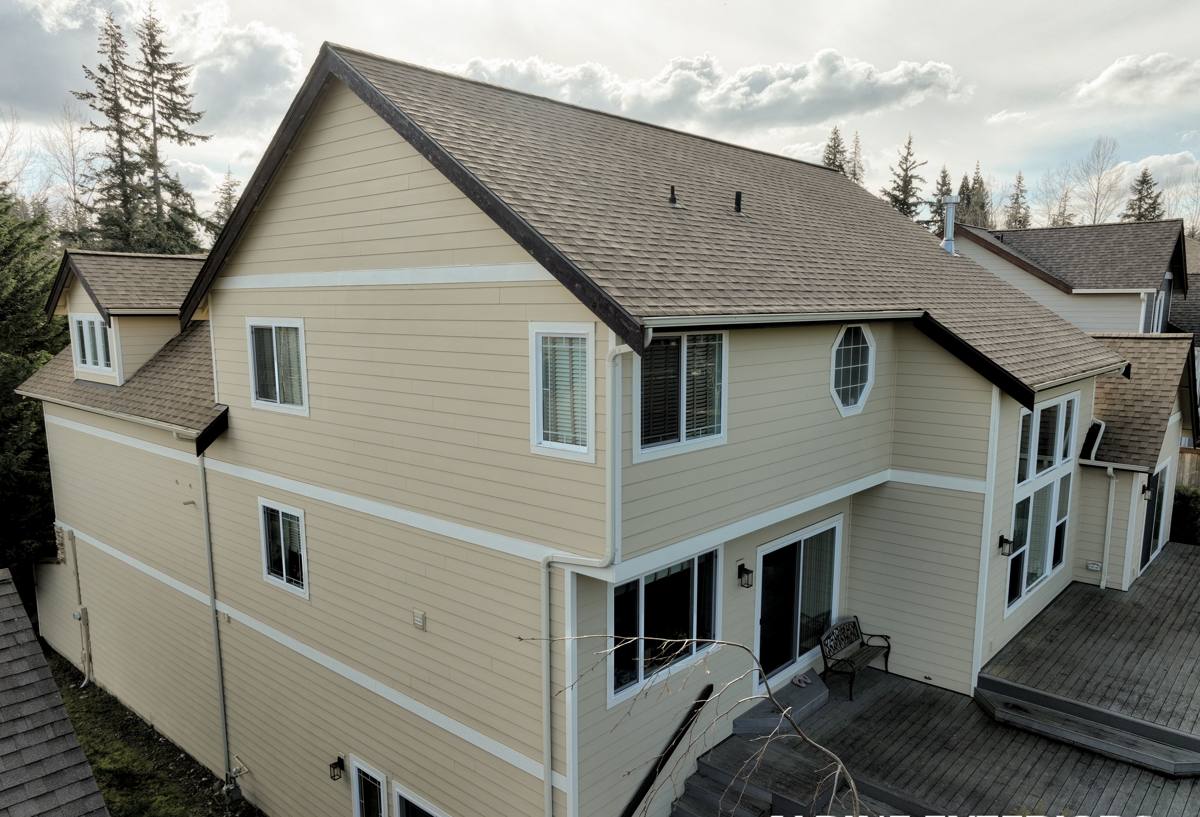
We build and repair decks throughout the Birch Bay area, including Cottonwood Beach, and the difference between a deck that lasts and one that needs early repair almost always comes down to details most people never think to ask about: what the fasteners are made of, how the ledger board is flashed, how water is allowed to drain off and out from under the structure, and whether the decking surface was chosen with moss and slip risk in mind.
What Salt Air Actually Does to a Deck
Salt air doesn't just affect boats and windows near the shoreline — it settles on every exposed metal component of a deck and speeds up corrosion, especially where two dissimilar metals meet or where a fastener coating has a weak spot. On a deck close to the water, this shows up as rust streaking down decking boards, corroded joist hangers, and screws that back out or snap because the metal underneath the coating has started to degrade.
This is why material selection for hardware matters as much as the decking itself. Standard galvanized hardware is built for general outdoor use, not sustained salt exposure. For a deck this close to the water, hardware and fastener choice should be treated as a structural decision, not an afterthought — because a corroded joist hanger is a hidden problem until it isn't.
Where Salt Corrosion Shows Up First
- Fastener heads and joist hangers, especially near ground contact or under the deck where they stay damp longer
- Railing hardware and post connectors, which see constant airflow off the water
- Any exposed metal flashing that wasn't rated for coastal exposure
- Screw heads on the decking surface itself, where corrosion streaks become a cosmetic problem before they become a structural one
Building for Driving Rain and Standing Water
Rain that comes in sideways off the water behaves differently than a straight-down summer shower. It gets driven up under railings, into ledger connections, and along the underside of decking boards in ways that a deck built for a drier, more sheltered lot doesn't have to handle. Two things determine whether a deck sheds that water correctly or slowly absorbs it: flashing at every point where the deck meets the house, and drainage underneath the deck itself.
The ledger board — where the deck attaches to the house — is the single most important place to get flashing right. A ledger flashed incorrectly, or not flashed at all, lets water track behind the siding and into the rim joist, where rot can develop for years before it's visible from outside. We treat ledger flashing as non-negotiable, not an upgrade option.
Underneath the deck, grading and drainage matter just as much. If water pools under a deck instead of draining away from the foundation, you end up with a damp microclimate that accelerates both wood rot and the moss growth that's already a problem in this climate. Proper board spacing, a graded surface below the deck, and keeping the structure clear of standing vegetation all reduce how much moisture sits against the framing.
Moss, Algae, and the Long Wet Season
Whatcom County's moss season isn't a two-month nuisance — on a shaded or north-facing deck near the water, moss and algae can be a near year-round maintenance issue. Beyond the cosmetic problem, moss holds moisture against the decking surface and creates a genuine slip hazard, especially on stairs and near entry points.
Some of this comes down to design: decks with more sun exposure and airflow dry out faster and grow less moss than decks tucked under overhangs or tree cover. But material choice matters too. Some decking surfaces resist moss growth and are easy to clean; others have a texture or grain pattern that gives algae something to grip, making it a recurring battle no matter how often it's cleaned.
We won't pretend any decking material is moss-proof in this climate — it isn't. But we'll be honest with you about which materials make moss and algae easier to manage and which ones make it a constant chore, so you can decide what you're actually signing up for.
Choosing the Right Decking Material for This Location
There's no single "best" decking material — there's a best material for your specific deck, budget, sun exposure, and how much maintenance you're willing to do. Here's how the common options actually perform in a salt-air, high-moisture environment like Cottonwood Beach.
| Material | Salt Air / Moisture Behavior | Moss & Algae Tendency | Maintenance Load |
|---|---|---|---|
| Pressure-treated lumber | Performs well if properly sealed and re-sealed on schedule; end grain is the weak point | Moderate — textured grain can hold moisture and algae if not maintained | Higher — needs periodic cleaning and sealing |
| Cedar | Naturally rot-resistant but still needs finish maintenance near salt air | Moderate to high without regular cleaning | Higher — finish upkeep every few years |
| Composite decking | Very stable in moisture and salt exposure; won't rot or splinter | Lower on most modern composite lines, varies by product line | Lower — periodic washing, no sealing |
| PVC / capped polymer decking | Excellent moisture and salt resistance; fully synthetic surface | Lowest of common options | Lowest — occasional rinse-off |
Wood decking isn't a wrong choice — plenty of homeowners prefer the look and are willing to keep up with sealing. Our job is to walk you through the real trade-offs for a Cottonwood Beach lot specifically, including how much shade and salt exposure your particular site gets, so the material you choose matches how you actually want to maintain it.
Framing Material Matters Too
Whatever surface material you choose, the framing underneath should be treated as the part of the deck you'll never see again once it's built — which is exactly why it needs to be right the first time. Pressure-treated framing lumber rated for ground contact, corrosion-resistant structural hardware, and correctly sized footings for our soil conditions all belong in the framing conversation, regardless of what decking surface goes on top.
What a Correct Deck Build Actually Involves
A deck that's going to hold up in this environment isn't just boards screwed to a frame. A correct build includes:
- Footings sized and set below frost depth, appropriate for the soil on your specific lot
- A properly flashed ledger connection where the deck meets the house, or a freestanding design where ledger attachment isn't advisable
- Corrosion-resistant structural hardware throughout — joist hangers, post bases, and fasteners rated for the exposure
- Correct joist spacing and blocking for the decking material chosen, since composite and PVC products often have different span requirements than wood
- Proper board gapping for drainage and material expansion
- Railings and stair connections built to current code, not just "close enough"
Permitting is part of a correct build too. Whatcom County and local jurisdictions have specific requirements for deck height, railing, and structural design — skipping that step can create real problems at resale or insurance time, even if the deck looks fine.
Our Process, From Estimate to Finished Deck
We start with an on-site look at your specific lot — sun exposure, drainage, how the deck will attach to your home, and what you actually want to use the space for. From there we walk you through material options honestly, including what each one will actually cost you in maintenance over time, not just at installation.
Once a design and material are chosen, we handle permitting, demo of any existing structure, framing, flashing, decking installation, and railings — and we don't consider the job finished until drainage and every connection point have been checked. We'll also tell you plainly what maintenance schedule your chosen material needs, so there are no surprises two summers in.
Why Local Experience in Cottonwood Beach Matters
A contractor who mostly builds decks inland can still build a structurally sound deck — but they may not think to ask about salt-air hardware, may under-flash a ledger board because it's never bitten them before, or may not warn you that a particular decking surface turns green by February on a shaded, water-facing lot. Building decks regularly in Birch Bay and Cottonwood Beach means these aren't theoretical concerns to us — they're the first things we check on every site visit.
We're also close enough to actually show up for warranty work, seasonal questions, or a maintenance check without it being a special trip. That matters more than it sounds like it should, especially a few years in when a deck built by an out-of-area crew needs attention and nobody's answering the phone.
Keeping a Coastal Deck in Good Shape
Whatever material you choose, a little regular attention goes a long way in this climate. A simple seasonal checklist:
- Rinse or sweep the deck surface regularly, especially shaded areas prone to moss
- Check railing and stair connections for looseness at least once a year
- Inspect fasteners and visible hardware for early rust or corrosion streaking
- Keep gutters and downspouts near the deck clear so runoff isn't draining directly onto it
- Reseal wood decking on the manufacturer's recommended schedule — don't wait until it looks dry and gray
- Clear debris and vegetation from underneath the deck to keep airflow and drainage working
If you're planning a new deck in Cottonwood Beach, replacing one that's showing its age, or just want an honest read on whether yours needs repair or replacement, we're happy to come take a look. Reach out for a free, no-pressure estimate using the form below.