 Birch Bay Siding
 Why Birch Bay Village Decks Take More Punishment Than Most
A deck built ten miles inland in Whatcom County lives a different life than a deck built in Birch Bay Village. Sitting near the water means salt-laden air settles on every surface, driving rain off the bay comes in sideways instead of straight down, and the moss season here runs long — often from early fall through late spring. None of that is dramatic on any single day. It's the accumulation, year after year, that separates a deck that still looks and performs well at year twelve from one that's already showing rot, rust streaks, and slick green patches by year five.
We build and replace decks in this specific area regularly, so this page isn't a generic rundown of composite decking. It's what actually matters for a deck going in — or already sitting — in Birch Bay Village.
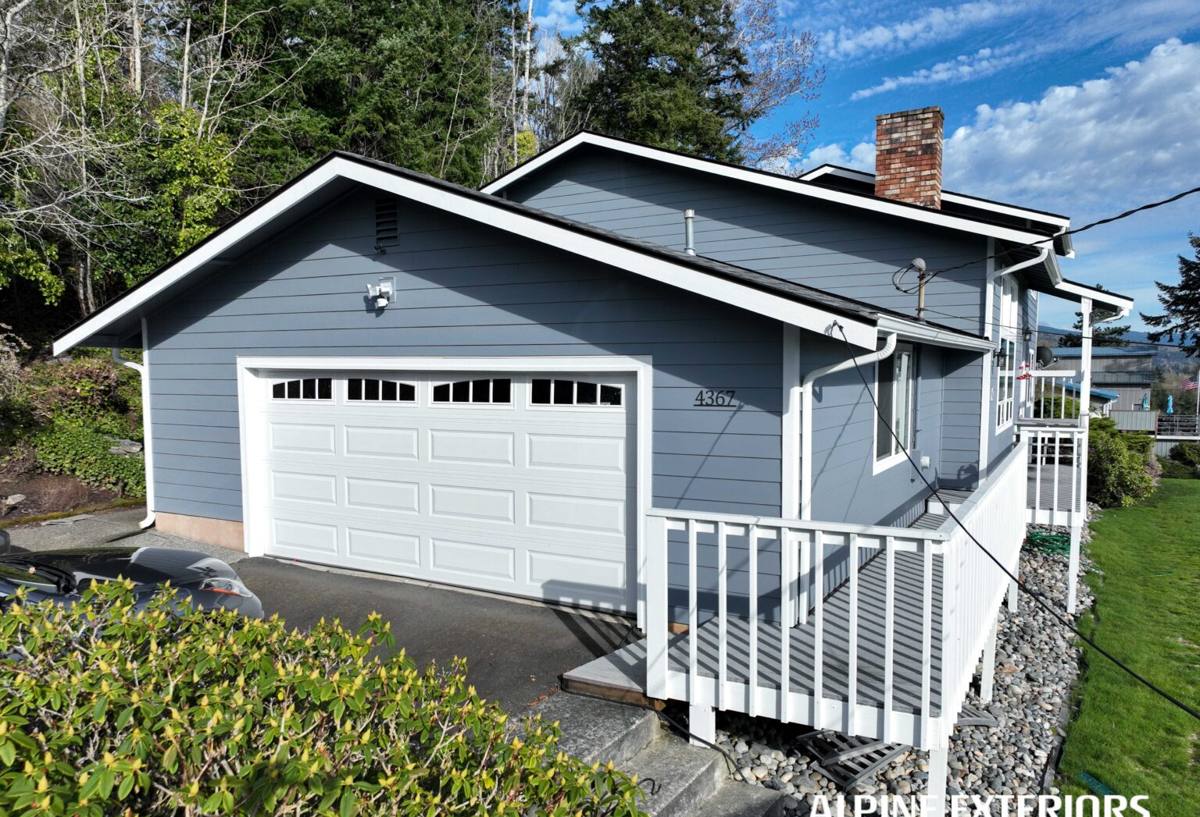
What Salt Air, Rain, and Moss Actually Do to a Deck Over Time
Fastener and hardware corrosion
Standard coated deck screws and generic joist hardware were never rated for salt exposure. Near the water, they corrode faster than most homeowners expect — sometimes showing rust bleed through composite boards within a couple of seasons if the wrong fasteners were used underneath. This is one of the most common problems we find when we're called out to look at an existing deck that's "only a few years old" but already has orange streaking around the screw pattern.
Moss, algae, and biofilm
Constant moisture plus shade plus organic debris (fir needles, leaves, pollen) is exactly what moss and algae need. On any decking material, a film builds up on the surface that isn't just cosmetic — it holds moisture against the board and creates a genuinely slippery surface, especially on stairs and in areas that don't get direct sun or wind.
Wood-specific breakdown
On a traditional wood deck, this same moisture cycle drives checking, cupping, and eventually rot — particularly at the ledger board, around post bases, and anywhere water can pool instead of shed. Composite decking sidesteps most of this because the boards themselves don't absorb water and swell the way wood fibers do. But composite isn't immune to the moss and algae buildup, and a poorly built composite deck can still trap moisture in the structure underneath it, which is where the real damage usually happens even when the surface boards look fine.
Composite vs. Wood for a Birch Bay Village Property
We install both, and each has a legitimate place. For a home this close to the water, though, the trade-offs tend to line up in a fairly consistent way:
| Factor | Composite Decking | Wood Decking |
|---|---|---|
| Moisture absorption into the board | Very low — boards don't swell or cup | Higher — wood expands, contracts, and can cup over time |
| Rot risk in the boards themselves | Minimal with capped products | Ongoing risk, especially at fastener points and end cuts |
| Moss and algae on the surface | Still occurs — needs periodic cleaning | Still occurs, plus contributes to surface breakdown |
| Refinishing needs | None — no staining or sealing required | Sealing/staining every 1–3 years to hold up in this climate |
| Upfront material cost | Higher | Lower |
| Typical usable lifespan here | Long, with a manufacturer warranty behind it | Shorter unless maintenance is kept up consistently |
Composite isn't automatically the "better" choice for every homeowner — it costs more up front, and some people genuinely prefer the feel and repairability of real wood. What we won't do is pretend wood performs the same way in this climate that it does somewhere drier. If you go with wood here, plan on a real maintenance schedule. If you go with composite, you're trading upfront cost for a much lighter maintenance load over the life of the deck.
What a Correct Composite Deck Build Involves in This Climate
Fasteners and hardware
Everything below and around the boards — joist hangers, structural screws, post bases — needs to be rated for coastal or salt exposure, not just "exterior grade." This is the single most common corner cut on decks near the water, and it's invisible until the rust starts showing through the finished surface.
Joist protection and drainage
Composite boards don't rot, but the wood-framed structure underneath usually still does unless it's protected. We use joist tape or an equivalent barrier over the tops of joists so water can't sit against exposed wood, and we build in drainage so moisture moves off the framing instead of pooling on it.
Airflow underneath the deck
A deck built low to the ground or boxed in on all sides traps humid air underneath — which is exactly the environment moss, mold, and rot want. Proper skirting still needs vents or gaps so air can move through, even on a composite deck where the visible surface won't rot.
Ledger board flashing
Where the deck attaches to the house is the single highest-risk point for water intrusion, and it's the spot most affected by driving rain coming off the bay. Correct flashing here — done in the right order, sealed at the right layers — is not optional trim work. It's the difference between a deck attachment that sheds water for decades and one that quietly rots the band board behind it.
Footings
Footing depth and bearing need to match the soil conditions on the actual lot, not a generic assumption. We check this on-site rather than guessing from a standard plan.
Choosing the Right Composite Boards
Capped vs. uncapped composite
Capped composite boards have a protective outer shell wrapped around a wood-plastic composite core. That shell is what actually resists staining, fading, and moisture absorption at the surface. Uncapped composite is more affordable but takes on stains and moisture more readily — for a property with this much salt air and rain exposure, we generally steer homeowners toward capped products because the extra durability at the surface is doing real work here, not just adding cost.
Color and how it hides — or shows — the climate
Very dark boards absorb more heat and can show mineral or salt deposits as a dusty film between cleanings. Very light boards show organic staining (leaves, pollen, early moss growth) more visibly. Mid-tone, variegated colors tend to hide the normal wear pattern of this climate best between cleanings, which is worth factoring in alongside your aesthetic preference.
Hidden fastener systems
Hidden fastener systems (clips that hold boards from the side, with no exposed screw heads on the surface) reduce the number of penetration points where moisture and grime can collect. They also mean no visible corrosion streaking around screw heads over time, which is a real advantage this close to the water.
Cost Factors by Board Tier
| Tier | Relative Cost | Maintenance Load | Typical Warranty |
|---|---|---|---|
| Uncapped composite | $ | Moderate — more prone to staining, needs regular cleaning | Shorter |
| Capped composite (standard) | $$ | Low — periodic washing, minimal else | Longer, prorated |
| Capped composite (premium line) | $$$ | Low — same care, better fade/stain resistance | Longest, often limited lifetime on the cap |
We'll walk through actual board options and current pricing on-site — this table is meant to show how the tiers relate to each other, not to quote a number sight unseen.
Our Process for a Birch Bay Village Deck Project
- On-site assessment — we look at the existing structure (if there is one), check for moisture damage, evaluate sun/shade exposure and drainage patterns on your specific lot.
- Design and board selection — layout, railing style, and composite board tier based on your budget and how the deck will actually be used.
- Permitting — pulled through Whatcom County as required before any structural work begins.
- Demo and structural prep — removing old decking where applicable, correcting any framing or footing issues found during assessment.
- Framing, flashing, and drainage — joist protection, ledger flashing, and drainage detailing done before a single composite board goes down.
- Decking installation — boards, hidden fasteners or approved coastal-rated fasteners, trim, and railing.
- Final walkthrough — we go over care and cleaning specific to the board you chose before we consider the job done.
Keeping a Composite Deck Ahead of Moss Season
Composite decking cuts the maintenance load dramatically compared to wood, but "low maintenance" isn't "no maintenance" in a climate like this one. A short seasonal routine keeps a composite deck performing the way it's supposed to for the life of the warranty.
- Sweep debris out of board grooves and gaps before it decomposes and feeds moss growth
- Keep gutters and downspouts clear so roof runoff isn't dumping directly onto the deck surface
- Wash the deck at least once a year — more often in shaded or low-airflow areas — with a cleaner approved for your specific composite brand
- Avoid pressure washing at close range or high PSI directly into the board surface or fastener points
- Check under-deck ventilation yearly to confirm skirting vents haven't been blocked by landscaping or debris
- Inspect the ledger board flashing line at the house each fall, before the heavy rain season sets in
- Address any moss or algae as soon as it appears rather than letting it establish — it's far easier to remove early
Why a Crew That Already Works Birch Bay Village Matters
Deck-building isn't the same job everywhere in Whatcom County. A crew that mainly builds decks inland doesn't necessarily think about coastal-rated fasteners by default, or design drainage and ventilation with this much sustained moisture in mind. Working in Birch Bay Village regularly means we already know how the wind and rain typically hit a given lot orientation here, and we design the framing, flashing, and fastener choices around that from the start — not as an afterthought after something starts rusting or growing moss.
If your section of Birch Bay Village has HOA or design guidelines around exterior materials, colors, or railing styles, it's worth checking those before finalizing board selection — we're glad to work within whatever guidelines apply to your property. Permitting, too, runs through Whatcom County, and we handle that as a standard part of the process rather than leaving it for the homeowner to sort out.
Get a Straightforward Estimate
Whether you're replacing an aging wood deck that's finally lost the fight against the moisture here, or planning a new composite deck from the ground up, we're happy to come take a look and give you an honest read on what your project needs. No pressure, no inflated scope — just a clear estimate based on your actual home and lot. Fill out the form below to get started.