 Birch Bay Siding
 Windows Built for the Cherry Point Shoreline
Cherry Point sits right up against the Strait of Georgia, and that location shapes everything about how a window performs here. Homes along this stretch of Whatcom County take on salt-laden air, wind-driven rain that comes in sideways off the water, and a moss and mildew season that runs longer than it does even a few miles inland. A window that's a perfectly fine choice in a sheltered neighborhood can fail early out here if it wasn't specified and installed with this exposure in mind. That's the lens we use on every Cherry Point window job: not "what's a good window," but "what's a good window for this specific spot, on this specific wall, facing this specific weather."
This page covers window installation as a standalone service for Cherry Point homes — replacement windows, new construction openings, and the flashing and water-management work that determines whether the window actually holds up. If you're also dealing with siding damage around existing openings, that's a related but separate conversation; we're happy to look at both during the same visit.
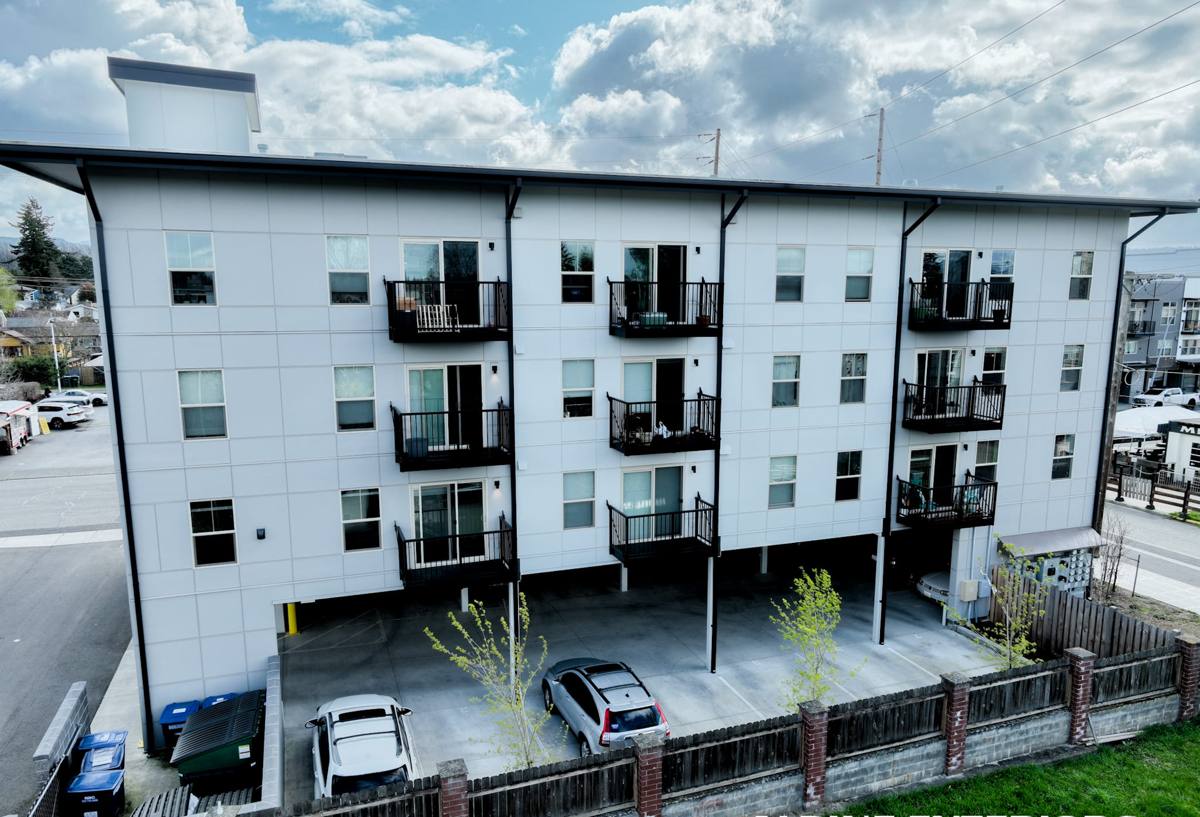
What Cherry Point's Climate Actually Does to a Window Opening
It helps to be specific about the mechanisms, because they drive real decisions about materials and technique.
Salt Air and Metal Components
Airborne salt accelerates corrosion on any exposed metal — screws, hinges, cranks, and cheaper cladding finishes. Over years, this shows up as pitting, stiff or failing hardware, and streaking on the frame. We favor corrosion-resistant fasteners and hardware packages on shoreline installs, and we point homeowners toward finishes with a track record in coastal exposure rather than the cheapest option in a given product line.
Wind-Driven Rain
Rain that's being pushed horizontally by wind behaves differently than rain falling straight down. It gets forced up under trim, into reveals, and behind poorly lapped flashing. A window opening that would stay dry in a calm rain can leak in a Cherry Point wind event if the flashing sequence wasn't done correctly. This is the single biggest factor in how we detail every opening — more on that below.
Extended Moss and Mildew Season
Consistent moisture and moderate temperatures mean moss, algae, and mildew get a longer growing window here than in drier parts of the county. On windows, this shows up as green or black staining on sills, frames, and the wood or trim surrounding the opening, plus accelerated breakdown of any organic material — untreated wood trim in particular — that stays damp.
Temperature Swings and Condensation
Whatcom County's marine climate keeps temperature swings relatively moderate compared to inland Washington, but the humidity load is high. Older or poorly sealed windows in this environment tend to show interior condensation and, eventually, moisture intrusion into the wall cavity — a problem that's often invisible until it's expensive.
What "Correct" Window Installation Means Out Here
A window is only as good as the opening it sits in. We've seen plenty of decent windows fail early because of shortcuts in the rough opening prep, not because the window itself was bad. On the coast, there's no margin for skipping steps.
- Opening inspection before anything is ordered. We check the rough opening for rot, soft framing, and existing water damage — common around older Cherry Point homes that have taken decades of shoreline weather.
- Correct flashing sequence. Sill pan flashing first, then side flashing lapped over it, then the header flashing lapped over the sides — always shingle-style so water sheds down and out, never trapped behind a layer above it.
- Compatible sealants and tapes. Not every flashing tape bonds well with every housewrap or sheathing. We match materials so the whole assembly works together instead of fighting itself.
- Proper shimming and squaring. A window that's out of square binds, leaks at the corners, and wears its weatherstripping unevenly.
- Insulation in the gap — not silicone alone. The space between the window frame and the rough opening needs low-expansion foam or backer rod and sealant, not a bead of caulk doing a job it was never meant to do.
- Interior and exterior sealant beads, not just one. Sealing only the outside traps moisture that gets in through other paths. Sealing only the inside won't stop wind-driven rain. Both matter.
- Weep paths kept clear. Any water that does get into the frame track needs a way back out — a detail that's easy to block accidentally during install.
Choosing the Right Window for a Cherry Point Home
There's no single "best" window brand or material — the right call depends on the wall's sun and wind exposure, the home's age and framing, and what you're trying to balance between upfront cost and long-term maintenance. Here's how the common options stack up for this specific environment.
| Frame Material | Coastal Performance | Maintenance | Notes for Cherry Point |
|---|---|---|---|
| Vinyl | Good — resists corrosion and rot | Low | Solid value option; confirm the welded-corner quality and hardware rating on the specific line |
| Fiberglass | Very good — dimensionally stable, low expansion | Low | Handles temperature and moisture cycling well; higher upfront cost than vinyl |
| Aluminum | Fair — needs a marine-grade or coated finish | Moderate | Prone to corrosion and condensation without the right coating; we're selective about where we recommend it here |
| Wood / wood-clad | Poor to fair without diligent upkeep | High | Beautiful, but the exterior cladding and any exposed wood need consistent maintenance to survive salt air and constant moisture |
We're not tied to a single manufacturer, and we'll say plainly when a product isn't a good fit for a shoreline wall — even if it's a fine window somewhere else in the county. If a homeowner wants wood-clad windows for a specific look, we'll do that job right, but we'll also be honest about the upkeep it requires this close to the water.
Glass Packages Worth Considering
Beyond the frame, the glass package matters more here than in drier climates:
- Double-pane, low-E glass is the practical baseline for this region — good energy performance without a large cost jump.
- Argon or krypton gas fills improve insulation value, which helps offset the heat loss that comes with constant humidity and wind exposure.
- Impact-resistant or laminated glass is worth discussing on exposed, unshielded walls that take the brunt of storm winds off the water.
- Warm-edge spacers reduce condensation risk at the glass edge, which matters given how much interior humidity these homes carry for much of the year.
How Our Cherry Point Window Jobs Work
1. On-Site Assessment
We walk the exterior and look at each opening individually — sun exposure, wind exposure, existing trim and siding condition, and any signs of past water intrusion. Coastal homes rarely need the exact same window spec on every wall.
2. Straight-Talk Recommendation
We'll tell you what we'd do on our own house, including where a mid-tier option is genuinely fine and where it's worth spending more. No upselling for its own sake.
3. Written Scope and Timeline
Before any work starts, you get a clear scope: what's being replaced, what materials are specified, what the flashing and sealing plan is, and a realistic schedule that accounts for Whatcom County's rain patterns — we don't open up walls when a soaking is forecast.
4. Removal and Opening Prep
Old windows come out carefully to protect surrounding siding and trim. Any rot or soft framing we find gets addressed before a new window ever goes in — installing a good window into a compromised opening just delays the same repair.
5. Install and Flashing
This is where the coastal detailing described above happens — sill pan, shingled flashing, correct sealant placement, and proper shimming and squaring.
6. Interior and Exterior Finish
Trim, interior sealing, and exterior caulking or trim work are finished to match the home, with attention to keeping weep paths and drainage clear.
7. Final Walkthrough
We operate every window with you, check the seal, and confirm the site is cleaned up before we call the job done.
Signs a Cherry Point Home Needs Window Attention Soon
- Visible gaps, soft spots, or paint failure around the frame or sill
- Persistent fogging or moisture between double-pane glass — a sign the seal has failed
- Windows that are hard to open, close, or lock, especially after a wind event
- Green or black staining on sills or surrounding trim that keeps returning after cleaning
- Noticeable drafts or a cold wall around the window frame in winter
- Rising heating bills without another clear explanation
- Visible daylight or a whistling sound around the frame during windy weather
Why Hire a Crew That Already Works Cherry Point
Window installation isn't exotic work, but coastal window installation done correctly requires judgment calls that only come from doing it repeatedly in this exact exposure — how much flashing overlap is enough when rain is coming sideways, which sealants actually hold up to salt air over years rather than months, and which framing details on older Cherry Point and Birch Bay homes tend to hide moisture problems. A crew that mostly works inland neighborhoods may install a technically fine window using techniques that aren't matched to what this stretch of shoreline actually throws at a house.
We're a Birch Bay-based crew, and Cherry Point is part of our regular service area, not an occasional stretch. That means we've seen how specific product lines and installation approaches actually hold up here over time, not just on a spec sheet.
Cost Factors Worth Understanding Upfront
We don't publish flat pricing because every opening is different, but these are the factors that most often move the number:
| Factor | Why It Matters |
|---|---|
| Frame material and glass package | Vinyl, fiberglass, and wood-clad windows carry different material costs, and upgraded glass or gas fills add to the price |
| Number and size of openings | Larger or more numerous windows mean more material and labor |
| Condition of the existing opening | Rot repair or reframing found during removal adds scope beyond a straightforward swap |
| New construction vs. replacement | Replacement into an existing opening is typically more straightforward than framing and flashing a new opening |
| Access and site conditions | Second-story or hard-to-access openings take more time and setup |
| Trim and siding tie-in | Matching or repairing surrounding trim and siding adds finish work beyond the window itself |
Get a Straightforward Estimate
If your Cherry Point home has windows showing their age, or you're planning a replacement project and want it done with the coastal exposure actually factored in, we're glad to take a look. The estimate is free, there's no pressure, and you'll get a clear explanation of what we see and what we'd recommend — including where you don't need to spend more than necessary. Fill out the form below and we'll get back to you to schedule a time.