 Birch Bay Siding
 Decks in Cherry Point Fight a Different Kind of Weather
Cherry Point sits right up against the water, and that changes what a deck has to survive here compared to a deck twenty miles inland. Salt-laden air off the Strait works into fasteners, hinges, and any exposed metal year-round. Driving rain off the water doesn't just fall straight down — it gets pushed sideways into ledger boards, railing joints, and the underside of decking where standing water and debris like to collect. And because so many lots in this part of Whatcom County have mature tree cover and shaded north or east exposures, moss and algae get a long growing season on any horizontal wood surface that doesn't dry out quickly.
None of that means a deck can't last here. It means the details that get skipped on a quick, cheap rebuild — flashing, fastener grade, drainage, gaps for airflow — matter more in Cherry Point than they would somewhere drier. A deck replacement done right for this location isn't just about new boards. It's about correcting whatever let the old deck fail in the first place.
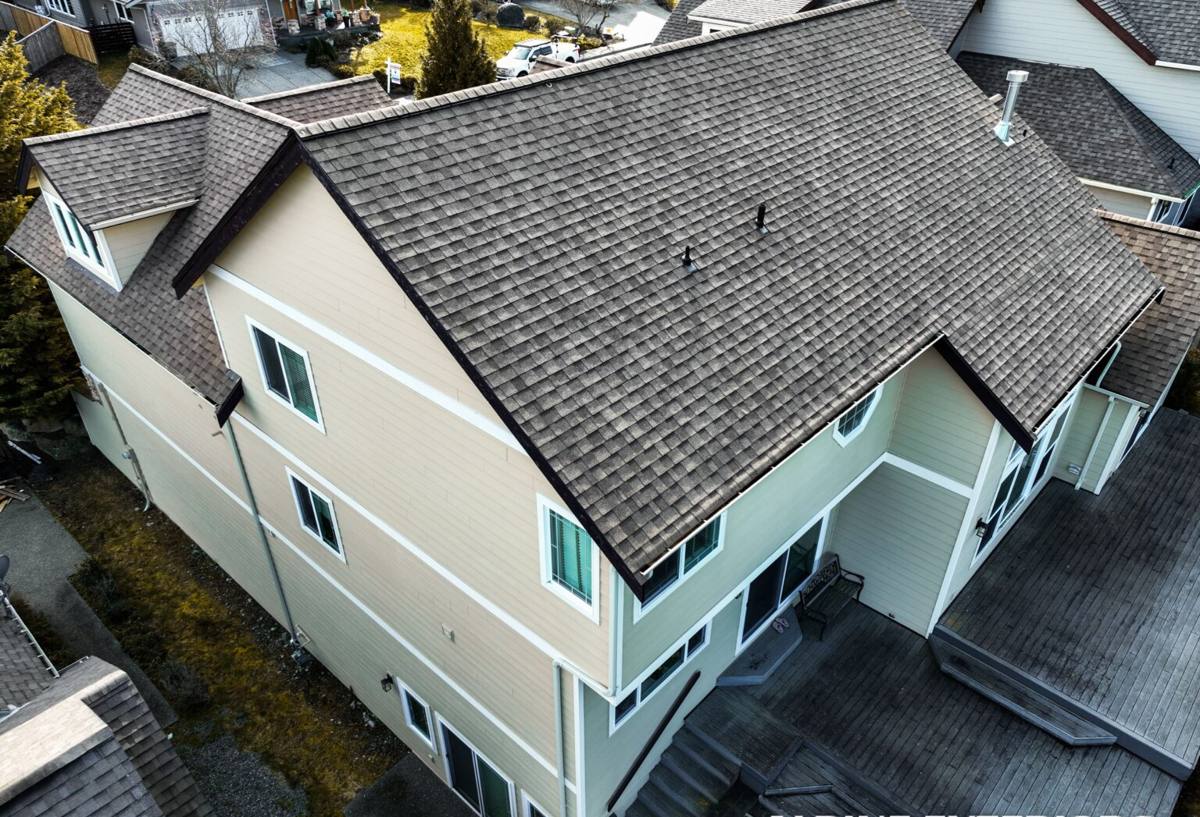
Signs Your Deck Has Reached the End of Its Life
Homeowners often ask us whether their deck needs a repair or a full replacement. A few boards can usually be swapped out. But once the damage reaches the structure underneath — the framing, ledger, or footings — patching stops making sense and starts becoming a liability.
- Soft, spongy, or spring-back decking when you walk across it, especially near the house
- Visible gaps or dark staining where the deck ledger meets the siding — often a sign water has been getting behind the flashing for a while
- Rusted, streaking, or backed-out fasteners, particularly on older decks built before stainless or coated hardware was standard
- Railings or posts that flex, wobble, or feel less solid than they used to — a real safety issue, not just cosmetic
- Persistent moss, algae, or black mildew staining that comes back within weeks of cleaning
- Joists or beams you can probe with a screwdriver and find soft wood, especially near ground contact or under the ledger
- A deck more than 20–25 years old that has never had the structure inspected below the decking boards
If you're only seeing one or two of these, a repair may still be on the table. If you're seeing several at once, especially anything involving the ledger connection or the framing, it's worth having someone look at the whole structure before spending money on surface fixes.
Why the Ledger Board Deserves Extra Attention Here
The ledger board — the piece that bolts the deck to your house — is the single most common failure point on older decks in wet climates. If it wasn't flashed correctly when it was built, or if the flashing has failed over time, water tracks down behind the siding and into the rim joist and framing of the house itself, not just the deck. In a location that sees as much sideways, wind-driven rain as Cherry Point does, we always inspect this connection closely before quoting a replacement, because it changes the scope of the job if there's hidden damage.
What a Proper Deck Replacement Actually Involves
A deck replacement is more than pulling up old boards and screwing down new ones. Done correctly, it touches every layer of the structure:
- Tear-off and structural inspection — removing the decking and railings to expose the framing, ledger, and posts so we can see what's actually sound and what isn't.
- Footings and posts — checking that footings meet frost depth and bearing requirements and aren't cracked, heaved, or undersized for the deck's actual load.
- Ledger and flashing — replacing the ledger board with proper flashing and a drainage gap so water sheds away from the house rather than behind it.
- Framing — sizing and spacing joists and beams correctly for the decking material and span, since composite and wood decking don't always share the same span tables.
- Decking installation — laying the surface with the right gapping for drainage and material expansion, and fastening it in a way that resists wind uplift and won't loosen over a few wet seasons.
- Railings and guards — rebuilding to current height and baluster-spacing requirements, not just matching whatever was there before.
- Finish work — stairs, fascia, post caps, and any trim details that tie the new deck back into the house's existing look.
Choosing a Decking Material for a Marine Climate
There's no single "right" decking material for every home — it depends on your budget, how much upkeep you want to do, and how much shade and salt exposure your specific lot gets. Here's how the common options actually compare for a location like Cherry Point.
| Material | Upfront Cost | Maintenance | Moisture & Salt Air Behavior | Typical Lifespan |
|---|---|---|---|---|
| Pressure-treated lumber | Lowest | Annual cleaning, periodic staining/sealing | Handles moisture well when sealed and maintained; needs re-sealing more often in salt air | 15–20 years |
| Cedar | Mid-range | Regular cleaning and staining to hold color and resist checking | Naturally rot-resistant but softer surface; benefits from finish that sheds driving rain | 15–20 years |
| Composite decking | Higher | Occasional washing, no staining or sealing | Doesn't absorb moisture or rot; resists mold and algae better than wood surfaces | 25–30+ years (per manufacturer warranty) |
Composite decking has become popular in areas like Birch Bay specifically because it holds up to the moss-and-algae cycle better than bare wood, and it doesn't need re-staining every couple of years. That said, we still install pressure-treated and cedar decking regularly — plenty of homeowners prefer the look and feel of real wood and are fine keeping up with maintenance. What matters more than the brand name on the boards is whether the framing underneath, the fastening method, and the gapping were done correctly for the material chosen. A composite deck installed on undersized framing or without proper ventilation underneath will still cause problems, warranty or not.
Railings, Fasteners, and Code Requirements
Guard railings on a deck aren't optional trim — they're a code-driven safety component, and the requirements matter more once your deck is more than a step or two off the ground. Current residential code generally calls for guards at least 42 inches high with baluster spacing that won't allow a 4-inch sphere to pass through, though exact requirements can vary by jurisdiction and deck height, which is something we confirm against the applicable code at the time of the job rather than assuming an old deck was built to today's standard.
Fasteners matter just as much as the visible lumber. In a coastal, salt-air environment, hardware needs to be rated for exterior and corrosive exposure — stainless steel or high-quality coated fasteners designed for treated lumber and composite decking. Standard interior-grade screws or under-rated hardware will corrode faster here than they would inland, and once fasteners start failing, decking boards loosen and railings lose their rigidity well before the wood itself is actually worn out.
A Quick Checklist for Fastener and Hardware Quality
- Stainless steel or coated fasteners rated for treated lumber and coastal exposure
- Hidden fastener systems used correctly if installing composite decking, per the manufacturer's spec
- Structural connectors (joist hangers, post bases) rated for exterior use, not interior-grade hardware
- Ledger bolts sized and spaced according to load requirements, not just "what fit"
Permits and Local Considerations in Whatcom County
Deck replacement projects in Whatcom County, including Birch Bay and the Cherry Point area, typically require a permit once the work involves structural changes — new footings, a rebuilt ledger connection, or a deck being enlarged beyond its original footprint. Simply swapping decking boards on an otherwise sound structure sometimes falls outside that requirement, but that line isn't always obvious from the outside, and getting it wrong can mean problems later if you ever sell the home or need an inspection for insurance. We handle the permit process as part of the job rather than leaving it for the homeowner to sort out, and we build to the code that actually applies to your property rather than guessing.
Our Deck Replacement Process
We keep the process straightforward and give you a clear picture before any tear-off starts:
- On-site assessment — we look at the existing deck, probe the framing and ledger for hidden damage, and talk through what you want from the new deck.
- Written estimate — a clear scope of work and pricing, including material options, so you're choosing between real numbers rather than guesswork.
- Permitting — handled on our end for anything structural, so it's not sitting on your to-do list.
- Tear-off and rebuild — old structure removed, framing and footings corrected as needed, new ledger flashing installed, then decking and railings built out.
- Final walkthrough — we go over the finished deck with you before calling the job done, not just before we invoice it.
Why Hire a Crew That Already Works in Cherry Point
A contractor who mostly works inland doesn't necessarily think about ledger flashing, fastener grade, or moss-prone shaded framing the same way a crew that works this stretch of Whatcom County coastline does every season. We've seen how quickly under-flashed ledgers and interior-grade hardware fail out here, and we build with that in mind from the start rather than treating it as an upgrade option. That's less about any one product and more about not skipping the parts of the job that don't show up until a few winters later.
We also know the practical side of building here — site access on smaller Birch Bay and Cherry Point lots, drainage patterns around waterfront and near-waterfront properties, and what Whatcom County actually expects on a permit application. That local familiarity tends to mean fewer surprises mid-project, not a different-looking deck at the end of it.
If your deck is showing its age or you're just not sure whether it needs a repair or a full replacement, we're happy to take a look. Reach out for a free, no-pressure estimate using the form below — we'll give you a straight answer about what your deck actually needs.