 Birch Bay Siding
 Siding Repair for California Creek Homes
Homes in the California Creek area sit close enough to the water that the same air carrying salt off the Strait of Georgia and Semiahmoo Bay is also working on your siding, your trim, and every fastener holding it in place. Add Whatcom County's long stretch of driving rain and the shaded, damp conditions that keep moss going most of the year, and you get a specific pattern of siding wear that's different from what you'd see on a drier, more inland property. Siding repair out here isn't just patching a hole or swapping a cracked board — it's understanding why that board cracked in the first place and making sure the fix doesn't fail again in eighteen months.
We work on homes throughout the Birch Bay area, including California Creek, regularly enough to know which elevations take the worst of the weather, which materials hold up, and which shortcuts show up as callbacks a year later. This page covers what local siding repair actually involves, how we approach it, and why the details matter more here than in most parts of the state.
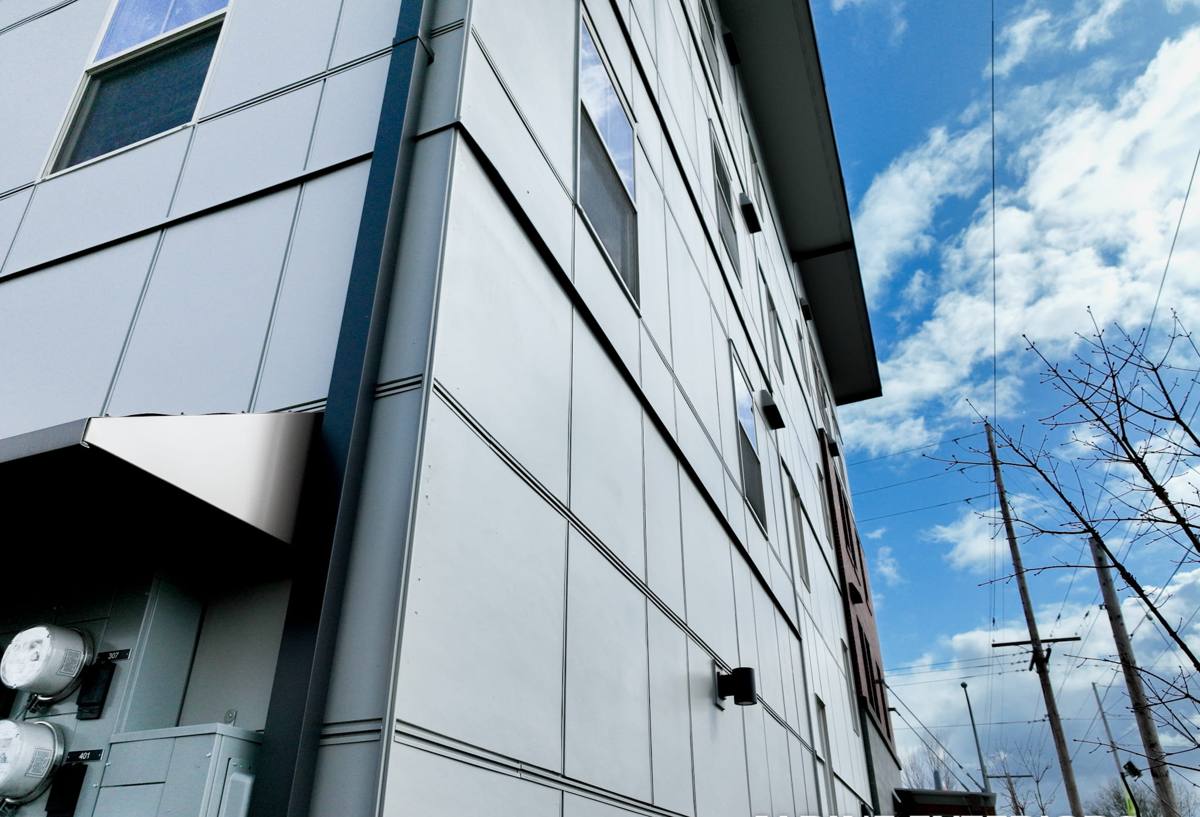
Why This Climate Is Hard on Siding
Three things combine to stress siding in this stretch of Whatcom County, and they don't act alone — they compound each other.
Salt Air
Proximity to saltwater means airborne salt settles on exterior surfaces and accelerates corrosion of exposed metal — nail heads, flashing edges, and hardware that isn't rated for coastal exposure. On siding itself, salt residue can hold moisture against the surface longer than it would inland, which matters a lot once you're dealing with a moisture-sensitive material.
Driving Rain
Wind off the water doesn't just drop rain straight down — it drives it sideways into wall assemblies, especially on west- and south-facing elevations. That means seams, laps, and butt joints that would stay dry in a calmer climate take on water here, and any gap in the original installation becomes a point of entry.
Long Moss Season
Shaded areas, tree cover, and the region's damp stretches from fall through spring give moss and algae a long runway to establish on siding, trim, and roof lines. Beyond looking bad, moss holds moisture against the siding surface and can work into seams and fastener points over time.
Signs Your Siding Needs Repair
Most siding problems out here don't start dramatically. They start small and get ignored because they don't look urgent — until they are.
- Soft or spongy spots when you press on a wall, especially near the bottom courses or around windows
- Visible cracking or splitting in boards, particularly at butt joints and corners
- Persistent moss or dark streaking that keeps coming back after cleaning
- Rust streaks below nail heads or trim fasteners
- Paint that's bubbling, peeling, or failing faster than it should on one section of the house
- Gaps opening up at seams, corner boards, or where siding meets trim and flashing
- Warping or bowing boards, especially on elevations that take the most wind-driven rain
- A musty smell or visible staining on interior walls that back up to an exterior wall with siding issues
Common Damage Patterns We See in This Area
Not every siding problem is the same, and the fix depends on what's actually causing it.
Fastener and Flashing Corrosion
Salt-exposed metal fasteners and flashing corrode faster than the siding around them, which can loosen boards or create small gaps that let water behind the wall. A proper repair replaces the hardware with corrosion-resistant fasteners, not just the visible siding.
Moisture Intrusion at Seams
Wind-driven rain finds weak points at butt joints, corner boards, and window trim. Left alone, this moisture can reach the wall sheathing and framing, turning a cosmetic repair into a structural one.
Moss and Algae Buildup
Beyond the appearance issue, moss holds water against the siding face and can accelerate deterioration in materials that aren't built to handle sustained moisture contact.
Product-Specific Failures
Older siding materials — untreated wood, some engineered wood products, or lower-grade vinyl — tend to show damage patterns tied directly to the material's known weaknesses in wet, coastal climates: swelling, delamination, or brittleness after years of UV and moisture cycling. What we're repairing often tells us as much about the original material choice as it does about the weather.
What a Correct Repair Actually Involves
There's a real difference between a repair that looks fine from the curb and one that actually solves the problem. Here's how we think about the gap.
| Quick Patch | Correct Repair |
|---|---|
| Replace the damaged board only | Inspect surrounding boards, sheathing, and house wrap for hidden moisture damage |
| Reuse existing fasteners and flashing | Replace corroded fasteners and flashing with corrosion-resistant materials |
| Caulk over gaps and call it done | Correct the underlying seam or drainage detail so water doesn't return |
| Match paint color only | Match material, texture, and factory finish so the repair doesn't stand out or age differently |
| No moisture check | Moisture meter reading on adjacent framing before closing the wall back up |
A patch that skips the underlying cause is the single biggest reason homeowners end up calling a contractor back for the same spot two or three years later.
Repair or Replace: How We Help You Decide
Not every damaged section needs a full re-side, and not every soft spot can be safely patched. The honest answer depends on a few factors we walk through on site.
| Factor | Leans Toward Repair | Leans Toward Replacement |
|---|---|---|
| Extent of damage | Isolated to one or two elevations | Widespread across multiple walls |
| Underlying material | Sound siding, isolated failure point | Original material is known to fail in this climate |
| Age of siding | Well within expected service life | Near or past typical lifespan for the product |
| Moisture findings | Framing and sheathing test dry | Moisture readings show ongoing intrusion behind multiple sections |
| Color/product match | Discontinued product still reasonably matchable | No viable match; patches will visibly stand out |
We'll tell you plainly if a repair is the right call — we're not trying to sell a full re-side when a targeted fix will hold up. We'll also tell you when patching a failing product is just delaying a bigger job.
Our Repair Process
1. On-Site Assessment
We look at the damaged area and everything around it — trim, flashing, adjacent boards, and the general condition of the elevation. Coastal exposure means damage often extends further than what's visible from the ground.
2. Moisture Check
Before we close anything up, we check for moisture in the sheathing and framing behind the damaged siding. Repairing the surface without checking what's underneath is how small problems turn into rot.
3. Correct the Cause, Not Just the Symptom
If the damage traces back to a flashing detail, a seam that was never properly sealed, or fasteners that shouldn't have been used this close to the water, we fix that root cause as part of the repair — not just the board that failed because of it.
4. Match and Finish
Where we're patching into existing James Hardie siding, we match the profile, texture, and ColorPlus finish as closely as the product line allows so the repair blends in rather than becoming its own visible patch.
5. Clear Explanation
You get a straightforward explanation of what we found, what we did, and what to watch for going forward — no vague summaries.
Why We Repair With James Hardie, Not Everything Else
We install and repair exclusively with James Hardie fiber cement siding. That's a deliberate standard, not a limitation, and it matters most in exactly the kind of climate California Creek sits in.
Hardie's HZ product lines are engineered for climate zones like ours, and the material itself is non-combustible and dimensionally stable — it doesn't swell, warp, or delaminate the way some wood-based and lower-grade products can after repeated wet-dry cycles. The factory-applied ColorPlus finish is also formulated to hold up under UV and moisture exposure far longer than field-applied paint, which matters when we're trying to match a repair into existing siding years down the road.
We don't install LP SmartSide, vinyl, Cemplank, Allura, or primed wood siding, and when we're called out to repair those products on a home, we'll tell you honestly what we're seeing and what your options are — including when a full transition to fiber cement is the more durable long-term fix for a coastal property like this one.
Why Local Experience With California Creek Homes Matters
A repair crew that hasn't worked this specific stretch of coastline will often treat a siding repair as a generic job — patch the visible damage, match the paint, move on. A crew that's worked California Creek and the broader Birch Bay area knows which elevations take the worst wind-driven rain, where moss tends to establish first, and which older siding products in this area are already showing their age. That local pattern recognition is often the difference between a repair that's diagnosed correctly the first time and one that gets revisited a year later because the real cause was never addressed.
We also understand the practical side of working in this area — permitting expectations in Whatcom County, typical construction types in the neighborhood, and the seasonal windows when repair work is most practical given the rain patterns here.
A Straightforward Checklist Before You Call Anyone
- Note which elevation the damage is on and whether it faces the prevailing wind and rain
- Check for soft spots by pressing gently on the siding near the damaged area
- Look for rust streaking near fasteners or trim
- Check nearby interior walls for staining, musty smell, or soft drywall
- Take note of how long the damage has been visible — this helps a contractor gauge urgency
- Avoid painting or caulking over damage before an inspection, since it can hide what's actually happening underneath
If you're seeing damage, moss buildup, or soft spots on your siding anywhere in the California Creek area, we're happy to take a look and give you a straightforward assessment — no pressure, no upsell, just an honest read on what's going on and what it'll take to fix it right. Reach out below for a free estimate.