 Birch Bay Siding
 Roofing in California Creek Has Its Own Set of Problems
California Creek sits close enough to the water that homes here take a different kind of beating than roofs a few miles inland. Salt-laden air off the Strait works on exposed metal fasteners, flashing, and drip edges year-round. Driving rain off Georgia Strait storms doesn't just fall on a roof — it hits it sideways, finding every weak lap, nail pop, and undersized flashing detail. And Whatcom County's long, wet moss season means anything shaded by fir or cedar canopy stays damp for months at a stretch. A roof that would hold up fine in a drier inland climate can fail early out here if it wasn't built with these specific conditions in mind.
When we replace a roof in California Creek, we're not just swapping old shingles for new ones. We're building a roof system that's specifically detailed for salt exposure, wind-driven rain, and moisture that lingers under moss and shade.
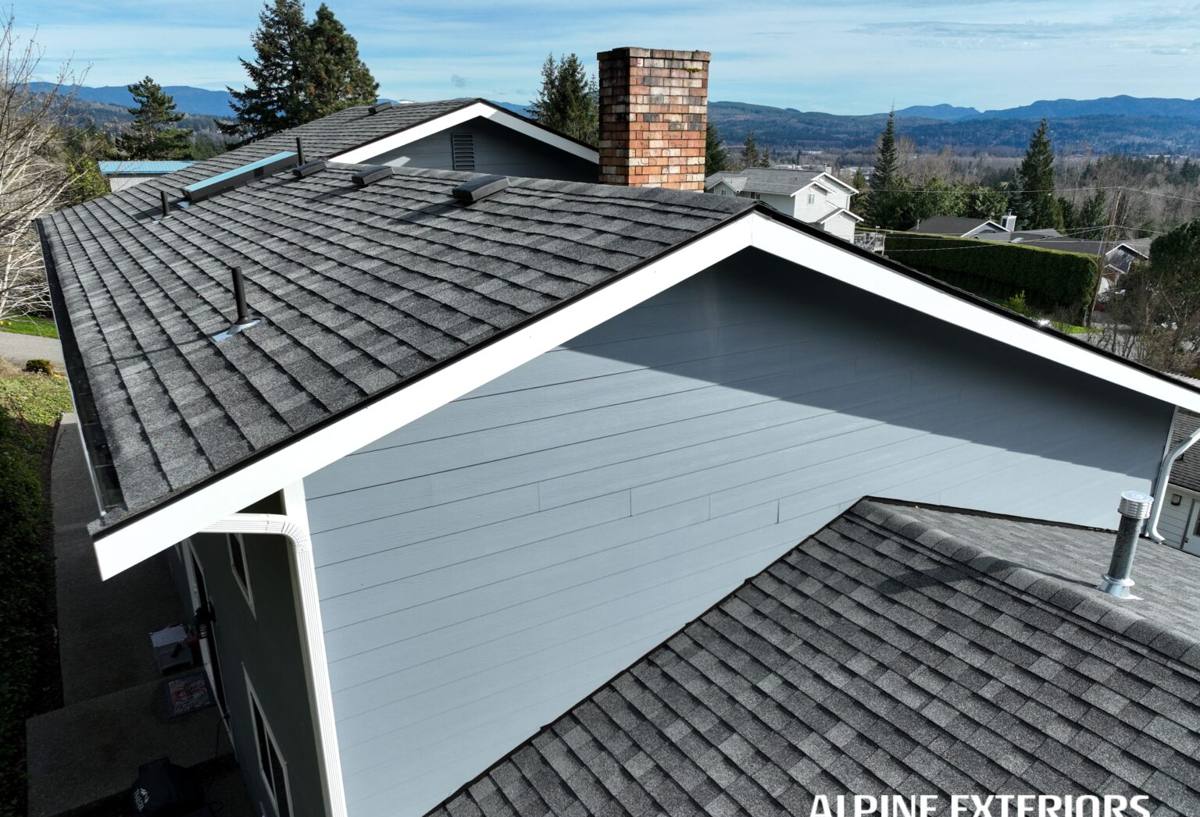
Signs a California Creek Roof Is Past Patching
Most roofs don't fail all at once — they give you warning signs for a year or two before a leak actually shows up inside the house. In this climate, those signs often show up faster on north-facing slopes and anywhere the roof sits under tree cover.
- Granules collecting in gutters or at downspout outlets, meaning the shingle surface is wearing thin
- Moss or dark streaking that keeps coming back within a season or two of cleaning
- Curling, cupping, or cracked shingles, especially on south and west-facing slopes exposed to sun and wind
- Soft or spongy decking felt underfoot during inspection, a sign moisture has reached the sheathing
- Rust staining or corrosion around flashing, vents, or exposed fasteners
- Daylight visible through the attic roof deck, or damp insulation near the eaves
- A roof approaching or past 20-25 years old, regardless of how it looks from the ground
Any one of these on its own might just need a repair. Several at once, or a roof that's already at the end of its expected service life, usually means replacement is the more honest recommendation — patching an old roof in this climate tends to buy a year or two at best before the next leak shows up somewhere new.
What a Correct Roof Replacement Actually Involves
A roof replacement is more than removing old material and nailing down new shingles. Done right, especially in a coastal, moss-prone area like California Creek, it's a full system rebuild:
Full Tear-Off, Not an Overlay
We remove the old roofing down to the deck rather than layering new shingles over old ones. Overlays trap moisture, hide deck damage, and void most manufacturer warranties. A tear-off also lets us actually see the condition of the sheathing before anything goes back down.
Deck Inspection and Repair
Any soft, delaminated, or water-damaged sheathing gets replaced before new roofing goes on. Skipping this step is one of the most common ways a "new roof" ends up leaking within a couple of years.
Underlayment Built for Wet Climates
We use synthetic or self-adhered underlayment appropriate for a marine climate, with ice-and-water shield in vulnerable areas — valleys, eaves, around penetrations — where wind-driven rain is most likely to work its way under the roofing material.
Flashing That Actually Sheds Water
Flashing around chimneys, skylights, vents, and roof-to-wall transitions is where most roof leaks actually start, not in the field of the shingles. We replace flashing rather than reusing old pieces, and we detail it for driving rain, not just straight-down rain.
Ventilation Sized for the Roof
Proper intake and exhaust ventilation keeps the attic dry and temperature-balanced, which matters for both moisture control and shingle lifespan. Under-ventilated roofs trap humidity, which speeds up moss growth and rot on the deck from underneath.
Material Options for a California Creek Home
There's no single "right" roofing material for every house — it depends on your roof's slope, sun and shade exposure, budget, and how long you want to go before thinking about it again. Here's how the common options stack up for this specific climate:
| Material | Typical Lifespan | How It Handles This Climate |
|---|---|---|
| Architectural asphalt shingle | 25-30 years | Good value, wide color range; needs decent ventilation and periodic moss treatment on shaded slopes |
| Standing seam metal | 40-50+ years | Sheds moss and rain well due to smooth surface and steep water flow; needs marine-grade fasteners and coatings to resist salt air corrosion |
| Composite/synthetic shake | 30-50 years | Resists moisture absorption better than real wood shake; holds up well under tree cover |
| Cedar shake | 20-30 years with upkeep | Classic look but needs the most maintenance in a damp, shaded, moss-heavy environment |
For homes tucked under trees, we tend to steer clients away from wood shake unless they're committed to regular upkeep — the moisture retention and moss growth in shaded, salt-humid conditions shortens its service life faster than in a drier inland setting. That's a maintenance and moisture-behavior tradeoff, not a knock on the material itself; plenty of homeowners choose it and keep it up. For most California Creek roofs, architectural asphalt or standing seam metal give the best balance of durability and upkeep.
How We Handle Moss and Moisture, Not Just Cover It Up
A new roof in this area still has to deal with the same moss season every fall through spring. The difference between a roof that stays moss-free for years and one that's green again within a season usually comes down to a few installation details rather than the shingle brand:
- Copper or zinc strips installed near the ridge on shaded slopes, which release trace metals that inhibit moss growth as rain washes over them
- Correct nail placement and fastening pattern, since underfastened shingles lift slightly and trap moisture underneath
- Balanced ventilation so the underside of the deck isn't staying damp from trapped attic humidity
- Clean valley and gutter design so water and debris don't pool and stay wet longer than necessary
We also talk with homeowners about tree trimming where it's practical — reducing overhanging branches over the roofline does more for long-term moss control than almost anything applied to the shingles themselves.
Our Replacement Process
1. On-Site Inspection and Honest Assessment
We walk the roof and attic, check the deck, flashing, and ventilation, and tell you plainly whether you're looking at a repair or a full replacement — and why.
2. Written Scope and Material Selection
You get a clear, itemized plan covering tear-off, deck repair allowance, underlayment type, flashing details, ventilation, and material choice, so there are no surprises mid-job.
3. Protection and Prep
Landscaping, siding, and gutters get protected before tear-off starts. We stage material and debris removal to keep the site as clean as a roofing job can reasonably be.
4. Tear-Off and Deck Repair
Old material comes off, the deck gets inspected in daylight, and any damaged sheathing is replaced before anything new goes down.
5. Installation
Underlayment, ice-and-water shield, flashing, ventilation components, and roofing material go in per manufacturer specification — this is where warranty coverage is either protected or quietly voided, depending on how carefully it's done.
6. Final Cleanup and Walkthrough
We magnet-sweep for stray nails, clear debris, and walk the finished roof with you before calling the job done.
Why Local Experience Matters for This Job
A roofing crew that's worked other California Creek and greater Birch Bay properties already knows which slopes tend to hold moss, how far inland the salt exposure still matters, and what wind-driven rain does to poorly flashed details in this specific pocket of Whatcom County. That's not something you can fully substitute with a generic install from a crew that mostly works drier, inland jobs. It shows up in the small decisions — where to add ice-and-water shield, how much ventilation a particular attic actually needs, which fastener spec holds up near the water — that separate a roof that lasts its full rated life from one that starts causing problems in year eight.
What Drives the Cost of a Roof Replacement
| Factor | Why It Matters |
|---|---|
| Roof size and number of slopes/valleys | More square footage and complexity means more material, labor, and flashing detail work |
| Roof pitch | Steeper roofs take longer to work safely and often cost more per square |
| Number of existing layers | Multiple old layers mean more tear-off labor and disposal |
| Deck condition | Rotted or soft sheathing adds repair cost that's hard to know precisely until tear-off |
| Material choice | Asphalt, metal, and composite shakes carry different material and labor costs |
| Access and site conditions | Tree cover, steep lots, or tight access can affect staging and cleanup time |
We won't quote a number without seeing the roof — anyone who does is guessing. What we can tell you is that a full tear-off replacement is a bigger investment up front than a repair, but on a roof that's already showing multiple failure signs, it's usually the more honest and less expensive path over the following ten to twenty years.
If your California Creek roof is showing its age or you're just not sure whether it needs a repair or a full replacement, we're happy to take a look. Reach out for a free, no-pressure estimate using the form below.