 Birch Bay Siding
 California Creek's Weather Is Hard on Siding — Here's Why
California Creek sits in that stretch of Whatcom County where Puget Sound weather and small-town Northwest living meet head-on. Homes here deal with salt-laden air off the water, long stretches of driving rain through fall and winter, and a moss season that can run most of the year in shaded, tree-lined yards. None of that is unusual for Birch Bay — but it adds up differently on a house than it does on a boat dock or a fence post. Siding is the one building material that has to hold that line every single day, in every direction the wind blows.
The siding choice that works fine in a dry inland climate often struggles here. Wood-based products absorb moisture and swell. Vinyl can warp with sun-to-shade temperature swings and doesn't stop moss and algae from taking hold in shaded, damp corners. Over years, that combination shows up as soft trim, discolored panels, and siding that needs recaulking and repainting far sooner than anyone expected when it went up.
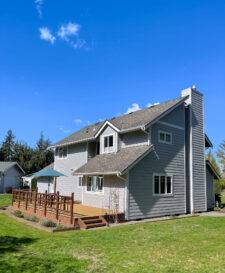
Why Fiber Cement Is the Right Fit for This Stretch of the County
Fiber cement siding is made from cement, sand, and cellulose fiber, pressed and cured into a dense, stable board. It doesn't absorb water the way wood does, it doesn't expand and contract with temperature the way vinyl does, and it's non-combustible — a real consideration for homes tucked into wooded lots. For a California Creek property, that translates into a siding material that keeps its shape, holds paint or factory finish far longer, and doesn't give moss and mildew the soft, porous surface they need to spread.
Salt air resistance
Airborne salt is corrosive to a lot of building materials, especially exposed metal fasteners and untreated wood. Fiber cement itself isn't harmed by salt exposure, but correct installation still matters — the fasteners, flashing, and trim details around it need to be rated for coastal exposure, or the siding ends up being the strong part of a system with a weak link.
Moss and moisture
Moss needs organic material and consistent moisture to establish itself. Fiber cement gives it neither. That doesn't mean a California Creek home will never see moss or algae on its siding — anything outdoors in this climate can pick up surface growth in shaded, damp spots — but it wipes off a hard, factory-finished fiber cement surface far more easily than it scrubs off wood or textured vinyl, and it doesn't work its way into the material itself.
What a Correct Fiber Cement Installation Actually Involves
Fiber cement siding is only as good as the installation behind it. The board itself is excellent; a rushed or generic install is where problems start, especially in a wet climate like this one.
Flashing and water management
Every window, door, and horizontal trim transition needs proper flashing and a drainage plane behind the siding — not just caulk. Caulk is a maintenance item, not a water barrier. A weather-resistive barrier with a rainscreen gap lets any moisture that does get behind the siding drain and dry out instead of sitting against the wall sheathing.
Fastening and joints
Fiber cement needs to be fastened per the manufacturer's specification — correct nail or screw type, spacing, and depth. Overdriven fasteners crack the board's edge and create a moisture entry point; underdriven fasteners let panels move and eventually work loose. Butt joints need to be treated correctly, not just butted and caulked, so they don't become the first place water gets in.
Clearance and ground contact
Siding installed too close to grade, a deck, or a roofline wicks up moisture and stays wet longer than it should. Manufacturer clearance specs exist for exactly this reason, and they matter more on a lot with heavy rain runoff or shaded, slow-drying areas.
Our Process for a California Creek Job
- On-site assessment. We look at the existing siding, sheathing, and trim, and check for moisture damage before we ever talk about new siding — no point covering up a problem that needs fixing first.
- Moisture and structural check. Given how much rain this area sees, we probe suspect areas around windows, corners, and low trim rather than assuming what's underneath looks fine.
- Tear-off and prep. Old siding comes off, damaged sheathing gets replaced, and the weather-resistive barrier and flashing details go in correctly — this step is where most long-term performance is decided.
- Installation to spec. Fiber cement boards go up fastened, flashed, and gapped according to James Hardie's installation requirements, not shortcuts.
- Finish and walkthrough. Trim, caulking at appropriate joints only, and a final walkthrough so you know what you're looking at and what to expect going forward.
Maintenance: What to Expect After the Job Is Done
No siding in Whatcom County is maintenance-free, but the maintenance load differs a lot by material. Here's a realistic comparison for a California Creek property:
| Siding Type | Moss/Algae Behavior | Moisture Handling | Repainting Interval |
|---|---|---|---|
| James Hardie fiber cement (ColorPlus) | Surface growth wipes off; doesn't penetrate material | Doesn't absorb or swell; relies on correct flashing/rainscreen | Factory finish is warrantied; no routine repainting needed |
| Vinyl | Textured surfaces trap growth in shaded areas | Can warp/buckle with temperature swings | Doesn't repaint well; fades and becomes brittle over time |
| Cedar or primed wood | Organic surface feeds moss and mildew readily | Absorbs moisture, prone to rot without diligent upkeep | Every 3-7 years depending on exposure |
Even with fiber cement, a homeowner in a shaded or low-airflow spot near the creek should expect to rinse siding down occasionally and keep gutters and downspouts clear so water isn't sheeting down the wall. That's a fraction of the upkeep other materials demand in this climate.
What Fiber Cement Siding Costs to Install Here
Pricing depends on the specifics of the home, but the main cost drivers on a California Creek job tend to be the same handful of factors:
| Cost Factor | Why It Matters |
|---|---|
| Home size and wall complexity | More square footage and more corners, gables, and trim details mean more labor and material |
| Existing siding removal | Tear-off and disposal of old siding adds time, especially if it's layered over prior siding |
| Sheathing or moisture damage repair | Rot found during tear-off has to be repaired before new siding goes on — this is common on homes exposed to years of driving rain |
| Trim and accessory work | Fascia, soffits, and window trim done at the same time affect both cost and how well the whole exterior performs together |
| Site access | Tight lots, slopes, or limited staging area near the water can add labor time |
Why We Only Install James Hardie
We install James Hardie fiber cement siding exclusively — not LP SmartSide, not vinyl, not Cemplank or Allura, not primed spruce or cedar. That's a deliberate standard, not a brand preference for its own sake. Hardie's HZ5 product line is engineered specifically for wetter, more variable climates like the Pacific Northwest, which is directly relevant to a property dealing with California Creek's rain and salt air exposure. The ColorPlus factory finish is baked on under controlled conditions, which holds color and resists fading far better than field-applied paint, and it comes with its own finish warranty on top of the product warranty — both of which are transferable if the home sells. We've found that installing one product correctly, to spec, on every job produces a more consistent and more durable result than juggling multiple siding lines, each with its own installation quirks.
Why a Crew That Already Works This Area Matters
A lot of siding problems in coastal Whatcom County trace back to installation details that make sense in a drier climate but don't hold up here — not enough clearance at grade, flashing details that assume less rain, or fastener choices that weren't rated for salt air exposure. A crew that regularly works California Creek and the surrounding Birch Bay area has already seen how these homes age under this specific weather pattern, and builds the install around that instead of a generic checklist. That local pattern recognition is worth more than it sounds like on paper — it's the difference between siding that looks right at installation and siding that still performs right in year ten.
A Quick Checklist Before You Hire
- Ask whether flashing and a drainage plane are included, not just caulked seams
- Confirm the fastener type and spacing meet the manufacturer's specification for your siding's exposure
- Ask how they handle sheathing found to be damaged during tear-off, and how that's priced
- Check that ground and roofline clearances will meet manufacturer minimums, not just "close enough"
- Ask which specific Hardie product line and finish they're proposing, and why it fits your home's exposure
- Get the warranty terms in writing, including whether the finish warranty is separate from the product warranty
If you're weighing siding options for a home in California Creek or elsewhere around Birch Bay, we're glad to take a look and talk through what your house actually needs. Reach out for a free, no-pressure estimate using the form below.