 Birch Bay Siding
 Composite Decking Built for California Creek's Setting
California Creek sits along the low-lying creek corridor at the edge of Birch Bay, and that setting shapes an outdoor deck differently than a typical open bayfront lot does. Properties along this stretch tend to combine two things at once: more tree cover than you'll find on an open waterfront block, and lower, damper ground tied to the creek itself. That's a different set of demands than salt spray alone, and it changes what "correct" actually means for a deck built here.
A deck has no roofline or wall to shelter it, so whatever this area does to a house, it does to a deck first and worse. Salt air, driving rain, and a long moss season are facts of life across Birch Bay generally, but on a shaded, creek-adjacent lot those pressures stack with slower drying and softer, wetter ground underneath. This page covers what a California Creek deck actually needs, what a correct composite installation involves out here, and how our process works for this specific part of Whatcom County.
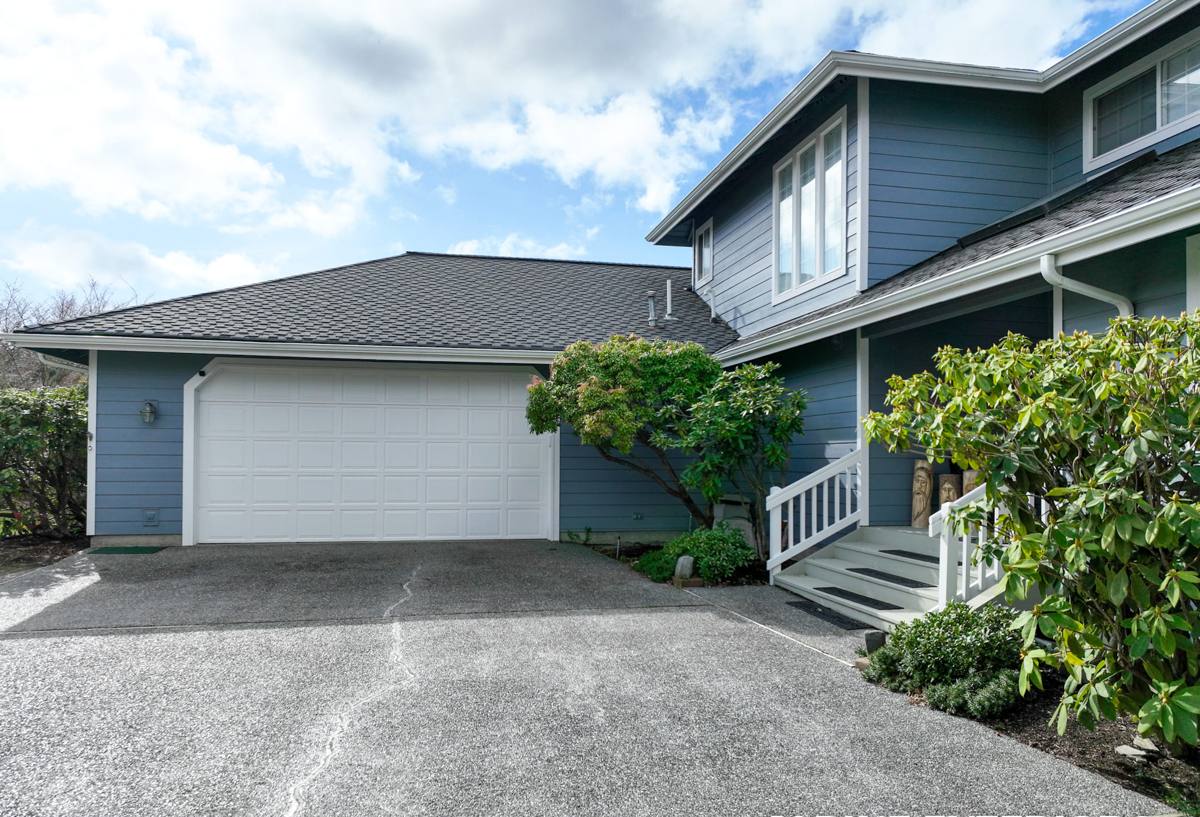
What California Creek's Setting Does to a Deck
Low Ground and a Higher Water Table Near the Creek
Lots near the creek corridor tend to sit lower and hold moisture longer at grade than properties set back on higher ground. That matters most for what's underneath the decking, not what you can see from the yard. Footings and posts set into consistently damp or seasonally saturated soil need to be sized, set to proper depth, and detailed against ground moisture more carefully than they would on a well-drained inland lot, and post bases need real separation from standing water rather than sitting right at grade.
Tree Cover and a Moss Season That Runs Long
Where open bayfront lots get more sun and more wind to dry a deck surface between storms, California Creek properties often have mature trees close to the house, which means more shade and less airflow across the decking. That combination is close to ideal for moss and mildew — shaded, slow-drying wood-fiber surfaces are usually the first thing to green up, and it happens faster here than it does on a sunnier, more exposed lot a mile away. Leaf litter and organic debris from that same tree cover also tend to collect between boards and in corners, which feeds the problem if it isn't cleared.
Salt Air and Driving Rain Off Birch Bay
Being part of the Birch Bay area still means dealing with salt-laden marine air and wind-driven rain even a short distance back from open water, just somewhat buffered by the tree cover and terrain that also bring the shade and moisture issues above. Salt accelerates corrosion in exposed fasteners, brackets, and railing hardware, and driving rain gets pushed under railings and into ledger connections rather than simply running off a flat surface. A deck here deals with that coastal load on top of the shade and ground-moisture issues, not instead of them.
Why Composite Decking Fits This Kind of Lot
Wood decking depends on regular sealing or staining to resist moisture, and on a shaded, damp lot like this, that maintenance schedule gets harder to keep up with — the wood simply doesn't get the sun exposure to dry out fully between treatments. Composite decking is built to resist moisture absorption and organic staining without that upkeep cycle, which is a real practical advantage on a lot where the deck surface is going to stay damp longer than average through the fall and winter.
Capped vs. Uncapped Composite
Capped composite boards have a plastic shell wrapped around a wood-plastic composite core, protecting that core from moisture absorption, staining, and mildew growth. Uncapped composite exposes the wood-plastic blend on all sides, so it can still absorb moisture and stain over time, especially where it's shaded and slow to dry. On a lot with California Creek's combination of shade and ground moisture, that cap layer is doing more work than it would on a sunnier site, which is why we standardize on capped composite for installs in this part of Birch Bay.
Where PVC Fits In
Cellular PVC decking contains no wood fiber at all, so it doesn't absorb moisture the way even capped composite can at a cut edge or fastener hole. It costs more up front and can flex a bit more under heavy point loads than composite, but for a deck sitting in near-constant shade close to the creek, some homeowners decide the added moisture resistance is worth it. We'll walk through both options against the specific site rather than defaulting to one product for every lot.
What a Correct Composite Deck Build Involves Here
The decking boards get most of the attention, but on a shaded, low-lying lot near the creek, the substructure and drainage details are what actually decide whether the deck holds up. A build done right for this area includes:
- Footings sized and set to proper depth for the site's actual soil moisture, not a generic spec pulled for a well-drained lot
- Post bases and hardware set clear of standing water at grade, with real separation between the wood or metal and damp ground
- Stainless steel or coastal-grade corrosion-resistant fasteners throughout, given the salt air exposure this area still sees
- Framing pressure-treated and rated for sustained moisture contact, not a lighter-duty grade meant for drier conditions
- Correct board gapping for drainage and airflow, so shaded sections of the deck can actually dry between rain events instead of staying damp
- Proper ledger flashing where the deck ties into the house, since that connection is a common entry point for wind-driven rain
- Ventilation and grading underneath the deck so groundwater and runoff don't sit against the framing between storms
- Joist spacing matched to the specific composite product's span rating rather than a one-size-fits-all layout
None of that shows up as a problem on day one. It shows up two or three winters in, as a soft joist, a post base that's started to corrode, or a shaded section of decking that never quite dries out and stays green.
Composite Decking Compared to the Alternatives
| Material | Handling Shade & Ground Moisture | Moss & Mildew Resistance | Upkeep |
|---|---|---|---|
| Capped composite | Strong — cap layer resists moisture absorption and staining | Good on most product lines, even in shade | Occasional washing |
| Cellular PVC | Excellent — no wood fiber to absorb moisture at all | Strong, smooth non-porous surface | Occasional washing |
| Uncapped composite | Moderate — exposed fiber can absorb moisture in shaded, damp spots | Fair; more prone to buildup over time | Periodic cleaning |
| Cedar | Weak in continuous shade without diligent upkeep | Fair when sealed regularly | Regular oiling or sealing |
| Pressure-treated wood | Weak against sustained shade and ground moisture over time | Poor without frequent treatment | Regular sealing or staining |
Site-Specific Design Considerations for California Creek Properties
A few design questions matter more here than on a typical lot. Deck height and post spacing often need to account for softer or wetter ground near the creek, which can affect footing layout more than it would on firmer, higher terrain. Tree placement affects where shade will fall through the day and which sections of the deck will stay damp longest — that shapes both board color choice, since darker boards can show water spotting differently than lighter ones, and where a homeowner might want to selectively open up the canopy for airflow. Drainage and grading around the deck's perimeter also deserve real attention on a lower lot, since water that used to sheet across open ground can end up channeling toward the house once a deck and its footings are in the way.
How Our Process Works
We start with a site visit to see what's actually there — existing deck or structure condition if it's a replacement, how the ground drains around the footprint, how much shade the site gets through the day, and how close the lot sits to the creek and the bay. From there we go over composite options that fit the budget and the shade pattern of the specific site, since a heavily shaded deck and a sunnier one don't always call for the same board.
Permitting in this part of Whatcom County generally follows standard setback, structural, and drainage requirements, and low-lying or creek-adjacent lots can carry additional review depending on the property — we handle that as part of the job rather than leaving it for the homeowner to sort out. Once permitted, the build follows the sequence above: substructure and footings first, sized for the ground conditions on that specific lot, then the composite surface, railing, and any stairs or trim. We finish with a walkthrough covering what the product you chose actually needs going forward, including anything specific to a shaded install.
What Composite Decking Still Needs From You
Composite is low-maintenance, not maintenance-free, and that matters more on a shaded lot than a sunny one. A short list worth keeping in mind:
- Sweep or blow leaf litter and organic debris off the surface and out of board gaps regularly, especially through fall
- Rinse the deck periodically to clear salt residue and organic buildup before it works into the surface
- Check for any shaded areas that stay visibly damp longer than the rest of the deck, and consider whether nearby branches can be trimmed back for airflow
- Check post bases and hardware once a year for early corrosion or softening in the ground around them
- Address any soft framing or standing water underneath right away — on damp, low ground that's a structural issue, not a cosmetic one
Why It Matters That We Already Work This Area
A crew that mostly builds on open, well-drained bayfront lots can still put together a competent deck, but California Creek's combination of shade, lower ground, and coastal exposure raises questions that don't come up as often elsewhere in Birch Bay — how deep footings need to be set in damp soil, which composite lines actually resist mildew in continuous shade, and how much airflow a design needs to build in around mature trees. Working this specific stretch of Whatcom County regularly means we're not guessing at those answers on your project.
That familiarity also shows up in smaller judgment calls — where to position a deck relative to tree canopy for the best balance of shade and drying, or being straightforward about which sections of a shaded lot will need more attention over time versus which won't.
Get a Straight Answer About Your Deck
Whether you're replacing a deck that's never quite dried out right or planning a new one for a California Creek property, we're glad to walk the site with you and lay out the options honestly. Reach out below for a free, no-pressure estimate.