 Birch Bay Siding
 Storm Damage Roof Repair for Blaine Homes
Blaine sits right on the water, and that location cuts both ways. The view is part of why people live here, but the same exposure that gives you a view of Semiahmoo Bay and Drayton Harbor also means your roof takes a harder hit than a house twenty miles inland. Wind comes off the water with less to slow it down, rain arrives sideways more often than straight down, and the salt-tinged air speeds up corrosion on fasteners, flashing, and gutter hardware. Add in Whatcom County's long, wet moss season and you've got a roof that's working harder every year than most manufacturers' warranties assume.
This page is about one thing: what it takes to properly assess and repair storm-damaged roofing on a home in Blaine, not a generic rundown of roof repair everywhere. If a windstorm, heavy rain event, or a winter of moss buildup has left you with missing shingles, a leak, or damaged flashing, here's what actually matters.
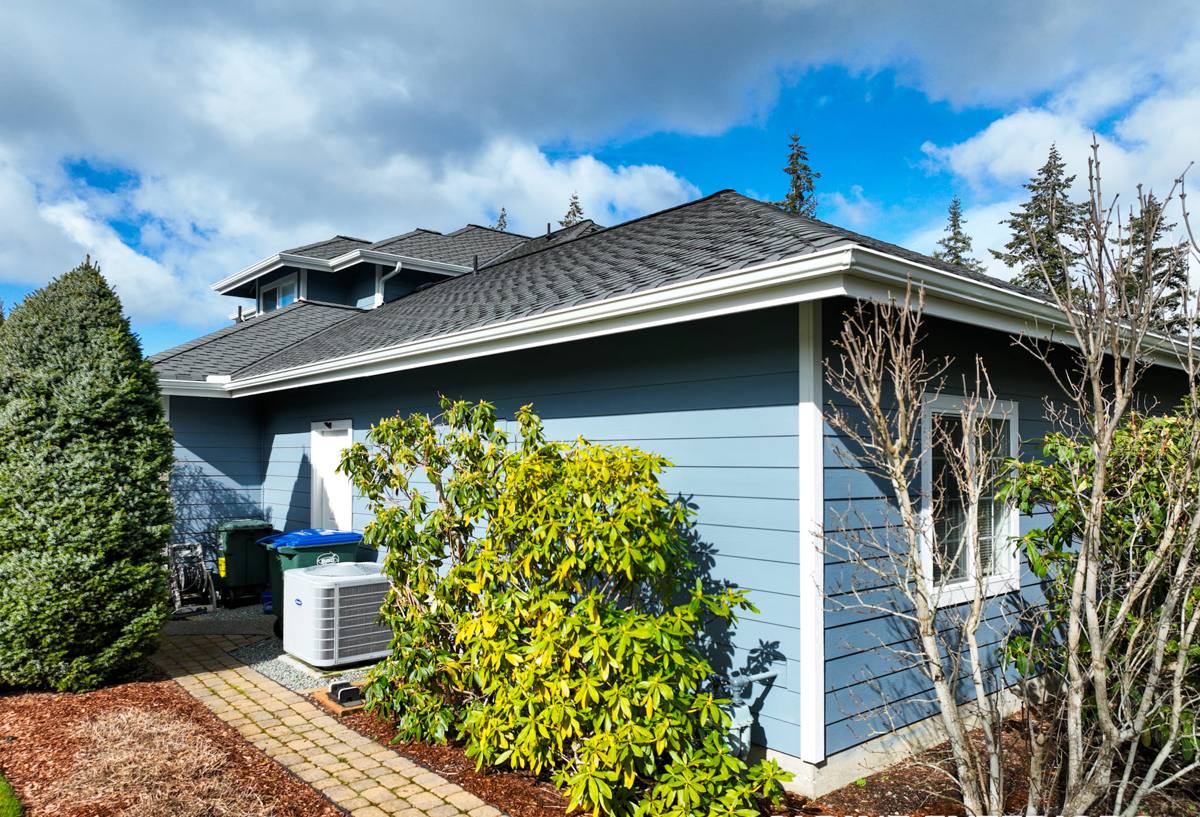
What Storm Damage Actually Looks Like Here
Storm damage in this part of Whatcom County rarely announces itself as dramatically as it does in hail-prone regions. There's usually no cracked shingle mat or obvious impact bruising. Instead, damage shows up as:
- Wind-lifted or missing shingle tabs along ridges, hips, and roof edges — the areas that catch the most uplift in a gusting coastal wind.
- Flashing pulled loose around chimneys, skylights, and roof-to-wall transitions, often after repeated wind-driven rain forces water behind the metal.
- Moss-weakened shingles that fail during a storm because months of moisture retention already softened the mat underneath — the storm just finishes the job.
- Gutter and downspout damage from wind-thrown debris or ice, which then backs water up under the roof edge during the next heavy rain.
- Granule loss and soft spots in valleys, where water concentrates and moss holds moisture longest.
The tricky part is that a lot of this damage is only visible from the roof itself, not from the ground or a gutter line. A homeowner in Blaine calling about "a leak after the last windstorm" is often dealing with damage that's been building for a season or two, with the storm as the final trigger rather than the sole cause.
Why Fast, Correct Assessment Matters
Two things make a quick, accurate assessment worth the effort after a storm hits Blaine specifically. First, secondary damage compounds fast in this climate — a small gap in flashing or a lifted shingle doesn't just sit there until you get around to it. With the rainfall this area gets, water finds its way into sheathing and insulation within days, not months, and once wood framing starts absorbing moisture in a marine climate, it doesn't dry out on its own between storms.
Second, if you're filing an insurance claim, documentation matters. Adjusters want to see clear evidence connecting the damage to a specific storm event, not general wear. A contractor who inspects promptly, photographs the actual damage, and can describe what happened and when is far more useful to your claim than someone who shows up weeks later after moss and rain have blurred the line between storm damage and ordinary deterioration.
What We Look At During an Inspection
A proper storm damage inspection isn't a walk around the yard looking up. It involves getting on or accessing the roof itself and checking:
- Shingle or panel condition at ridges, hips, valleys, and all penetrations
- Flashing integrity at chimneys, skylights, vents, and wall intersections
- Underlayment exposure anywhere shingles are missing or lifted
- Fastener condition — coastal salt air corrodes exposed nail heads and staples faster than inland homes ever see
- Attic or roof deck signs of moisture intrusion, staining, or soft sheathing
- Gutter, downspout, and drip edge condition, since these determine whether water sheds away from the structure or pools against it
What a Correct Repair Involves
Storm damage repair done right isn't just swapping out the shingles you can see are missing. It means addressing the conditions that let the damage happen and making sure the repair will hold up to the next storm, not just look fine until then.
That typically means:
- Matching materials as closely as possible in type, weight, and color so the repair doesn't create a weak seam or an obvious patch that ages differently than the surrounding roof.
- Rebuilding flashing correctly rather than just caulking over a gap — caulk is a temporary fix, not a repair, especially in a climate where UV and moisture cycling break down sealants faster.
- Checking and clearing moss from the repair area and surrounding roof plane, since leaving moss in place next to new material just sets up the same failure again.
- Confirming ventilation isn't part of the problem — poor attic airflow traps moisture that softens decking from underneath, which no amount of surface repair will fix.
- Sealing and re-fastening with corrosion-resistant hardware appropriate for a coastal environment, not standard inland-grade fasteners that will rust prematurely near Drayton Harbor's salt air.
Our Process
- Initial contact and scheduling. We ask what happened, when, and what you've noticed — leaks, missing shingles, debris — so we come prepared.
- On-site inspection. We get eyes on the actual roof surface, not just a ground-level look, and document everything with photos.
- Written assessment. You get a clear explanation of what's damaged, what's causing it, and what repair options make sense — no pressure toward a bigger job than the roof needs.
- Insurance coordination if needed. If you're filing a claim, we provide documentation that supports it and can walk an adjuster through what we found.
- Repair. We complete the work with matched materials and correct flashing detail, then clean up debris, including moss and granules dislodged during the repair.
- Follow-up. We check our own work after the next significant rain when practical, since a repair that holds in dry weather but fails under wind-driven rain isn't actually finished.
Repair or Replace? What Actually Drives That Decision
Not every storm-damaged roof needs a full replacement, and not every roof that "just needs a patch" should get one. The honest answer depends on a few factors specific to the roof's age, condition, and how much of the damage is storm-caused versus already-present wear.
| Factor | Points Toward Repair | Points Toward Full Replacement |
|---|---|---|
| Roof age | Under 12–15 years, otherwise sound | Near or past expected service life |
| Extent of damage | Isolated to one section or slope | Spread across multiple slopes or the whole roof |
| Moss history | Minor, surface-level growth | Long-term moss with visible mat deterioration underneath |
| Decking condition | Solid, no soft spots found | Soft or stained sheathing discovered during inspection |
| Material availability | Matching shingles/panels still obtainable | Discontinued product, visible mismatch unavoidable |
| Insurance scope | Adjuster approves repair-level scope | Adjuster approves replacement based on damage extent |
We'll tell you honestly which side of this table your roof falls on. A repair-only recommendation isn't us trying to save money on materials — it's us not selling you a roof you don't need yet.
Working With Your Insurance Claim
Most storm damage repair in this area involves an insurance claim at some point, so it helps to know how the pieces fit together. Your policy will typically require documentation that the damage resulted from a specific weather event, which is part of why prompt inspection matters. We can meet an adjuster on-site, provide photos and a written scope, and explain the technical side of what caused the failure in terms that support your claim rather than muddy it. What we won't do is inflate a scope of work to chase a bigger payout — that approach tends to backfire on homeowners when adjusters push back or when future claims get scrutinized more closely.
Why It Matters That We Already Work in Blaine
Storm damage repair has a lot of judgment calls in it — how much moss buildup is normal for this coastline versus a sign of a bigger moisture problem, how much wind exposure a given roof plane actually sees based on its orientation to the water, what flashing details hold up against Whatcom County's wind-driven rain versus ones that look fine on paper but fail here. A crew that works Blaine and Birch Bay regularly has already seen how local roofs age under these specific conditions, which means less guesswork and fewer surprises once we're on your roof.
There's also a practical side: storms don't damage one roof at a time. When a windstorm comes through, we're often fielding calls from several homes in the same area within days of each other. Being established here means we can respond faster and follow up without a long drive eating into the time we spend actually inspecting and repairing.
Signs You Should Have Your Roof Inspected After a Storm
- Shingles or granules in the gutters or on the ground after a windstorm
- Any new water stain on an interior ceiling or attic sheathing
- Visible gaps, curling, or lifted edges along ridges and roof edges
- Flashing that looks bent, separated, or loose around chimneys or skylights
- A sudden increase in moss or dark streaking following a wet spell
- Gutters pulling away from the fascia or sagging after storm winds
- Daylight visible through the attic roof deck at any point
If any of these sound familiar, it's worth getting a look before the next storm turns a small repair into a bigger one.
If your roof took a hit in the last storm, or you're just not sure whether what you're seeing is storm damage or ordinary Whatcom County wear, we're happy to take a look. Reach out for a free, no-pressure estimate — use the form below and we'll get back to you.