 Birch Bay Siding
 Deck Building in Blaine: Built for the Weather That's Actually Here
Blaine sits about as close to Puget Sound's marine weather as a Whatcom County property can get. That means any deck built here has to deal with three things a deck in a drier inland climate rarely faces at the same intensity: salt-laden air blowing in off the water, driving rain that hits structures sideways during winter storms, and a moss season that can stretch from October through May. A deck that's built to a generic spec — one that would hold up fine in Spokane or Boise — often starts showing problems in Blaine within a few years: soft spots at the ledger, corroding fasteners, black streaking on the boards, or a substructure that stays damp long after the surface looks dry. Building correctly for this specific location isn't an upsell. It's the difference between a deck that needs real attention at year 20 and one that needs it at year 5.
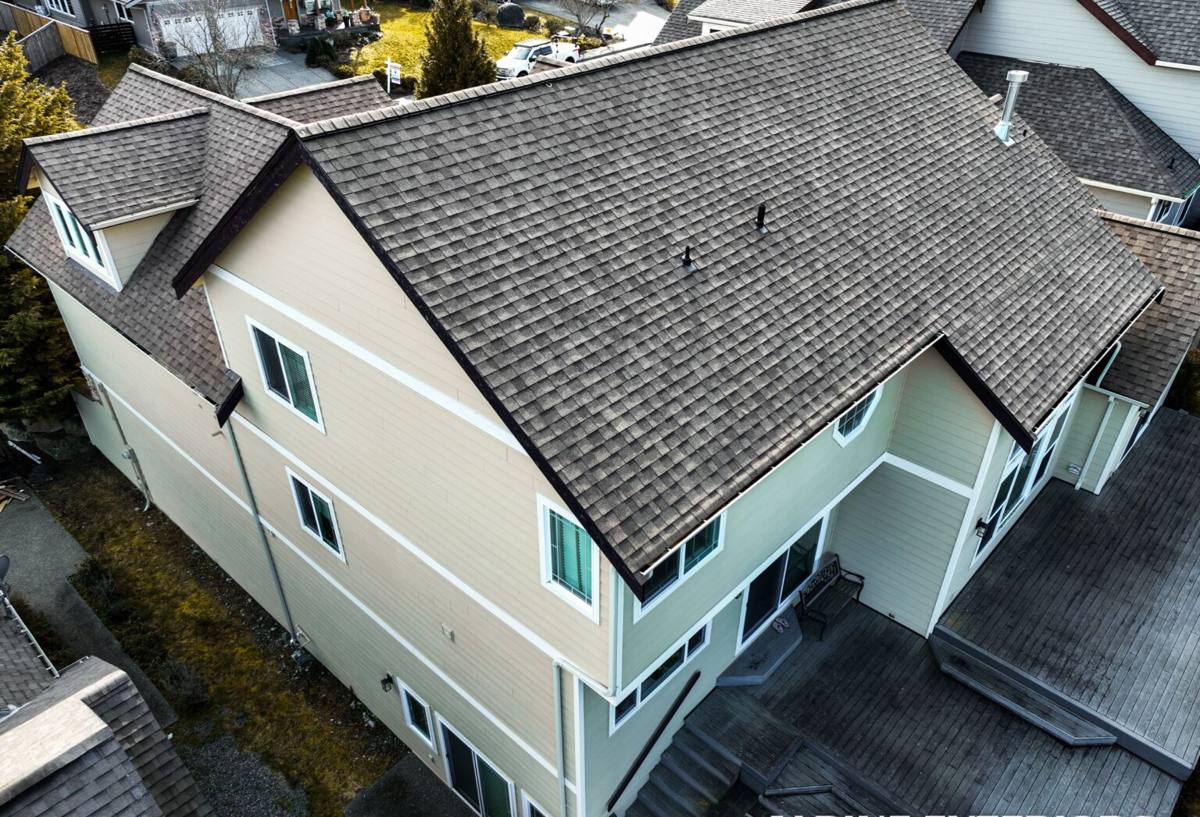
What Salt Air and Driving Rain Actually Do to a Deck Over Time
Salt air is corrosive in a way that's easy to underestimate because the damage is slow and mostly invisible until it isn't. Airborne salt settles on metal hardware, screw heads, joist hangers, and structural bolts, and it accelerates oxidation even on coated or galvanized products that would hold up fine further inland. Once a fastener starts to rust, it loses grip strength gradually — long before it fails outright — which is part of why deck hardware in coastal zones needs a higher corrosion standard than the minimum code requires.
Driving rain adds a second problem: water intrusion at the wrong angle. Rain that falls straight down is relatively easy to shed with standard flashing and slope. Rain that's being pushed sideways by wind — which is routine in Blaine during fall and winter systems — finds its way behind ledger boards, under poorly lapped flashing, and into end-grain cuts that weren't sealed. That's where rot actually starts on most decks: not on the open, sun-exposed decking boards, but in the hidden framing where water gets in and can't dry out.
Footings, Framing, and Flashing: Getting the Structure Right
The visible decking gets all the attention, but the framing underneath is what determines whether a deck is still sound in fifteen years. A few things matter more in this climate than they might elsewhere:
- Footing depth and bearing: Footings need to be sized and set to the frost depth and soil conditions on the actual lot, not just poured to a rule of thumb.
- Ledger flashing: Where the deck attaches to the house is the single most common failure point on any deck. Proper step flashing and a drainage gap behind the ledger keep water from tracking into the house's wall framing — not just the deck's.
- Joist protection: Joist tape or a comparable barrier over the top of each joist keeps standing water out of screw penetrations and end grain, which is where rot typically starts under a deck board.
- Airflow underneath: A deck built too close to grade, or boxed in without any ventilation, stays damp longer after every rain. That extended damp period is exactly what feeds both rot and moss growth.
None of this shows once the decking is installed, which is precisely why it's worth asking any contractor to walk through it before the boards go down — not after.
Choosing Decking Material for a Blaine Property
There's no single "right" decking material — it depends on budget, how much maintenance the homeowner wants to do, and how close the deck is to the water. Here's how the common options actually compare in this climate:
| Material | How it handles salt air & rain | Maintenance | Typical lifespan here |
|---|---|---|---|
| Pressure-treated lumber | Good if properly sealed; end cuts and fastener holes need extra attention | Needs re-sealing every 1-3 years | 15-20 years with upkeep |
| Cedar | Naturally rot-resistant but softer; more prone to graying and surface checking in driving rain | Regular sealing/staining to hold color and resist moisture | 15-25 years with consistent care |
| Composite decking | Doesn't absorb water into the board itself; handles salt exposure well | Occasional washing to keep pollen/algae film off | 25-30+ years, warranty-backed |
Composite has become the more common recommendation for Blaine decks specifically because it doesn't take on moisture the way wood fibers do, which matters when a deck is going to sit under near-constant humidity for half the year. That's not a knock on wood — a well-built and consistently maintained cedar or PT deck performs fine — it's just a maintenance-versus-cost tradeoff each homeowner should decide on with full information, not after the fact.
A Word on Fasteners
Whatever decking material is chosen, the fasteners matter just as much as the boards. In a marine-influenced climate, standard coated deck screws can start showing surface corrosion within a few seasons, and once a fastener is compromised the board around it loosens. Stainless steel fasteners cost more up front but are the standard we hold ourselves to for any deck within reach of salt air, because replacing corroded screws later means pulling and resetting boards that are otherwise fine.
Moss, Algae, and Keeping the Surface Safe
Whatcom County's long wet season is exactly what moss and algae need to establish on a deck surface — shade, moisture, and organic debris (fir and cedar needles, leaf litter) that collects in board gaps. Beyond the cosmetic issue, a mossy or algae-covered deck surface gets genuinely slippery, which is a real safety concern on stairs and near entry points. Design choices that reduce this over the life of the deck include:
- Proper board spacing so water and debris can drain through rather than pool
- Grooved or textured decking surfaces that shed water faster than smooth-face boards
- Keeping the deck clear of overhanging branches where practical, since shade and falling needles are the main moss feeders
- A seasonal cleaning routine — even a simple wash before the wet season sets in makes a measurable difference by spring
No decking material is fully immune to moss in this climate; the goal is a deck that's built and finished so moss doesn't get a structural foothold, and that stays easy to clean rather than becoming a slip hazard by December.
Permits, Setbacks, and Local Requirements
Deck construction in Whatcom County generally requires a building permit once the deck exceeds a certain height or size threshold, and any deck attached to the house needs to meet current guardrail, stair, and structural connection requirements. Properties in Blaine that are closer to shoreline areas may also have additional setback or environmental review considerations depending on the specific parcel. We handle the permit process as part of the job rather than leaving it to the homeowner to sort out, and we build to current code requirements — not to whatever the previous deck happened to meet, which matters if the existing structure predates the current guardrail and connection standards.
How Our Deck Building Process Works
The process is straightforward, but each step exists for a reason specific to this climate:
- On-site assessment: We look at drainage, sun/shade exposure, proximity to salt air, and the condition of anything being replaced, not just take dimensions.
- Design and material selection: We walk through decking and hardware options with the actual tradeoffs — cost, maintenance, lifespan — rather than steering toward one product.
- Permitting: We pull the required permits and build to current code, including guardrail and structural connection requirements.
- Footings and framing: Footings sized to local soil and frost conditions, proper ledger flashing, joist protection, and stainless or coastal-rated hardware throughout.
- Decking installation: Boards installed with correct spacing for drainage and expansion, and fastening appropriate to the chosen material.
- Final walkthrough: We go over basic seasonal care with the homeowner — what to check, what to clean, and what to watch for as the deck settles in.
Here's a quick checklist worth keeping regardless of who builds the deck:
- Ledger flashing installed with a drainage gap, not sealed flush against the house
- Joist tape or equivalent barrier on every joist top
- Stainless or coastal-rated fasteners specified in writing, not just "corrosion resistant"
- Footings sized to actual soil and frost conditions, confirmed by inspection
- Permit pulled and final inspection completed before calling the project done
Why a Crew That Already Works Blaine Makes a Difference
A lot of deck problems in this area trace back to a build crew that was more used to a drier inland climate applying a standard spec here. Knowing that Blaine's rain comes in sideways during winter storms, that salt air is a real factor for hardware selection even a mile or two from the water, and that moss season here is closer to eight months than three — that's not something you get from a manual, it's something you get from building decks in this specific area repeatedly and seeing how they hold up five and ten years later. That local track record is what informs the flashing details, the fastener spec, and the material recommendations on every deck we build here.
If you're planning a new deck or replacing one that's showing its age, we're glad to come take a look and put together a straightforward, no-pressure estimate — just fill out the form below.