 Birch Bay Siding
 Decks Built for Blaine's Marine Climate
Blaine sits right on the water, close enough to the Salish Sea and the Canadian border that its weather behaves differently than towns even a few miles inland. A deck built here isn't just a place to put a grill and some chairs — it's an outdoor structure that has to survive salt-laden air, wind off the water, and a wet season that stretches for months. A deck design that works fine in a drier part of Whatcom County can start showing rust streaks, soft spots, and green film within a couple of seasons if it wasn't built with this specific climate in mind.
This page covers what we build differently for custom decks in Blaine, what correct construction actually involves, and why hiring a crew that already works this stretch of coastline matters more than it might for a lot of other home improvements.
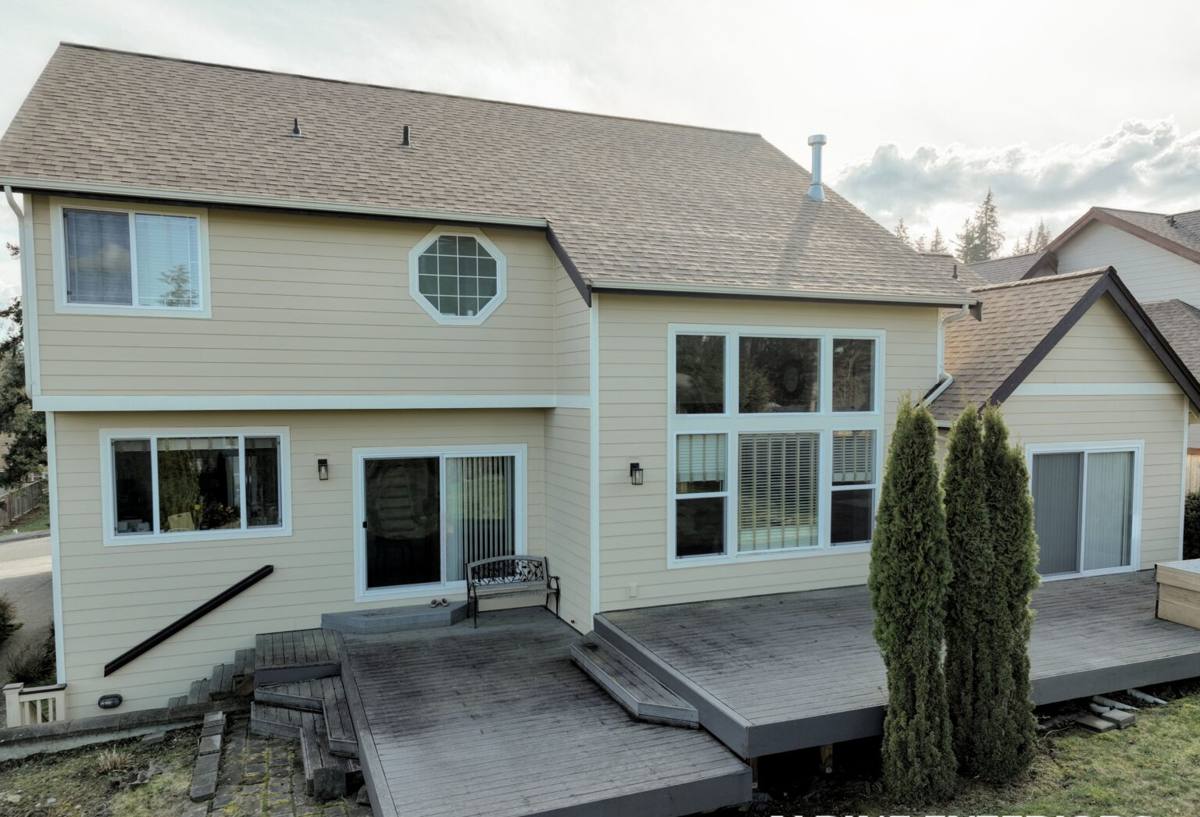
What Blaine's Weather Actually Does to a Deck
Salt Air and Hardware Corrosion
Coastal salt air is hard on any exposed metal. Standard galvanized fasteners and connectors that would last decades in an inland climate can start corroding in a fraction of that time this close to the water. Once a fastener starts to rust, it weakens the connection it's holding and can bleed rust stains into the decking around it — a cosmetic problem that's also a sign something structural is degrading underneath.
Driving Rain and Water Management
Rain here doesn't just fall straight down — wind off the water pushes it sideways into ledger boards, railing posts, and any gap where water can find a way behind the siding or under the decking. A deck that isn't detailed for driving rain will eventually let water track back into the house framing at the ledger connection, which is one of the most common (and most expensive to fix) failure points on any deck.
The Long Moss Season
Whatcom County's wet season runs long, and Blaine's marine humidity keeps surfaces damp even between rain events. Moss and algae need moisture and organic debris to get established, and a deck with tight board spacing, poor drainage, or shaded, low-airflow areas gives them exactly that. Once moss takes hold on wood decking it holds moisture against the boards and accelerates rot; on composite it's mostly cosmetic but still needs regular cleaning to keep the surface from getting slick and stained.
What a Correctly Built Deck Requires in This Climate
Ledger Attachment and Flashing
Where a deck ties into the house is the single most important detail on the whole project. It needs proper flashing — typically a metal flashing cap paired with a compatible membrane — installed so water sheds away from the house wall instead of behind the siding. This is also the point where a deck contractor's siding knowledge actually matters: tying a ledger into existing siding without disturbing the water-resistive barrier behind it takes more care than most general framing crews give it.
Footings and Framing
Footings need to be sized and set below the local frost depth and bear on solid, undisturbed soil — Blaine's coastal soils can vary block to block, so this isn't a spot to guess. Framing lumber should be rated for ground contact where it's close to grade, and any framing that will stay damp for long stretches benefits from a breathable protective tape over the joists to slow moisture absorption at the cut ends and fastener holes.
Fasteners and Connectors
For anything this close to the water, we treat stainless steel or high-grade coated fasteners and joist hangers as the standard, not an upgrade. It costs more up front than basic galvanized hardware, but replacing rusted-out hardware under a finished deck a few years later costs a lot more than the difference.
Choosing a Decking Material for Blaine
There's no single "best" decking material — it's a trade-off between upfront cost, how much upkeep you're willing to do, and how the material actually holds up in salt air and a long wet season. Here's how the common options compare for a Blaine home:
| Material | Upfront Cost | Maintenance | Moss / Moisture Behavior | Typical Lifespan Here |
|---|---|---|---|---|
| Pressure-treated wood | Lowest | Needs cleaning and re-sealing every 1-2 years | Absorbs moisture; prone to moss and splitting if not maintained | 10-15 years with upkeep |
| Cedar | Moderate | Needs regular sealing or staining to hold its color and resist moisture | Naturally rot-resistant but still needs care in constant damp conditions | 15-20 years with upkeep |
| Capped composite | Higher | Occasional washing; no sealing or staining | Won't rot, but algae and pollen film can build up on the surface and need scrubbing | 25-30 years |
| PVC decking | Highest | Lowest — occasional washing only | Fully moisture-resistant; best resistance to staining and surface growth | 30+ years |
Homeowners who want the lowest maintenance burden in a marine climate usually land on capped composite or PVC. If you like the look and feel of real wood and are willing to stay on top of sealing, cedar holds up reasonably well — it just needs more attention than it would in a drier climate.
Railings and Coastal-Grade Hardware
Railing posts and their connection points take a lot of wind load right on the water, and they're also where corrosion problems show up first because the hardware is often left exposed. We use fasteners and post connectors rated for coastal exposure, and we pay attention to how railing posts are flashed where they penetrate the decking surface — an unflashed post penetration is a direct path for water into the framing below.
Permits and Code Considerations Near the Border
Most custom decks in Blaine require a building permit, and the requirements — footing depth, guardrail height, baluster spacing, ledger attachment method — are governed by the applicable building code and enforced through Whatcom County or the City of Blaine depending on where the property sits. We handle the permit application and inspection scheduling as part of the job, so you're not the one tracking down requirements or coordinating inspection visits.
Our Process, Start to Finish
- On-site consultation: We look at the house, the site, existing siding and grading, and talk through how you actually want to use the space.
- Design and material selection: We lay out size, layout, and decking/railing options with honest cost and maintenance trade-offs for each.
- Permitting: We prepare and submit the permit package and schedule the required inspections.
- Site prep and framing: Footings, ledger flashing, and structural framing go in first, built to hold up to coastal wind and moisture exposure.
- Decking and railing installation: Boards and railing are installed with proper spacing and fastening for drainage and long-term stability.
- Final inspection and walk-through: We confirm everything passes inspection and walk the finished deck with you before calling the job done.
Keeping a Blaine Deck Ahead of Moss and Moisture
A well-built deck still needs some seasonal attention in this climate. This is the same basic checklist we'd give any Blaine homeowner, regardless of who built the deck:
- Sweep leaves and debris out of board gaps regularly, especially in fall — trapped organic matter is what feeds moss growth.
- Rinse or scrub composite and PVC surfaces once or twice a year to clear algae film before it stains the surface.
- Re-seal or re-stain wood decking on schedule rather than waiting until it looks weathered.
- Check railing post bases and fastener heads yearly for early rust streaking — it's cheaper to address early than after it spreads.
- Keep gutters and downspouts near the deck clear so runoff isn't dumping extra water onto or under the structure.
- Trim back vegetation that's shading the deck and keeping it damp longer than the rest of the yard.
Why Hire a Crew That Already Works in Blaine
A deck built to a generic spec sheet can look fine on installation day and still fail early in a place like Blaine. The details that matter here — ledger flashing that respects the existing siding, corrosion-rated hardware, board spacing that accounts for a long moss season, footings set for local soil and frost conditions — come from having actually built and maintained decks in this specific climate, not from a one-size-fits-all approach. A crew that already works this area also knows the local permitting process, has a track record with the inspectors who'll be signing off on the work, and is easy to reach later if you ever need a warranty question answered or a repair looked at.
If you're planning a custom deck in Blaine, we're happy to walk the site with you and put together a straightforward estimate — no pressure, no obligation. Use the form below to get started.