 Birch Bay Siding
 Roof Repair Built for Birch Bay Village Conditions
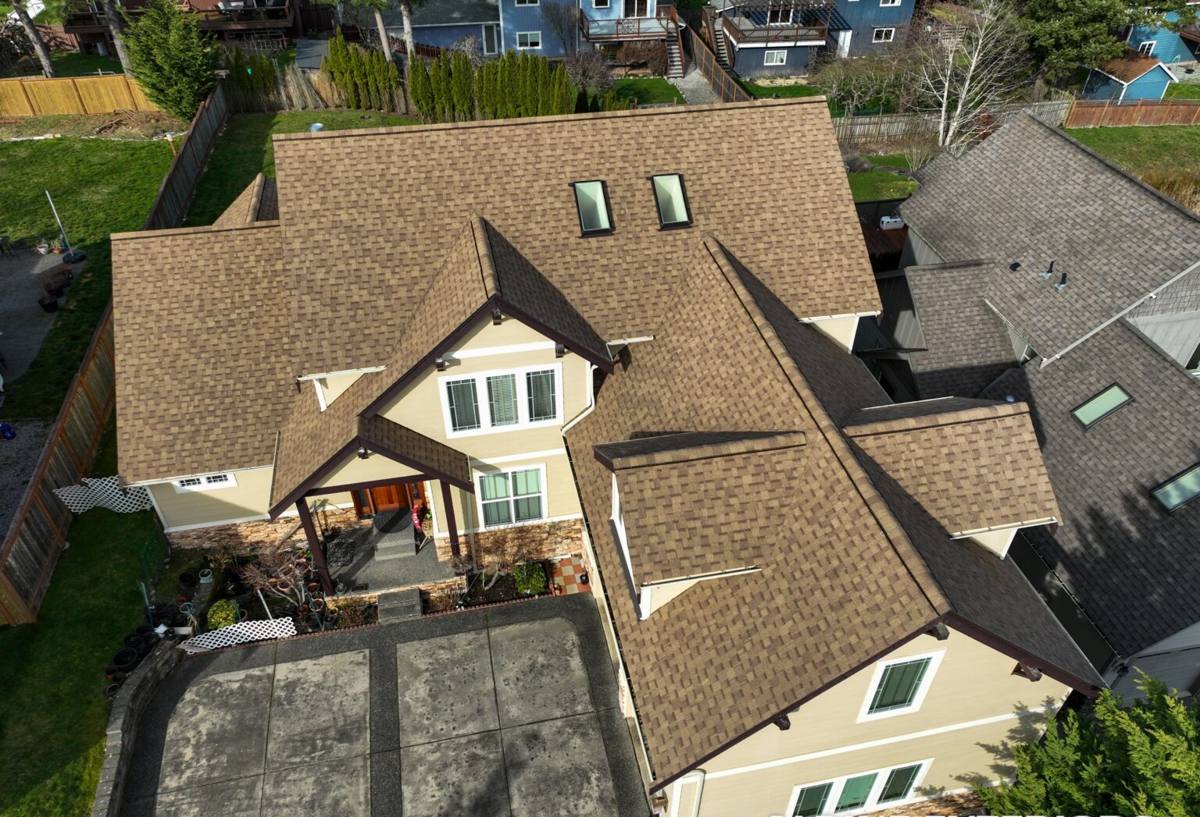
Birch Bay Village sits close enough to the water that its roofs live a harder life than roofs twenty miles inland. Salt-laden air off Birch Bay works on exposed metal and fastener heads year-round. Driving rain off Whatcom County storms doesn't fall straight down — it comes in sideways, testing every flashing detail and shingle overlap a roof has. And the shaded, moisture-heavy tree cover common to the area keeps roofs damp long enough for moss to take hold and spread. None of that means a roof here is doomed to constant trouble. It means repairs need to account for those three stresses specifically, not just patch the visible symptom and move on.
This page is about roof repair — not full replacement — for homes in Birch Bay Village. If your roof still has useful life left but is leaking, staining, losing granules, or growing moss faster than it should, this is the service that gets it back to sound condition without the cost of tearing the whole thing off.
How Local Climate Shapes What Fails First
Salt Air
Salt in the air accelerates corrosion on anything metal — flashing, nail heads, gutter fasteners, vent caps. Corrosion that starts small and hidden under a shingle tab can eventually open a path for water long before the shingles themselves are worn out. This is one of the more common reasons we find leaks on roofs that still look fine from the ground.
Driving Rain
Wind-driven rain doesn't test a roof's flat surfaces nearly as much as it tests transitions — where a roof plane meets a wall, where a chimney or skylight breaks the surface, where two roof sections form a valley. Those are the spots where flashing quality and installation care matter more than shingle brand, and where most of the leaks we're called out for in this area actually originate.
Moss
Moss needs shade and moisture to establish, and a lot of Birch Bay Village properties have tree cover that provides both. Moss isn't just cosmetic. As it grows, it lifts shingle edges, holds water against the roof surface longer than it should sit there, and its root structure can work into the shingle mat itself. Left unaddressed, moss growth turns a simple maintenance issue into a repair job, and an unaddressed repair job into premature replacement.
Signs Your Roof Needs Repair, Not Just a Watchful Eye
Most roof problems give warning signs well before they become emergencies. Homeowners just aren't always sure what they're looking at. Here's what we'd want you to call about:
- Water stains on ceilings or upper interior walls, especially ones that appear or worsen after a windy rainstorm
- Visible moss or dark streaking concentrated on shaded sections of the roof
- Shingles that look cupped, curled, or are missing granules in patches
- Flashing around chimneys, skylights, or roof-to-wall transitions that looks lifted, rusted, or gapped
- Granules collecting in gutters or at the base of downspouts
- Soft or spongy spots when walking the roof or attic decking that feels damp to the touch
- Daylight visible through the roof deck from inside the attic
- A noticeable rise in energy bills, which can point to moisture-compromised insulation under a leak
Any one of these on its own doesn't necessarily mean a major problem. But ignoring several of them at once, especially heading into another wet season, is how a $400 repair turns into a $4,000 one.
What an Actual, Correct Roof Repair Involves
A roof repair that holds up in this climate is more than swapping out a few visibly damaged shingles. We treat every repair call as a chance to check the surrounding area, not just the spot that's leaking — because water rarely stays where it enters.
Diagnosis Before Repair
Leaks are notorious for showing up in one spot while originating somewhere else entirely, since water follows the roof deck and framing before it drips through a ceiling. We trace the actual entry point rather than patching wherever the stain appears.
Matching Materials, Not Just Covering Gaps
Where shingles need replacing, we match the existing product as closely as possible in profile and color so the repair doesn't stand out as a visible patch. Where that's not fully achievable — an older or discontinued shingle line, for example — we're upfront about it before starting.
Flashing Gets the Same Attention as Shingles
Because flashing failure is such a common source of leaks in wind-driven rain, we inspect and, where needed, replace flashing at valleys, chimneys, skylights, and wall transitions as part of the repair, not as a separate line item discovered later.
Underlayment and Decking
If water has been getting under the shingle layer, the underlayment and even the wood decking underneath may be compromised. A repair that skips checking this level of the roof is a repair that's likely to fail again in the same spot.
Common Repairs We Handle in Birch Bay Village
| Issue | What Causes It Here | Typical Fix |
|---|---|---|
| Leaks at chimneys or skylights | Flashing corroded by salt air or opened by wind-driven rain | Remove and replace flashing, reseal transitions |
| Moss-damaged shingles | Shaded, moisture-holding areas of the roof | Moss removal, shingle replacement where lifted or degraded, treatment to slow regrowth |
| Valley leaks | Concentrated water flow overwhelming worn or improperly installed valley flashing | Rebuild valley flashing and adjacent shingle courses |
| Rusted fasteners or vent caps | Ongoing salt air exposure | Replace with corrosion-resistant fasteners and hardware |
| Soft or damaged decking | Prolonged hidden leak before discovery | Cut out and replace affected decking, then re-roof that section |
Repair or Replace? Weighing the Decision
Not every damaged roof needs full replacement, but not every roof is a good repair candidate either. We'll always tell you honestly which side of that line your roof falls on.
| Factor | Leans Toward Repair | Leans Toward Replacement |
|---|---|---|
| Age of roof | Under 15-20 years, within normal lifespan | Near or past the material's expected service life |
| Extent of damage | Isolated to one area or feature | Widespread across multiple sections |
| Underlying decking | Sound, no rot found during inspection | Multiple areas of rot or repeated soft spots |
| Shingle condition overall | Granule loss and curling limited to damaged area | Granule loss and curling widespread across the roof |
| History of repairs | First or second repair in this location | Repeated repairs to the same area over recent years |
If your roof lands mostly in the middle column, repair is usually the honest and economical answer. If it's landing mostly in the right column, we'll say so rather than perform a repair we don't expect to hold.
Our Repair Process
- Inspection. We walk the roof (weather permitting) and check the attic from inside where accessible, looking at both the reported problem area and the roof as a whole.
- Diagnosis and written estimate. We explain what we found, what's causing it, and what it will take to fix — including whether repair is the right call or replacement should be on the table.
- Scheduling around weather. Roof work depends on dry, safe conditions. We plan around Whatcom County's rain patterns rather than rushing a repair into a wet window where it won't seal properly.
- The repair itself. Removal of damaged material, correction of the underlying cause (not just the surface symptom), and installation matched to the surrounding roof.
- Cleanup and check. Debris, old materials, and nails are cleared from the property, gutters and ground included.
Materials and Methods for Coastal Exposure
We choose repair materials with salt air and wind-driven rain in mind, not just whatever's on the shelf. That generally means corrosion-resistant flashing and fasteners over standard galvanized options in areas with direct salt exposure, and underlayment products with strong water-resistance ratings rather than the bare minimum. These choices add modest cost to a repair but meaningfully extend how long that repair lasts before it needs attention again — which matters more here than in drier, inland parts of the county.
We also treat moss control as part of the repair, not an upsell. If moss contributed to the damage, leaving it in place after the repair just sets up the same problem again in a few seasons.
Why Hiring a Crew That Already Works Birch Bay Village Matters
A roofer who works this specific area regularly already knows which failure points show up most often on homes with this kind of exposure — which flashing details tend to fail first, which roof orientations hold moss longest, which fastener types hold up and which corrode early. That knowledge shortens diagnosis time and reduces the odds of a repair that only addresses half the problem. It also means a contractor who understands the practical realities of scheduling roof work around this area's weather, rather than promising a timeline that ignores it.
When you're vetting anyone for roof repair, ask direct questions: how they diagnose the source of a leak rather than just the visible symptom, what materials they use for flashing and fasteners in salt-exposed areas, and whether they'll give you a straight answer about repair versus replacement even if repair is the less expensive job for them.
Maintenance That Extends a Repair's Lifespan
A good repair holds up longer with basic upkeep between service calls:
- Keep gutters and downspouts clear so water isn't backing up under roof edges
- Trim back overhanging branches to reduce shade and moisture that feed moss growth
- Have the roof looked at after any major windstorm, even without an obvious leak
- Address small moss patches early rather than waiting for a full seasonal cleaning
- Schedule a periodic inspection rather than waiting for a ceiling stain to prompt one
If you're seeing signs of a problem, or just want an honest read on where your roof stands, we're glad to take a look. Reach out for a free, no-pressure estimate using the form below.