 Birch Bay Siding
 Metal Roofing Built for Birch Bay Village's Coastal Conditions
Birch Bay Village sits close enough to the water that every roof on the block deals with the same three things year-round: salt-laden air off the bay, wind-driven rain that gets pushed sideways under anything loosely fastened, and long stretches of gray, damp weather that feed moss and algae growth on north-facing slopes. A roof that would hold up fine twenty miles inland doesn't always hold up here. Metal roofing, installed correctly, is one of the few systems that handles all three conditions at once — but "installed correctly" is doing a lot of work in that sentence, and it's where most of the problems we get called out to fix started.
This page is about metal roofing specifically for homes in and around Birch Bay Village — what the climate demands, what a proper installation actually involves, and what to look for in a crew before you hire one.
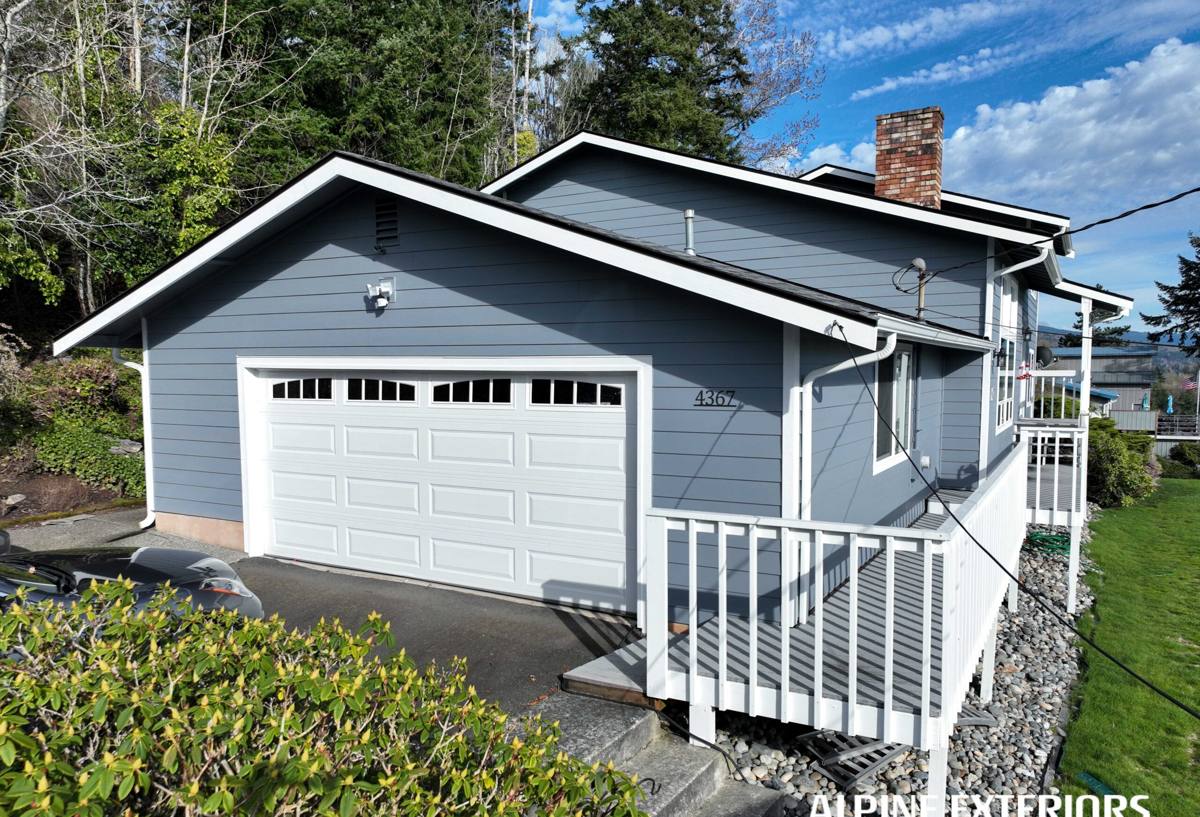
What Birch Bay's Climate Actually Does to a Roof
Salt Air and Metal Fatigue
Salt air accelerates corrosion on any exposed metal — fasteners, flashing, panel edges. It's not dramatic; it's slow, and it shows up first at cut edges and fastener heads where protective coatings are thinnest. This is a materials and detailing issue more than a "metal roofing is bad near water" issue — the right alloy, coating, and fastener spec make the difference between a roof that looks the same in fifteen years and one that's visibly rusting at the screws in five.
Driving Rain
Storms off the Strait of Georgia don't always fall straight down. Wind-driven rain pushes water sideways and upward under laps, ridge caps, and around penetrations that weren't sealed with that in mind. A metal roof's watertightness depends almost entirely on lap direction, fastener pattern, and underlayment — not just the panel itself.
Moss and Algae
Whatcom County's damp season runs long, and shaded, north-facing roof sections stay wet for days after a storm passes. Moss doesn't take hold on metal the way it does on shingles or wood shakes, which is one of the real advantages metal has here — but valleys, gutters, and any spot where debris collects can still grow algae and hold moisture against trim and fascia if they're not kept clear.
Why Metal Roofing Fits This Location
We recommend metal roofing in Birch Bay Village for reasons specific to this location, not as a one-size-fits-all pitch:
- Steep water-shedding profile: Standing seam and ribbed panels shed wind-driven rain faster than a flat, granular surface, cutting the window where water can work its way under a lap.
- No moss substrate: Moss needs organic material to root into. Metal doesn't give it one, which matters through Whatcom County's long wet season.
- Wind performance: Correctly fastened panels resist uplift better than most other roofing types in the gusty conditions common near the bay.
- Longevity against salt, if specified right: A properly coated and fastened metal roof is built for decades of coastal exposure — but only if the coating, gauge, and fasteners are chosen for it, not for a generic inland spec.
Material Choices: What Actually Holds Up Here
| Option | Coastal Performance | Trade-Offs |
|---|---|---|
| Steel, Galvalume-coated, standing seam | Strong corrosion resistance when coating stays intact; widely used in coastal Pacific Northwest work | Cut edges need field-sealing; requires correct fastener spec |
| Steel, standard galvanized | Weaker long-term salt resistance than Galvalume; coating degrades faster near the bay | Lower upfront cost, shorter service life in this environment |
| Aluminum | Naturally corrosion-resistant, doesn't rust; a strong option directly on the water | Softer material, more prone to denting; higher material cost |
| Exposed-fastener panels | Workable, but every screw penetration is a future leak point in driving rain | Lower install cost, but shorter fastener/gasket service life near salt air |
| Concealed-fastener standing seam | Best watertightness in wind-driven rain; no exposed penetrations | Higher material and labor cost |
For most Birch Bay Village homes, we steer toward Galvalume or aluminum standing seam with concealed fasteners. It costs more upfront than exposed-fastener panel systems, but the maintenance burden and leak risk on an exposed-fastener roof this close to the water adds up over time — repeated gasket failure, fastener backing out, and re-caulking that a homeowner shouldn't have to keep up with. That's a trade-off we'll walk through honestly based on your budget and how exposed your particular roof is.
What a Correct Installation Involves
Underlayment
A synthetic, self-adhering underlayment — particularly at eaves, valleys, and penetrations — is non-negotiable in a wind-driven-rain climate. It's the backup layer that keeps you dry if wind ever forces water past a lap or seam.
Fastener Spec and Spacing
Fastener type, coating, and spacing are engineered to the panel manufacturer's wind-uplift rating, not just "close enough." This matters more in open, exposed lots near the bay than it does further inland.
Flashing and Penetrations
Every pipe boot, vent, and chimney flashing is a place water can find a way in under sideways rain. These get sealed and lapped correctly, with materials rated for the metal they're paired with — mixing incompatible metals at a flashing joint causes galvanic corrosion, which is its own slow failure mode near salt air.
Panel Layout and Laps
Panel laps are run to shed water with the prevailing wind and rain direction for the specific roof plane, not just laid out for convenience. On a home with multiple roof pitches facing different directions, this sometimes means different lap details on different slopes.
Our Process for Birch Bay Village Jobs
- On-site assessment: We look at pitch, exposure, existing decking condition, and how the specific lot sits relative to wind and rain direction off the bay.
- Material and system recommendation: Based on that assessment and your budget, we recommend a panel type, gauge, and coating — with the trade-offs explained, not just the upsell.
- Tear-off and deck inspection: Old roofing comes off and the decking gets checked for moisture damage before anything new goes down. Coastal moisture sometimes finds its way into decking long before it shows up as an interior leak.
- Underlayment and flashing installation: Self-adhering underlayment at vulnerable areas, correctly lapped and sealed flashing at every penetration.
- Panel installation: Fastened to spec, laps run for the roof's actual wind and rain exposure.
- Final walkthrough: We go over the finished roof with you, including what routine maintenance (if any) it needs going forward.
Maintenance: What Metal Roofing Does and Doesn't Need
One of the honest selling points of metal roofing here is how little upkeep it needs compared to other systems — but "little" isn't "none":
- Clear gutters and valleys of debris a couple times a year so water isn't sitting against trim or fascia.
- Rinse off accumulated salt residue periodically if your home is directly exposed to bay wind — a garden hose is usually enough.
- Have flashing and sealant at penetrations checked every few years; sealant is the one component that ages faster than the panels themselves.
- After any major windstorm, a quick visual check for lifted panels or loose fasteners is worth the five minutes.
Why Local Experience Matters for This Job
Metal roofing done by a crew that hasn't worked exposed, coastal Whatcom County sites tends to default to inland specs — standard galvanized fasteners, generic lap details, underlayment that's fine for a dry climate but not for driving rain. None of that fails immediately. It fails in year four or five, quietly, as corrosion at the fastener heads or a slow leak at a flashing joint that wasn't detailed for sideways rain.
Working Birch Bay Village and the surrounding area regularly means we're specifying for this exposure by default, not as an afterthought — the right coating grade, the right fastener metallurgy, and lap details set for how weather actually moves through this specific stretch of coastline.
Questions Worth Asking Before You Sign a Contract
- What panel gauge and coating are being specified, and why for this house specifically?
- What fastener type and spacing pattern will be used, and is it matched to the panel manufacturer's wind rating?
- What underlayment goes down at eaves, valleys, and penetrations?
- How are dissimilar metals at flashing points being handled to avoid galvanic corrosion?
- What's the manufacturer's warranty structure, and what voids it?
If you're weighing a metal roof for a home in Birch Bay Village, we're glad to come take a look and talk through what your specific roof needs — no pressure, no generic pitch. Use the form below to request a free estimate.